Why Rosemary Turns Brown and Dies (Common Causes and Fixes)
If your rosemary’s turning brown and dying, you’ve probably got one of the classic herb disasters on your hands: too much water (hello, mushy root rot), not enough water (crispy desert vibes), sneaky pests like spider mites, or a dreaded fungal fuzz attack—think powdery mildew on a camping trip! Maybe it’s the summer scorch or a winter chill turning those leaves brown. Don’t forget, bad soil pH or feeding blunders can cause drama, too—stick around to fix these fast!
TLDR
- Overwatering causes root rot, leading to yellowing, browning, wilting, and eventual plant death.
- Underwatering results in dry, brittle, brown leaves and overall dehydration stress.
- Fungal infections and pests cause browning, leaf drop, and visible damage such as powdery patches or sticky residues.
- Extreme temperatures, frost, or prolonged heat stress can scorch leaves, causing browning and decline.
- Poor soil drainage, improper pH, or over-fertilization can damage roots, resulting in brown leaf tips and stunted growth.
Early Warning Signs: How to Tell If Your Rosemary Is in Trouble
Even though rosemary is usually one of the toughest herbs you can grow, it’s not invincible—sometimes, it sends out distress signals if something’s wrong, a bit like a plant version of an SOS!
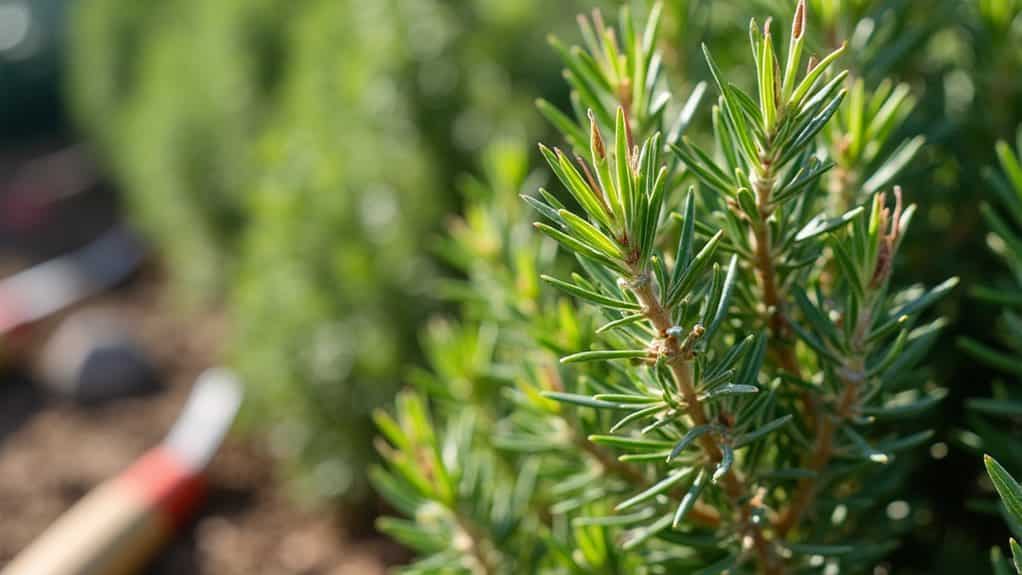
If you spot brown leaves, wilting, discoloration, or sudden leaf drop, these are early warning signs of plant stress. Watch for fungal infections, pests and diseases.
And remember, root rot means urgent action! Ensuring proper soil drainage can help prevent root rot and keep your rosemary healthy.
Root Rot Problems: Spotting and Fixing Overwatering
Let’s talk about root rot, which is basically your rosemary’s worst nightmare when you’ve been a little too generous with the watering can—think of it like giving your plant soggy socks on a camping trip! You’ll want to check for squishy, stinky roots, and if things look gross, get your rosemary into a pot with excellent drainage and fresh, airy soil, just like setting up a cozy, dry tent after a rainstorm. Proper soil drainage is key to preventing root rot and keeping your rosemary healthy. Don’t panic if you spot trouble—grab some scissors, snip away the mushy roots, and let the soil dry out between waterings, because honestly, nobody (not even a plant) likes wet feet for too long.
Identifying Root Rot Symptoms
While you might think your rosemary just needs a little extra water, root rot is actually one of those sneaky problems that’s easy to miss until things get really bad—kind of like realizing you forgot your tent stakes in the middle of a rainstorm!
Watch for yellowing leaves, brown leaves, plant wilting, and mushy or blackened roots.
Gently inspect roots—if they’re soft or smelly, root rot from overwatering or poorly draining soil is likely.
Improving Soil Drainage
If you’ve ever had a camping trip ruined by soggy socks and a flooded tent, you know just how miserable too much water can be—and your rosemary feels the same way when its roots are stuck in wet, heavy soil!
To improve soil drainage, mix in organic matter like compost, add gravel for aeration, and always choose well-draining soil or containers with drainage holes, especially when transplanting.
Repotting for Recovery
Even though overwatering might seem like you’re just giving your rosemary a little extra love—kind of like bringing too many snacks on a camping trip—it can actually cause some major problems, especially root rot, which is basically the plant version of having soggy, ruined gear.
To help your plant recover, repot by trimming black roots, then transplant into well-draining soil, ensuring excellent drainage for healthy roots—no more mushy disasters!
Brown, Brittle Leaves? Signs of Underwatering
Have you ever come back from a camping trip, only to find your rosemary looking crispy and sad, like it spent too much time under the sun without sunscreen? When your rosemary’s leaves turn brown and brittle, it’s usually screaming for a big drink. Additionally, prolonged exposure to UV radiation can degrade the plant’s natural oils, making the leaves more susceptible to drying out and turning brown.
Recognizing Dehydration Symptoms
Whenever you spot those crispy, brown, and brittle leaves on your rosemary, it’s like your plant is waving a little flag that says, “Help, I’m thirsty!” Seriously, I remember the first time my own rosemary started looking more like a tumbleweed than an herb—total panic mode, right?
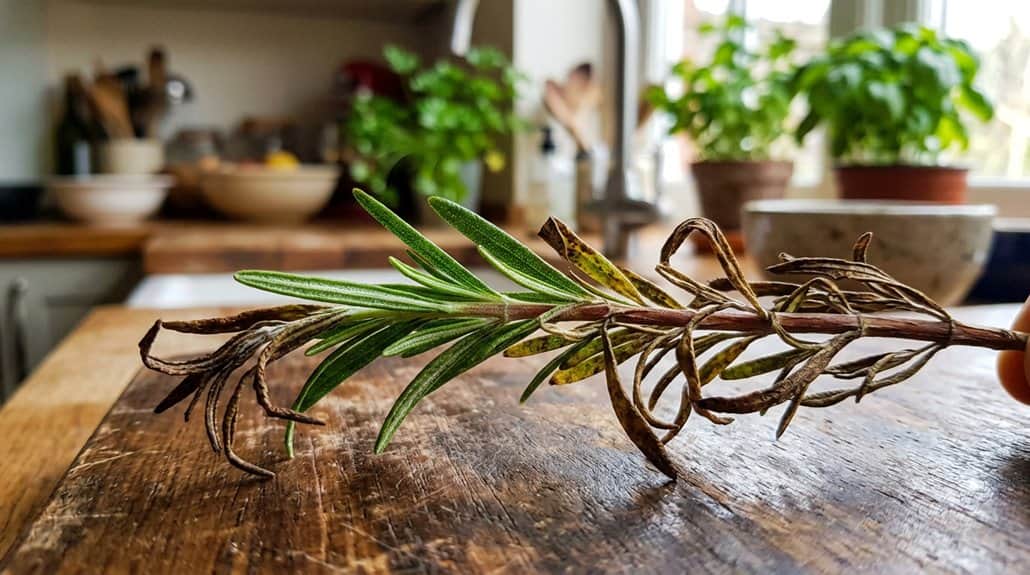
Leaves turning brown, browning tips, and leaf dryness scream dehydration symptoms—usually from insufficient watering, dry soil, or drought stress. Water deeply!
Deep Versus Shallow Watering
So, you’ve spotted those crunchy brown leaves and you’re pretty sure your rosemary’s throwing a fit because it’s thirsty—let’s talk about how you water it, because honestly, that’s where a lot of people (including me, on my first camping trip with a potted rosemary in tow) get it wrong.
Deep watering is key—shallow watering leads to dry soil, dehydration, brown foliage, and stressed, underwatered roots.
Impact Of Environmental Factors
Honestly, isn’t it wild how a simple thing like forgetting to water your plant can turn your once bushy, fragrant rosemary into something that looks like it spent a week camping in the desert without sunscreen?
Changes in climate, low humidity, or high temperature can dry out soil fast. If you spot brown, brittle leaves—clear signs of stress from underwatering—it’s essential to check soil moisture and adjust your watering routine!
Heat and Humidity: How Hot Weather Damages Rosemary
Ever wonder why your rosemary plant suddenly looks like it spent too much time at the beach without sunscreen? Hot temperatures above 85°F can zap its drought tolerance, causing dehydration, browning leaves, and even sun scorch. If you love helping your plants thrive, watch for heat stress, water stress, and browning tips—prolonged heatwaves can cause cellular damage. Proper water management and providing a bit of shade can help your rosemary recover and stay healthy!
Cold Damage: Protecting Rosemary From Frost and Winter Burn

Even though rosemary totally gives off those beachy Mediterranean vibes, it’s actually not a fan of freezing weather—kind of like someone who forgot to pack a jacket for a camping trip in the mountains!
To protect your rosemary from frost damage and winter burn, try covering plants with frost blankets, insulating the ground with mulch, and moving pots indoors during cold snaps.
Additionally, understanding proper site selection and microclimates can help reduce frost risk and keep your rosemary healthy through the winter.
Getting Sunlight Right: Best Placement for Rosemary Indoors and Out
If you’ve ever tried growing rosemary and felt like you were prepping it for a world tour—moving it from the sunny balcony to the kitchen windowsill and back again—you’re not alone! Rosemary’s a sun-chaser, craving 6-8 hours of direct sunlight daily.
Indoors, park it by a south-facing window or use grow lights.
Outdoors, avoid shade—give it prime placement, gradually adjusting sunlight exposure to prevent stress.
Ensuring the plant receives proper inspection and maintenance can help prevent issues like browning and dieback.
Fungal Diseases on Rosemary: Treating Powdery Mildew and Mold
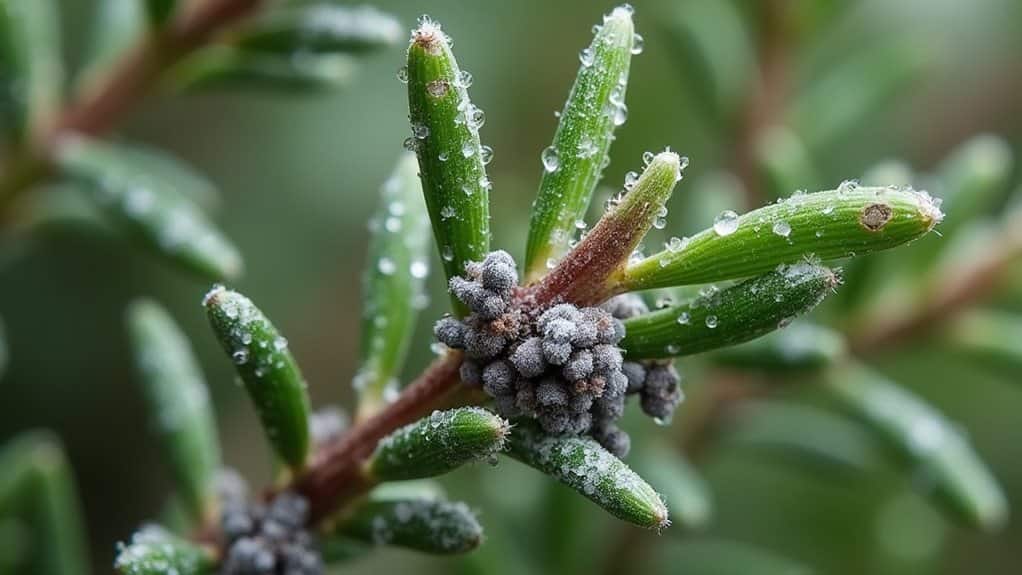
Have you ever spotted a weird white powder on your rosemary, almost like it’s dressed up for a camping trip in the snow? That’s actually a sign of powdery mildew, a sneaky fungus that loves humid, stuffy places and can really mess up your plant’s journey plans.
But don’t worry—you’ve got some awesome, organic tricks like pruning, spacing, and even a bit of neem oil to help your rosemary bounce back.
Proper plant spacing and airflow are key to preventing the spread of fungal diseases and keeping your rosemary healthy.
Let’s check out how you can spot these fungal invaders early and send them packing before they turn your herb into a brown, soggy mess!
Identifying Fungal Infection Signs
Ever wondered why your rosemary suddenly looks like it’s been dusted with flour or sprouting fuzzy grey patches, as if it’s prepping for a camping trip in the clouds? Those are classic fungal infection signs—powdery mildew shows up as white powder.
While fungal diseases like mold create grey fuzzy patches on infected plant tissues. If you spot these symptoms, grab some neem oil or organic fungicides for help!
Effective Organic Treatment Methods
Although rosemary might dream of joining you on a misty mountain camping expedition, those white or grey powdery patches and fuzzy molds definitely aren’t the kind of gear you want it packing!
To help your plant thrive and serve others, use organic fungicides like neem oil or potassium bicarbonate for an effective organic treatment.
Enhance air circulation, remove infected foliage, and stick to preventive measures to keep powdery mildew and fungal infections away.
Battling Pests: How Spider Mites and Aphids Harm Rosemary
When you’re taking care of rosemary, it’s kind of like prepping for a camping trip—you’ve got to watch out for unexpected visitors, and sometimes those guests are way tinier than you’d ever imagine!
Spider mites leave webbing and cause browning, while aphids bring yellowing and sticky messes. If you spot pests or damaged leaves, don’t panic—try organic control like neem oil, soap, or gentle washing!
Fertilizer and Soil pH Mistakes That Turn Rosemary Brown
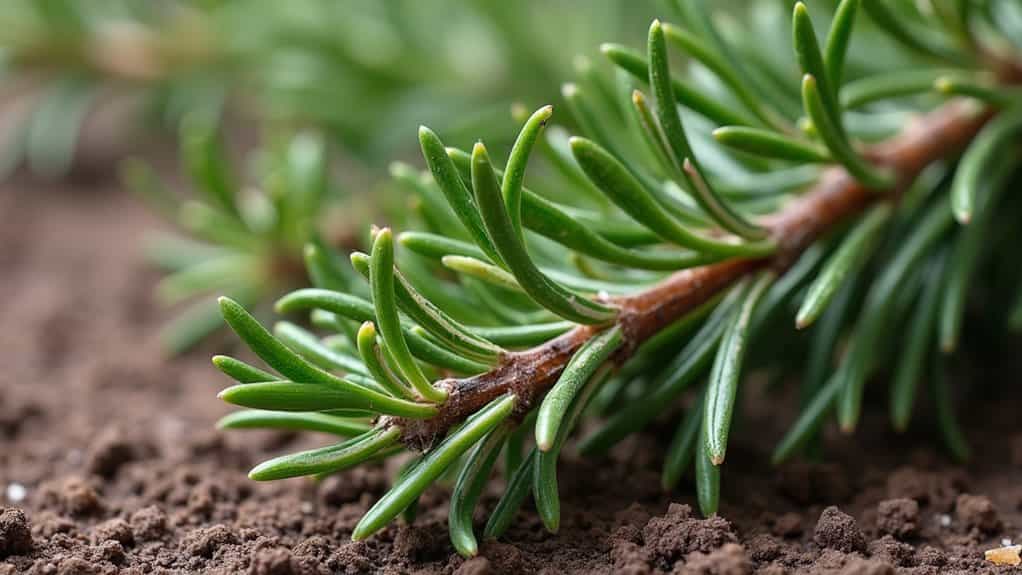
Pests aren’t the only sneaky troublemakers that can turn your rosemary brown—sometimes it’s all about what’s going on down in the dirt, right where you can’t see it!
If your soil pH is too acidic or you’re over-fertilizing, you’ll get nutrient burn, brown tips, and unhappy plants. Test your soil, use the right soil amendments, and help your rosemary enjoy perfect nutrient uptake!
How and When to Prune Brown Rosemary for Healthy Growth
Let’s be real—nobody likes to see their rosemary looking like it just survived a desert camping trip, all brown and crispy at the edges!
So, grab your sterilized pruning shears in late winter or early spring, and snip off those dead sections just above the green nodes.
Ensuring proper soil health and avoiding overwatering can help prevent browning and promote vibrant, healthy growth.
Overall
So, if your rosemary’s looking more like a crispy brown tumbleweed than a bushy green herb, don’t panic—just remember, with a little detective work and some TLC, you can totally bring it back to life! Check the roots, adjust your watering, and watch out for sneaky bugs. Honestly, I’ve killed more rosemary on camping trips than I care to admit, but hey, every plant escapade is a chance to learn. Let’s keep those rosemary sprigs thriving!