Why Ants Take Over Patios After Rain
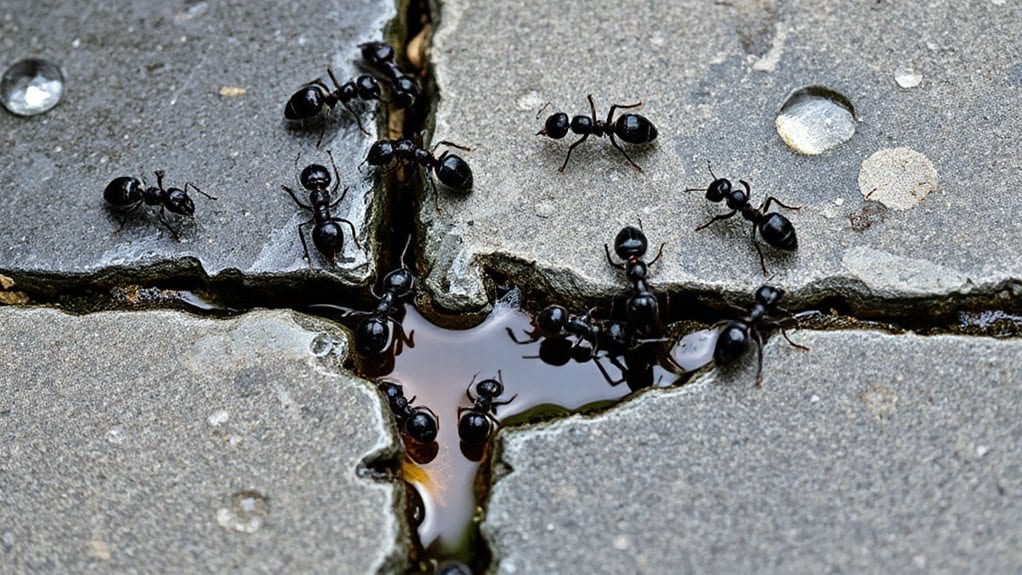
So, rain rolls in and suddenly your patio’s crawling with ants—what gives? Well, their homes just flooded, they’re starving because the rain washed away their snacks, and your warm, dry patio looks like a five-star resort. They scramble onto slabs and furniture, scouting for shelter and food, turning your chill hangout into their survival mission. Sound intense? You have no idea what happens when the queen gets involved.
TLDR
- Flooding collapses underground nests, forcing ants to flee to dry patios and hard surfaces for survival.
- Rain washes away outdoor food, driving hungry ants to forage on patios for exposed human food.
- Damp patios and nearby moisture attract ants seeking favorable post-rain habitat conditions.
- Ants relocate to cracks in patios and foundations, using structures as shelter after nest flooding.
- Post-rain scouting leads to new colony establishment on patios, especially in softened or damaged areas.
Flooded Nests Drive Ants to Higher Ground
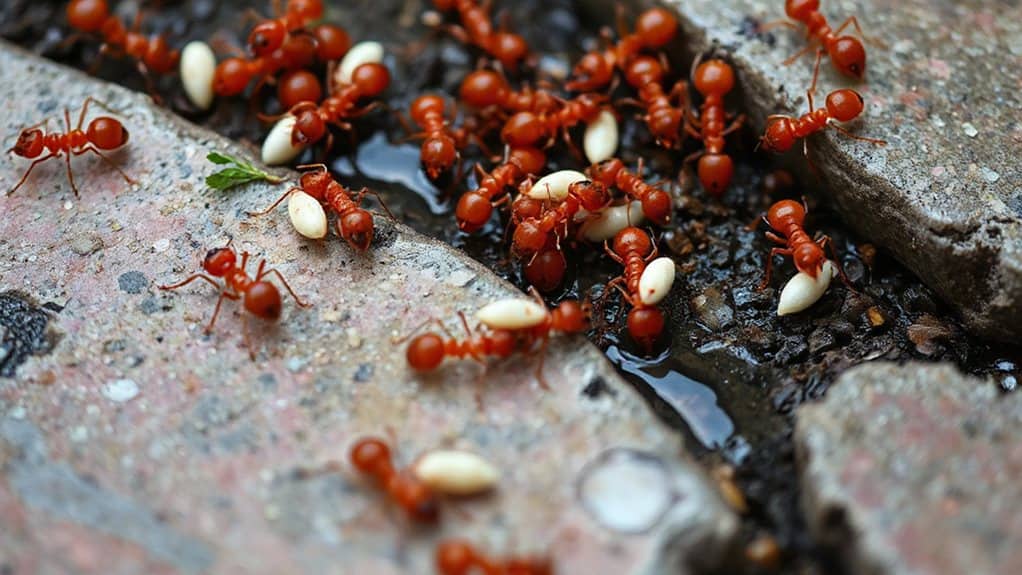
So, envision this: you’ve just finished setting up your campsite, the tent’s pitched, the snacks are unpacked, and—bam!—a sudden downpour turns the ground into a soggy mess.
Now, imagine being an ant with your entire home flooding beneath you! You’d scramble too, right? Ants race to higher ground—like patios or walls—escaping drowning, hauling precious eggs and larvae. They’re not invading; they’re surviving! This urgent retreat is triggered when rising water causes nest entrances to collapse and seal, trapping air inside—a survival tactic known as (collapsing soil seals nests).
Ants often choose nearby hard surfaces because soil compaction makes burrowing back into waterlogged ground difficult.
Scarcity of Outdoor Food Pushes Ants Indoors
So, you’re out there enjoying your patio after a big rain, maybe dreaming about your next camping trip, when suddenly—bam!—ants swarm your picnic table, and you’re like, “Where’d they come from?”
Well, guess what? All that rain washed away their snacks—crumbs, spills, even their secret sugar stash under the flowerpot—leaving them hangry and on a full-on mission to crash your kitchen instead.
With their outdoor buffet gone and soggy trails wiped clean, they’re not just looking for food, they’re on a serious indoor food safari, and honestly, your pantry’s looking pretty tempting right now!
After rain, standing water and disturbed soil can also flush out insect prey and other food sources that ants rely on, pushing them to search elsewhere.
Washed-Away Food Sources
Ever noticed how a good rainstorm seems to wash the whole backyard clean—only to have ants suddenly pop up everywhere on your patio like they’re crashing a party?
Rain sweeps away their snacks—bugs, sap, crumbs—leaving scouts scrambling, trails broken, and colonies hungry.
They’re not rude guests; they’re desperate! You’d do the same if your pantry vanished mid-campout.
Indoor Foraging Surge
Envision this: the rain finally stops, birds start chirping, and you step outside, ready to enjoy your freshly washed patio—only to find a dozen ant scouts doing reconnaissance on your picnic table like they’re planning a full-scale invasion.
Soaking soil drowns their snacks, forcing ants indoors in a hunger-fueled exodus. Be proactive—seal cracks, wipe surfaces, and stash food fast. You’re not just cleaning; you’re leading a tiny, determined army away from your kitchen!
Rising Moisture Levels Attract Ant Colonies
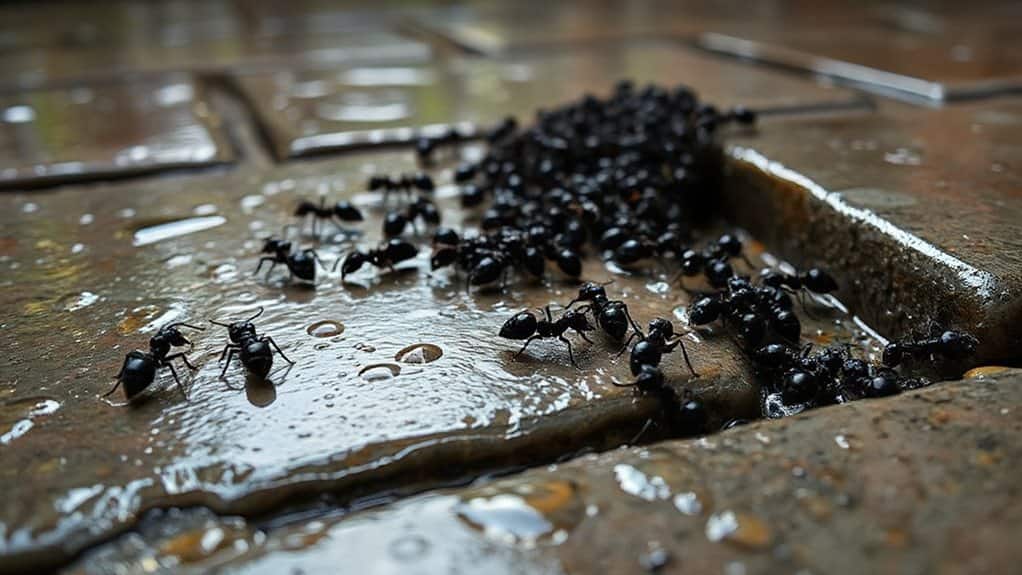
When the rain finally stops and you step outside, thinking your patio’s all yours again, guess what? Those clever little ants are already moving in, drawn by rising moisture levels like campers to a puddle pond.
They *love* damp spots—under slabs, near leaks, even in soggy leaves—so grab a towel (or a shovel) and help dry things up before they throw a full-on colony pool party! Exterior prevention and perimeter control help keep pests from settling in.
Relocation Patterns Shift Toward Built Structures
While you’re busy wiping down your patio furniture and checking for soggy cushions, those sneaky ants are already on the move—turning your outdoor hangout into their new neighborhood hotspot.
They don’t just wander; they scout, decide, and relocate like tiny, determined campers seeking drier tents. Rain floods their underground homes, so they pack up and march toward patios, drawn to cracks that feel like five-star suites—warm, sheltered, and oddly close to your snack stash. This movement is similar to how other yard pests relocate after rain, often spreading via wind or water to new areas.
Signs of Ant Infestation Around Patios
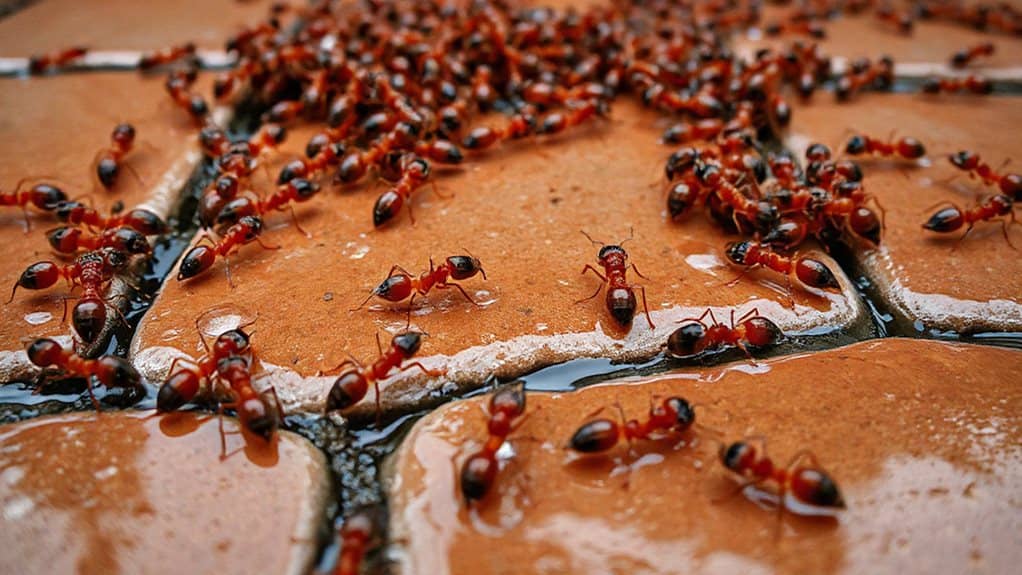
So your patio survived the rain—congrats! But if you’re seeing ant highways on the slabs, tiny soil piles by the cracks, or mysterious sawdust near doors, guess what? You’ve got uninvited roommates.
Pavement, carpenter, or fire ants might be claiming your patio as their new basecamp—especially after storms. Check for trails, frass, or mounds; early clues mean you can stop a full ant invasion before it ruins your next backyard hangout. Liquid baits containing borax remain effective but should be replaced regularly, especially if they show hardening or color changes, to ensure bait effectiveness.
Post-Rain Swarming and Mound Formation
Okay, imagine this: you step outside after a downpour, ready to enjoy your soggy-but-serene patio, and suddenly—*whoa*—there’s a full-on ant convention happening right on your sidewalk like they’re throwing a tiny, chaotic festival. They’re not crashing your hangout—they’re on a mission!
Rain softens the soil, so queens dig new homes, and flooded nests send ants swarming to rebuild. Some even raft up like mini survivalists! Those little mounds popping up? Fresh ant motels, open 24/7.
Overall
So, next time it rains and you spot ants marching across your patio, don’t freak out—they’re just doing what we’d do: evacuating soggy homes! Think of it like a tiny ant camping trip, except they picked your doorstep instead of a forest. They’re not here to party, but hey, who doesn’t love unexpected guests? Keep things dry and tidy, and maybe toss some cinnamon around—ants hate that stuff, kind of like how I hate soggy marshmallows.