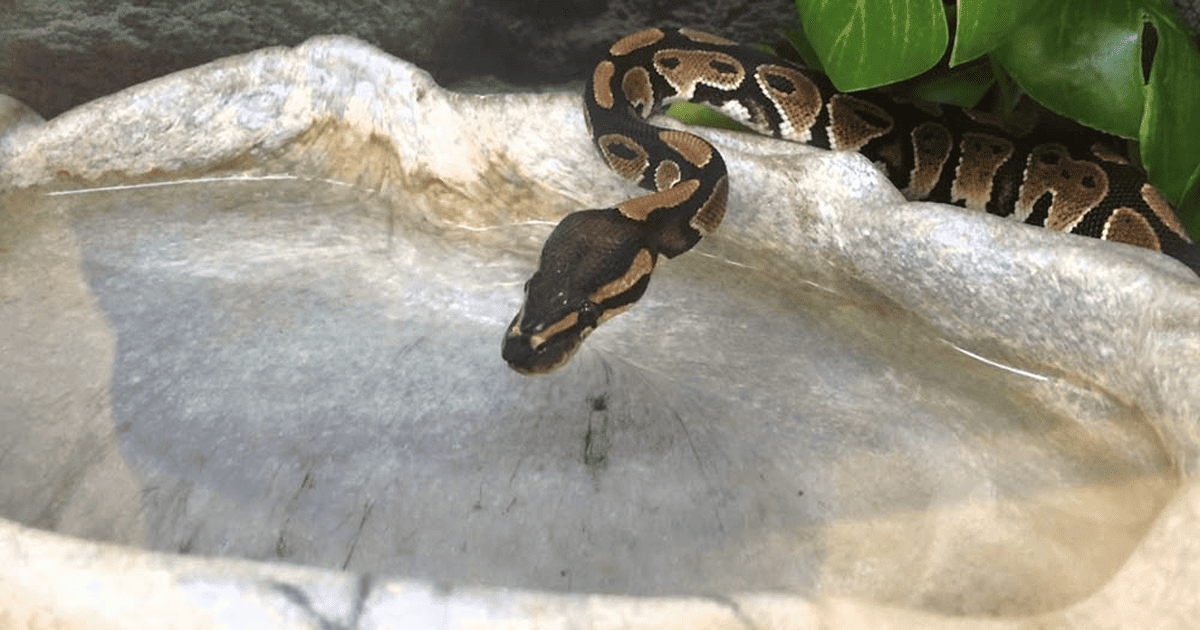
How Long Can Ball Pythons Go Without Water
You’re curious about your Ball Python’s water needs. Understanding dehydration in these snakes is crucial. It can occur due to insufficient water, high temperatures, incorrect humidity, and parasites. Without proper hydration, your snake risks serious health issues—even death.
Let’s dive into how long they can survive without water, the signs of dehydration, and ways to rehydrate them effectively. Remember, their survival depends on you!
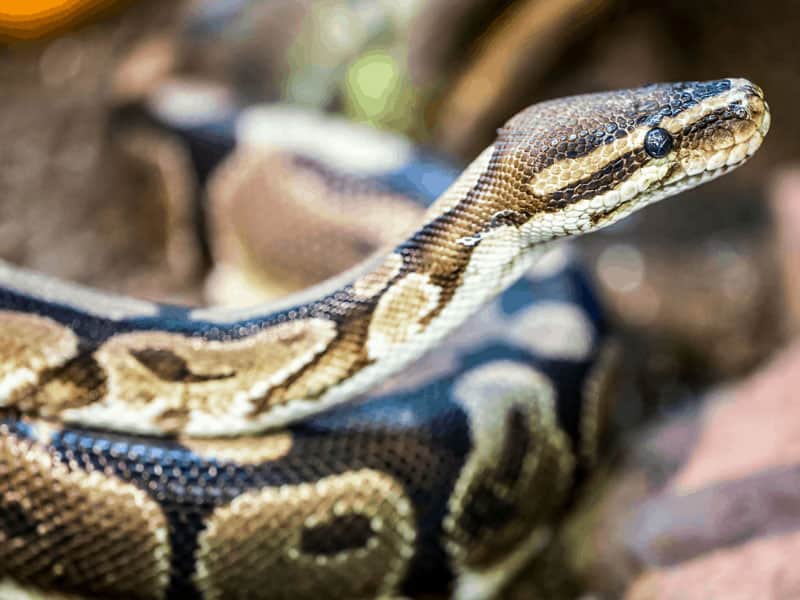
Understanding A Ball Python’s Water Needs and Usage
You might wonder about the significance of fresh water to your ball python’s overall health. How often does a ball python need to drink, and how can you interpret its water intake? Comparing the water usage in ball pythons to other snake species will also be insightful as we delve into understanding just how much water your pet needs for optimal health. (Read Why Do Turtles Not Like Black)
The Importance of Fresh Water to a Ball Python
It’s crucial to understand that freshwater plays a vital role in the health and survival of a ball python. Your pet can’t regulate its body temperature or stay hydrated without clean drinking water. Ensuring ample water intake through a well-maintained water bowl is essential to ball python care. Thus, never underestimate the importance of fresh water in your snake’s dish.
How Often Do Ball Pythons Drink
Despite their ability to survive for periods without direct water intake, ball pythons typically drink several times a week. You must provide a fresh drinking water dish as a consistent water source.
Decoding A Ball Python’s Water Intake
Decoding a ball python’s water intake isn’t always straightforward since they’re reptiles that can survive for extended periods without drinking. Ball pythons don’t require constant hydration and can go without water for about 12 days. However, it would be best always to have water for your snake to prevent a dehydrated ball python. Monitor signs of dehydration closely to ensure your ball python snake’s health.
The Type Of Snake: Is Water Usage Different in Ball Pythons
You’re probably wondering if ball pythons’ water usage differs from other types of snakes. Ball pythons require less water as they are cold-blooded and can survive longer without it. A captive ball python may show signs like flaky skin or lethargy if dehydrated.
Remember, while this type of snake might need less water than others, proper hydration remains crucial for their health. (Read Water Pooling On Composite Deck: How To Solve The Problem)
How Much Water Does A Ball Python Need
Understanding that a ball python needs access to fresh water for proper hydration is crucial.
- As a snake owner, you might wonder how much water does a ball python need?
- While they don’t need a lot of water, the water must be still fresh.
- Replace the water regularly for your pet snake to enjoy.
- If your snake may not have enough water, adjust accordingly.
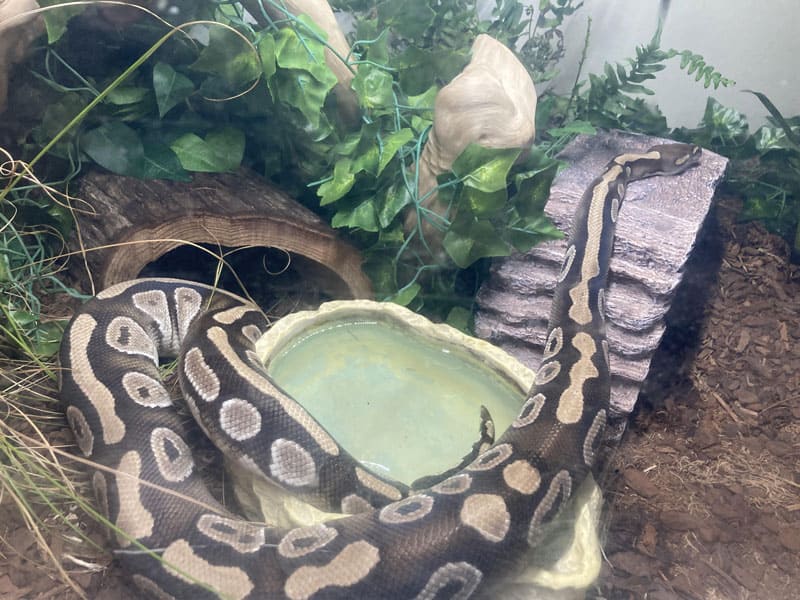
How Long Can A Ball Python Snake Go Without Water?
You might wonder, can a ball python survive 12 days without water? What about those that go for months without this vital resource? In our discussion, we’ll delve into the role of dehydration and detail just how long these resilient creatures can endure before they start to suffer from lack of hydration.
We’ll also explore the effects when a snake can’t access enough water, shedding light on their incredible endurance and the potential consequences they face in such situations.
Can A Ball Python Survive 12 Days Without Water?
Ball pythons can survive for about 12 days without water, but they’ll start to experience health problems after this period. If your snake goes without water for too long, it’ll get dehydrated. Dehydration in snakes is severe; it causes a dehydrated snake to become weak and suffer from water loss. Always ensure your ball python has access to fresh water to prevent dehydration.
What About Ball Pythons That Go For Months Without Water
Contrary to what you might think, snakes can’t survive months without hydration. They’ll show signs of severe dehydration and potentially face life-threatening conditions. When a snake is dehydrated for a long time without water, the snake needs to drink.
Even though some believe a snake can go without water for months, they need to drink water to survive for long.
The Role Of Dehydration: How Long Without Drinking Before A Snake Gets Dehydrated
Understanding dehydration can set in a snake after just a week of not drinking. Is crucial. If you notice your snake showing symptoms of dehydration, such as flaky skin or lethargy, they’ve likely become dehydrated. Ball pythons can go about 12 days without water but rely heavily on it for survival. To help your snake, ensure regular hydration to prevent serious health issues.
Surviving A Long Time Without Water: A Snake’s Endurance
You’d be amazed at a snake’s endurance. Some species can survive without water for surprisingly extended periods. Long snakes like pythons can go up to days or weeks without drinking. Even if a snake doesn’t have enough water, it manages to live by absorbing moisture from its prey. Nevertheless, remember that all snakes drink water and shouldn’t go without fresh water for prolonged periods. (Read Is Spraying Someone With Water Assault)
When A Snake Can’t Access Enough Water: The Consequences
When your snake can’t access enough water, serious health issues, such as dehydration, might lead to fatal conditions if not addressed promptly.
Even though ball pythons, a snake native to Africa, can go weeks without much water, they need regular access. To keep your snake healthy, provide lukewarm tap water regularly and ensure they absorb water effectively.
Spotting A Dehydrated Ball Python: Signs Of Dehydration In Snakes
As a ball python owner, you must recognize signs of dehydration in your pet snake. Understanding what a dehydrated ball python looks like could save its life, as symptoms can range from subtle skin changes to severe lethargy.
This discussion will provide practical solutions for dealing with a dehydrated ball python and highlight the importance of a water dish in preventing dehydration—knowledge that is not only scientifically accurate but essential for maintaining the health and happiness of your reptilian companion.
Recognizing Dehydration In Your Pet Snake
It’s crucial to recognize the signs of dehydration in your pet snake. Some symptoms include dry, flaky skin or refusing to eat. If you own a corn snake, it’s essential always to have water available and keep it clean. Dehydration can lead to significant health issues and even death. Be vigilant for signs like lethargy, sunken eyes, and unusual shedding patterns. If you suspect severe dehydration, seek immediate veterinary care.
What Does A Dehydrated Ball Python Look Like
You’d notice your pet snake’s skin looking wrinkled or having folds, indicating possible dehydration. Other signs include a dull coloration and an unusually tight or rough feel to the skin. The snake’s eyes may appear sunken or covered with a dull film. In severe cases, your ball python might become lethargic and refuse food.
If you observe these symptoms, you need to rehydrate your pet immediately. (Learn How To Cap A Copper Pipe)

Dealing With A Dehydrated Ball Python: Effective Solutions
Coping with a dehydrated snake can be stressful, but there are practical solutions that’ll help your pet recover quickly.
- Firstly, soak your snake in lukewarm water for 15-30 minutes daily.
- Increase the humidity inside its enclosure and bathe it using an electrolyte solution like Pedialyte.
- Lastly, seek professional vet assistance if the condition doesn’t improve or worsens.
Preventing Dehydration In Ball Pythons: Importance of A Water Dish
Ensuring your snake has a clean, filled water dish prevents dehydration. You can’t underestimate the importance of hydration for your ball python’s health. Regularly change the water to keep it fresh.
Also, ensure the bowl is stable and deep enough for your snake to soak if desired. Remember, good hydration helps with digestion and shedding too.
How To Rehydrate A Dehydrated Ball Python
As an owner, ensure your pet snake’s hydration for its well-being. Is crucial. You might wonder if snakes can drink tap water and how to provide fresh water effectively
We’re about to delve into the methods of rehydrating your pet snake using warm water. Additionally, we will discuss whether tap water is safe for your slithery friend. Furthermore, we will explore practical techniques to encourage a ball python to drink.
Rehydrating Your Pet Snake: Using Warm Water
If it’s dehydrated, you must soak your ball python in warm water. Fill a container with enough lukewarm water to submerge about half its body. Remember, the temperature shouldn’t exceed 82 degrees Fahrenheit. Let your snake soak for around 15-20 minutes. Monitor it constantly during this time, ensuring its head stays above water.
This procedure helps rehydrate your snake and can facilitate shedding too.
Do Snakes Drink Tap Water?: Fresh Drinking Water For Your Snake
It’s a common question among snake owners: can snakes drink tap water? Yes, they can. However, you should be aware that tap water contains chlorine which may lead to respiratory problems in snakes.
Use filtered or bottled spring water instead to ensure your snake’s health. Always remember to keep their water fresh and clean by changing it regularly.
Effective Techniques to Encourage A Ball Python to Drink
Encouraging your snake to stay hydrated can be a bit tricky, but there are several techniques that you can use. Try regularly listing the enclosure with water to increase humidity or soak their food before feeding.
Some snakes also enjoy soaking in shallow water dishes, so ensure a clean supply is always available. If they’re still not drinking, consult a vet for advice.
Proper Ball Python Care: Managing Their Water Intake
Understanding their hydration needs is crucial for maintaining your ball python’s health. You’ll want to ensure that you’re providing a suitable water bowl -which consistently supplies sufficient fresh water and allows easy cleaning to promote optimal snake care. Let’s delve into some practical tips on effectively maintaining your ball python’s hydration, including insights on the ideal water bowl setup, ensuring a clean water source, and more.
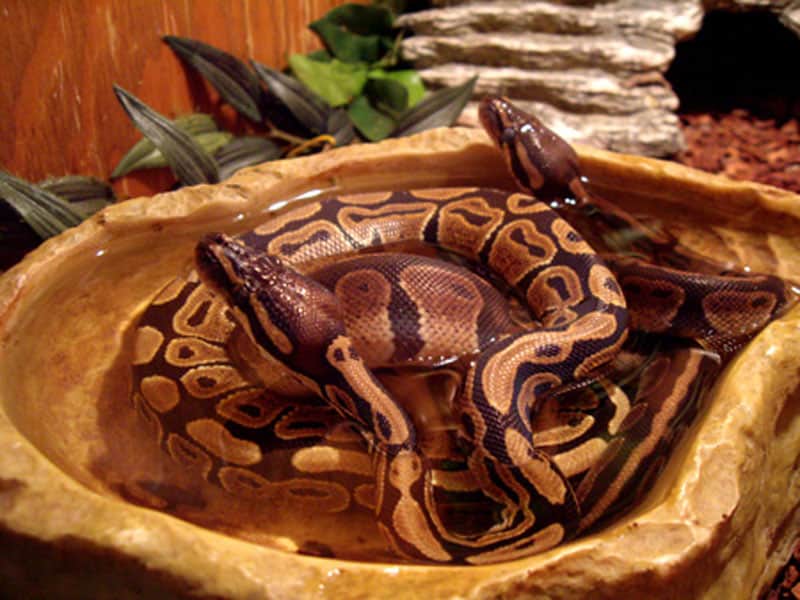
The Ideal Water Bowl For A Ball Python: Sufficient Fresh Water
You’ve got to ensure your ball python’s water bowl is always filled with fresh, clean water. It should be placed in a cool area of the enclosure to prevent quick evaporation. Choose a shallow dish that won’t tip over quickly, and ceramic or plastic containers work best. Clean it regularly to keep bacteria at bay. Remember, proper hydration is essential for your snake’s health and well-being.
Clean Water for Optimum Ball Python Care
It’s crucial to remember that providing clean water for your ball python significantly contributes to its overall health and well-being. Dirty water can harbor bacteria, leading to potential infections. Therefore, you must change the water daily or immediately if it becomes contaminated. Use a water dish that’s easy to clean and sturdy enough not to tip over easily. Hygiene is fundamental in python care.
Maintaining A Ball Python’s Hydration: Practical Tip
Keeping your pet snake’s hydration isn’t just about providing water and controlling humidity levels in the habitat. Regularly mist the enclosure and use a substrate that retains moisture, like sphagnum moss. You can also soak your ball python in lukewarm water occasionally. However, never forget to offer fresh water daily.
If dehydration signs persist, don’t hesitate to visit a vet.
Conclusion
In conclusion, your ball python can go up to 12 days without water, but their health may worsen beyond this point. Be vigilant for signs of dehydration like skin folds and dry mouth, and take immediate action by providing ample fresh water, adjusting humidity levels, or seeking vet care.
Remember, prevention is critical to ensuring your snake’s good health.