Leaf Drop After Repotting Causes and Recovery Timeline
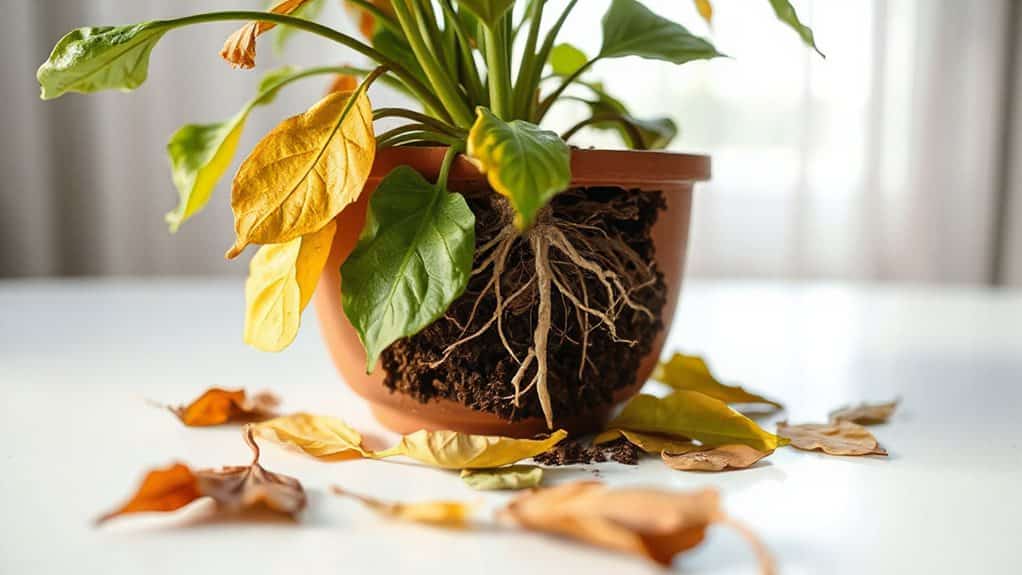
So, your plant’s throwing a leafy tantrum after repotting? Totally normal—it’s like when you get grumpy after moving houses! Root stress, overpotting, or soggy soil can all trigger leaf drop, but don’t sweat it. Back off on watering, skip the fertilizer, and give it some chill time. Most plants bounce back in 2–4 weeks, especially if you’ve got the basics right. Think of it as plant puberty—awkward, but temporary. Stick around, and you’ll see how to turn that frown (or fallen leaf) upside down!
TLDR
- Leaf drop after repotting is commonly caused by root disturbance, which impairs water uptake and triggers stress responses.
- Overpotting or using poorly draining soil can lead to waterlogged conditions, suffocating roots and promoting leaf loss.
- Transplant shock redirects energy to root recovery, causing older leaves to yellow and drop as part of natural adjustment.
- Avoid overwatering and fertilizing immediately after repotting; allow time for roots to heal and reestablish.
- Recovery typically takes a few weeks to a month, with new growth signaling successful adaptation to the new pot.
What Causes Leaf Drop After Repotting?
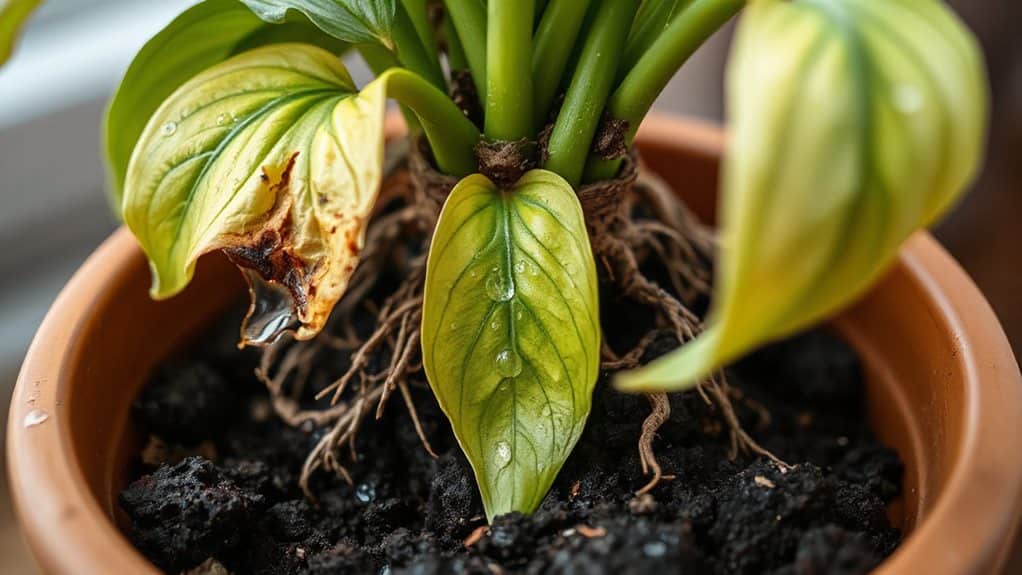
So, you’ve just repotted your plant—maybe you were excited to give it a bigger home, kind of like upgrading from a cozy tent to a full-on camper van—and now, *bam*, leaves are dropping like it’s the end of the world. Don’t panic! It’s likely root disturbance, overpotting, or a soil mismatch.
Your plant’s stressed, not doomed. Think of it like helping a friend adjust after a big move—patience and care go a long way. If you used a heavy or poor-quality starter mix, that can prolong stress and slow recovery, so consider switching to a light, well-draining potting mix for better results.
This stress response is common, especially in sensitive species like fiddle leaf figs and rubber plants, which are prone to plant shock when their environment changes abruptly.
Is Leaf Drop After Repotting Normal?
While your plant might throw a bit of a tantrum after its big move—kind of like your little brother when you switched his favorite cereal—dropping a few leaves after repotting is totally normal, so take a deep breath and don’t start drafting a eulogy just yet.
It’s just adjusting, like you do after a long hike. Older leaves yellow or drop? That’s fine! Your plant’s redirecting energy to new roots, kind of like packing smarter for your next camping trip. Just keep watering gently, give it light, and watch for new growth—it’s the green thumbs-up you’re waiting for! The Vegepod’s self-watering reservoir can help maintain consistent moisture while your plant recovers.
How Does Transplant Shock Cause Leaf Loss?
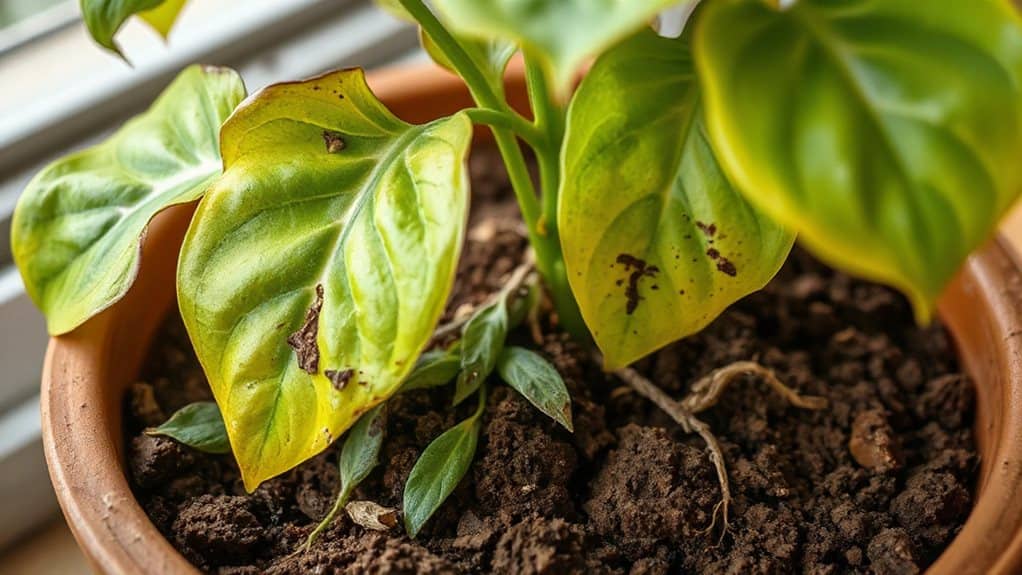
So, you just repotted your plant and now it’s dropping leaves—bummer, right?
When you yank it from its old home, you’re basically giving it a root buzz cut, leaving it parched and stressed, kind of like forgetting your water bottle on a hot camping hike.
To survive, your plant’s going, “No more leaves for now!” and dumps them to save energy, focus on fixing its roots, and avoid becoming a sad, crispy souvenir.
This is especially common when soil conditions like poor drainage or incorrect pH stress the roots, making transplant shock worse.
Root System Disruption
Think of your tree’s roots like the crew on a road trip—while you’re busy enjoying the view from the canopy, they’re down below, hauling water and snacks (a.k.a. nutrients) from the soil to keep everything running smoothly.
But when you repot, you’re basically stranding half their team mid-journey! Those tiny feeder roots? They’re the real MVPs, and now they’re gone. No surprise your tree’s stressed—wouldn’t you panic if your cooler vanished at a campsite?
Energy Redirection To Roots
When your plant goes through transplant shock, it’s kind of like when your family’s deep into a road trip and suddenly decides to switch cars—mid-highway, no warning, snacks spilled everywhere.
It panics, drops leaves to save energy, and rushes to rebuild roots like setting up camp after a detour.
You’re helping it survive, so water gently, stay patient, and trust the process—it’s worth it!
Environmental Stress Amplification
Okay, your plant just repotted itself into a whole new life—kind of like that time you packed up the tent mid-campout and hauled everything to a new site, only to realize you forgot the marshmallows and the wind’s picking up.
Now, harsh sun, dry winds, or cold snaps hit harder—your plant’s roots are still shaky, remember? It’s like hiking with soggy boots: uncomfortable and slow to recover.
So, shade it, mulch it, and ease up on fertilizer—no pressure, right? Think of it as plant camping: always pack backup water, wear layers, and never skip the snacks.
Your green buddy’s got this—with a little help from you.
Can Overpotting Cause Leaf Drop After Repotting?
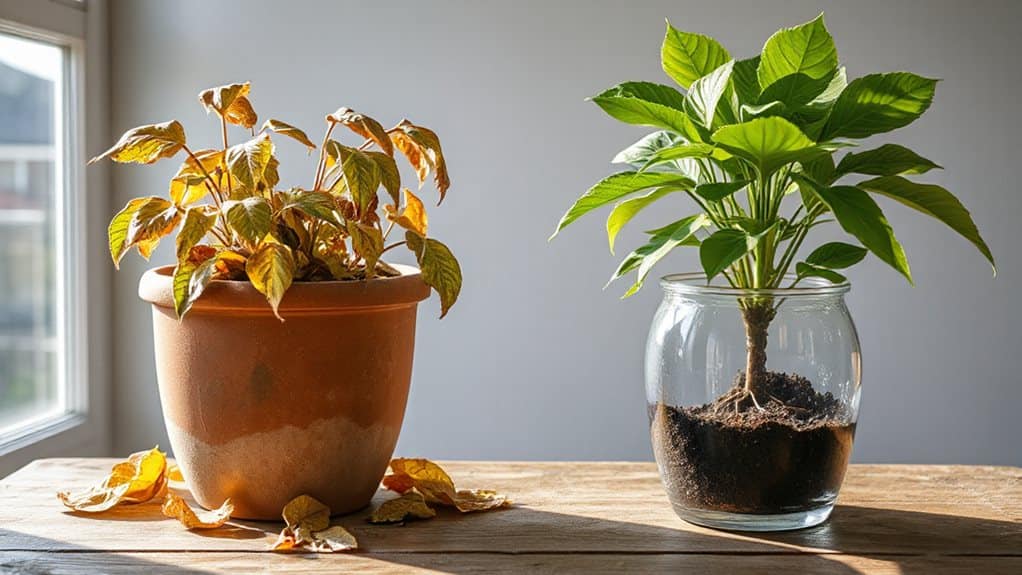
You know that excited feeling when you upgrade your camping tent, only to realize it’s way too big and takes forever to heat up?
Well, your plant feels the same when you plop it into a pot that’s way too large—too much soil holds onto water like a soggy sponge, and your roots can’t breathe, kind of like trying to sleep in a damp sleeping bag.
If you see leaves wilting, turning yellow, then browning after repotting, chances are you’ve overdone the pot size, and it’s time to scale back before things go from bad to root rot! Also, choosing a pot only one size larger and prioritizing horizontal space helps prevent overwatering and keeps roots healthy.
Excessive Soil Volume
Envision this: you’re all excited to give your plant a fancy new home—bigger pot, fresh soil, the works—only to find it looking sadder by the day, leaves turning yellow and dropping like it’s shedding tears over your good intentions.
Turns out, too much soil holds onto water like a soggy sponge, drowning roots and cutting off oxygen—kind of like overpacking a backpack so much there’s no room to breathe!
Root Suffocation Risk
So you upgraded your plant’s digs, thinking you were giving it the penthouse suite of pots—more space, more soil, more room to stretch out—and instead, it’s acting like it just got lost in the woods with no map, wilting and dropping leaves like it’s tossing its backpack piece by piece.
Turns out, all that extra soil holds too much water, drowning the roots like a flooded campsite; they can’t breathe, can’t feed your plant, and start to rot—talk about a soggy disaster!
Pot Size Mismatch
Think of your plant like a camper setting up in a giant, empty field—sure, there’s plenty of room to roam, but without the right gear, that wide-open space quickly turns into a soggy mess when it rains.
You’ve probably overpotted, leaving too much wet soil your plant can’t handle. Roots drown, rot sets in, and leaves yellow, then drop—yikes!
But don’t panic: downsize the pot, skip root disturbance, and let your green buddy dry out between waterings. A seaweed boost helps, too—think of it as trail mix for tired roots!
Why Switching Soil Can Stress Your Plant
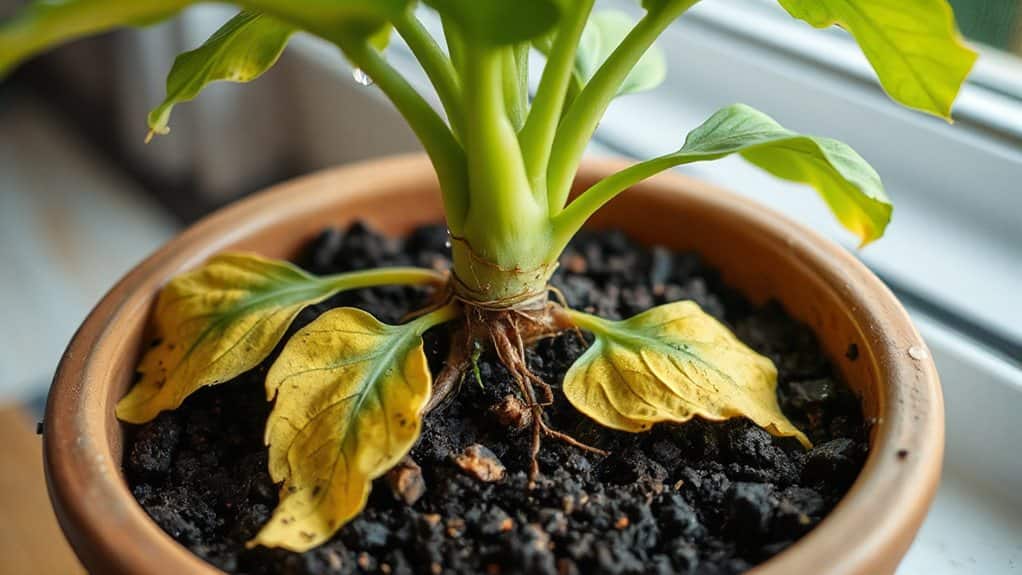
While your plant mightn’t pack a suitcase when you repot it, switching soils can still feel like a major relocation for its roots—kind of like when we trade our cozy home for a wild camping trip with unpredictable weather, sketchy snacks, and a suspiciously lumpy sleeping pad.
You’re suddenly dealing with heat, salt, or poor drainage it didn’t sign up for, right? Imagine sipping soda when you expected water—confusing!
Tiny root hairs panic over new textures, weird chemicals, or compacted zones, making your plant drop leaves like old baggage.
Be a soil superhero: ease the adjustment, match the roots’ needs, and watch it thrive! Properly amended soil with plenty of organic matter helps roots recover faster and supports healthier growth.
How Cold and Dry Air Worsen Leaf Drop
Feeling like your plant’s throwing a mini tantrum after you repotted it? Cold drafts and dry air are probably teaming up like campfire marshmallows—sticky and problematic!
AC zaps humidity, leaves crisp up, and chilly blasts shock sensitive roots. Your plant’s stressed, not dramatic!
Keep it warm, mist those leaves, and block that draft—think cozy camping vibes, but for plants. You’ve got this!
Repotting Mistakes That Lead to Leaf Drop
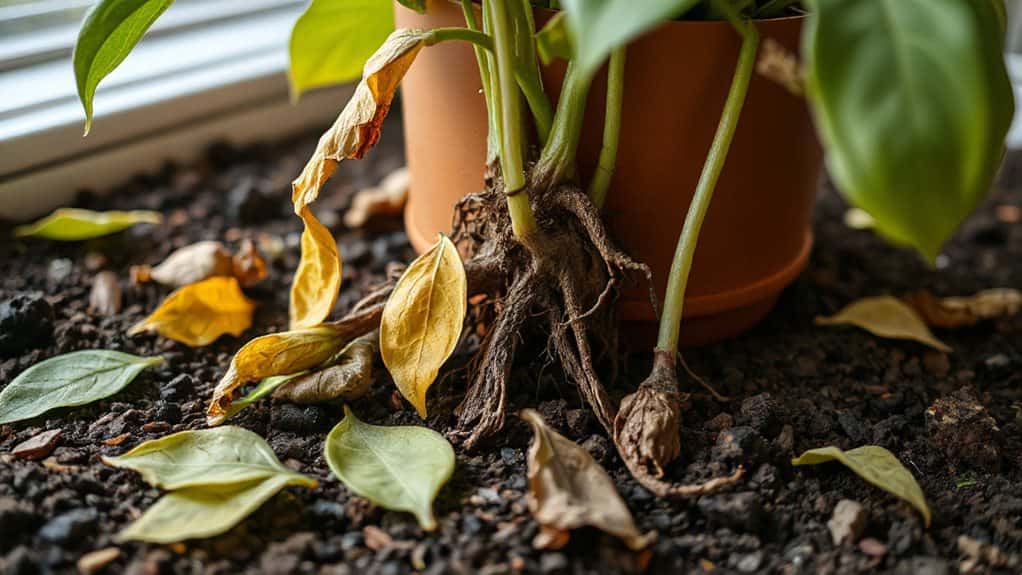
Okay, so you’ve shielded your plant from that icy AC blast and turned your living room into a mini jungle oasis—nice work, by the way, seriously, you’re basically a plant whisperer now—but what if your green buddy is *still* dropping leaves like it’s shedding old baggage at a campsite?
Well, guess what? You might’ve accidentally stressed it during repotting. Yanking roots, picking the wrong pot, or drenching it too soon can all backfire—kind of like overpacking a backpack for a hike.
Be gentle: skip root disturbance, choose the right-sized pot, use airy soil, don’t overwater, and hold off on fertilizer.
Your plant’s just trying to settle in—give it space, patience, and a little grace.
Speed Up Recovery: Key Care Tips by Plant Type
Now that you’ve nailed the repotting basics and dodged those leaf-dropping disasters, let’s kick things into high gear and help your green pals bounce back faster—because nobody likes watching their favorite plant throw a post-move tantrum.
Succulents? Hold the water, chill in the shade. Fast growers like pothos? Just wait a month, then resume care. Leafy friends? Try seaweed tonic—they’ll perk up like campers at a s’more station!
Overall
So, your plant’s dropping leaves after a repot? Totally normal—don’t panic! Think of it like moving houses: even we get stressed when the boxes come out, right? Give it time, keep the soil just right—not too wet, not too dry—and stash it in a cozy spot with good light. Talk to it if you want (I do!), and soon enough, it’ll bounce back, happier in its new home. You’ve got this!