Why Tomatoes Produce Flowers but No Fruit
You’ve got flowers, but where’s the fruit? Blame it on sassy weather—too hot or too cold—and your plants might just ghost their own blossoms. Pollinators slacking? Give flowers a gentle morning wiggle with a toothbrush (yes, really!). Keep water steady, light bright, and ease up on nitrogen so your tomatoes chill out and make fruit instead of just leaves. Pests or diseases could also be crashing the party—check under those leaves! Stick around, and you’ll uncover the rest of the garden secrets hiding in plain sight.
TLDR
- High daytime temperatures or cold nights can impair pollen function and cause blossoms to drop before fruit forms.
- Poor pollination due to lack of insects, wind, or improper timing prevents fertilization and fruit development.
- Inconsistent watering—either too much or too little—stresses plants and leads to flower abortion.
- Insufficient sunlight, overcrowding, or poor air circulation reduce flowering and hinder fruit set.
- Excessive nitrogen, nutrient imbalances, pests, or diseases can damage flowers and limit fruit production.
Why Tomato Flowers Drop Without Setting Fruit

So, you’ve been checking your tomato plants every morning, super excited to see little green fruits starting to form, right? Yeah, we’ve all been there—like waiting for campfire s’mores that never melt.
Flowers drop because of poor pollination, uneven watering, nutrient hiccups, or cramped spacing. Humidity’s a sneaky one too—too high or low, and pollen just quits. Help your plants thrive, and soon you’ll be sharing juicy tomatoes with everyone! Temperature extremes can also cause blossoms to abort before fruit even starts to develop. Improve air circulation by spacing and pruning to reduce disease and moisture buildup, which also helps successful fruit set air circulation.
High Heat and Cold: How Temperature Kills Pollination
You’re out there tending your tomato plants like a pro, but if the thermometer’s hitting the upper 80s during the day or dropping below 55°F at night, guess what? Your poor pollen’s throwing in the towel—heat makes it sticky and useless, like gum on a hot sidewalk, while cold nights slow down fertilization so much it’s like watching paint dry.
Don’t just stand there wondering why your flowers vanish; grab a thermometer, keep an eye on those swings, and remember: happy tomatoes need temps as balanced as your camping trip’s s’mores—sweet, steady, and never too hot or cold! Soil temperatures below 50°F can also stunt root development and slow germination, which further hampers fruit set, so monitor both air and soil temperature.
High Heat Disrupts Pollen
When the summer sun really starts cranking, your tomato plants might look lush and blooming, but if you’re not seeing fruit, don’t panic—chances are, it’s not you, it’s the heat throwing a total wrench in their love life.
High temps fry pollen before it can do its job, block tubes from reaching eggs, and even make flowers bail altogether—talk about drama!
Cold Nights Halt Fertilization
While the sun might be playing nice during the day, don’t let those chilly nighttime temps fool you—they’re sneaky little party crashers that can totally sabotage your tomato plants’ chances of making fruit, even if everything else looks perfect.
Cold nights below 60°F mess with pollen, stunt roots, and wreck flower function, leaving blossoms hanging around sadly, like campers waiting for a ride that never comes.
Keep those nights warm, friend!
Temperature Extremes Cause Drop
Tomatoes might look like they’re just chillin’ in the garden, soaking up the sun and doing their thing, but don’t be fooled—when the heat cranks up, your plants are basically stuck in a sweltering tent with no breeze, no snacks, and zero chance of a good night’s sleep.
Pollen turns sticky or weirdly shaped, humidity messes with delivery, and flowers bail—literally dropping—because, honestly, who can focus on romance when it’s a heatwave?
Poor Pollination? How to Get Tomatoes to Set Fruit?
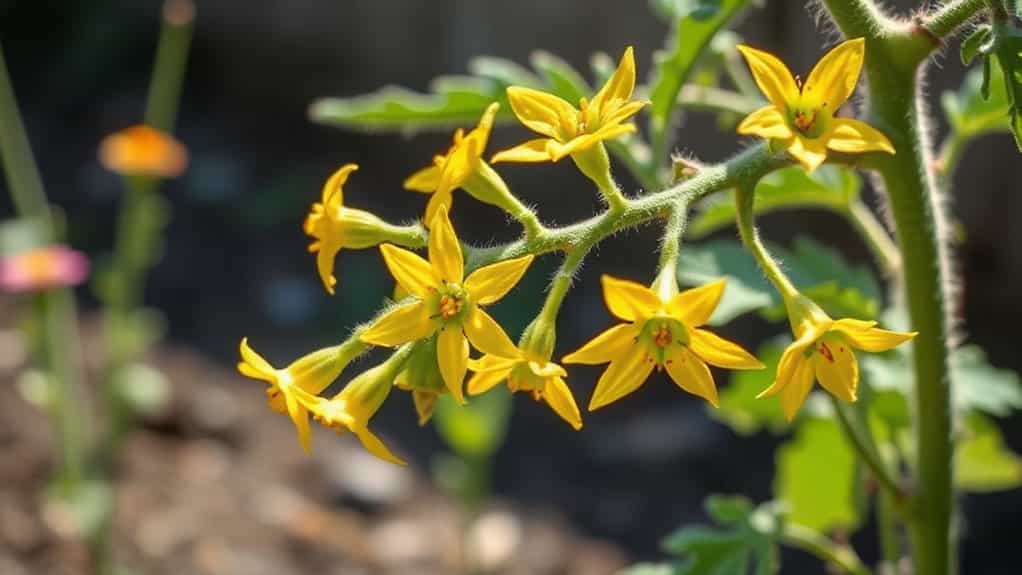
So you’ve been eyeing those cheery yellow blooms on your tomato plants, waiting for them to turn into juicy, red slicers or sweet little cherry bombs, but… crickets? Don’t panic!
Give your plants a gentle shake every few days—think of it as morning calisthenics—to jostle pollen loose. Or buzz an electric toothbrush near flowers; it’s silly, but it works like a charm! One quick morning visit to gently vibrate flowers can improve fruit set by helping transfer pollen between blooms.
Overwatering and Drought: Water Mistakes That Cause Blossom Drop

You know that sinking feeling when you’re all geared up for a camping trip, tent packed and snacks ready, only to realize you left the stove at home—yeah, well, your tomato plants get just as let down when their water routine goes haywire.
Too dry? Flowers bail. Too wet? Roots suffocate and drop blooms. Keep moisture steady, like packing the right gear—don’t forget the mulch “raincoat” and morning watering “snacks” to keep your tomatoes happy, hydrated, and fruit-bound! Increased watering frequency during heat waves and checking that the top inch of soil has dried before irrigating helps prevent both drought stress and overwatering soil checks.
Not Enough Sun or Space? Light and Spacing Fixes
Alright, imagine this: you’ve nailed the watering—consistent, mulched like a pro, not too soggy, not too parched—your tomato plants are blooming up a storm, and you’re already mentally slicing that first juicy beefsteak… but then, crickets. Sound familiar? Let’s talk light and space—two quiet culprits stealing your harvest.
Tomatoes crave 6–8 hours of direct sun; less than that, and they’ll stretch, sulk, and drop blossoms like bad habits. Shaded? Move pots into the spotlight, trim nearby plants, or reflect light with mulch.
Space them 24–36 inches apart—crowding chokes airflow, invites disease, and turns your garden into a sad, fruitless jungle. Give ‘em room, give ‘em sun, and watch the magic happen! Proper spacing also reduces disease risk by improving air circulation around each plant.
Too Much Nitrogen: Leaves Instead of Fruit

You know that super lush, dark green tomato plant that looks like it’s trying out for a jungle movie? Yeah, if it’s all leaves and no flowers, you’ve probably been a little too generous with nitrogen—kind of like packing ten sleeping bags for a weekend camping trip, way more than you actually need.
Ease up on the high-nitrogen fertilizer, switch to a balanced or tomato-specific blend, and watch how your plant starts trading those leafy show-offs for real, fruit-bearing blossoms.
Excess Nitrogen Effects
Envision this: you’re out in the garden, totally stoked to see your tomato plants lush and leafy, green and growing like they’ve got a serious case of the munchies—only problem is, there’s not a single fruit in sight.
You fed them nitrogen like trail mix on a camping trip, but now they’re just flexing leaves instead of making tomatoes.
Ease up—your plants need balance, not a buffet!
Lush Foliage, Few Flowers
Sometimes, your tomato plants get so busy showing off their lush, leafy muscles that they completely forget they’re supposed to be making fruit—talk about a priorities mix-up!
You’ve probably seen it: thick, dark green leaves, long stems, but barely any flowers. That’s nitrogen showing off too much.
Ease up on the fertilizer, let the plant focus, and soon you’ll be picking tomatoes instead of just admiring foliage!
Balanced Feeding Tips
Let’s face it—your tomato plants can totally get carried away with their leafy selfies if you’re not careful, especially when there’s too much nitrogen hanging around like an overenthusiastic gym buddy.
Want fruit, not foliage? Switch to a balanced 5-10-10 or tomato-specific feed, ease up on the nitrogen, and let phosphorus and potassium shine—they’re the real MVPs for blooms and bounty.
Your future salsa garden will thank you!
Pests and Diseases That Cause Blossom Drop
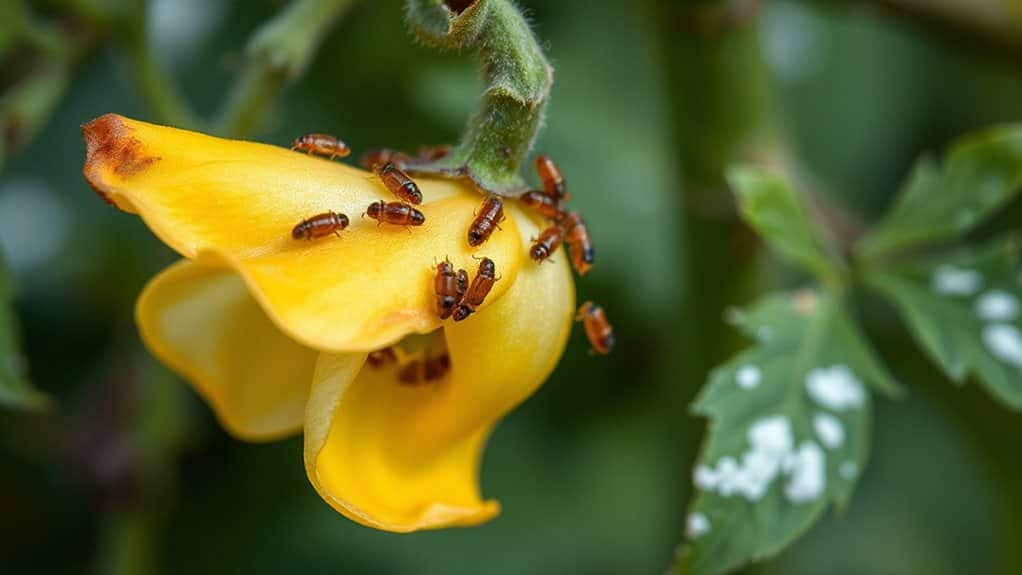
While your tomato plants might look like they’re putting on a beautiful flower show, don’t be fooled—those blossoms could be dropping like hot potatoes thanks to a sneaky crew of pests and diseases working behind the scenes.
Thrips leave silvery scars, spider mites suck the life out of leaves, and stink bugs sneak in like ninjas, injecting toxins that make flowers bail.
Gray mold? It’s like a fuzzy party crasher turning blooms into sad, brown casualties.
Check under leaves, peek at stems, and keep plants happy—your future tomato sandwiches depend on it!
Overall
So, your tomato plants are all dressed up with flowers but no fruit? Bummer, right? Well now you know—heat, cold, bad pollination, or too much nitrogen could be the culprits. Don’t stress, though! Just tweak the water, give ‘em sunshine, maybe tickle the flowers to help pollinate, and boom—tomatoes galore! Think of it like camping: prep matters, but a little fun improvising helps too. You’ve totally got this!