Uneven Lawn Color in Strips: Common Causes Homeowners Miss
You’re not crazy—those stripes aren’t just from mowing! Uneven fertilizer spreads leave pale or burnt streaks, while sneaky irrigation leaks create random lush green strips like nature’s highlighter. Compacted soil or bad grading traps water, inviting fungal parties that turn your lawn into a disco of discoloration. Mixed grass types and weeds add polka-dot chaos, and let’s be real, we’ve all overshot the spreader once or twice. Keep your turf happy, and you’ll spot the secrets hiding in plain sight.
TLDR
- Mowing direction changes grass blade tilt, creating light and dark stripes due to uneven light reflection.
- Mixed grass types or weeds grow at different rates, causing patchy, striped discoloration across the lawn.
- Overlapping fertilizer applications lead to dark green strips or brown burn from excess salts.
- Underwatering or poor irrigation leaves pale, thin stripes where grass lacks moisture and nutrients.
- Fungal diseases like brown patch or stripe smut mimic nutrient deficiencies with discolored, irregular stripes.
Why Your Lawn Has Color Stripes

So, ever walk outside in the morning and do a double-take because your lawn looks like a giant zebra decided to crash on your front yard? Those stripes aren’t magic—they’re science!
Cool-season grasses like fescue bend easily, creating bold patterns, while warm-season types like Bermuda resist bending but can show frost stripes. Sun angle, mowing height, and lawn health all team up to make your yard look like a pro sports field—or a messy campsite after a wild weekend! The key visual effect comes from the way light reflects off grass blades depending on their direction, with grass blade orientation making the difference between dark and light stripes. Wet or damp turf can make stripes appear more pronounced after rain because surface moisture changes how light reflects off blades.
How Mowing Direction Creates Light and Dark Stripes
You know how sunlight makes your lawn look like a living highlighter one minute and a shadowy maze the next?
When you mow in one direction, the grass blades lean away from you and catch more light, making those stripes pop like sunshine on a tent during summer camp—bright and bold!
But when you swing around and mow the opposite way, the blades flop forward, soak up the light, and boom: instant dark stripes, like stepping into the shade of your favorite tree after roasting marshmallows all afternoon. Mowing direction also affects how grass competes with weeds for light and space, so regular mowing helps reduce weed spread.
Light Reflection Differences
Ever wonder why your lawn suddenly looks like a freshly striped soccer field after mowing? It’s all about light bouncing off bent grass blades!
When blades tilt away from you, they catch more sunlight and look lighter—like sunshine on a lake. Lean them toward you, and they cast tiny shadows, appearing darker.
Your angle, the sun’s spot, and even your mower’s roller team up to create those crisp, satisfying stripes you can’t help but admire.
Alternating Mowing Directions
Most of the time, those gorgeous, crisscrossing stripes on a well-groomed lawn aren’t magic—or a secret paint job—they’re all about how you mow.
You see, when you alternate directions with each row, grass blades bend opposite ways, changing how light bounces off—hello, natural art!
Plus, switching it up keeps your lawn healthy, happy, and way less grumpy (think of it like stretching, not slouching).
Mow Taller for More Dramatic Stripes

Getting that show-stopping stripe effect on your lawn isn’t just about mowing in straight lines—it’s about letting your grass grow a little wild, in the best way possible.
You want those blades tall—2.5 to 4 inches—so they bend easily and catch the light like a spotlight.
Think of it as giving your grass a spa day: taller cuts mean healthier, happier turf that shows off bold, dramatic stripes you can’t miss.
Test your soil first to know what nutrients your turf needs and improve stripe uniformity with proper soil amendments.
Missed Spots? Yellow Stripes Mean Uneven Fertilizer?
Ever looked at your lawn and thought, “Did I just mow a zebra path by accident?”
Well, those yellow stripes mightn’t be a fashion statement—they’re probably screaming for help after a fertilizer fail. Whether you overlapped like a overeager painter or missed spots like you were playing lawn limbo, uneven feeding can burn or starve your grass, so let’s get real about spreader secrets and save your yard from looking like a sad campsite after a rainy weekend trip! Regular maintenance like even feeding helps prevent these striping issues.
Yellow Stripes Revealed
So there you are, stepping outside with that proud, post-mowing glow, ready to admire your lush green lawn—only to do a double-take at these weird yellow stripes cutting across the yard like some kind of sad lawn zebra pattern.
Yikes! Those stripes? Either you under-fertilized, overdid it, or your spreader’s acting up—each leaving its own calling card.
Don’t panic! With a little water, a change in direction, and some care, your grass will bounce back greener and happier—promise!
Fertilizer Spread Secrets
While you’re out there trying to give your lawn the five-star treatment, those sneaky yellow stripes might actually be waving a white flag—telling you your fertilizer’s not playing nice. Did you calibrate your spreader? Different granules, different rules!
Drop spreaders? They’re like lawn lawnmowers for stripes. Go broadcast, walk steady, shut off on turns, and crisscross like you’re mapping a treasure hunt—your grass will thank you!
Avoid Overlap Burn
If you’ve ever stepped back after fertilizing your lawn only to see weird stripes popping up like some kind of abstract lawn art, you’re not imagining things—your spreader might’ve pulled a fast one on you.
Overlap burn happens when you double-back and dump too much nitrogen, turning patches into dark green zebra stripes—talk about fertilizer drama! Avoid it by walking straight, turning off the spreader while pivoting, and using a checkerboard pattern. Your grass (and neighbors) will thank you!
Overlapping Fertilizer Passes Burn Grass Brown
You know that sinking feeling when you’re trying to make your lawn look lush and green, only to end up with weird brown stripes that make it look like a zebra threw up on your yard?
Yep, overlapping fertilizer passes can burn grass fast—those dark, scorched stripes?
That’s salt buildup sucking moisture from roots, dehydrating blades, and killing helpful microbes.
Walk steady, overlap just enough, and water deeply after—your lawn will thank you like a campfire s’more thanks chocolate!
Be careful not to over-apply fertilizer, since excess use can cause fertilizer burn and kill grass.
Uneven Feeding Causes Patchy Green Lawn Stripes

Ever stared at your lawn and thought, *Wait—did someone mow this with a highlighter?* When your grass sprouts stripes like a sad attempt at camouflage, it’s probably not a fashion statement; it’s a feeding frenzy gone wrong.
You might’ve missed spots while spreading, right? Gaps leave pale yellow trails because hungry grass can’t thrive.
Thick, dark strips? That’s where you double-dipped—oops! Calibrate that spreader, walk steady, and feed your lawn evenly so every blade gets its fair share.
Think of it like sharing camping trail mix—nobody likes a hungry camper!
Overwatering Leads to Hazy Brown Fungal Stripes
While your lawn’s supposed to be the lush, green backdrop for epic backyard campouts and barefoot sprints, sometimes it starts looking more like a soggy campfire pancake—especially when overwatering sneaks in and throws a fungal rave.
You see hazy brown stripes? That’s brown patch fungus crashing the party. It loves wet, sticky nights and squishy soil. Stop watering late, skip daily sprinkles, and let your grass breathe—your yard (and future s’mores spot) will thank you.
Underwatering Creates Thin, Pale Lawn Stripes

You know how your tent flattens the grass when we go camping? Well, underwatered strips kind of look like that—thin, pale, and easily crushed, because without enough water, your grass literally can’t stand up straight!
Have you noticed those ghostly yellowish lines popping up like faded tire tracks, especially after a hot week? That’s not just thirst, it’s a full-on cry for help: dry soil locks away nutrients, stunts growth, and turns lush green blades into wispy shadows, kind of like overcooked spaghetti versus the al dente kind—nobody wants the mushy version!
Thin Grass Growth
Spotting your lawn looking more like a patchy quilt than a lush green carpet?
When you skip deep watering, grass blades turn thin, brittle, and sparse—like overcooked spaghetti!
They roll up, stunt growth, and leave bald spots that scream, “Help!”
Shallow roots can’t fight drought, so revive your turf with slow, thorough soaks.
Your lawn’s thick, happy comeback starts now—think of it as a spa day, not a band-aid fix!
Pale Color Development
When your lawn starts looking like it’s been sunbathing without sunscreen—going from a rich, juicy green to a washed-out, tired gray—you’re probably not imagining things, and no, your grass isn’t just “going through a phase.”
Underwatering sneaks up like a stealthy campfire gone dim, leaving behind thin, pale stripes that wave at you like sad little flags saying, “Hey, we’re parched over here!”
These ghostly streaks often pop up first near driveways or sidewalks, where heat bakes the soil, or in spots your sprinkler barely glances at, like that one corner that always misses the shower.
See those curled blades and lingering footprints? That’s your lawn crying out for a drink, not fading from boredom or bad vibes.
Give it some love—water deeply and watch it perk up like it’s ready for a backyard camping excursion again!
Soil Nutrient Lockup
That washed-out, sad-soda-color creeping across your yard in streaks? Yeah, it’s not just thirsty grass—it’s a full-on nutrient jailbreak!
When soil’s too dry, nutrients get stuck, salts build up, and roots miss the memo. Think of it like trying to drink a smoothie through a clogged straw. So, water deeply, flush those salts, and let your lawn breathe—happy grass feeds happy families!
Irrigation Leaks Cause Isolated Green Stripes

Ever noticed how some parts of your lawn are throwing a secret water party while the rest are just trying to survive the summer drought?
Those lush green stripes? Yeah, that’s usually a sneaky irrigation leak feeding one spot way more than it needs—like over-pouring juice at a campsite breakfast.
Check for soggy soil, weirdly tall grass, or sprinklers dripping after shutdown.
Your wallet (and the planet) will thank you!
Poor Drainage Causes Soggy, Discolored Stripes
If your lawn’s got soggy stripes that look like someone dragged a wet sleeping bag across it after a rainy camping trip, you’re probably dealing with poor drainage—and trust me, your grass isn’t thrilled about it.
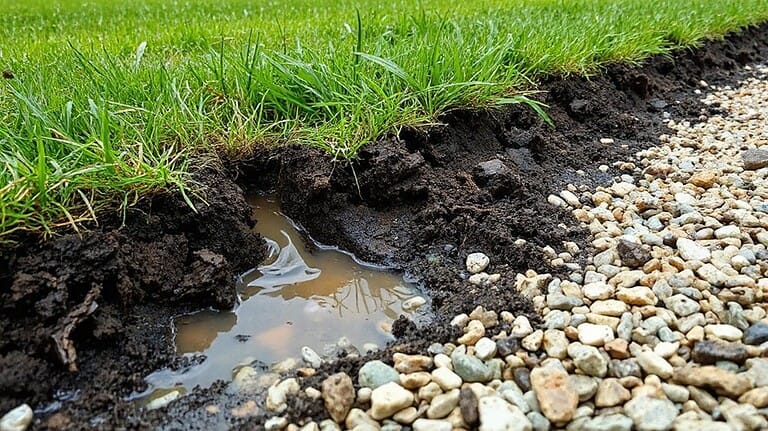
Compacted soil, flat spots, or bad grading trap water, leaving your yard gasping for air. Those muddy, discolored bands? That’s fungus throwing a pool party your turf didn’t invite. Fix the flow, and you’ll save your grass from drowning—plus, your neighbors (and their shoes) will thank you.
Fungal Diseases Mimic Nutrient-Related Stripes

While you’re out there dreaming of summer campfires and s’mores under the stars, your lawn might be stuck in its own kind of horror movie—courtesy of sneaky fungal diseases that masquerade as nutrient problems.
Think stripe smut’s dark, curling blades or red thread’s pinkish tangles—they mimic hunger signs but spread like gossip!
Spot weird stripes, not circles? Could be fungi, not fertilizer fails.
Weeds and Mixed Grass Varieties Cause Patchy Color
You’re out there chasing fireflies and picturing your next camping trip, dreaming of bug-free nights and perfect s’mores, but your lawn might be staging its own backyard drama—starring weeds and mixed grass types as the main troublemakers behind those weird color strips.
Weeds hog water and nutrients, leaving patchy, yellowish streaks, while crabgrass throws shade—literally—creating dark green blotches.
Different grasses? They’re like roommates with clashing styles: one stays lush, the other fades fast.
Mix tall fescue with bluegrass, and boom—nature’s tie-dye.
Dog urine rings, uneven seeding, or mismatched sod can turn your yard into a polka-dot mess.
You want harmony, not hodgepodge, right? Time to evict the invaders and unify your turf team!
Overall
So, your lawn’s got stripes—cool, right? But unless you’re going for a football field vibe, it’s time to fix those funky patches. Check your mow pattern, ease up on the fertilizer, and make sure water’s not pooling or leaking. I once turned my yard into a swamp by ignoring a leak—pro tip: don’t do that. With a little love, your grass’ll be lush and even, perfect for barefoot summer runs or epic backyard camping nights under the stars!