Can You Lay A Propane Tank On Its Side
A fuel with such a wide range of applications as propane, it is incredibly adaptable. A propane tank can be used to power outdoor fire pits and fireplaces, insect traps, portable generators, deck and patio heaters, spa and pool heaters, and barbeque grills.
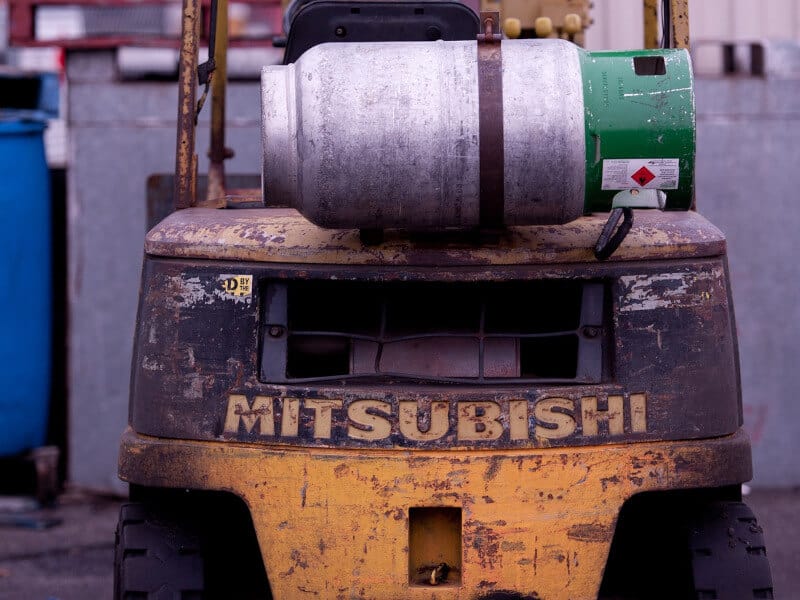
Do you know how to store a propane tank? There are two responses to the question of whether can propane tanks be used laying down. Small, transportable propane tanks shouldn’t be laid on their sides because doing so could lead to a broken relief valve. Instead, move them into a vertical, upright position for transit, store, and use. However, the container is horizontal when you see them mounted on forklift trucks.
In our guide, you can learn more about whether can you lay propane tanks on their side and why you should or shouldn’t. By the end, you’ll know more about the proper ways to use your cylinders of LP gas at home, in your RV, with no issues. (Read When To Remove Straw Blanket From New Grass)

Can You Transport 100lb Propane Tanks On Their Side?
No matter the cylinder size, all propane containers need treating the same. Here are ways to transport containers safely.
Truck Bed or Trailer
Be cautious about securing your portable propane tank with a bungee cord or rope if you’re driving a pickup truck or have a trailer hitched to your automobile. During the trip, ensure that the tank doesn’t slide or bounce about and remains upright.
Rear Seat
Put a tight wedge between your propane tank’s front seat and back seat. To prevent the tank from tipping over or becoming loose during the drive, ensure it is upright and secured. It can be secured with a rope or bungee cord for additional safety.
Trunk
To ensure that your propane tank remains upright while being transported in the trunk of your car, you’ll need some kind of support. For this, a pre-made stand will be helpful, but a sturdy object with high sides, such as a milk carton, should also work.
Tips For Propane Tank Transport
- Don’t keep a filled propane cylinder inside a hot vehicle.
- A cylinder should be transported upright and securely to prevent rolling or falling while driving. Additionally, because it is dangerous to travel with a tank on its side, it is crucial to keep the propane tank vertical throughout transport.
- The cylinder must remain in a well-ventilated area of the vehicle.
- Close the cylinder valve, even if the cylinder is empty.
How To Transport Liquid Propane Cylinder Safely
Most of us, have transported propane cylinders frequently, be it for home, on the grill, or when camping.
Using a reliable propane tank holder and stabilizer is the safest way to secure a propane cylinder in any vehicle. The holders fit around the propane cylinder or lock the cylinder’s foot ring.
Unfortunately, propane sellers often overlook educating customers of the correct way to carry propane cylinders.
Here are a few pointers to remember:
- Only four or fewer propane cylinders can be transported together in a sedan or SUV.
- A single propane cylinder shouldn’t hold over 45 pounds, and an enclosed vehicle’s total cylinder weight shouldn’t be over 90 pounds.
- All propane cylinders must be secured in an upright position.
- A milk crate is frequently chosen, and cylinders stay vertical thanks to the crates. You need a reliable anchor point in your automobile to secure your propane cylinder with rope, ratchet strap, or other tie-downs.
- A trailer or open pickup truck can carry 1,000 pounds of propane, and the propane cylinders must be transported in a vertical position.
- Even being used horizontally, forklift cylinders should be transported vertically. A pin secures the cylinder to a forklift, keeping the pressure release valve in the cylinder’s vapor space. The pressure relief valve may roll to the bottom of the cylinder’s liquid compartment if the cylinder is transported on its side.
Is It Safe to Use a Propane Tank On Its Side?
- Always keep a propane tank upright when operating a propane appliance.
- Propane tanks that fuel a complete house can be stored on their side, but smaller tanks should never be stored horizontally.
- Forklifts with larger tanks can be used on their side as they are specially modified to do so. They have a dip tube for liquid withdrawal, and the base is marked to show which side is up.
- Small, portable propane tanks withdraw gas off the top instead of liquid. The liquid will withdraw if you lay them on the side, causing a fire or explosion.
Can You Store Propane Tanks On The Side?
Because it can spill liquid propane and other dangerous gasses, you should never store a propane tank on its side. If your propane tank is kept close to an open flame, it could cause damage to your property or, worse yet, endanger your life.
Your propane tank’s relief valve may become submerged in liquid propane if it is not stored upright. The relief valve will become inoperable because of a fast rise in tank pressure, which could have disastrous consequences. (Read Why Does My Yard Have So Many Flies)
Can Transporting a Propane Tank On Its Side Be Dangerous?
Never transport a propane tank on its side. Instead, ensure that a tank is always transported vertically or upright. A propane tank’s internal pressure is delicate and must be considered when transporting.
The tank’s structural integrity could be harmed if you transport the cylinder on its side, which would also change the pressure of the gas inside.
The pressure relief valve may be submerged in liquid propane if the tank is transported on its side and the pressure relief valve is moved to the bottom. Because of the unregulated gas pressure, this can be exceedingly dangerous.

FAQs
Can I Put A Propane Tank On Its Side?
Never keep a propane cylinder filled with fuel inside a hot vehicle. Instead, a cylinder should be transported upright and securely to prevent rolling, shifting, or falling while driving.
It is highly crucial to keep the propane tank in a vertical position during transport and secure it with a good anchor point, rope, ratchet straps, or other tie-downs.
In addition, you can secure the foot ring to some anchor points or use a milk crate to help them vertically when transporting propane tanks.
What happens if you lay a propane tank on its side?
The pressure relief valve may roll to the bottom of the cylinder’s liquid space if the cylinder is transported on its side.
Is it OK to store a propane tank on its side?
Propane cylinders should never be placed on their side or transported in the front seat of a vehicle.
The tanks feature a little valve that releases a small amount of gas when pressure builds up; if the tank is laid on its side, then a small amount of liquid comes out instead of gas.
Can you use a propane tank horizontal?
These tanks can be transported in either vertical and upright position but must be filled vertically. The float unit inside the tank has been made to only function in the horizontal position; hence it must be used in that specific position.
How Can Propane Run In A Non-Upright Position?
When it turns to gas, the liquid expands by a factor that is many times larger than its original volume.
If you only put gas in the tank, you won’t have much left after driving around for a while. Since liquids are more liquid than gases, the liquid will reach the valve first when the tank is inverted.
Are Propane Regulators Universal?
How Similar Are Gas Grill Adapters? An LP regulator is essential to any propane gas grill, but not all of them are the same.
Although they all serve the same purpose, various configurations need for specific types of regulators. The specifics of the grill’s propane application determine the best kind of regulator to use.
Does Propane Produce Co?
Combustible materials, such as propane, wood, and fuel oil, contribute to carbon monoxide production when used in home and transportation appliances.
An alarm specifically designed to detect carbon monoxide is the only way to get a heads up about the danger of gas flow from an appliance.
Can Any Natural Gas Stove Be Converted To Propane?
Aside from a few exceptions, most appliances may be changed from natural gas to propane.
The major problem is that some appliances can’t be adjusted to work with propane’s greater pressure flow since natural gas is stored at a lower pressure.
How Much Pressure Is A Propane Tank Rated For?
In propane tanks, liquid state propane is stored at a pressure of around 60 psi.
A compressed air storage tank or bottle is what you need if you need a tank for compressed air. It can store compressed air at a pressure of 120 psi.
How Much Pressure Is Inside A Propane Tank?
Propane pressure should typically range from 100 to 200 psi to guarantee that the liquid propane gas stays liquid.
Changes in ambient temperature cause normal variations in propane tank pressure and vapor. For instance, a typical 20-pound propane tank will have an internal pressure of 145 psi at 70 degrees.