Basil Leaves Turning Black? Causes and Solutions
Your basil’s black leaves are likely caused by fungal diseases like downy mildew, bacterial infections, or environmental stress from overwatering and poor air circulation. To save your plants, start by improving airflow, watering at soil level instead of on leaves, and removing infected foliage. Natural remedies like neem oil can help, while resistant varieties and proper spacing prevent future issues. Stick around to uncover proven techniques that’ll change your basil from struggling to thriving!
TLDR
- Fungal infections, particularly downy mildew, cause black spots with gray centers and yellow halos around leaf lesions.
- Poor air circulation and high moisture levels create ideal conditions for black spots and fungal growth.
- Water plants at soil level to keep leaves dry, and ensure proper ventilation to prevent disease development.
- Remove infected leaves immediately and apply copper-based fungicides or neem oil for treatment.
- Maintain optimal growing conditions with 6-8 hours of sunlight and consistent, but not excessive, soil moisture.
Common Signs of Black Spots on Basil
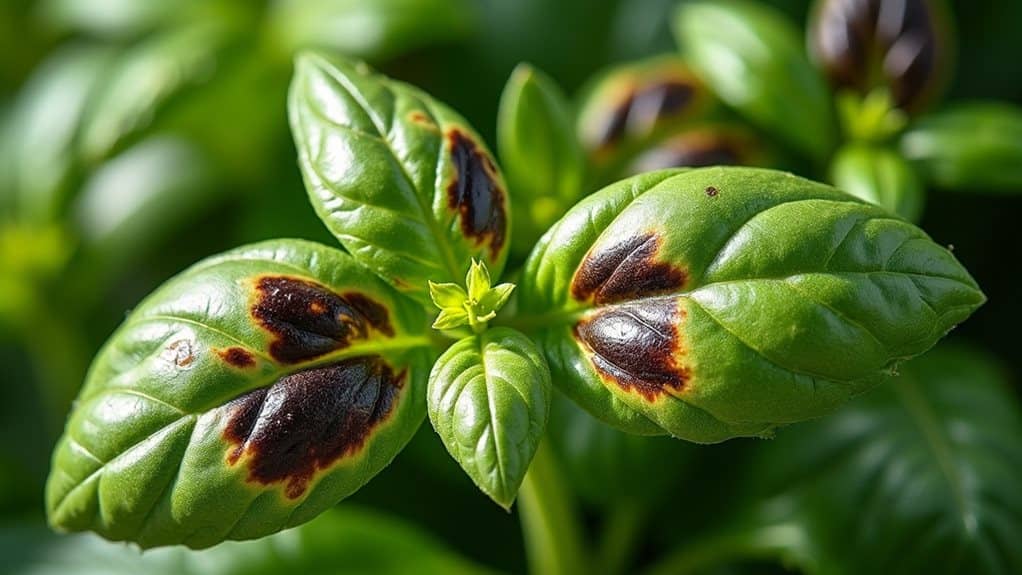
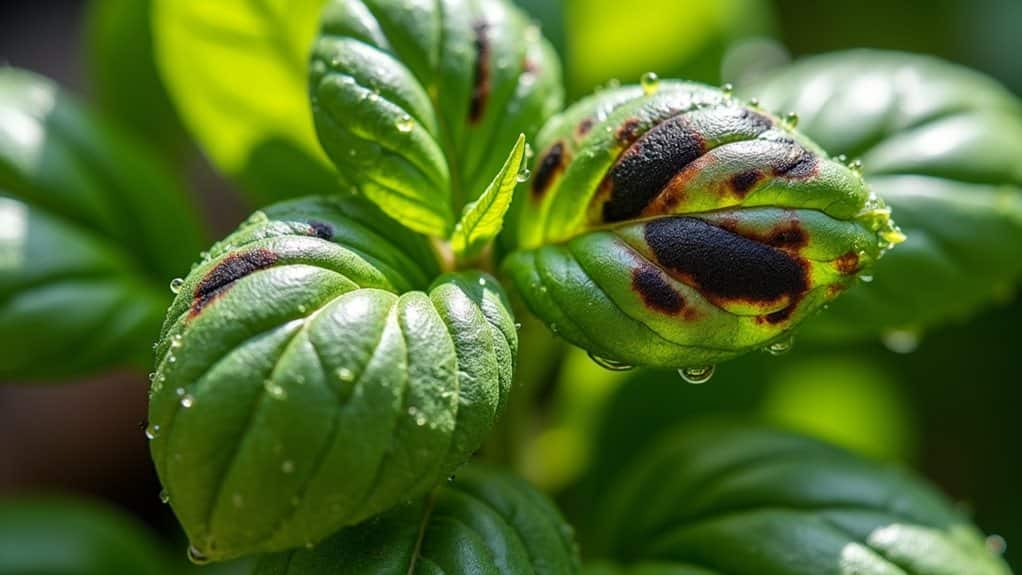
When you notice those dreaded black spots appearing on your beloved basil plants, it’s important to quickly identify what’s causing them, since different culprits leave distinct calling cards! You’ll want to look for telltale signs like circular spots with gray centers (likely fungal), yellow halos around black lesions (could be bacterial), or asymmetrical spots along leaf edges that only appear on the sun-exposed side (classic sunburn damage). Additionally, insufficient sunlight can exacerbate the risk of fungal infections, so ensure your basil gets enough light. For indoor plants especially, high moisture levels can encourage downy mildew issues which need immediate attention.
Understanding Downy Mildew Impact
If you’re seeing dark patches forming on your basil leaves, you’ll want to act quickly because downy mildew can take your healthy plant from thriving to wilting in just a matter of days, starting with yellowing between leaf veins and progressing to those tell-tale black spots on the undersides.
You’ll notice the disease typically creeps up from the bottom leaves and works its way to the top, leaving a trail of destruction that can wipe out your entire basil crop if you don’t catch it early. This destructive pathogen can travel via moist air currents and rapidly infect entire gardens. Additionally, ensuring a proper balance of essential nutrients can help strengthen your basil’s defenses against such diseases.
The good news is you’ve got several weapons in your garden arsenal to fight back, including resistant varieties like Rutgers Obsession DMR, proper watering techniques (remember: leaves don’t like to stay wet!), and preventative fungicides that can help keep this persistent pest at bay.
Early Warning Signs
Spotting downy mildew early can make all the difference in saving your beloved basil plants from turning into a black, wilted mess.
If you notice yellowing on your lower leaves, especially when it’s restricted by the leaf veins, that’s your first red flag!
Keep an eye out for grey to purplish-black spores developing underneath the leaves, particularly during cool, moist conditions.
Disease Progression Stages
Understanding how downy mildew progresses on your basil plants can feel like watching a scary movie in slow motion, but don’t worry – you’ll learn exactly what to look for!
First, you’ll notice yellow patches on the leaves that might trick you into thinking it’s just a nutrient problem.
Soon after, those sneaky spores will create a purplish-gray coating underneath, and if humidity stays high, they’ll spread faster than gossip in a small town!
Treatment and Prevention Methods
While battling downy mildew might seem like an uphill garden battle, you’ve got plenty of weapons in your arsenal to fight back and protect your precious basil plants!
Start by choosing resistant varieties like Obsession DMR or Prospera, and make sure you’re using pathogen-free seeds.
Keep your plants happy with good airflow, switch to drip irrigation instead of overhead watering, and don’t hesitate to use approved fungicides when needed.
The Role of Environmental Stress
If you’ve noticed your basil leaves turning black, you’ll want to know that temperature swings can really stress out your plants, whether it’s those chilly nights or scorching afternoons that catch them off guard. Managing moisture is another vital factor, since both overwatering and high humidity can team up to create the perfect storm for fungal problems, especially if your plants aren’t getting enough air circulation. Your basil needs just the right amount of light too – think of it as Goldilocks in the garden, where too much direct sun can cause leaf burn, while too little light will leave your plant weak and susceptible to all sorts of problems that can turn those lovely green leaves black. Additionally, proper watering practices are essential to prevent stress and promote healthy growth in your basil.
Temperature Extremes and Impact
Temperature plays an essential role in your basil’s health, and when Mother Nature decides to throw a weather tantrum, your plants can really feel the stress!
Your basil’s sweet spot is between 70°F and 90°F, but when temperatures dip below 60°F, you’ll notice your leaves turning an unhealthy purple-brown or black.
Those dramatic temperature swings throughout the day can be especially tough on your leafy friends!
Moisture Balance for Success
Just as your basil needs the right temperature to thrive, maintaining proper moisture balance is like walking a gardening tightrope!
You’ll want to keep your soil lightly moist but never waterlogged, as too much water can actually suffocate those sensitive roots and lead to blackened leaves.
If you’re using containers, make sure they’ve got great drainage, and try bottom watering to keep those leaves dry and happy!
Light and Growth Control
While basil plants love soaking up the sun’s rays, maintaining the right balance of light and environmental conditions is essential for preventing those dreaded black leaves!
You’ll want to keep temperatures between 70-85°F, since anything below 50°F can damage your leafy friends.
If you’re growing indoors, consider using full-spectrum LED grow lights to give your basil that perfect amount of light it craves for healthy growth.
Bacterial and Fungal Disease Management
When your beloved basil plants start showing signs of disease, it’s essential to know exactly what you’re dealing with and how to tackle the problem head-on!
Both bacterial leaf spot and fungal diseases like downy mildew can turn your leaves black, but don’t worry – you’ve got options!
Use copper-based fungicides for bacterial issues, guarantee proper spacing between plants, and remove infected leaves right away to stop these pesky problems from spreading.
Proper Watering Techniques for Prevention
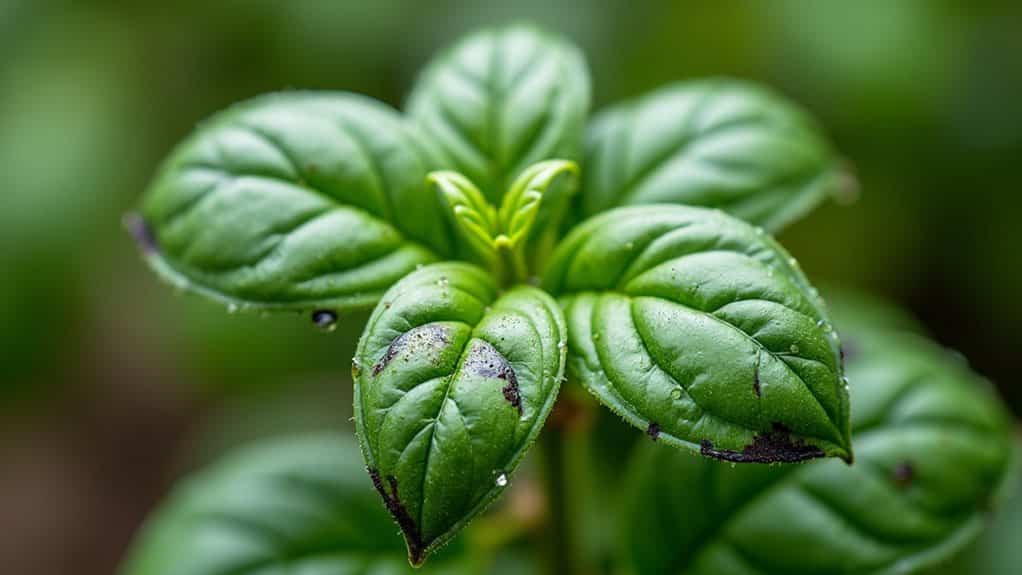
Since proper watering can make or break your basil’s health, let’s investigate the techniques that’ll keep those leaves gorgeously green instead of turning black!
You’ll want to water directly at the soil level, making sure it penetrates about 2 inches deep, and avoid splashing those sensitive leaves.
Check moisture levels by sticking your finger into the soil – if it’s dry beyond your first knuckle, it’s time to water!
Essential Soil and Nutrient Requirements
Whether your basil’s thriving or struggling, understanding its nutrient needs is like learning your plant’s love language!
Your basil craves a specific pH between 5.8 and 6.2, along with just the right balance of nutrients – especially nitrogen for those lush leaves you’re dreaming of.
You’ll want to keep your fertilizer levels modest, around 100-150 ppm nitrogen, and don’t forget to add some compost for good measure!
Temperature and Humidity Control
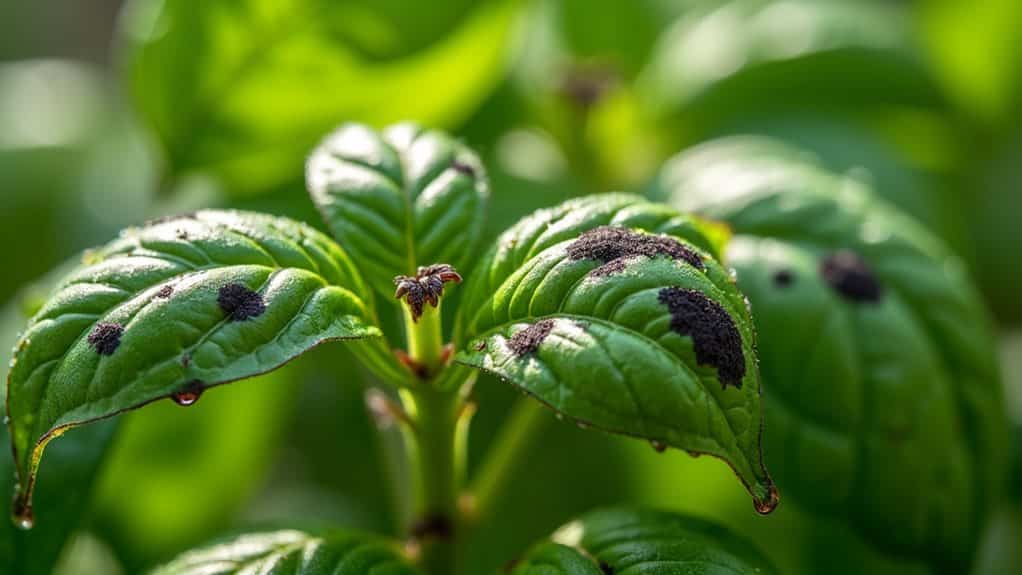
Although basil plants love warmth and sunshine, they’re surprisingly sensitive when it comes to temperature swings and humidity levels!
You’ll want to keep your basil’s environment above 53.6°F (12°C) to prevent those pesky black spots from forming, and watch out for high humidity, which can invite unwanted fungal visitors like downy mildew.
Good ventilation and consistent temperatures are your best friends for keeping those leaves green and healthy!
Natural and Chemical Treatment Options
When those dreaded black spots appear on your basil leaves, you’ve got plenty of options to fight back, ranging from gentle natural remedies to more powerful chemical treatments!
You can start by removing infected leaves and improving air circulation, or try natural solutions like neem oil and garlic sprays.
For tougher cases, copper-based fungicides and horticultural oils work wonders, while careful pruning and proper soil management help prevent future outbreaks.
Best Practices for Growing Healthy Basil
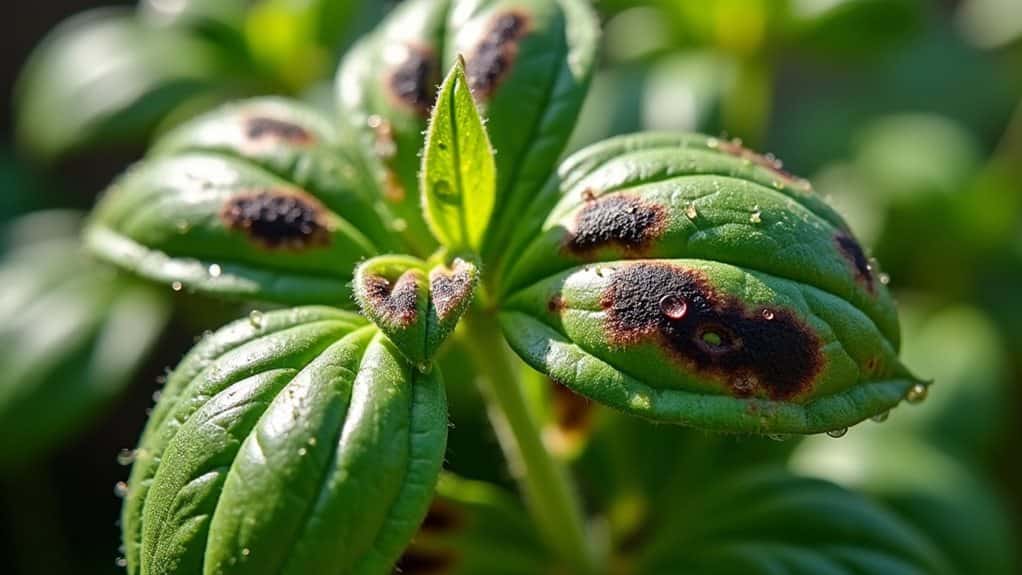
Since growing healthy basil requires careful attention to several key factors, you’ll want to perfect the basics of proper plant care to enjoy those delicious, aromatic leaves!
Give your basil 6-8 hours of sunlight daily, keep the soil consistently moist (but never soggy), and fertilize every 4-6 weeks if growing indoors.
Remember to prune just above leaf sets regularly, and you’ll have bushy, productive plants!
Overall
Now that you’ve learned the key causes and solutions for black spots on your basil, you’ll be well-equipped to grow lush, healthy plants that’ll make your kitchen garden thrive! Remember to maintain proper watering habits, keep an eye on those humidity levels, and don’t hesitate to treat any early signs of disease. With these tips in your gardening toolkit, you’ll be harvesting fresh, lively basil leaves for your favorite recipes in no time!