Why Birds Pull Seedlings Out of Soil (And How to Stop It)
Birds yank up your seedlings because they’re hunting snacks—seeds, bugs, or even that yummy coating on treated seeds—and loose soil makes digging easy, kind of like your favorite campsite trail snack stash! Sparrows and starlings are the usual suspects, scratching around at sunrise like tiny feathered bandits. But don’t worry—you can outsmart them! Try floating row covers, stringing fishing line just above soil, or planting seeds deeper. And hey, moving scare tactics around helps—birds get sneaky, but you can be sneakier. Stick around, and I’ll show you the coolest tricks that actually work.
TLDR
- Birds pull up seedlings to access nutritious seeds or seed coatings in disturbed, exposed soil.
- Seed-eating birds like sparrows and starlings scratch and forage at dawn when soil is dry and soft.
- Shallow-sown seeds and slow germination increase vulnerability to bird damage in spring.
- Floating row covers or bird netting securely anchored prevent birds from reaching seedlings.
- Deter birds by combining physical barriers, visual scares, and feeders placed away from gardens.
What Attracts Birds to Your Garden Seedlings

You might wake up one morning and find your carefully planted seedlings yanked out like tiny green flags surrendered to a feathery invasion—and chances are, your first thought is, “Who gave the birds an all-access pass to my garden buffet?”
Well, guess what? Birds aren’t just being nosy; they’re hunting seeds and bugs, drawn by exposed soil, tasty plants nearby, and seasonal hunger. Think of it like camping: you follow food smells, right? They’re just following survival instincts—no hard feelings! Many of these birds are actually seed-eating species that rely on natural food sources throughout the year. Wild birds can also bring disease or contaminate areas around feeders, so keeping them away from disturbed soil helps reduce bacterial risks.
Common Bird Species That Damage Young Plants
You’re probably wondering why your carefully planted seedlings keep vanishing overnight—well, meet the usual suspects: starlings and sparrows.
Starlings don’t just peck around, they actually snip off tender shoots like tiny green scissors, while sparrows scratch at the soil like they’re digging for buried treasure (spoiler: it’s just your lettuce seeds).
I once spent an entire Saturday replanting rows, only to find those feathery bandits had turned my garden into their personal buffet by Sunday morning—talk about a camping trip-level disaster, minus the fun of sleeping under the stars!
Dragonflies also help control garden pests by eating large numbers of mosquitoes and flies and other small insects.
Starlings Snip Tender Shoots
Envision this: you’ve just planted a neat little garden, full of hopeful green sprouts poking through the soil like tiny hands waving, “We’re here!”—and then *whoosh*, in come the starlings, nature’s feathery little pranksters, turning your garden dream into their all-you-can-eat salad bar.
They snip buds, yank up seedlings, and peck fruits just for fun—talk about rude guests! With beaks like tiny scissors, they leave triangle-shaped marks and turn ripe cherries into sad, hollow shells.
And when 100,000 show up? Game over.
Sparrows Scratch Soil Surface
Sometimes, just when you think your garden’s safe after dodging the starling snack squad, along come the sparrows—those small, sneaky scratch artists of the bird world—who turn your carefully planted soil into their personal buffet prep station.
They scratch, peck, and flick dirt like tiny, feathery campers digging for buried trail mix.
You’ll spot bare patches, uprooted greens, and V-shaped nicks—classic sparrow graffiti.
Cover beds with mesh, add straw mulch, or hang fluttery tape to send them packing.
Why Birds Scratch and Uproot Freshly Planted Seeds

Honestly, it’s kind of wild how quickly birds can turn your carefully planted garden bed into a post-apocalyptic seed buffet—like, one minute you’re admiring your neat rows of freshly sown carrot seeds, and the next, a squad of sparrows descends like tiny feathered ninjas, scratching and flipping soil like they’re on a reality show called *Extreme Foraging*.
They’re not being mean, though—they’re hungry, and those nutrient-rich seed coatings? Totally irresistible. Dry soil makes it even easier for them to dig in, and before you know it, your future salad is someone’s snack. Improved soil health and organic matter can also change how attractive your bed is to foraging birds and other wildlife, as it alters food availability and microhabitat conditions like soil moisture.
Plants Most Vulnerable to Bird Activity
Okay, so here’s the deal—pretty much *every* plant you tuck into the soil has a chance of becoming a bird snack, but let’s be real, some are basically rolling out the red carpet for feathery bandits.
You’ll catch pigeons shredding brassicas like confetti, crows yanking up garlic like it’s their job, and starlings treating your seedlings like a buffet—seriously, they’ve got no manners! Protect those vulnerable greens and sunflowers, or say goodbye to your harvest. Try adding native pollinator-friendly plants nearby to distract birds and support beneficial wildlife.
Timing of Bird Damage in the Growing Season
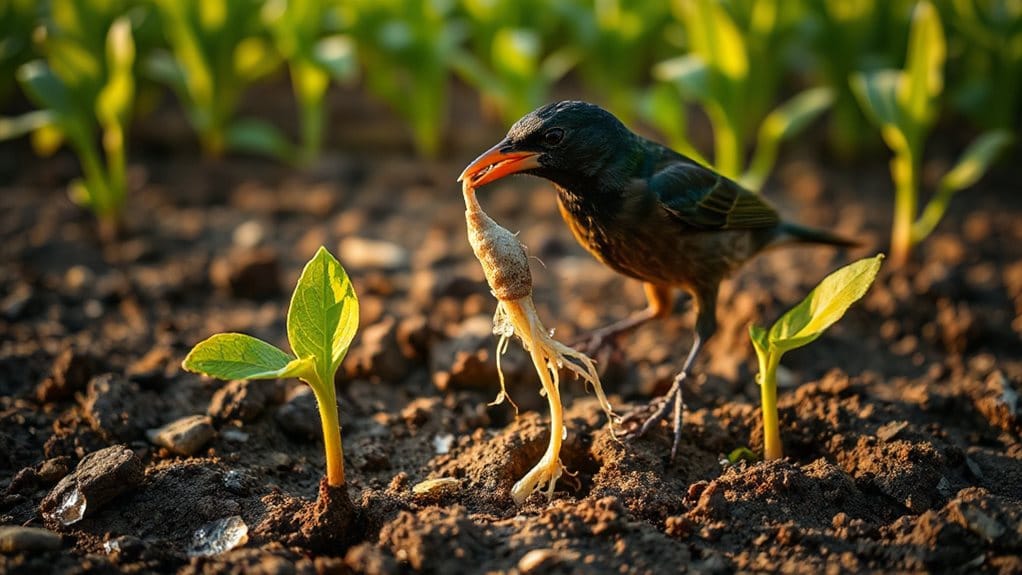
Most of the time, those sneaky feathered foragers don’t wait around—they swoop in fast, often the very second your seeds hit the soil, turning your carefully planted rows into an all-you-can-peck salad bar.
You’ll spot trouble at sunrise or late afternoon, especially in spring, when birds feast before seedlings even pop up.
Shallow seeds? Easy snacks.
Cool soil? Slower sprouts mean longer bird banquets—yikes!
Planting at the right time and using physical barriers can greatly reduce early-season bird damage.
Using Row Covers to Shield Emerging Seedlings
You’ve planted your seeds, and now those sneaky birds are treating your garden like an all-you-can-eat buffet—time to fight back with floating row covers!
Just drape the lightweight fabric right over your beds, make sure to tuck and secure the edges tight with rocks or bricks (because, trust me, birds are crafty and will exploit even the tiniest gap), and boom—you’ve got a cozy, see-through shield that lets light and rain in while keeping feathered bandits out.
Leave it on for about 10–14 days, or until your seedlings pop up a few inches tall, then celebrate with a little “plant victory dance” before removing it or switching to tulle for longer protection.
Install Floating Row Covers
Think of floating row covers as lightweight, breathable sleeping bags for your baby plants—except instead of keeping them cozy at bedtime, these magical fabric sheets guard your seedlings from hungry birds, sneaky bugs, and surprise weather tantrums.
Drape them right over the soil after planting, or float them on hoops like tiny greenhouses.
They let in sunlight and rain while blocking pests—no chemicals needed! You’ll save your seedlings, help the planet, and feel like a gardening superhero. Win-win!
Secure Edges Tightly
Lock those row cover edges down like you’re sealing a treasure chest—because let’s be real, your tiny seedlings *are* garden gold, and birds are the feathered pirates ready to swoop in and steal the loot!
Use bricks, rocks, or anchor bags to weigh everything down; trust me, a loose edge is basically a welcome mat for sneaky sparrows and crafty raccoons—no pressure, right?
Remove After Germination
Watching your first green sprouts push through the soil is kind of like seeing the opening scene of a nature documentary—except you’re the star, the director, *and* the proud parent cheering from the sidelines.
Once seedlings hit 3–4 inches, remove row covers so they can stretch, breathe, and bloom—plus, pollinators need access! Leave them on too long, and your plants might throw a tiny, leafy tantrum.
Installing Effective Bird Netting and Frames
When those feathery little freeloaders start treating your garden like an all-you-can-eat buffet, it’s time to draw the line—preferably with a sturdy, well-installed bird netting system that keeps your seedlings safe without turning your yard into a tangled mess.
You’ve got options: go heavy-duty with Bird Net 2000™ for lifelong protection, or try no-knot netting if you’d rather wrestle less and enjoy more coffee breaks.
Wrap small plants snugly, drape trees like you’re gift-wrapping a giant fruit cake, or build cage frames over raised beds—think backyard fort, but for veggies.
Use poles to suspend netting overhead, so it floats like a hammock for invisible birds.
Match mesh size to your uninvited guests: 1/4” for tiny sparrows, 3/4” for bold pigeons.
And hey, combo nets pull double duty—keeping pests out *and* shading plants from scorching sun, kind of like sunscreen with benefits.
DIY Deterrents: Fishing Line, Eye Paint, and Noise Makers

Alright, so you’ve got your bird netting up and running—solid move, by the way—but what if you’re the crafty type who loves a good weekend project that doesn’t cost a fortune?
Try fishing line strung just above soil; birds hate bumping into it! Hang eye-painted balls or clanging pie tins—they’re silly-looking but seriously effective.
Move them often, though, or the birds’ll wise up!
Adjusting Bird Feeder Placement to Protect Crops
Right in the middle of your garden’s drama—where seedlings peek out like tiny green flags and birds swoop in like feathery ninjas—your bird feeder might be the unexpected villain stealing the show.
You’ve set it up with love, but if it’s too close to veggies, hungry birds will raid both feeder *and* sprouts! Move feeders 10–15 feet from gardens, use baffles, and give birds clear escape space—your seedlings will thank you!
Deep Planting as a Preventive Strategy

You know how frustrating it’s to spot those tiny seedlings poking through the soil, only to find them yanked out overnight—yeah, birds love playing nature’s prank on us gardeners.
Try planting your seeds a bit deeper, like tucking them in snug under a cozy blanket, so they’ve got a head start before they even peek above ground.
When your little green troops finally rise up to about 8 inches tall, they’ll be sturdier, harder to pull, and way less tempting to feathered bandits looking for an easy snack.
Plant Seeds Deeper
Want to outsmart those cheeky birds that keep yanking your baby seedlings right out of the ground? Plant your seeds deeper—like burying treasure they’ll never find!
Deeper planting, around 1.5 to 2.5 inches, gives seedlings a sturdy start with stronger roots, making them harder to pluck. Plus, corn and soybeans actually thrive when tucked in deeper, so you’re not just bird-proofing—you’re enhancing growth!
Protect Emerging Seedlings
Honestly, birds can be total ninjas when they’re on a seedling heist—silent, swift, and way too confident for their own good.
Protect your tiny greens like a garden bodyguard: try insect netting, chicken wire, or even upside-down crates.
Fishing line works like magic, spooking birds for no clear reason—kinda hilarious, right?
Just secure covers well, and boom, your seedlings grow safe and strong!
Combining Tactics for Long-Term Seedling Protection
When it comes to keeping clever birds from yanking your baby seedlings out of the ground like they’re playing a twisted game of whack-a-mole, relying on just one trick is like bringing a squirt gun to a water balloon fight—it’s not gonna cut it.
Layer bird netting with monofilament lines, add spooky Mylar tape and rotating scare-eye balloons, toss in AQ-treated seeds so birds learn to avoid them, and don’t forget to clean up spilled food—boom, you’re building a fortress they won’t even wanna mess with!
Overall
So, you’ve seen the chaos—birds yanking up seedlings like tiny garden bandits, right? Well, now you’ve got tricks up your sleeve: fishing line barriers, clever decoys, and even moving the snack bar (aka bird feeders) away from your crops. I once lost a whole row of lettuce to sparrows—lesson learned! Mix and match these fixes, stay one step ahead, and boom, your plants thrive while the birds just squawk. Happy gardening—think of it as camping, but with fewer mosquitoes and way more tomatoes!