Can Dogs Eat Birds? What You Need to Know
If you've ever watched your dog chase after birds in the backyard, you're not alone – it's a common canine behavior that stems from their natural hunting instincts. While your furry friend might succeed in catching a bird occasionally, you'll want to think twice before letting them make a meal of their feathered prey. From harmful bacteria to dangerous parasites, bird consumption can lead to serious health issues for your pet. Understanding the risks and knowing how to prevent potentially dangerous situations won't just protect your dog – it'll give you peace of mind during those outdoor escapades.
TLDR
- Dogs should not eat raw or dead birds due to potential bacterial infections, parasites, and other harmful pathogens.
- While dogs can technically digest cooked bird meat, wild birds may carry diseases that cooking cannot eliminate.
- Hunting dogs should be trained to retrieve birds without consuming them to prevent health risks.
- Birds that have died from unknown causes pose additional risks, including toxins, diseases, or parasitic infections.
- Opt for commercially prepared bird-based dog foods or properly cooked poultry instead of allowing wild bird consumption.
Understanding Wild Bird Consumption
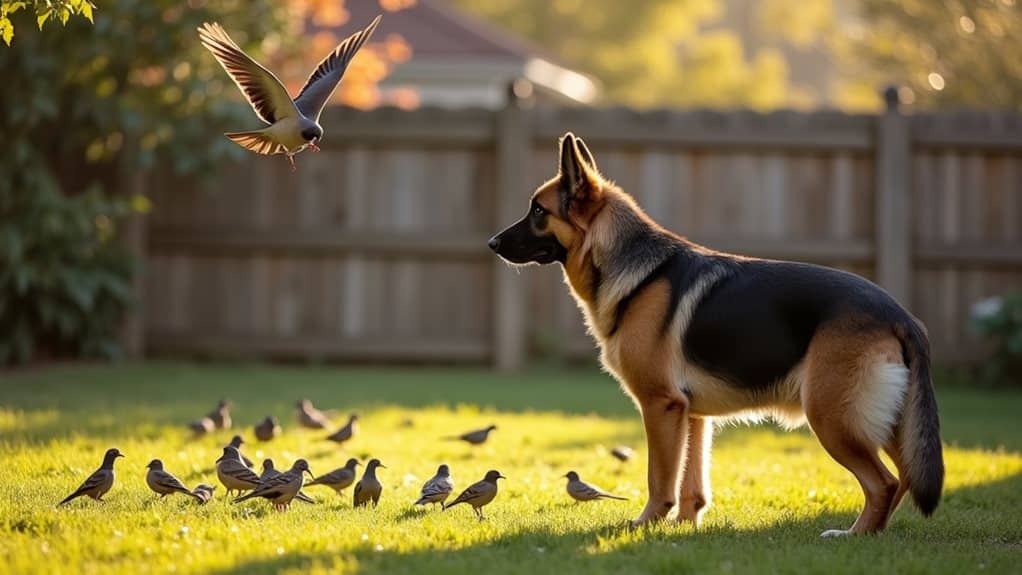
A curious dog's nose can lead them straight to wild birds, whether alive or deceased.
You'll often find that many types of birds, from waterfowl to common sparrows, can attract your pup's attention, especially if they're bred for hunting. It's important to remember that birds can sometimes become trapped in chimneys, posing risks not only to themselves but also to your dog if they come into contact with them. While some dogs might encounter birds in parks or gardens, others actively seek them out due to their natural hunting instincts and keen sense of smell. It's crucial to prevent your dog from eating dead birds since they often contain harmful bacteria and parasites.
Health Risks and Safety
Letting your dog roam around or under bird feeders presents several serious health risks. The biggest dangers come from toxic mold called aflatoxins in old, damp birdseed, which can cause liver damage, and harmful bacteria like Salmonella in bird droppings. Regular yard cleaning can help mitigate these risks by ensuring that any fallen seeds or droppings are promptly removed. Watch for symptoms like sluggishness and vomiting if you suspect your dog has eaten contaminated seed. If your pup gobbles up large amounts of seed, they might also suffer from dangerous intestinal blockages or bloat, especially if the mix contains toxic raisins or grapes.
Toxic Dangers to Watch For
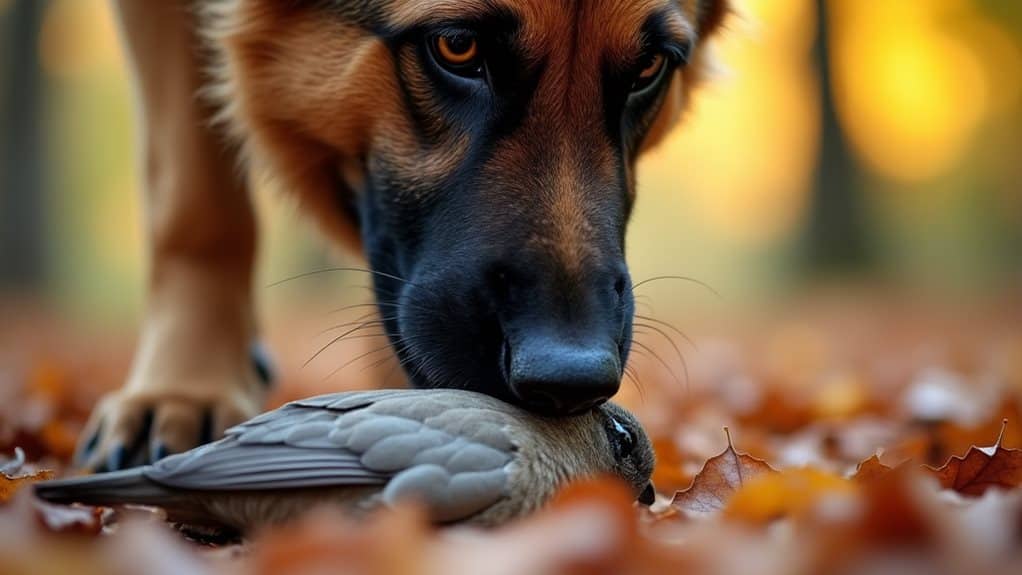
Several toxic dangers lurk around bird feeders that can seriously harm your dog.
If you've got birdseed scattered around, watch out for moldy seeds that can cause aflatoxin poisoning, leading to vomiting and loss of appetite. Additionally, be aware that certain plants like fiddle leaf figs contain harmful substances that can pose risks to pets.
You'll also need to be extra careful with any decorative plants near your feeders, like daffodils or bird of paradise, which can make your pup seriously ill. Bird of paradise plants can cause severe oral irritation in dogs who chew on or eat any part of the plant.
Prevention and Training Tips
Taking steps to prevent your dog from eating birds is just as important as watching for toxins.
You'll want to keep your pup on a leash during walks, train them to respond to "leave it" commands, and never let them roam unsupervised where dead birds might be found. Additionally, be aware that high humidity levels can attract various pests, which may inadvertently lead your dog to scavenging behaviors.
If you're a hunter, it's vital to teach proper retrieval techniques using controlled training methods and wrapped practice birds. Always wash your hands thoroughly with soap and water after handling any training materials or retrieved birds.
Safe Protein Alternatives
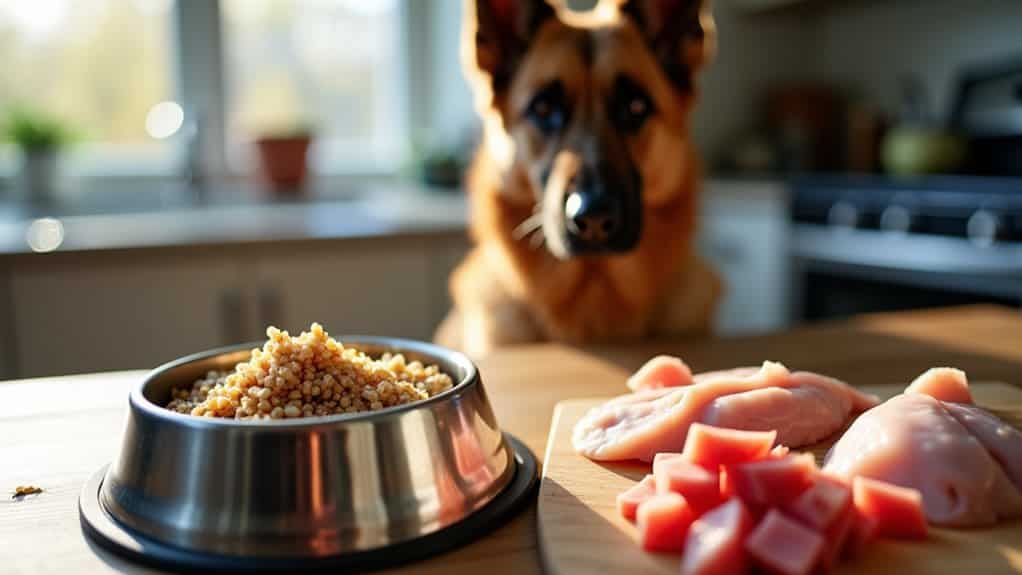
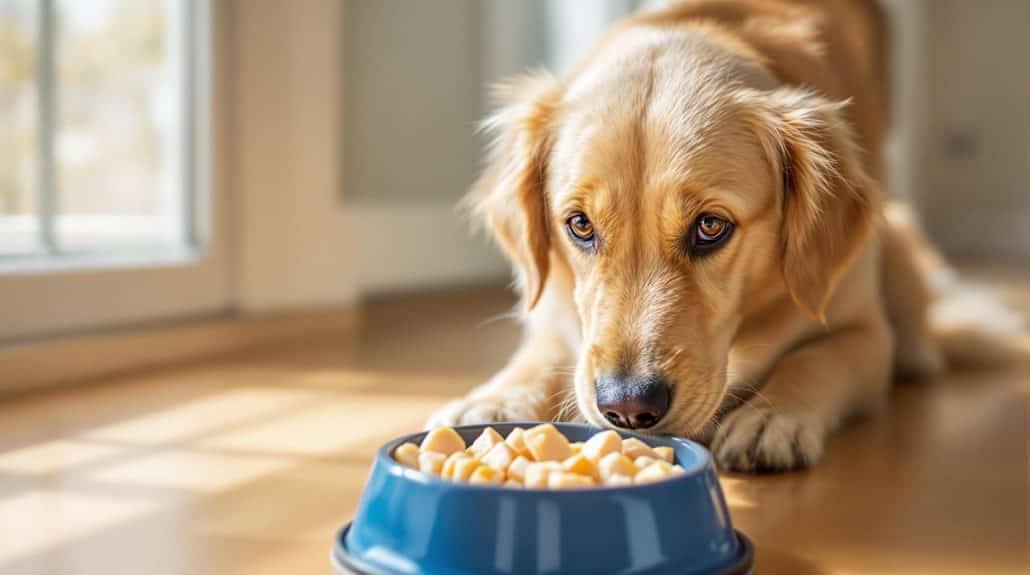
Instead of letting your dog hunt birds, you can provide numerous safe and nutritious protein alternatives that meet their dietary needs.
Lamb makes an excellent protein choice as it provides essential amino acids for maintaining strong muscles and supporting immune system health. Additionally, including nutrient-rich alternatives like coffee grounds in your pet's diet can promote overall health in their food.
Consider trying lean options like turkey, elk, or rabbit if your pup needs to watch their weight, or energy-rich proteins like beef and pork for active dogs.
If your furry friend has allergies, duck and lamb are excellent choices that'll keep them healthy and satisfied.
Overall
While your pup's natural instinct might be to chase and catch birds, you'll want to keep them safe by redirecting this behavior through positive training and offering healthy alternatives. Remember, birds can carry diseases and parasites that aren't good for your furry friend, so it's best to stick to vet-approved proteins instead. By staying vigilant and teaching commands like "leave it," you're protecting your dog while still letting them enjoy their outdoor escapades!