Sun Scorch Vs Fertilizer Burn: Leaf Damage Explained
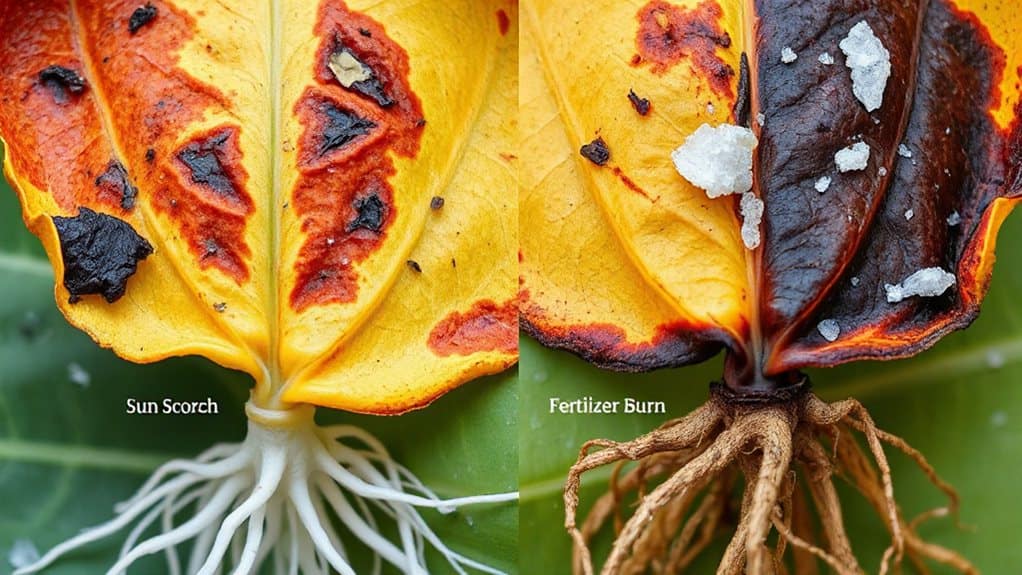
Ever seen crispy leaf edges and panicked? If the burn marks are on sun-facing leaves with bleached patches, it’s sun scorch—too much light and heat teamed up like a bad camping duo. But if the browning’s uniform and follows feeding time, hello, fertilizer burn! Salt buildup sneaks in and dehydrates roots, kind of like forgetting your water filter on a hike. Both stress your plant, but spotting the clues helps you act fast—and yeah, there’s more where that came from.
TLDR
- Sun scorch causes crispy, bleached patches on sun-facing leaves after intense light or heat exposure.
- Fertilizer burn shows uniform brown edges on older leaves, often with soil crust and recent feeding.
- Sun scorch appears rapidly in hot, dry conditions without a yellow halo around damaged areas.
- Fertilizer burn results from salt buildup, impairing water uptake and causing gradual leaf withering.
- Check timing and location of damage: sudden sun exposure points to scorch; post-fertilization damage suggests burn.
Identifying Sun-Induced Leaf Scorch

So, imagine this: you wake up after a blazing hot weekend, head outside to check on your leafy pals, and—yikes!—half your peace lily looks like it tried to audition for a role in a desert scene and totally overdid it.
Crispy edges, bleached patches, brown tips—sound familiar? That’s sun scorch, my friend. It hits the sun-facing leaves hardest, especially on hot, dry, windy days.
Unlike fertilizer burn, it skips the yellow halo and strikes fast, no warning. Time to give your green buddies some shade, stat! This type of damage often occurs when plants are exposed to intense direct sunlight exceeding 10,000 lux, especially if they’re not acclimated. Plants adapted to lower light levels, like many indoor palms, are particularly vulnerable to sudden light changes.
Recognizing Fertilizer Burn Symptoms
You know that crispy, burnt look on your plant’s leaf edges? Yeah, it’s like they’ve been camping too close to a campfire—except the real culprit’s probably too much fertilizer, not the sun.
When the damage shows up in a uniform pattern, especially after feeding your plant, it’s a dead giveaway that you’ve overdone the nutrients, kind of like packing too many snacks and ending up with a messy, sticky backpack.
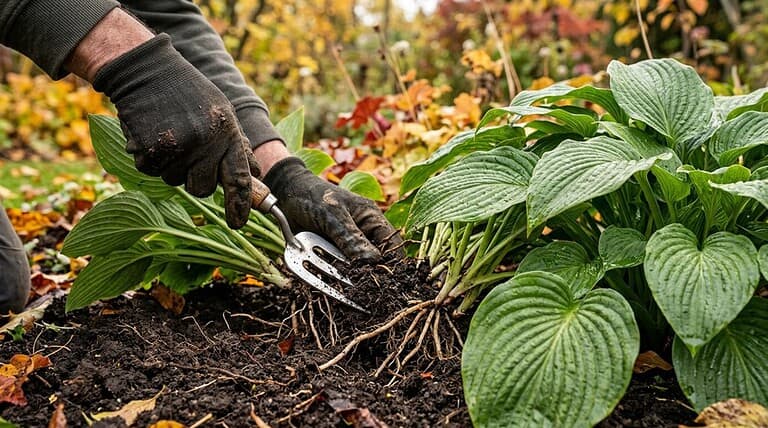
Test your soil pH first to rule out nutrient lockup from alkaline conditions and ensure proper nutrient uptake by the plant (see soil pH).
Crispy Leaf Edges
While you’re out there tending your leafy friends like a plant superhero, keep an eye out for one sneaky villain: fertilizer burn.
See those crispy, brown edges—like toast left too long in the toaster? That’s salt drawing moisture out, especially on older leaves. It’s not sunburn; it’s a fertilizer fiasco!
Check for soil crust, wilting, or stunted growth—classic clues.
Uniform Damage Pattern
When your plants start throwing a full-on drama fit with leaves turning yellow, curling up like tiny green fists, and dropping faster than your phone battery on a camping trip, it’s probably not pests or poor watering—it’s fertilizer burn throwing a tantrum.
You’ll see yellowing, curling, and withering spread evenly, like a sad, uniform wave across leaves—no patchy chaos here. It’s fertilizer’s way of saying, “Hey, I’m too much!” So back off the nutrients, give them a drink, and let your green buddies chill out.
How Light and Temperature Trigger Damage
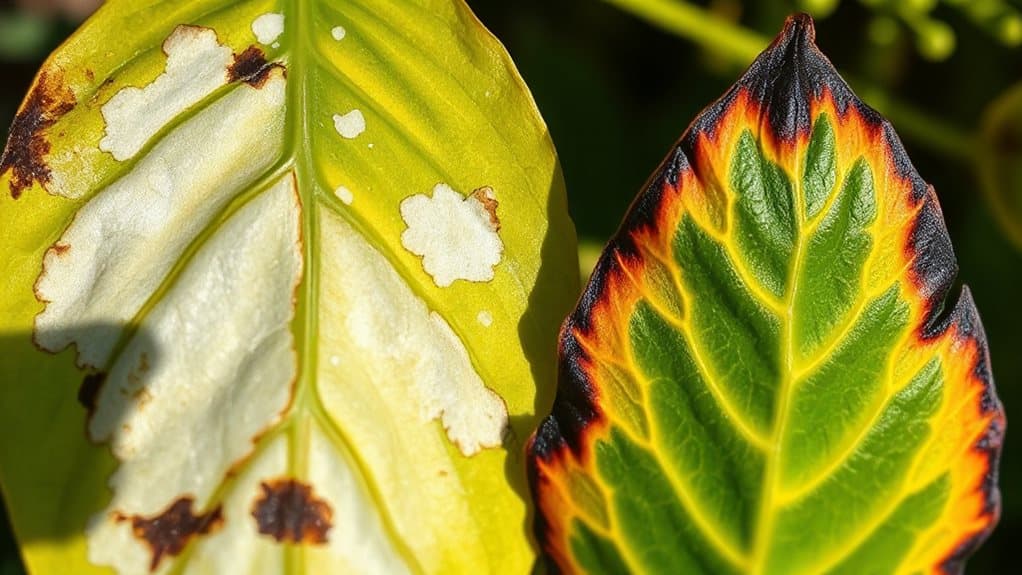
You know how we always pack sunscreen for our camping trips because too much sun feels great at first but eventually burns our skin?
Well, your plants feel the same way—when light gets too intense, especially during those scorching afternoon hours, it literally fries their photosystem like an egg on the sidewalk, and boom, chlorophyll starts breaking down, leaving leaves pale and crispy.
And when you crank up the heat—say, near a south-facing wall or under a poorly ventilated grow light—it’s like trapping your plant in a mini desert, where proteins denature, water vanishes, and suddenly, your green buddy’s throwing in the towel with brown tips and wilted drama.
Keep plants hydrated and adjust exposure to avoid sun scorch.
Light Intensity Thresholds
Think of your plant like a camper out on a sunny hike—sure, a little sunshine keeps things lively, just like that perfect morning light filtering through the trees at your favorite campsite, but too much, especially when it’s blazing hot, and suddenly you’ve got a recipe for disaster.
You wouldn’t grill marshmallows on high heat and expect s’mores, right? Same goes for seedlings: most thrive at 100–300 μmol/m²/s—enough light to grow strong, but not so much that leaves start curling, bleaching, or throwing a full-on botanical tantrum.
Watch for tipburn or leaf shrinkage; they’re your plant’s way of yelling, “Dude, I need shade!”
Heat and Protein Damage
Sunlight’s great for a tan, but your plants aren’t lounging on a beach towel trying to impress anyone—too much heat turns their photosynthesis party into a total meltdown.
You see, heat wrecks the D1 protein in photosystem II, and if it can’t repair fast enough, boom: damage piles up. Stomata slam shut, leaves overheat, and without cool transpiration, it’s like a camping trip with no shade and zero water—disaster!
The Role of Salt Buildup in Leaf Decline
While you’re out there dreaming of summer exploits—camping under the stars, hiking through lush forests, or just chilling in your backyard with a good book—your plants might be silently battling a sneaky, salty enemy you can’t even see.
Salt from fertilizers or water builds up, blocks water absorption, and zaps nutrients, leaving leaves brown-edged, wilted, or chlorotic—kind of like how *you* feel after too much sun and not enough water! Recent stressors like overwatering and root rot can make salt damage worse by reducing a plant’s ability to recover.
Root Health’s Impact on Leaf Scorch
You know how your tent collapses if the poles get bent? Well, when tree roots get squished by compaction, it’s kind of like that—water can’t flow right, and boom, leaf scorch shows up like an uninvited campfire guest.
If you’ve ever forgotten your water bottle on a hot hike (don’t worry, we’ve all been there), you’ll understand how drought stress leaves roots parched and plants gasping, especially when potassium’s missing like a missing marshmallow roaster.
Aeration helps by punching small holes into the soil to improve air and water movement and support healthier roots, especially in compacted areas with poor drainage and reduced air movement.
Root Compaction Causes Scorch
Think of your tree’s roots like a busy underground city—roads for water, power lines for nutrients, and air vents keeping everything alive—except when soil compaction rolls in like a grumpy bulldozer and flattens the whole neighborhood.
You’re literally squishing out the air and water lifelines, trapping roots in a hot, dry, suffocating mess—no wonder they can’t keep leaves cool!
When roots gasp, leaves scorch, even on cloudy days.
Drought Stress Triggers Damage
Soil compaction’s one thing—like throwing a root rave and then canceling the air supply—but when drought shows up, it’s like the whole underground block party gets shut down.
You’re out camping, right, and forget your water filter? That’s your tree’s daily reality. Roots can’t drink, leaves scorch, and suddenly, your proud pine’s doing a sad wilt.
Help them thrive—water deep, mulch wide, and keep roots chill, literally.
Potassium Deficiency Increases Risk
While your tree’s roots are busy playing underground superhero, pulling up water and nutrients like nature’s own little vacuum cleaners, skimping on potassium is like sending them into battle without a cape—or worse, without snacks.
You’ll spot brown, crispy leaf edges, purple spots underneath, and yellowing that marches inward—classic scorch imposters. Older leaves suffer first, since potassium ditches them for younger growth.
Without enough, roots stay small, struggle in clay or cold soil, and leave plants parched and panicky on sunny days—talk about a drama queen!
Drought Stress and Its Visible Effects

When your plants start looking like they’ve been left out in the desert without a canteen, you’re probably seeing the dramatic handiwork of drought stress—nature’s version of a plant panic attack.
They wilt, curl, and even drop leaves just to survive, like campers rationing water on a hot hike. Brown edges? That’s leaf scorch, not sunburn—your plant’s crying out for help!
Heat, Light, and Combined Stress Factors
You know how it feels stepping out of a shady forest into a blazing open field on a summer hike, like someone just cranked the sun’s dial to “fajita”? That’s your plant’s life on a scorch day—heat zaps roots, intense light fries leaves, and together, they shut down photosynthesis like a broken AC.
Watch for crispy edges, tan patches, and wilted ego. Shield plants with shade cloth, water deep at dawn, and skip black mulch—it’s basically a solar oven for roots.
How Plants Naturally Defend Against Light Stress
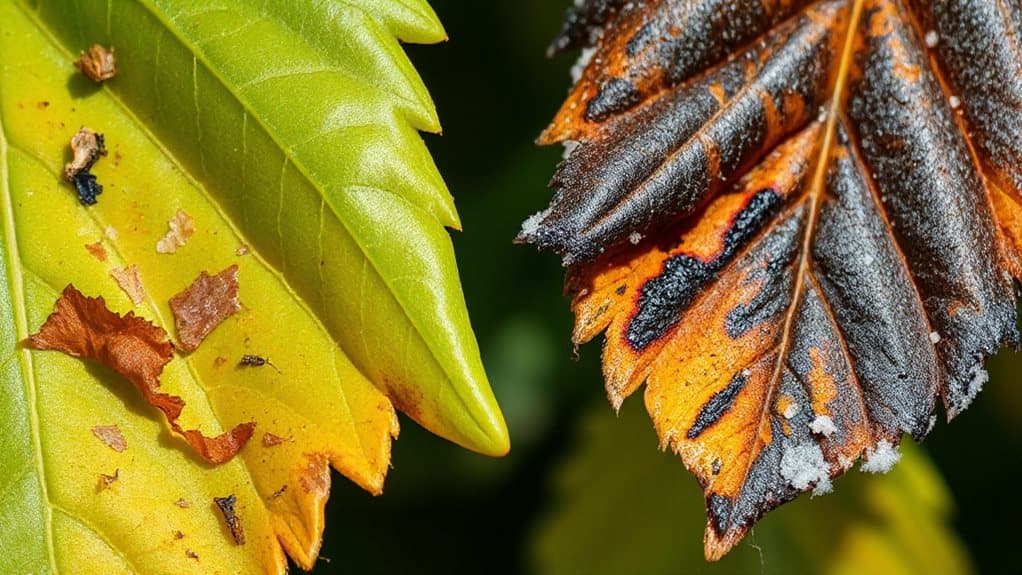
Think of your plant as a tiny, leafy adventurer gearing up for a desert trek—sun blazing, horizon shimmering, the works—only instead of sunscreen and a wide-brimmed hat, it’s got a whole biochemical survival kit hidden in its cells.
It turns up heat shock proteins, revs antioxidant enzymes, and even dials down photosystem II like dimming a flashlight to save battery—smart, right?
Carotenoids act like built-in sunglasses, while zeaxanthin and lutein soak up excess light like a champ.
When light stress hits, your plant doesn’t just sit there—it fights back with everything it’s got, turning up defenses, tweaking gene signals, and even using proline as a molecular bodyguard.
Pretty cool for a “silent camper,” huh?
Species-Specific Vulnerabilities to Sun Exposure
Ever wonder why your fern throws a fit in the backyard sun while your succulent basks in it like a lizard on a rock? That’s because plants have unique sun tolerances—some, like full-shade species, burn easily, while sun-lovers thrive.
Knowing their needs helps you protect them, whether you’re gardening at home or camping under open skies. Be their hero—match each plant to its perfect light!
Preventing Permanent Leaf Damage

Sunlight can turn from a plant’s best friend to its worst enemy faster than you can burn your toes on hot sand during a surprise beach day.
You’ve got this—just space plants wisely, water at soil level in the morning, and trim overcrowded growth.
Use mulch like a cozy blanket, block pests with row covers, and rotate crops like clockwork.
Your garden will thrive, and honestly, nothing beats watching it flourish!
Managing and Recovering From Leaf Injury
While your plant might look like it just lost a fight with a magnifying glass left out in summer camp, don’t toss it out yet—recovery is totally doable with a few smart moves.
Flush the soil, trim the crispy bits, and give it some shade, like you’d seek under a pine tree while camping.
Water gently, skip the fertilizer, and hey—watch for new growth. It’s like nature’s high-five!
Overall
So, now you know—sun scorch and fertilizer burn aren’t just plant drama, they’re real issues you can actually fix! Ever seen a leaf looking crispy like last week’s campfire marshmallow? Yeah, not cute. But hey, with the right light, water, and a little plant TLC, your green buddies bounce back fast. Don’t stress, just observe, adjust, and keep loving them—happy plants mean happy camping vibes later!