Why Does Lawn Soil Become Hard and Compacted?
You notice your lawn turning hard because rain, foot traffic, mowers, and even tractor wheels mash the tiny soil particles together, especially if you have clay or low‑organic‑matter soil, creating a dense crust that blocks air and water; the heavy rain crushes crumbs into a rock‑like layer, while wet tilling and repeated footprints squeeze pores tighter, and the mower’s blades further compact the surface, making roots choke and water pool—keep reading and you’ll uncover how to fix it.
TLDR
- Heavy rain on clay or low‑organic soils crushes particles into a hard crust, especially when the ground is already wet.
- Repeated foot traffic, mower wheels, or tractor tires compress soil pores, raising bulk density and limiting air‑water movement.
- Over‑tilling or working the lawn when wet forces soil particles to settle tightly, creating compaction.
- Lack of organic matter reduces soil structure, making it easier for water to act as a lubricant and for particles to slide into a dense mass.
- Compacted soil blocks root expansion, impedes water infiltration, and leads to shallow, stressed lawns.
Why Soil Becomes Hard in a Compacted Lawn
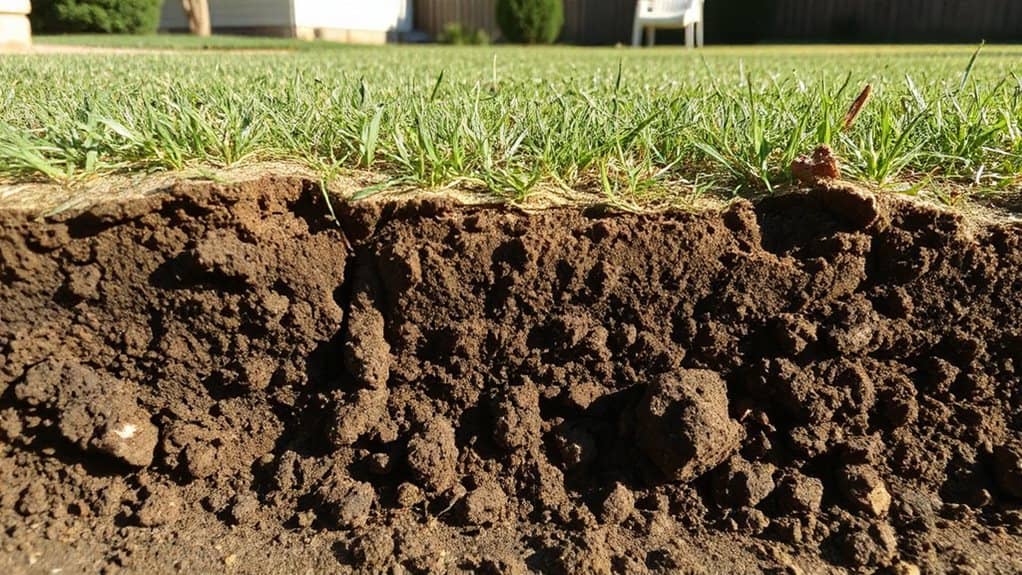
Ever wondered why your lawn feels like a concrete slab after a rainstorm? Heavy rain crushes soil crumbs into a hard crust, especially on clay that’s low on organic matter, and when you over‑till or work wet ground, you’re basically squashing it even more. Think of it as a snack‑like surface that blocks air, water, and roots—making it tough for seedlings to thrive. Varying mowing patterns weekly helps prevent soil compaction from repeated foot traffic. Improving soil health with regular core aeration and added organic matter boosts porosity and root growth, making turf less prone to compaction.
How Tractors, Mowers, and Foot Traffic Pack Down a Compacted Lawn
Why do you feel like you’re walking on a cement slab every time you step onto a lawn after a rainstorm?
You’ll see tractor wheels raise bulk density from 1.48 to 1.5 g/cm³, mowers crush pores, and foot traffic squashes soil particles, all slashing root growth and water flow.
Heavy axle loads on wet ground can cut earthworm counts dramatically, leaving the lawn stiff, thirsty, and yield‑starved.
Core aeration and adding organic matter can relieve compaction and restore soil structure, improving porosity and root health with regular core aeration.
How Soil Type & Moisture Influence Compaction in a Lawn
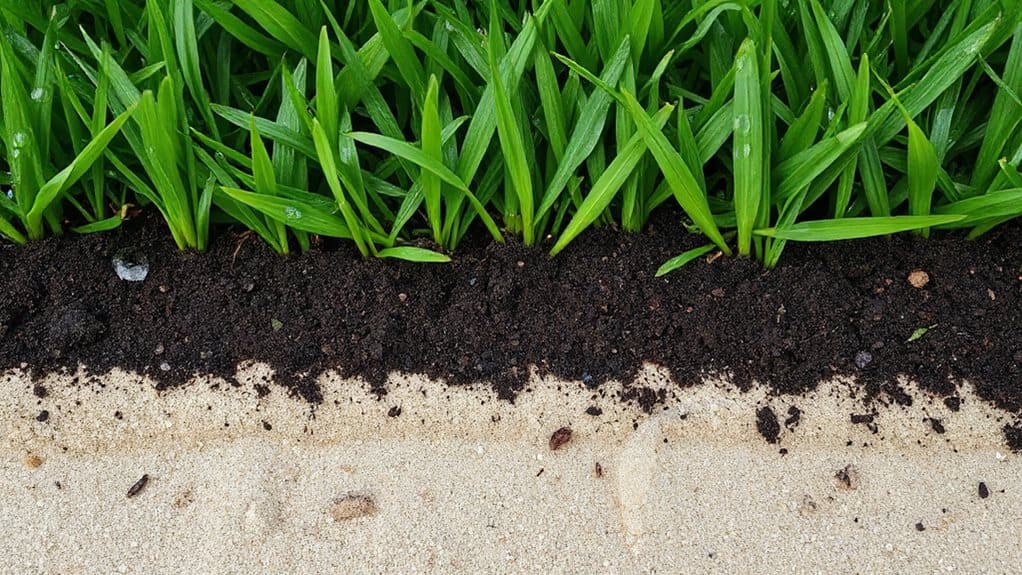
So, ever wonder why a lawn on a rainy day feels like you’re walking on a packed‑down camping mat instead of a soft meadow?
Clay’s tiny particles cling together when wet, turning your grass into a hard slab, while sand stays loose, draining fast.
Low organic matter makes any soil stiffer, and over‑watering acts like a lubricant, letting particles slide into a dense, uncomfortable surface.
Adding organic matter like compost can help loosen compacted soils and improve drainage by increasing soil structure.
What Compaction Does to Roots and Plant Health
How does a packed‑down lawn actually mess with your roots and the whole plant?
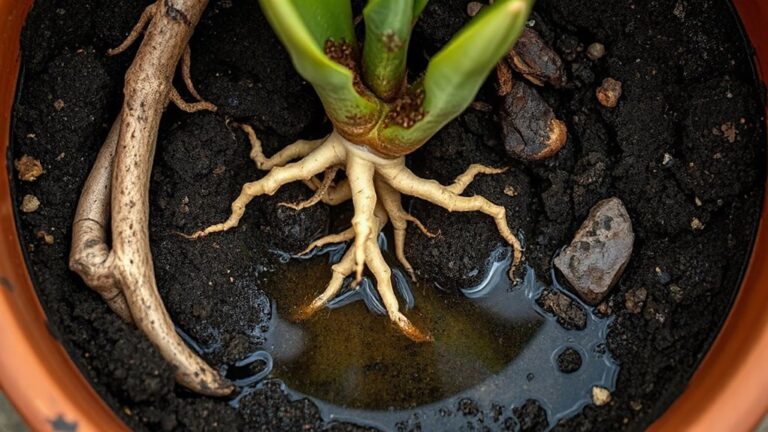
You’ll see ethylene building up, choking root tips, and the soil’s tightness stops elongation, so roots swell, flatten, and twist like a camp‑fire rope.
Lateral branches drop, energy costs soar, and the plant can’t sip water or nutrients, leaving it stunted, thirsty, and yielding less—like a hiker stuck on a rocky trail.
Compaction also prevents water from penetrating deeply, limiting roots to the topsoil and encouraging shallow roots that dry out quickly.
How Compaction Messes Up Water, Drainage & Nutrients
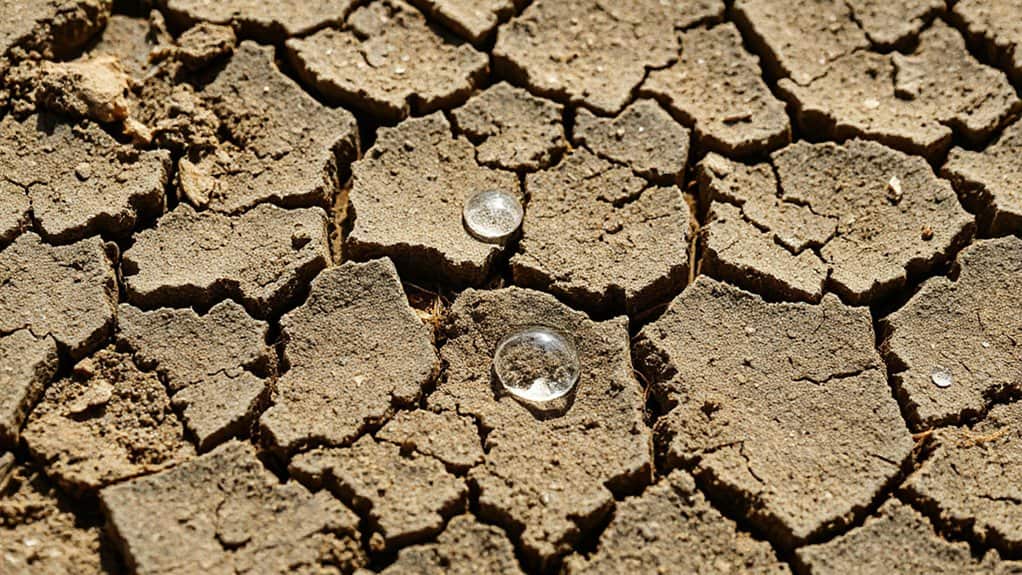
Imagine your lawn as a campsite where water, nutrients, and air are the hikers trying to reach the fire pit (the roots). Compaction shrinks macropores, so water trickles like a slow‑moving creek, pooling on the surface, causing puddles and runoff that wash away fertilizer. Nutrients get stuck, nitrogen mineralization drops, denitrification spikes, and you end up needing double the feed to keep the grass thriving. Ants nesting under hard surfaces can create voids and channels that further disrupt soil structure and drainage, especially near pavers and slabs.
How to Spot Compaction on Your Lawn Today?
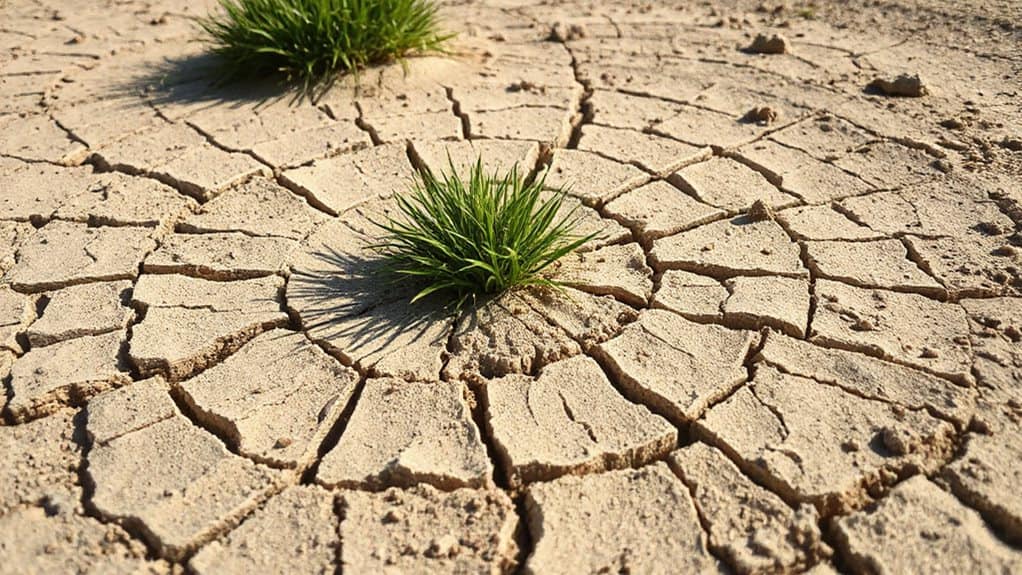
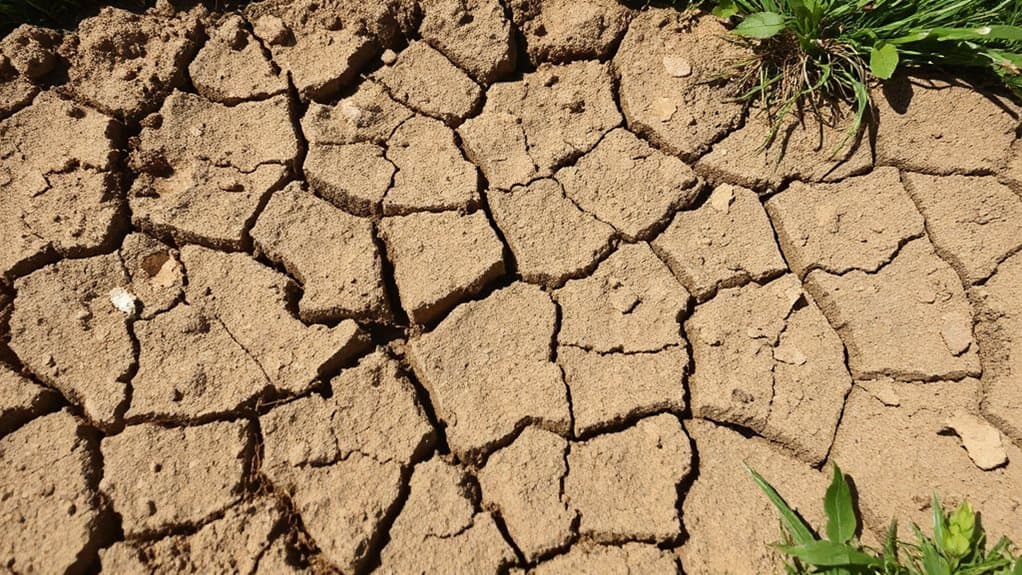
You can spot compaction right now by looking for those tell‑tale soil cracks that spider‑web across the lawn, especially after a rain when the ground should be soft but feels more like a cracked desert;
have you tried the foot‑print depth test—step onto a bare patch and see if the imprint stays deep and defined, because a hard, dense surface will hold your weight like a concrete slab, and trust me, I’ve spent more weekends hunting for those clues than setting up a tent, so grab a ruler, press a screwdriver in, and let’s figure out if your grass is stuck in a “hard‑core” situation!
Visible Soil Cracks
Ever noticed those jagged lines cutting across your lawn, like tiny canyons that suddenly appear after a rainstorm? Those cracks are tell‑tale signs your soil’s packed tight, blocking water and roots, so you see rough patches and puddles.
Spotting them lets you act fast—add organic matter, aerate, and give your grass a healthier, more breathable home.
Footprint Depth Test
Is your lawn feeling more like a concrete slab than a springy carpet? Try the Footprint Depth Test: walk on damp soil, press a shoe, and measure the impression. If the footprint goes deeper than an inch, the ground’s loose and happy; shallower than half an inch means it’s compacted and stubborn. Skip stones, avoid roots, and you’ll spot trouble fast.
How to Loosen Compacted Soil and Prevent Future Compaction
Ever wondered why your lawn feels like a concrete slab after a rainy day, and how you can turn it back into a soft, springy carpet? You can loosen it by core‑aerating each spring, then top‑dress with compost, water deeply but rarely, keep foot traffic low, and add mulch or clover ground covers—simple steps that keep soil happy and your neighbors impressed.
Overall
Now that you know why soil gets hard, you can keep your lawn happy and healthy—just like packing a lightweight backpack for a camping trip, you’ll want to avoid extra weight and keep things breathable. Aerate, loosen, and add organic matter, then watch the grass bounce back like a well‑inflated air mattress. Ready to give your yard a fresh start? Grab a fork or a core aerator and start digging—your lawn will thank you with lush, resilient growth!