Why Is My Lawn Turning Yellow in Patches?
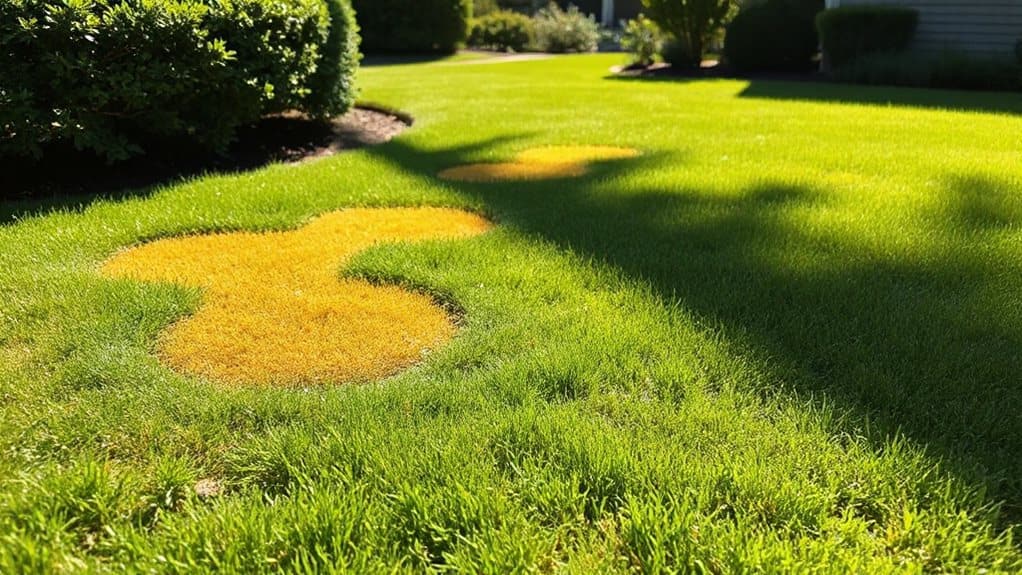
Your lawn’s yellow patches usually mean the soil’s too wet, the pH is off, or nutrients are out of balance, and sometimes a sneaky fungus or bug is to blame. Check if water’s pooling or if you’ve over‑watered—excess moisture fuels Rhizoctonia, which makes those ring‑shaped yellow spots you’ve seen. Test the pH; if it’s acidic, lime it, if it’s alkaline, add sulfur, then retest. Look for nutrient clues: uniform yellowing points to nitrogen, interveinal yellow hints at magnesium, and brown edges signal potassium. Over‑fertilizing can scorch grass, so water deeply to flush salts. Aerate compacted soil, mow higher, keep blades sharp, and avoid heavy traffic until new grass is a couple of inches tall. If you keep digging into these tips, you’ll discover even more ways to rescue your lawn.
TLDR
- Excess moisture and poor drainage foster fungal diseases like Rhizoctonia, producing yellow rings and patchy turf.
- Soil pH outside the 6.2‑7.0 range limits nutrient uptake; acidic or alkaline conditions cause yellowing.
- Nutrient imbalances—nitrogen, iron, magnesium, or potassium deficiencies—manifest as uniform or interveinal yellow patches.
- Over‑watering or fertilizer burn damages roots and leaves, leading to yellowing, thinning, and brown margins.
- Inadequate mowing height, dull blades, or excessive traffic stress grass, making it more vulnerable to yellow patches.
Diagnose Why Your Lawn Has Yellow Patches
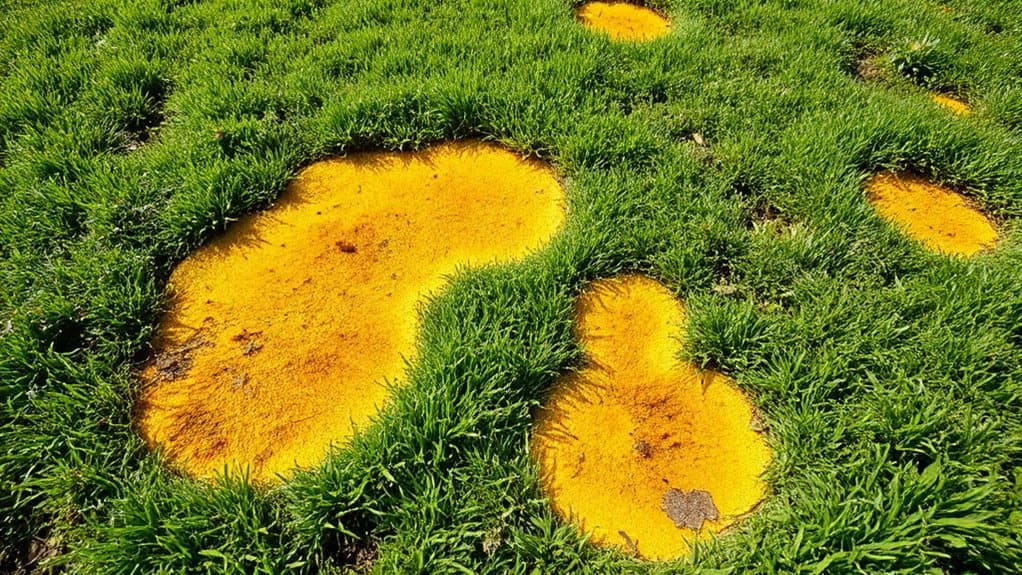
Ever wonder why your lawn suddenly looks like a patchwork quilt of yellow spots instead of a lush green carpet? You can pinpoint the cause by checking for fungal rings, grub tunnels, or soggy soil, then match those clues to the facts: Rhizoctonia rings, billbug scars, over‑watering streaks, or compacted footpaths. Excess moisture creates the ideal environment for Rhizoctonia cerealis to develop its characteristic yellow rings. Improve drainage and adjust irrigation to prevent recurring patches and promote recovery of the turf, especially where poor soil contact or compaction is present.
Test Soil pH and Amend for Yellow Patches
You can quickly find out if your lawn’s yellow spots are caused by a pH problem by testing the soil—just mix a spoonful with water, dip a strip, or use a cheap digital meter, and you’ll see if it’s too acidic or too alkaline.
Once you know the number, grab some lime if it’s acidic or a bit of sulfur if it’s alkaline, and spread it evenly to bring the pH back into the sweet spot that grass loves.
Trust me, getting the balance right feels like finding the perfect campsite—once you’re set up, everything just thrives!
Also check nearby hardscaping for cracks and joints that can affect moisture retention and contribute to uneven lawn conditions.
Test Soil pH
So, why are those yellow spots popping up on your lawn like surprise campfire embers? Grab two tablespoons of soil, a splash of vinegar, and watch the fizz—if it bubbles, your soil’s alkaline; if not, try baking soda and water for acidity.
For a precise number, dip a pH strip into a soil‑water slurry or use a calibrated digital meter, then compare to the 6.2‑7.0 ideal range.
Apply Lime or Sulfur
When you’ve pinned down the pH with your DIY vinegar fizz test and discovered it’s off‑balance, the next step is to bring the soil back into the sweet spot for grass by applying lime if it’s too acidic or sulfur if it’s too alkaline—think of it as packing the right gear for a camping trip, where getting the right supplies means you’ll avoid soggy socks and burnt marshmallows later on.
You’ll spread lime in fall, letting rain work it into roots, or dust sulfur in early spring, watching bacteria turn it acidic over months, then retest and repeat if needed, keeping lawns lush for everyone.
Identify Nutrient Deficiencies vs. Over‑Fertilization
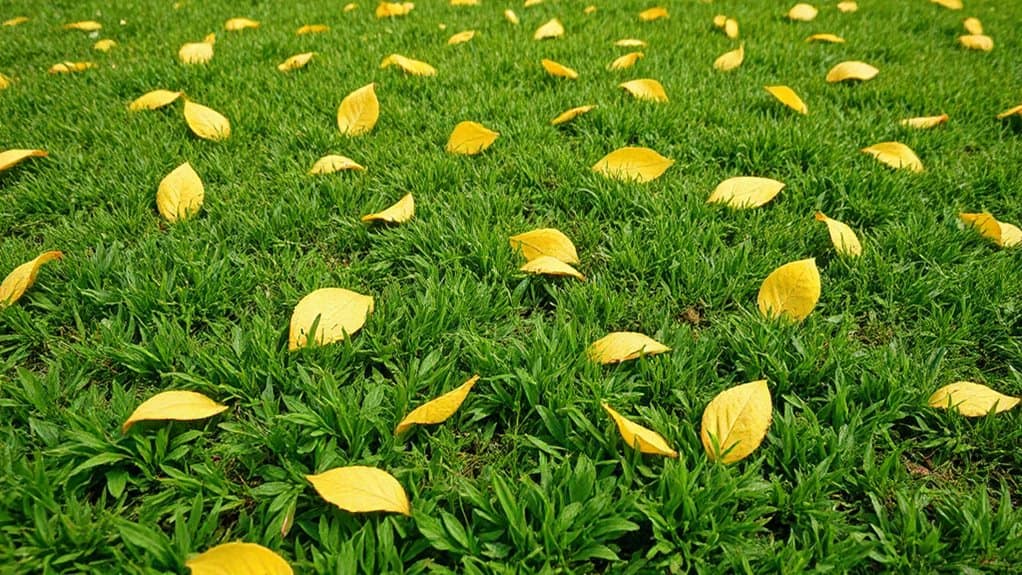
Ever wonder why some patches of your lawn look like a sun‑kissed desert while others stay a lush green? Check if yellow spreads uniformly—maybe nitrogen’s gone—or if veins stay green, pointing to iron. Sharp, crisp edges after feeding? That’s fertilizer burn. Look for interveinal yellow in older blades for magnesium, and brown leaf margins for potassium. Spotting these clues helps you fix the right issue, not just guess. Before making changes, consider local regulations and property boundaries to avoid disputes if trimming or removing trees near your lawn.
Spot Water‑Related Causes of Yellow Lawn Patches
You might notice that those dry, crispy spots are often just your lawn begging for a drink, while the soggy, yellow patches scream “I’m drowning!”—both under‑ and over‑watering can mess with root health and nutrient uptake. Have you ever seen a sprinkler stuck on one corner, turning it into a mini swamp that fuels rot and fungus, or a rainstorm that leaves the soil waterlogged and oxygen‑starved?
Try checking your irrigation schedule, fixing any drainage problems, and giving the soil a breather; a quick aeration or a simple watering tweak can turn those yellow zones back into lush, green carpet. Deep, infrequent soaks promote stronger roots and help prevent both drought stress and surface runoff.
Underwatering and Surface Dryness
Ever wondered why your lawn looks like a patchwork quilt of yellow after a hot day? When you water just the surface, roots stay shallow, so the grass can’t sip deeper moisture, leading to rapid yellowing.
Hot weather evaporates that thin film fast, especially on compacted soil, and you end up with spotty, wilted patches that scream, “I need a deeper drink!”
Overwatering and Root Rot
Why does your lawn look like a soggy swamp after a rainstorm, turning yellow in uneven patches that scream “something’s wrong”?
Overwatering drowns roots, starving them of oxygen, so younger leaves yellow first, then the whole patch thins.
Fungal rot like Pythium thrives, turning soil mushy, roots blackened, and grass wilting; compacted soil and thatch trap moisture, letting pathogens party.
Aerate, cut back watering, and watch the green return.
Drainage Issues and Waterlogging
A soggy lawn can feel like a swampy campsite after a rainstorm, and that lingering water is the sneaky culprit behind those yellow patches you keep spotting.
You’ll notice compacted soil turning puddles, moss sprouting, and roots suffocating, especially after heavy rain or evening irrigation.
Fix it by aerating, adding drainage, and letting sunlight dry the turf—your lawn will thank you.
Detect Pests and Fungal Diseases That Yellow Patches
So, you’ve spotted those weird yellow patches on your lawn and you’re wondering whether it’s pesky critters or a sneaky fungus causing the drama?
Look for round, light‑brown rings with purple edges, especially on bluegrass in cool, wet weather; check for wilted blades without root rot.
Spotting right‑angle hyphae under a microscope confirms Rhizoctonia, while insects leave bite marks or chewed leaves.
Improve soil drainage and avoid overwatering to reduce conditions that favor fungal growth and stress soil health.
Treat Pest‑ and Disease‑Induced Yellow Spots
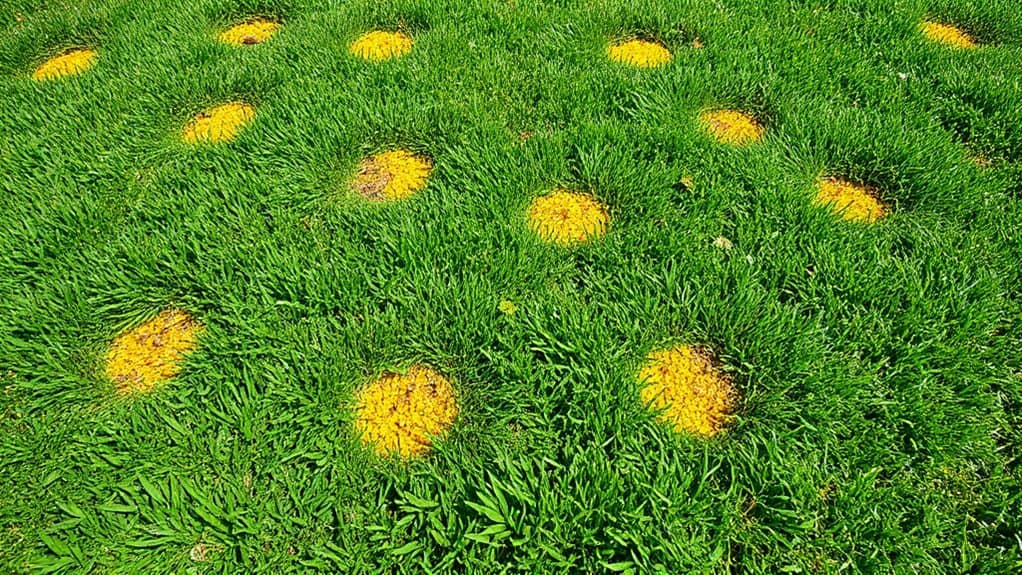
When you finally figure out that those bright yellow spots are caused by pests or disease, you’ll feel like a detective who just solved a mystery on a camping trip—except the “trail” is your lawn and the “clues” are tiny insects or sneaky fungi.
Apply fungicide in the morning, use insecticidal soap or nematodes, raise mower height, and overseed with resistant grass, all while sharing tips with neighbors.
Aerate Compacted Soil to Stop Yellowing
You’ll spot compacted soil when the ground feels hard and the grass patches stay yellow despite watering, so start by checking those stubborn spots and think about how a core‑aerator can punch half‑inch plugs to loosen the crust.
Have you tried a quick aeration session yet?
It’s like giving your lawn a breeze of renewal—those tiny tunnels let water, nutrients, and oxygen rush in, and after you water and fertilize, the roots will thank you by growing deeper and greener.
Identify Soil Compaction
Ever wonder why some spots of your lawn look like they’ve been sun‑baked by a desert while the rest stays lush? When your grass turns yellow, check for compaction: a screwdriver won’t bite deeper than two inches, water puddles for days, and the soil feels hard as a rock.
Foot traffic, clay, drought, or poor drainage can crush the soil, suffocating roots and inviting weeds. Test by tugging a blade—if it lifts too easily, the roots are shallow and stressed.
Identify these signs, then you’ll know where to aerate and revive the lawn.
Core Aeration Benefits
You’ve spotted those stubborn yellow patches, and now it’s time to give those compacted spots a breather—by core aerating the lawn. You’ll pull out tiny plugs, letting air, water, and nutrients rush in, which loosens soil, deepens roots, and thins thatch, so grass turns greener and tougher.
Think of it as a mini‑camping journey for your turf, enhancing resilience and keeping everyone happy.
Post‑Aeration Care Tips
So, what’s the secret to turning those yellow‑patchy spots into a lush, green carpet after you’ve aerated?
Leave the plugs to decompose, overseed right away, then water lightly but often—keep the top inch moist for ten days.
Apply starter fertilizer within two days, limit traffic, and hold off mowing until the new grass is two inches tall.
This routine revives lawns fast.
Adjust Mowing Practices to Prevent Yellow Patches
Why let your lawn look like a patchy map after a camping trip? Cut only the top third of each blade, keep the mower deck high during stress, and sharpen blades so you don’t tear grass.
Mow in the cool morning, never when it’s wet, and maintain at least four‑centimeter height to shade soil, retain moisture, and keep yellow patches at bay.
Flush and Re‑water Fertilizer‑Burned Areas
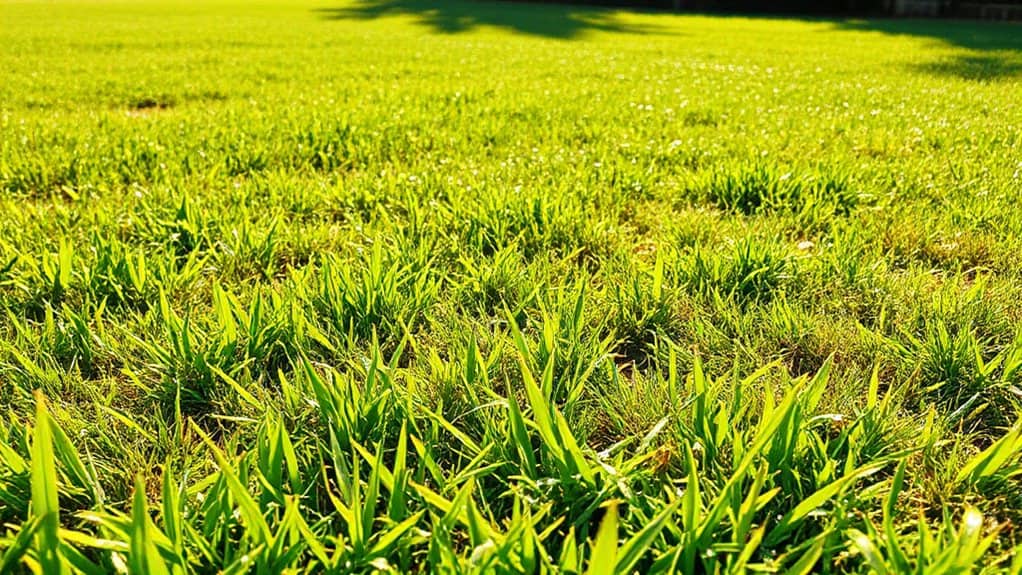
Even after you’ve nailed the mowing height and kept those blades sharp, a stray fertilizer spill can still turn parts of your lawn into a yellow‑ish disaster zone, especially after a weekend camping trip when you’ve been more focused on marshmallows than mulch.
Immediately soak the burned spots with a deep, inch‑deep watering each morning, then rake away any lingering granules, test the soil, and add gypsum or lime if needed, keeping the patch hydrated for a week until the salts wash out.
Seasonal Lawn Maintenance to Keep Patches Green
Ever wondered why your lawn can look like a patchwork quilt after a summer road trip or a rainy fall weekend?
You’ll keep patches green by watering one inch weekly, early‑morning deep soaks, and letting soil dry between sessions; aerate each spring, dethatch in fall, apply slow‑release fertilizer matching grass type, mow at three‑to‑four inches, and inspect for pests before they spread.
Overall
So, now you’ve got the low‑down on why those yellow spots keep popping up, and you know exactly how to fix them—whether it’s tweaking pH, feeding the soil, watering right, or hunting down pests. Grab your tools, give the lawn a quick check‑up, and watch those green blades bounce back like a campfire after a night under the stars. Ready to turn your yard into a thriving, happy oasis? Let’s get started and keep the yellow at bay!