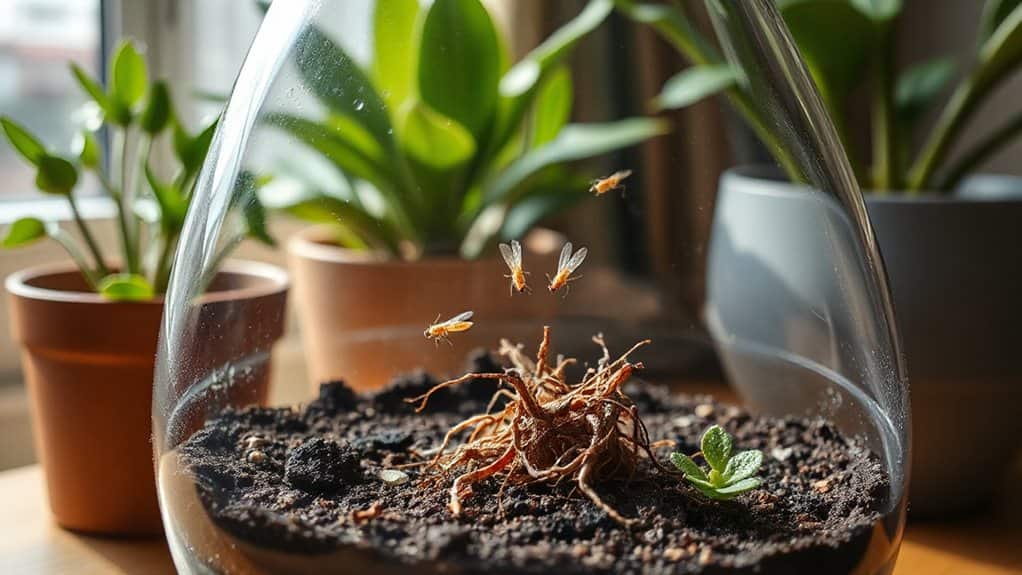
Why Do Indoor Plants Get Fungus Gnats?
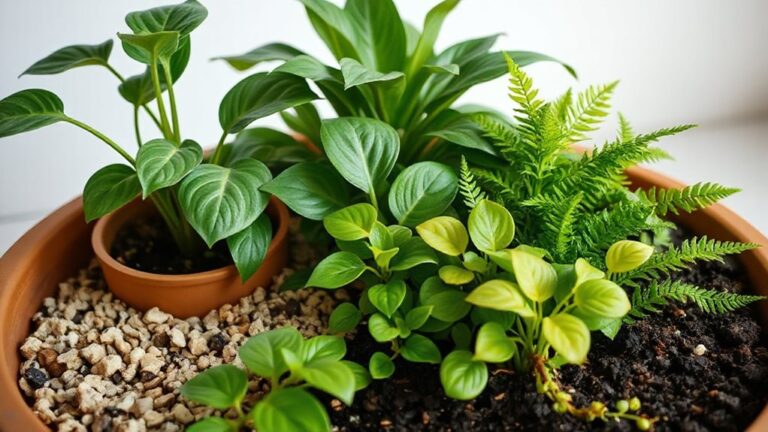
You’re seeing fungus gnats because your potting mix is basically a tiny, warm campsite—think damp, organic‑rich soil where larvae feast on decaying matter and roots, just like campers love a soggy forest floor; the top inch staying moist lets them hatch and thrive, while the dense, water‑logged medium gives them plenty of air‑less hideouts, and the sweet scent of decomposing peat is their all‑you‑can‑eat buffet, so if you keep the surface dry and improve drainage, you’ll cut their party short, and the next section shows exactly how.
TLDR
- Over‑watering keeps the top inch of soil constantly moist, creating an ideal breeding ground for fungus gnat larvae.
- Moist, organic‑rich potting mixes retain water and provide food for larvae, especially when drainage is poor.
- Warm, soggy conditions in indoor pots allow gnats to complete their life cycle quickly, producing many adults.
- Lack of airflow and dense soil limit oxygen, encouraging microbial growth that feeds gnat larvae.
- Using self‑watering systems without allowing the surface to dry can sustain the humid environment gnats need.
Quick Non‑Chemical Fixes for Fungus Gnat‑Infested Soil
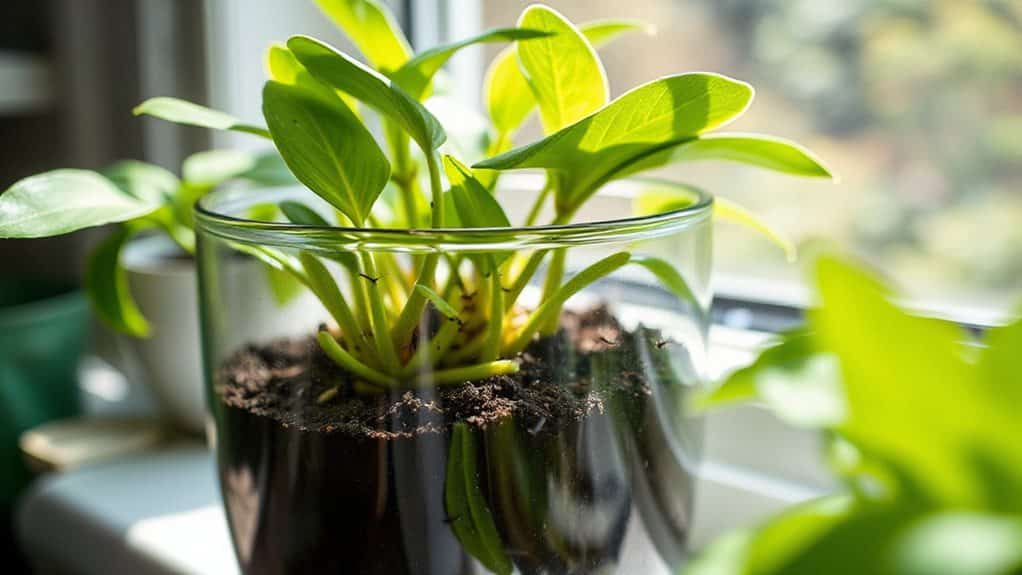
Ever wondered why those tiny, buzzing gnats keep showing up in your indoor garden, like uninvited campers at a campsite? Try letting the top inch or two of soil dry completely, then water from the bottom so the surface stays dry, and toss in a few yellow sticky traps near the pots; you’ll see adults stuck fast, while terracotta pots sip moisture better, keeping gnats at bay. Larvae feed on organic matter and roots, so drying the surface disrupts their food source.
Why Do Fungus Gnats Love Your Moist Potting Mix?
Why do those tiny fungus gnats seem to set up camp in your potting mix, just like you’d set a tent in a damp forest?
You’re basically offering them a water‑logged, compost‑rich campsite where peat holds moisture, decaying organics feed larvae, dense soil limits air, microbes thrive, and warm, soggy layers keep them comfortable—so they never want to leave. Sandy soils often lack organic matter and moisture retention, so adding regular organic amendments helps create the kind of water‑holding, nutrient‑rich environment that both plants and soil organisms benefit from.
Biological Controls for Fungus Gnat Larvae
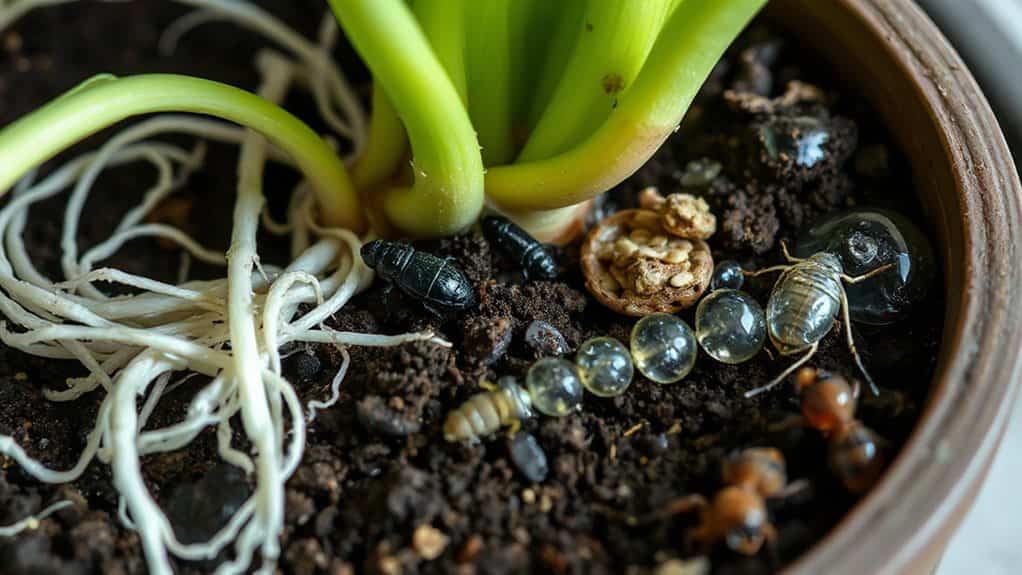
Think of your potting mix as a tiny campsite where fungus‑gnat larvae love to set up shop, and guess what? You can invite Steinernema feltiae nematodes, which slip through mouth, anus and breathing pores, release bacteria, and gut the larvae in a few days—just keep the soil moist.
Add Bti drenches every week, release Stratiolaelaps mites or Dalotia beetles, and dry the top inch between waterings for a thriving, larva‑free garden.
These biological controls work especially well when paired with self-watering reservoirs that help maintain consistent moisture without overwatering.
When to Use Chemical Controls for Fungus Gnats and How to Apply Them Safely
After you’ve tried inviting those tiny nematode campers and mite guards, you might still notice a swarm of adult gnats buzzing around your foliage like an over‑enthusiastic campsite firefly party, and that’s when chemical controls step into the spotlight.
Use pyrethrins or a labeled indoor spray only after three weeks of failed non‑chemical tricks, drench soil with imidacloprid or Bti, keep pets away, repeat every five to seven days, and combine with dry‑soil practices for lasting peace.
Allowing the top inch of soil to dry between waterings helps prevent future infestations and supports dry‑soil practices that reduce gnat breeding.
Ongoing Prevention & Maintenance to Keep Fungus Gnats Away
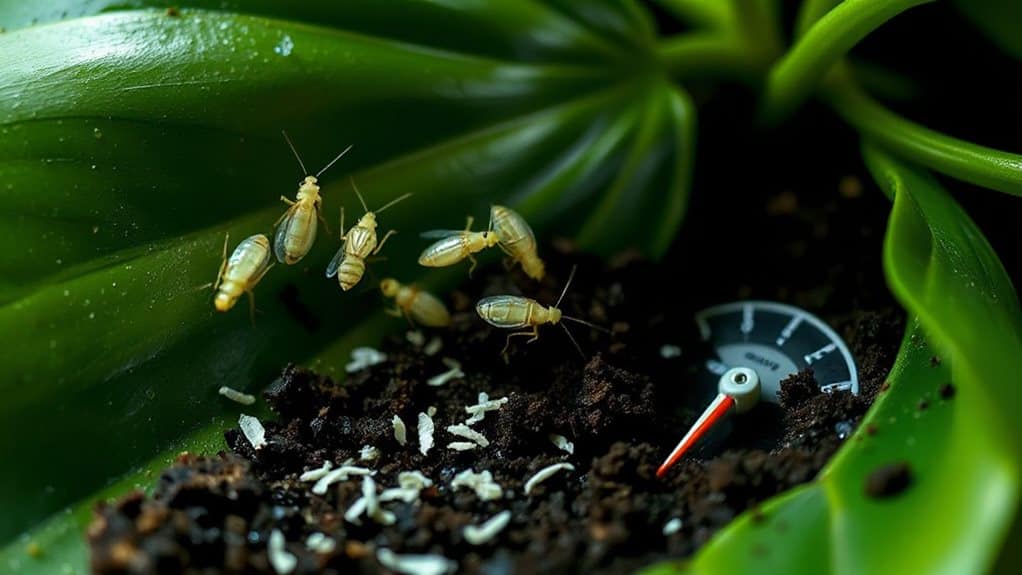
Ever wonder why keeping fungus gnats at bay feels a bit like n a campsite— you have to set up the right gear, keep the fire dry, and check the perimeter every night?
You’ll dry the top inch of soil, add perlite, sprinkle sand or cinnamon, use yellow sticky traps, quarantine new plants, and keep containers well‑drained, so the gnats never get a foothold. Plants that form dense mats can also create favorable conditions for pests by retaining moisture and shading the soil, so consider replacing aggressive groundcovers with non-invasive alternatives to reduce risk.
Overall
Now you’ve got the know‑how to beat those pesky fungus gnats, so grab your watering can, dry out the topsoil a bit, and try a sprinkle of sand or a dash of neem oil—just like I did when my basil went on a gnats‑party. Keep an eye on moisture, add some beneficial nematodes for good measure, and remember: a little vigilance now means more time for your indoor jungle and less time battling bugs. Happy planting!