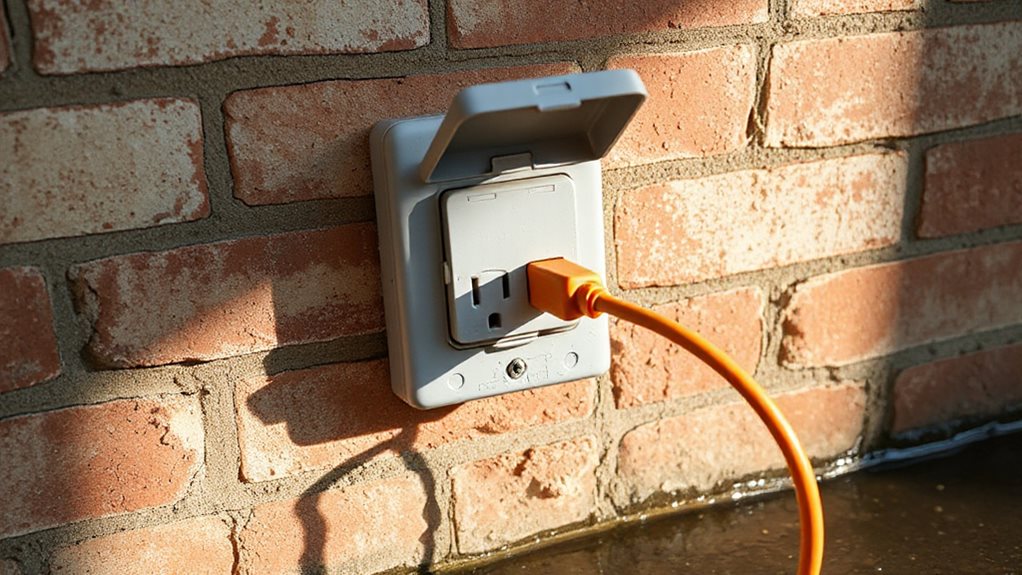
Why Did My Outdoor Outlet Stop Working? Easy Fixes
Your outdoor outlet probably quit because the GFCI tripped from moisture, overload, or a loose connection, so first unplug any devices, then press the bright red reset button firmly until you hear a click—if it’s still dead, check the circuit breaker, flip it off and on, and make sure the weather‑proof cover and gasket are snug and dry; you might need to towel the area or use a low‑heat hair dryer after a rainstorm, and if the outlet still won’t reset, it’s time to call an electrician, but stick around and you’ll discover more tricks.
TLDR
- Check the GFCI reset button; press firmly until you hear a click to restore power.
- Verify the circuit breaker isn’t tripped; flip it OFF then ON if needed.
- Inspect for moisture or water damage; dry the outlet and surrounding area before resetting.
- Ensure the outlet’s weather‑proof cover, gasket, and seals are intact and not cracked.
- Unplug all devices, reduce load, and test the outlet with a voltage meter to confirm proper voltage (≈120 V).
Reset the Outdoor GFCI Using the Button
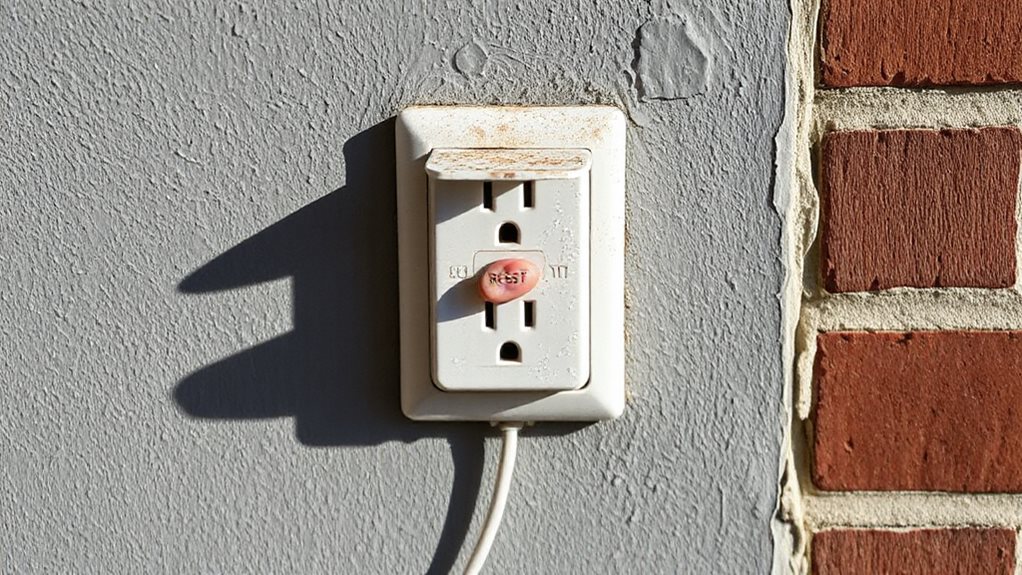
Ever wondered why your campsite’s power strip suddenly went dark? You’ll spot the bright red RESET button on your outdoor GFCI, often popping out when tripped, so just press it firmly until you hear a click, and power jumps back to all protected outlets. Unplug devices first, test after resetting, and remember monthly TEST‑RESET checks keep everyone safe and happy. Moisture buildup can cause the GFCI to trip, so ensure the outlet stays dry and clear of debris. Avoid using undersized cords outdoors where heat and load can increase the chance of trips.
Identify and Reset a Tripped Circuit Breaker for Outdoor GFCI
You’ll spot a tripped breaker when its handle sits stubbornly in the middle or feels loose, and suddenly none of your outdoor outlets work—like the whole campsite lost power at once. Grab a lamp, unplug everything, head to the panel, flip that breaker all the way off then back on until it clicks, and watch the lights come back to life. If it trips again, it’s probably moisture or an overload, so you’ll know whether to keep camping or call an electrician.
Locate and Identify Tripped Breaker
When you’re setting up a campsite kitchen or charging a lantern on the porch, a dead outdoor outlet can feel like a sudden rainstorm on a sunny hike, but the fix is usually just a quick peek at the breaker panel.
Open the box, scan for the switch labeled “outdoor GFCI” or “patio,” and look for a lever that’s in the OFF or middle position— that’s your tripped breaker, ready for a reset.
Reset Breaker Safely and VerifyPower
So, you’ve found the breaker that’s tripped and you’re ready to bring power back to your campsite kitchen, but before you smash that reset button, let’s make sure you’re doing it safely and actually getting the job done.
First, unplug every appliance, dry your hands, then flip the breaker fully ON—listen for a click.
Next, press the GFCI reset until it clicks, test with a charger, and if it refuses, dry any moisture or call a pro.
Spot Moisture Intrusion Around Your Outdoor Receptacle
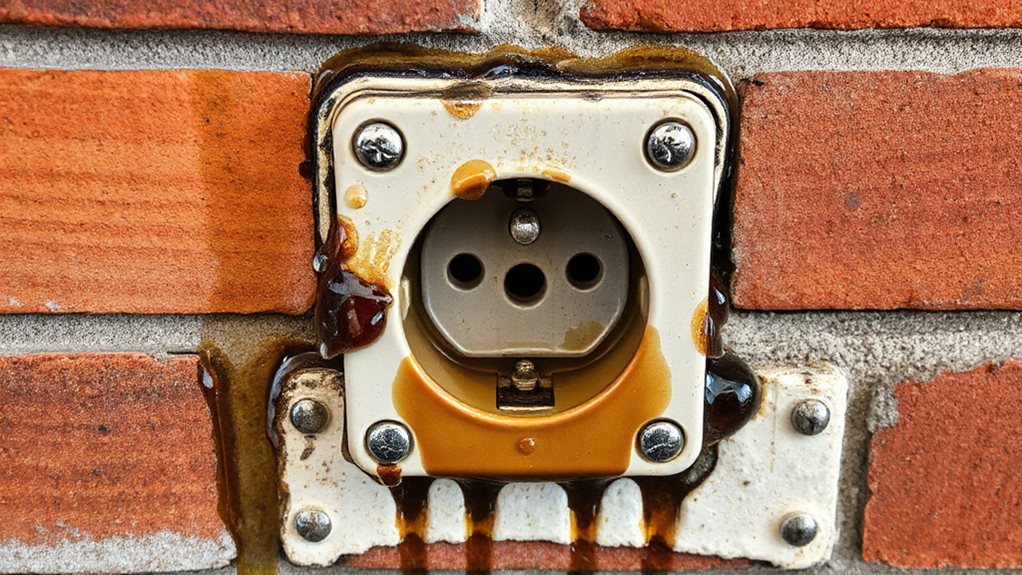
Ever wondered why your outdoor outlet sometimes looks like it’s taken a dip in a lake? Spot moisture by checking rust, scorch marks, or a faint burning smell—those are red flags.
Look for cracked covers, warped gaskets, or gaps where rain splashes from gutters or irrigation.
Press the GFCI test button; if it trips, water’s likely inside.
Fix seals, replace worn parts, and keep your campsite power safe.
Repotting can help plants recover when roots are crowded, so treat moisture issues promptly to prevent damage to nearby landscaping and electrical components; consider inspecting for roots poking that can disturb conduit lines.
Inspect Weather‑Proof Covers on Outdoor GFCI Outlets
You’ll want to check that the weather‑proof cover on your outdoor GFCI is still snug and uncracked, because a tiny gap can let rain sneak in and fry the outlet, which is the last thing you need when you’re gearing up for a camping trip; have you ever tried to plug in a charger during a downpour and felt that sudden zap?
Make sure the gasket and seal are intact, and if the lid doesn’t latch firmly or the rubber feels brittle, replace it right away—nothing ruins a hike like a dead outlet at the campsite.
And remember, a solid, well‑sealed cover not only keeps moisture out but also protects insects and debris, so you can keep your gadgets powered and your adventures rolling without a hitch.
Inspect gaskets regularly to maintain an effective moisture barrier and prevent corrosion or shorts after rain.
Seal Weather‑Proof Cover Condition
Ever wondered why a cracked, warped, or faded weather‑proof cover can turn a sunny campsite into a soggy nightmare? You should check the seal every month, especially after rain, and look for cracks, warping, or faded plastic that lets water slip in. If the gasket feels brittle or the hinges are loose, replace it—otherwise you risk GFCI trips, corrosion, and even mold growing where you need power most.
Secure Cover Seal and Gaskets
How can a simple gasket turn a soggy campsite into a dry‑and‑ready power hub? You’ll love the thermoplastic, UV‑stabilized gaskets that hug the device opening and cover edge, blocking moisture like a superhero shield.
Snap the self‑closing lid, align the GFCI screws, and secure with the tiny hardware—then enjoy reliable, weather‑proof power while you serve friends on the trail.
Tighten Loose Wire Connections in the Junction Box
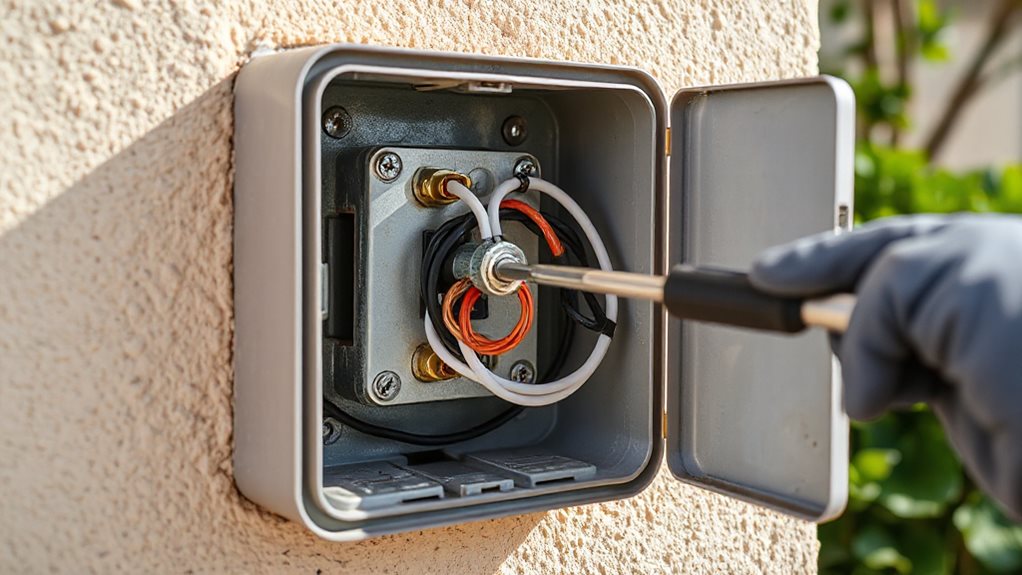
Ever wondered why your outdoor outlet suddenly quits on you, especially after a weekend of camping‑style BBQs and late‑night stargazing?
You’ll first cut power, test with a voltage checker, then pull the receptacle out.
Look for wires slipping out, strip a half‑inch, push them fully into terminals, tighten screws firmly, twist pigtails, and snap the cover back on before restoring power.
Detect Damaged Wiring: Look for Heat, Buzzing, or Scorch Marks
You’ll spot a busted outlet the moment you see dark, crispy burn marks or feel the plastic getting unusually warm—like a campfire that’s gone rogue on your grill.
Do you ever hear a faint, steady buzz coming from the box? That’s the electricity trying to jump gaps, so you’ve got to stop the power, grab a flashlight, and give that outlet a good look‑over before the whole thing fries.
Check nearby plumbing and fixtures for signs of concealed damage, since leaks at connections can steal performance and indicate broader corrosion issues.
Visual Inspection for Burn Marks
Ever wondered why a single outlet can look like it survived a tiny campfire? You’ll spot black‑brown scorch rings around plug holes, darkened faceplates, or melted plastic—each a tell‑tale sign of overheating from overloads, loose wires, or arcing.
Check for charred edges, sizzling smells, or bulging insulation; if you see any, shut off power, document the damage, and call an electrician before the outlet becomes a fire hazard.
Listen for Persistent Buzzing Sounds
Why does your outdoor outlet sometimes sound like a tiny, unyielding mosquito trapped inside a power line? When you hear a steady buzz, think loose wires—screws shrink, arcs jump, and the hum grows louder over weeks.
Overloaded circuits hum louder when many gadgets plug in, then quiet down when you unplug.
Damaged or old wiring, rodent‑chewed cables, and worn internal contacts also vibrate, screaming for a check before fire risks.
Listen closely; a persistent buzz is a red flag.
Check for Unusual Heat Build‑up
Ever felt a tiny furnace humming behind your patio plug, like a campfire that never quite catches? You can spot trouble by feeling the plate—if it’s warm, something’s resisting electricity, maybe a loose wire or overloaded circuit. Look for black spots, melted plastic, or a faint buzzing, then shut off the breaker, unplug everything, and call a pro before the heat turns into a fire‑starter.
Test Voltage With a Multimeter Before Any Repairs
Before you start pulling wires or swapping parts, grab a multimeter and make sure the outlet’s actually dead—because nothing’s more frustrating than spending an afternoon fixing something that’s already fine, right?
Set the selector to AC volts, plug the black probe into the neutral slot and the red into the hot slot, then read the voltage; it should hover around 110‑125 V. If it’s far off, you’ve got a real issue to tackle.
Fertilizer can indirectly affect outdoor wiring by promoting rapid plant growth that may disturb shallow buried cables or conduit, so inspect for soil disturbance around the outlet area.
Interpret Multimeter Readings and Decide If Wiring Needs Repair
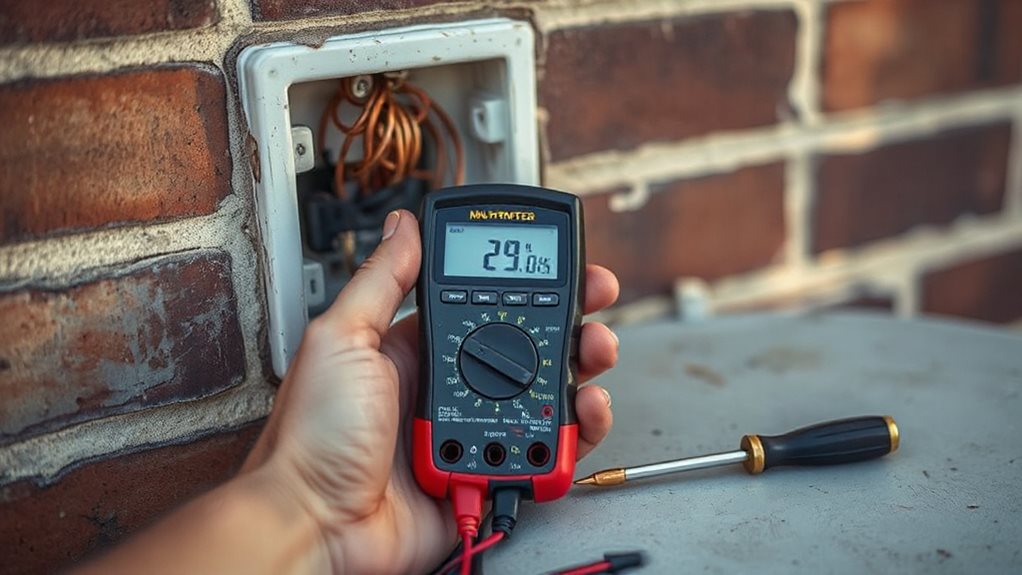
Now that you’ve confirmed the outlet is actually dead with a quick voltage check, it’s time to decode what those multimeter numbers are really telling you and decide whether the wiring itself needs a rescue mission. If the voltage jumps, suspect loose connections or corrosion; zero volts means a broken switch or wire. Check resistance only after disconnecting, and watch for reversed polarity. Persistent erratic readings? It’s wiring time.
Unplug Appliances Before Resetting to Reduce Circuit Load
A quick unplug before you hit the reset button can make a huge difference, especially when you’re trying to lighten a circuit that’s feeling like a packed backpack on a summer hike.
Pull the cords from TVs, chargers, and gaming consoles, because phantom loads drain power and can trip the outlet; a single watt costs about a dollar yearly, so unplugging saves money, reduces CO₂, and lets you enjoy camping without worrying about a dead outlet.
Safely Reset a Trip‑Prone GFCI After Moisture Clears
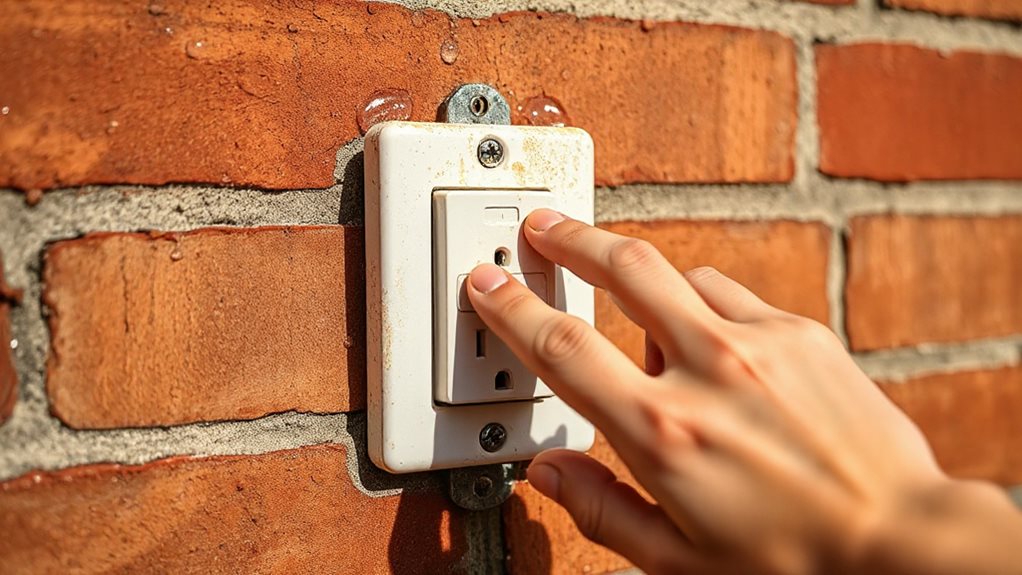
Ever wonder why a soggy GFCI refuses to cooperate after a sudden storm, even though the sky’s finally cleared? First, let it dry—wait for a clear day, then gently towel the area and use a low‑heat hair dryer from another outlet. Press the reset button firmly until you hear a click, plug in a nightlight, and test the button; if the light goes off, you’ve succeeded. Stay safe, keep it dry, and enjoy camping!
Know When to Call a Professional Electrician
Ever wondered why a stubborn outdoor outlet keeps dying on you just when you’re about to charge your phone for a night‑under‑the‑stars excursion?
If you hear buzzing, smell burning, see sparks, or the GFCI won’t reset, it’s time to call a licensed electrician—don’t gamble with rusted wires or scorching marks, because safety matters more than any campsite selfie,
Perform Preventive Maintenance on Outdoor Outlets Year‑Round
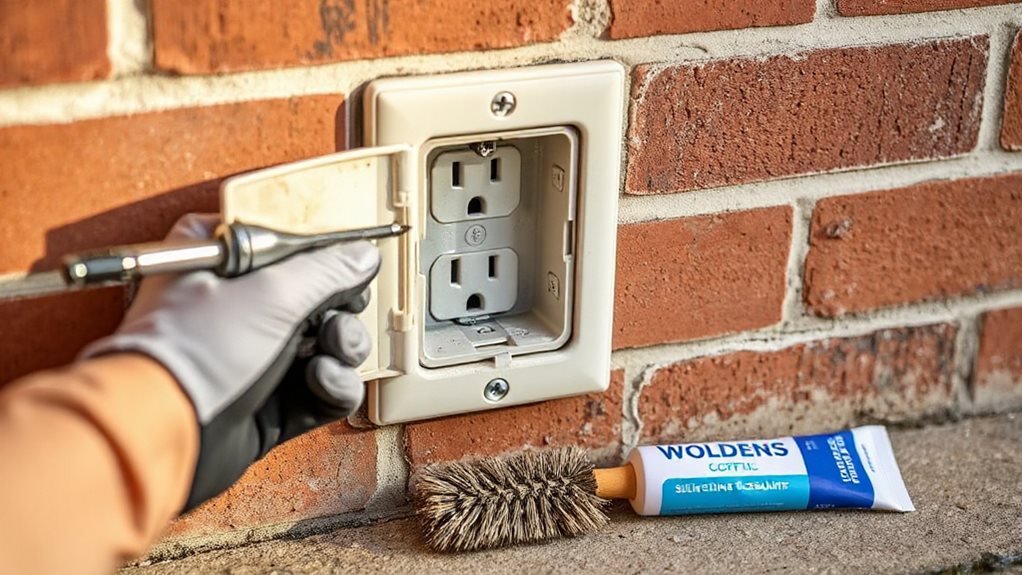
Wondering how to keep your backyard charger humming all year long? You’ll schedule quarterly inspections, wipe dust with a dry cloth, trim overhanging branches, and check covers for cracks—replace damaged ones immediately. Test GFCI functionality each season, keep outlets dry under eaves, and never overload circuits or rely on permanent extension cords. These simple habits protect friends, family, and your camping escapades.
Overall
Now you’ve got the know‑how to bring that outdoor outlet back to life, so pack your gear, head out, and let the campsite lights glow without a hitch—just remember to reset the GFCI, check the breaker, dry any moisture, and tighten those wires before you plug in the grill or lantern. If anything still acts up, don’t sweat it; a quick call to an electrician will keep your journey on track, and you’ll be back to roasting marshmallows in no time.