Outdoor Outlet Stops Working After Rain: What’s Going On?
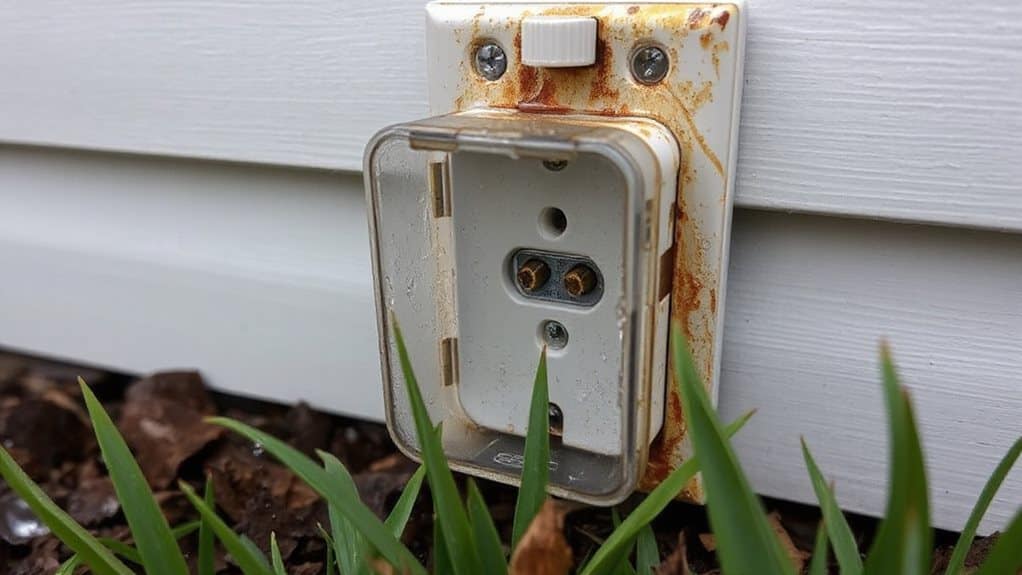
So your outdoor outlet packed up after the rain? Yeah, water’s sneaky—it slips in through cracked seals, loose conduit fittings, or those flimsy flip-up covers that barely work when it drizzles, let alone pours. Moisture causes shorts, trips the GFCI (that safety superhero!), or worse, corrodes stuff inside. I once found a spider family vacationing in mine—adorable, but no thanks! Dry it out, reset the GFCI, and peek for green fuzz or burns. Want to know how to fix it for good and keep your camping gadgets powered? There’s a cool trick with waterproof covers that’ll blow your mind.
TLDR
- Rainwater enters outdoor outlets through unsealed cables, damaged gaskets, or tilted boxes, causing shorts or GFCI trips.
- Moisture creates conductive paths, leading to corrosion, short circuits, and insulation failure in electrical components.
- GFCI outlets trip quickly when detecting current leakage from water, cutting power to prevent shocks.
- After rain, allow the outlet to dry completely before attempting to reset the GFCI; repeated trips indicate lingering moisture or damage.
- Cracked enclosures, green corrosion, or water pooling require professional repair to restore safe operation.
How Rainwater Gains Access to Outdoor Outlets
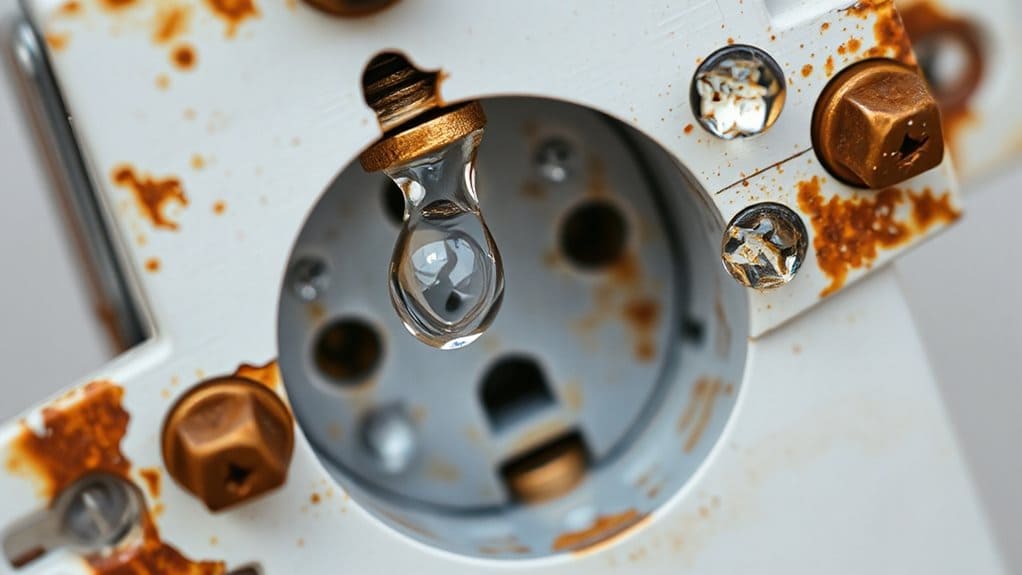
So, you’re all set for a backyard movie night or maybe prepping the camper for a weekend trip, and—uh oh—your outdoor outlet won’t power up after the rain.
Rain sneaks in through unsealed cable entries, tilted boxes, or missing gaskets, turning your cozy plan into a soggy surprise.
Flip-up covers? They’re cute but useless in a downpour. Always seal knockouts and use in-use covers—your blender (and satisfaction) will thank you!
A short circuit may occur when water creates an unintended path between live conductors, and this is often caused by poor sealing or lack of proper protection—making water ingress a leading culprit in post-rain outlet failures. Additionally, monitoring amp draw on outdoor circuits can help you spot problems caused by moisture-related shorts.
The Role of Damaged Seals and Cracked Enclosures
You thought that flip-up cover was doing its job, but turns out, it’s been letting rain sneak in like an uninvited guest at a campfire cookout—hello, soggy toast and zero popcorn for the movie night!
Cracked seals and busted enclosures? Yeah, they’re the sneaky culprits.
UV rays and temperature swings wreck rubber gaskets over time, and once moisture slips in, your outlet’s toast—corrosion, shorts, even shock risks. Yikes!
Check for rust, test after storms, and replace cracked covers with snug, gasket-sealed, weatherproof ones—your camping gadgets will thank you!
Propane tanks can also be affected by cold and moisture, so keep them at least 30% full during cold periods to help maintain pressure and safety.
Why Moisture Triggers Electrical Faults
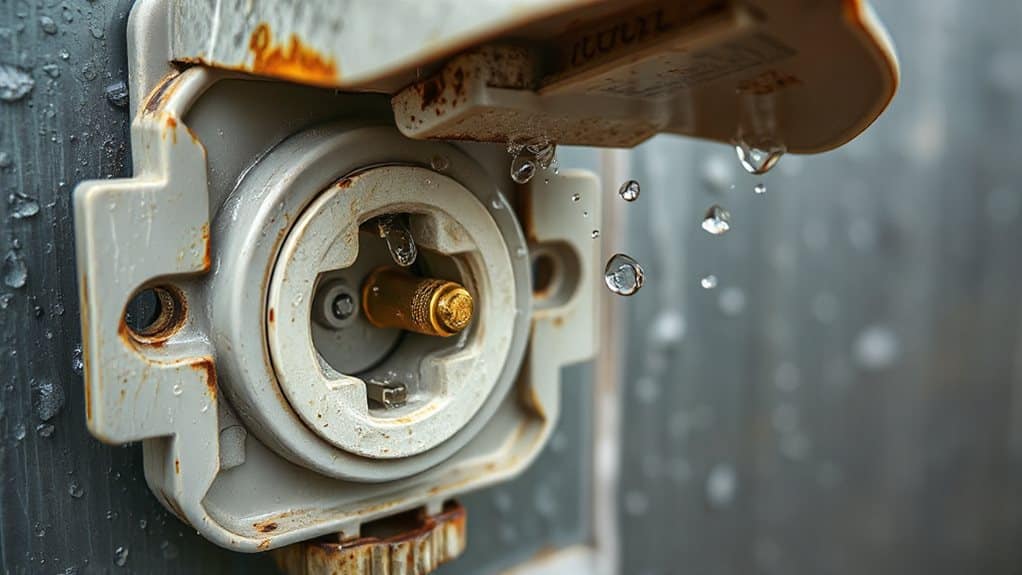
Even though pure water doesn’t conduct electricity, the stuff that actually falls from the sky—rain, dew, or that sneaky mist creeping in at dawn—is packed with minerals, dirt, and other tiny troublemakers just waiting to crash your electrical party like uninvited campfire marshmallow thieves.
These contaminants team up with moisture to create sneaky conductive paths, leading to short circuits, corrosion, and insulation failure—basically throwing a wrench into your outdoor outlet’s happy little circuit world.
Proper ventilation and monitoring with a carbon monoxide detector can help protect indoor spaces when electrical faults cause combustion-related hazards.
How GFCI Protection Responds to Wet Conditions
So your outdoor outlet’s acting up after the rain? No worries—your GFCI’s just doing its job, springing into action the second it senses moisture messing with the current, like when puddles sneak into plugs during a downpour or you’re setting up camp and forget to cover the power strip (hey, it happens!).
It cuts power in a flash, faster than you can say “shocking,” to keep you safe, but here’s the kicker: you’ve gotta let things dry out completely before you hit that reset button, or it’ll trip again like it’s playing tag and you’re *it*. Turning off the fuel supply, such as closing the propane tank valve after use, is a similarly important safety step to prevent leaks and hazards (turn off tank).
GFCI Detects Moisture Instantly
Most of the time, your outdoor GFCI outlet is just chilling there, minding its own business—until rain shows up and suddenly, *poof*, everything shuts off!
It’s not broken; it’s *protecting* you! That tiny brain inside senses sneaky current leaks through moisture faster than you can say “campfire gone wrong,” then trips in under 0.1 seconds—zap! Stay safe, stay dry, and keep those s’mores roasting safely!
Tripping Prevents Electrical Hazards
When rain sneaks into your outdoor outlet and your GFCI instantly cuts the power, don’t roll your eyes—cheer! It’s not being dramatic; it’s saving your skin.
That quick trip stops shocks before they start, especially when you’re barefoot or handling lights, grills, or camping gear. Water and electricity? Super dangerous combo. But thanks to GFCI, you’re safe—even if your smoothie blender suddenly quits.
Reset Only When Dry
Don’t even think about smacking that reset button the second the rain stops—your GFCI’s got a mind of its own, and it’s not ready to play nice until everything’s bone dry.
Seriously, it’s like trying to start a campfire with wet matches—frustrating and pointless! Let the outlet, cords, and connectors air out completely; otherwise, you’ll just get that annoying *click* and nothing happens. Patience, my friend—safety first!
The Impact of UV Exposure on Outlet Gaskets
Sunlight might seem harmless, but that golden glow is secretly waging war on your outdoor outlet’s gasket—yes, really!
UV rays zap rubber, making it crack and flake like old paint, while ozone from storms or gadgets speeds up the damage.
You see discoloration? That’s a red flag!
Brittle gaskets fail, rain sneaks in, and—zap—your outlet trips.
Protect your campsite’s power by choosing UV-resistant silicone or EPDM gaskets, and check them regularly; a little care keeps the lights on and the fun going!
HOA entries to inspect outdoor electrical components are typically governed by governing documents and state law, so always verify your association’s rules before allowing inspection.
Corrosion Build-Up Inside Weathered GFCI Units
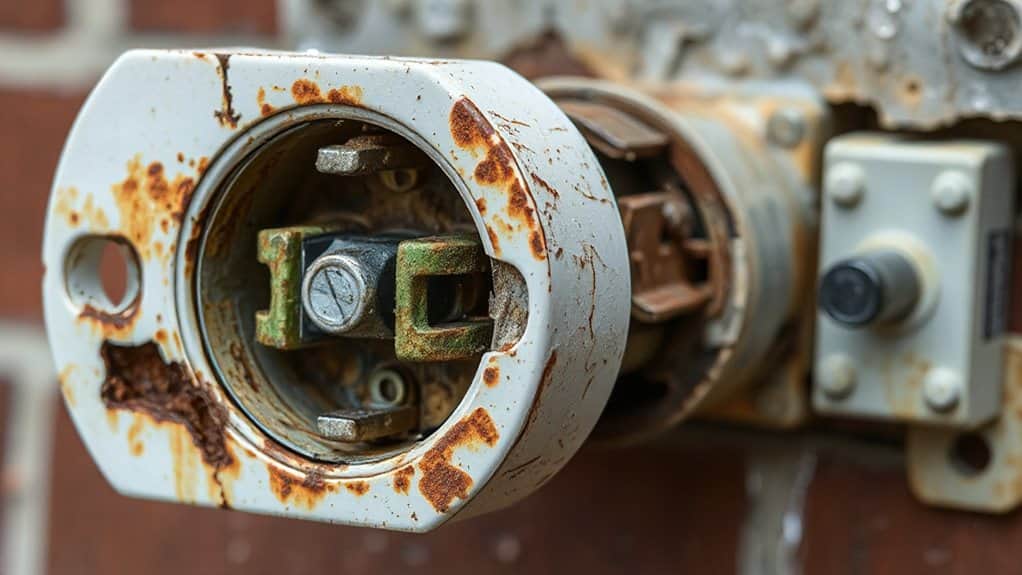
Ever opened up a soggy outdoor outlet after a downpour and found a science experiment gone wrong? Water sneaks in, reacts with copper, and boom—rusty gunk builds up inside your GFCI.
That crud messes with connections, causes tripping, and can even lead to shocks. Yikes! Coastal? Saltwater speeds it up. Humid? It sticks around.
Don’t panic—check for pitting, test monthly, and slap on a weatherproof cover. Your camping trips depend on it!
Common Signs of Water Damage in Outdoor Wiring
Envision this: you’re all set for a weekend camping trip, coffee in hand, ready to fire up the grill or charge your gear from the outdoor outlet—only to find it’s acting weirder than a squirrel on espresso.
See rust around the slots? That’s a red flag. Is the wall spongy, paint peeling, or cover swollen? Uh-oh. Smell burning or musty scents? Hear buzzing or crackling? Yikes—water’s likely sneaking in.
Did you get a shock? Stop! Moisture means danger. Tripping breakers? Yep, that’s your home screaming for help. Don’t ignore it—safety first, always!
How Loose or Corroded Connections Invite Problems
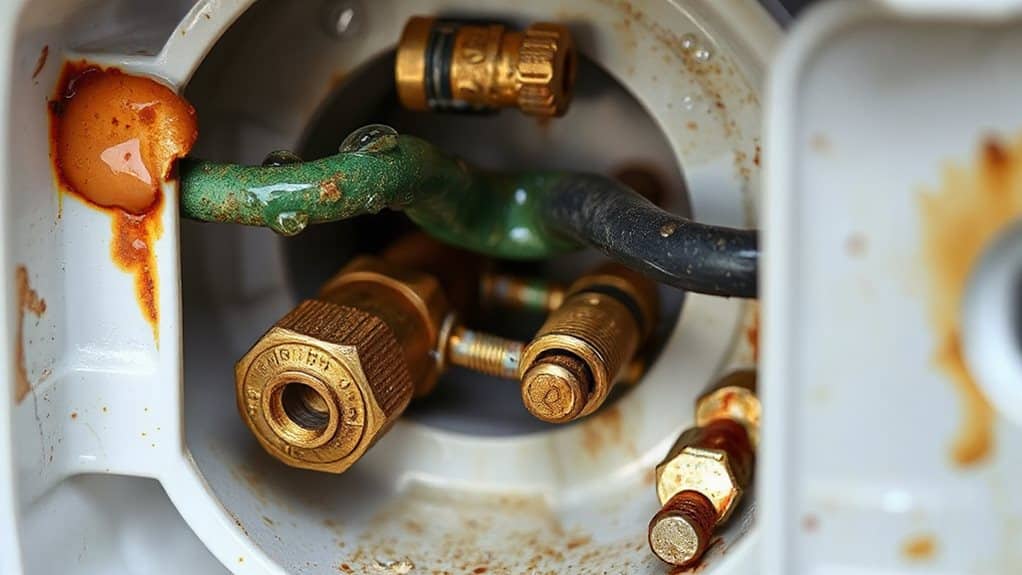
So there you are, about to plug in your trusty camp blender for some post-hike smoothies—because roughing it doesn’t mean skipping nutrition—and *nothing*. Uh-oh. Loose connections? Yep, they let moisture sneak in, creating sneaky electrical paths.
Corrosion builds up, resistance spikes, and suddenly, your outlet’s throwing a tantrum. Trips, shorts, even fire risks—yikes! Don’t wait: check those screws, look for rust, and grease those joints. Stay safe, keep blending, and let’s keep those outdoor vibes flowing!
The Importance of Proper Conduit Sealing Outdoors
While you’re out chasing waterfalls or setting up camp under the stars, the last thing you want is for your outdoor outlet to bail on you because water snuck into the conduit like an uninvited trail buddy.
Seal it right—use waterproof silicone, snug gaskets, or expanding foam to block moisture and pests. Tighten those fittings, match materials to weather, and boom: reliable power, rain or shine, so you can keep the coffee brewing and lights glowing.
Choosing the Right Weatherproof Covers and Ratings
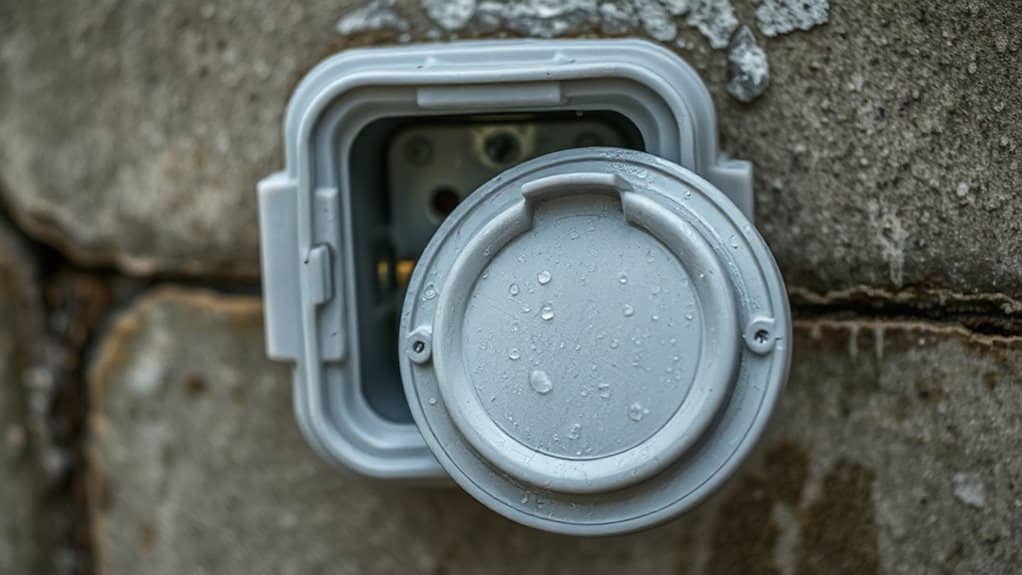
When rain starts falling and your outdoor outlet decides to take a nap, it’s probably not the outlet’s fault—it’s likely the cover wasn’t up to the challenge.
You’ll want extra-duty, in-use covers for wet spots; they laugh in the face of downpours! Pair WR/TR outlets with IP65 or NEMA 4 enclosures, and boom—your camping lights, grill, and coffee maker stay powered, no matter the weather.
Don’t let a soggy plug ruin your backyard outing!
Step-by-Step Reset Process After Rain Exposure
Alright, let’s get that outdoor outlet back in action—because nobody wants a soggy surprise cutting power to your s’more-roasting station or that string of fairy lights making your backyard feel like a campsite straight out of a magazine.
First, unplug everything and kill power at the breaker—safety first, right? Check nearby bathrooms or garages for a tripped GFCI; those sneaky reset buttons love to hide.
Found it? Press reset till you hear a click—like a tiny victory cheer.
No click? Probably still damp or damaged. Let it dry overnight, maybe use a blow dryer (not while it’s live—yikes!).
Test with a nightlight, and boom: back to backyard bliss.
When to Call a Licensed Electrician for Repairs
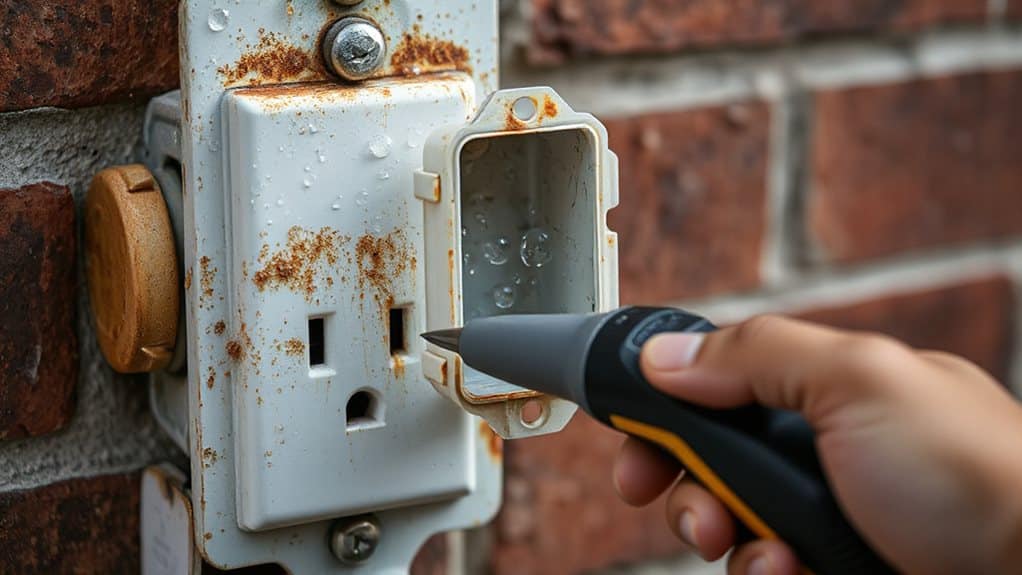
So, if you peek inside your outdoor outlet box and spot water pooling like a tiny indoor pool, or if your GFCI just refuses to reset no matter how many times you mash that button, it’s definitely time to call in a pro—trust me, I learned the hard way after my camping trip got rained out and my portable grill wouldn’t fire up.
Visible corrosion that looks like greenish fuzz, or any scorch marks that scream “I’ve been cooking something besides your hot dogs,” means your wiring’s throwing a silent tantrum and needs expert eyes, not a YouTube tutorial.
Don’t wait until your next outdoor movie night turns into a shock-filled surprise—get a licensed electrician on the case now, so you can get back to roasting marshmallows and charging your phone without fear!
Water Inside Outlet Box
Envision this: you’re all set to fire up the grill for a backyard cookout, extension cord in hand, only to find a splash of rainwater sloshing around inside your outdoor outlet box—yep, that sinking feeling when Mother Nature crashes your plans.
Water in there? Big no-no. It can cause short circuits, shocks, or even fires.
Don’t panic—just flip the breaker, unplug everything, and let it dry.
But if it’s soaked or you see rust, call a pro. Safety first, friend!
GFCI Won’t Reset
So there you are, standing in your damp backyard with a soggy extension cord in one hand and a burger that’s not getting any hotter, wondering why the GFCI outlet won’t reset after the rainstorm blew through—kind of like that time my camping trip turned into a “survival skills refresher” when my portable grill wouldn’t fire up and I realized I’d plugged it into a wet outlet (spoiler: the raccoons judged me hard).
If flipping the breaker doesn’t help, or the GFCI trips again instantly, there’s likely a ground fault or wiring issue—definitely time to call a licensed electrician. Don’t play electrical detective; safety first, especially when you’ve got burgers (or campfires) depending on you!
Visible Corrosion or Damage
Sometimes—okay, *most* times—you’ll catch it before things go full meltdown: a little rust on the outlet cover, a faint sizzle when you plug in the string lights, or that one socket that’s always a little too warm, like it’s embarrassed it’s not working right.
Green gunk? Pitting? Burn marks? Yeah, don’t poke it like a campfire mystery—call a pro. Safety first, escapade later!
Overall
So, your outdoor outlet acts up after rain? No worries—it’s probably just doing its job by shutting down safely! Moisture sneaks in through cracked covers or worn seals, and *bam*, the GFCI trips to protect you. Always check the weatherproof cover, seal the conduit tight, and don’t forget to hit that reset button. Honestly, I learned this the hard way—mid-camping trip, no coffee. Not fun! Stay safe, stay dry, and keep those excursions powered!