Why Do Plants Suddenly Drop Flowers?
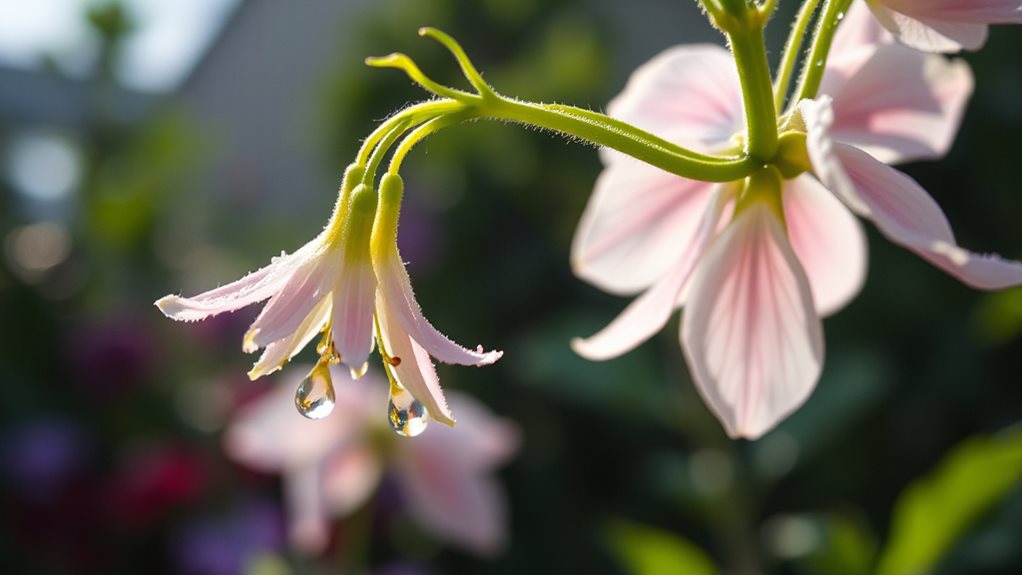
You’re probably watching your garden like a campsite at sunrise, only to see buds suddenly vanish, and it’s usually the weather, water, nutrients, or pesky critters pulling the plug on those blossoms—cold nights under 55°F sterilize pollen and force buds to abort, scorching daytime heat makes pollen sterile, and rapid temperature swings can shrivel buds, while over‑watering or overhead sprays invite mold, excess nitrogen fuels leafy growth at the expense of flowers, and thrips, mites, or aphids chew and transmit disease; if you keep an eye on temperature, moisture, nutrition, and pests, you’ll reveal the real culprits and how to stop the drop.
TLDR
- Temperature extremes (cold nights below 55 °F or heat above 85 °F) cause pollen sterility, hormonal imbalance, and bud abortion, leading to flower drop.
- Inadequate or excessive watering, especially overhead irrigation, creates humidity conditions that promote disease and stress, causing blossoms to fall.
- Nutrient imbalances, particularly excess nitrogen or phosphorus deficiency, weaken flower development and increase premature shedding.
- Pest infestations (thrips, mites, aphids) and fungal diseases (powdery mildew, Botrytis) damage buds and petals, triggering abscission.
- Rapid temperature swings after cold nights, combined with poor root nutrient uptake, stress buds and result in sudden flower loss.
Why Tomato Flowers Drop: The Core Reasons
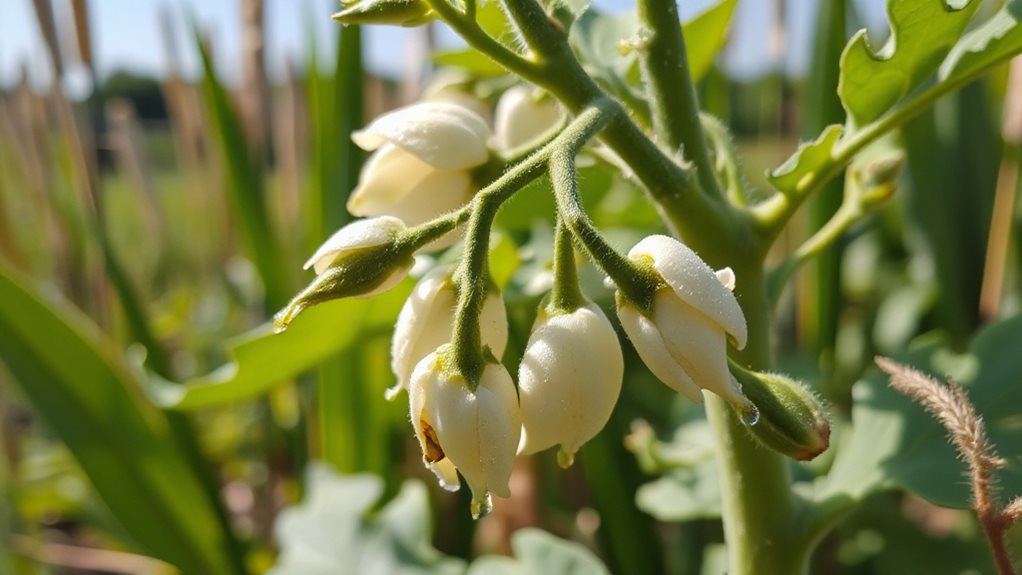
Ever wondered why your tomato blossoms sometimes just *poof*—disappear?
Cold nights below 55°F sterilize pollen, halting fruit set, while low humidity dries pollen and high humidity clumps it, both ruining pollination.
Inconsistent watering steals calcium, leaving flowers weak, and a lack of buzzing bees or wind vibrations means pollen never reaches the stigma.
Balance temperature, moisture, and nutrients, and your garden will thrive. Adding excess nitrogen can cause lush foliage but weak blossoms, increasing drop risk. Repeated improper pruning timing can also stress plants and reduce flowering if done at the wrong time for spring bloomers like prune spring shrubs.
How Extreme Daytime Heat Triggers Flower Drop
When the midday sun turns the garden into a sizzling desert, you’ll notice the pollen going totally bonkers, becoming sterile like a campfire that never catches a spark, and that’s one reason the blossoms bail out.
Have you ever wondered why the plant’s hormones go haywire under those scorching temps, cranking up ethylene and flipping the switch on flower abscission?
Cold soils slow root growth and nutrient uptake, especially phosphorus and potassium, which can worsen stress responses in heat‑stressed plants.
Heat‑Induced Pollen Sterility
How does a scorching summer day turn a blooming garden into a “no‑flower” zone?
You’ll see pollen grains shrivel, starch vanish, and walls crack, because extreme heat fries the unicellular, bicellular, and tetrad stages, slashing germination by up to 80 %.
The pollen can’t penetrate silks, sperm cells stall, and anthers stay shut, so the plant drops flowers, saving energy for future growth.
Temperature‑Driven Hormonal Imbalance
So, why does a scorching summer day turn a thriving garden into a “no‑flower” zone? You see, extreme heat spikes IAA and GA20 in buds, while ABA drops, shattering hormone balance; pollen tubes stall, ovules wilt, and the plant aborts blossoms.
Drought sharpens this effect, and cooler nights (negative DIF) can rescue the cycle, so keep moisture steady and temps moderate.
What Night‑time Temperature Swings Do to Buds?
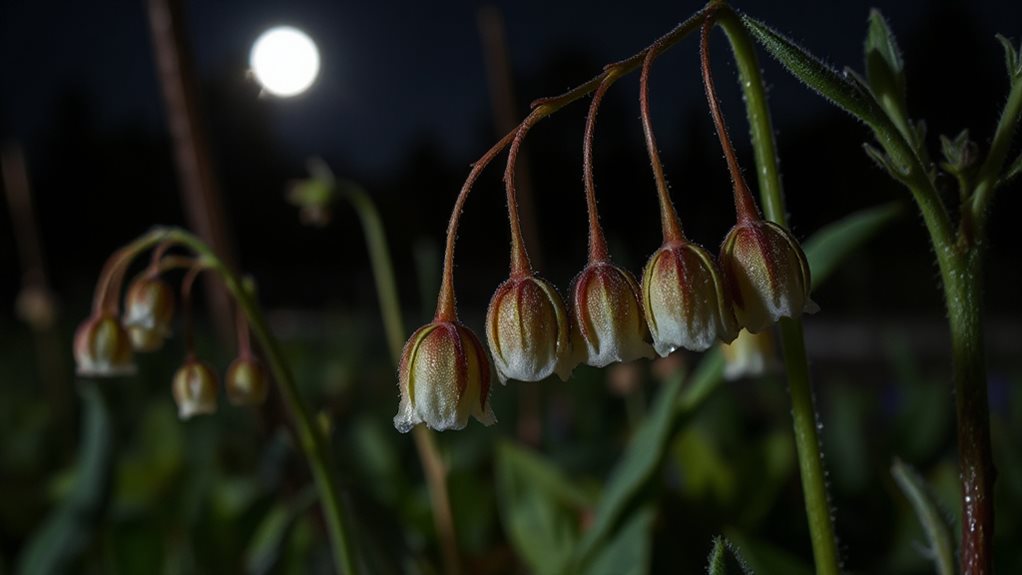
You’ll notice that when night‑time temps dip too low, the buds get a chill‑stress that can freeze their tiny cells, and if a sudden warm spell follows, the plant may abort the buds altogether, kind of like packing a tent in a snowstorm and then realizing you left the stove on.
Have you ever camped out under a clear sky only to wake up to a frost that makes the ground sparkle and the fire die out?
Keep an eye on those temperature swings—if you see a rapid rise after a cold night, expect the buds to shrivel, and remember, a steady, moderate night chill is your garden’s best campfire for healthy flowering.
Cold‑tolerant spring growers often gain an advantage because they tolerate cool temps, letting them get an early start when others are still waking up.
Night‑time Chill Stress
Ever wonder why a garden can feel like a roller‑coaster after a chilly night?
When temps dip below 55 °F, pollinators hide, pollen tubes crawl, and hormone signals go haywire, causing buds to abort.
You’ll see tomatoes shedding blossoms, canola losing flowers, and overall fruit set plummeting.
Keep nights steady, maintain moisture, and you’ll rescue those blooms.
Heat‑Induced Bud Abortion
What happens when the night air stays warm after a scorching day? You’ll see buds abort because heat lingers, especially if degree‑hours exceed 33 °C; Arabidopsis No‑0 aborts from stage 9‑12, while Col‑0 only at stage 12.
Direct hot exposure kills pollen, so warm nights block recovery, causing canola to lose flowers and pod formation fails—think of it as a camping trip where the fire never goes out.
Best Watering Practices to Prevent Flower Drop
Ever wondered why a plant’s blossoms seem to vanish overnight?
Water at the base, not overhead, using you avoid leaf rot and sunburn, so grab a long‑spout can or a soaker hose and aim for the soil.
Early‑morning watering lets leaves dry before night, while deep, weekly soaks nurture strong roots—think of it as giving plants a campsite’s steady water supply, not a fleeting rainstorm.
Mulch like shredded leaves to lock in moisture, and check soil before you pour.
Plant aromatic herbs nearby to help repel pests like aphids and invite beneficial insects such as lacewings and hoverflies mint and basil.
How Post‑Pollination Humidity Affects Flower Retention
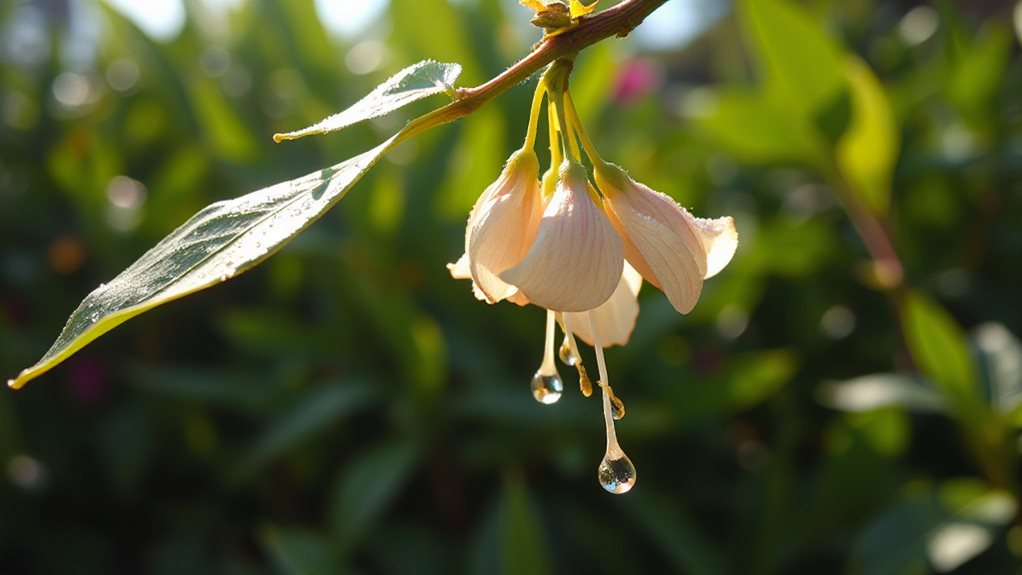
You’ll notice that right after pollination the air around the blossoms can make or break their stay—high humidity slows down transpiration, so the flower hangs on longer, but too much moisture can swamp it and invite mold, turning a pretty bloom into a soggy mess.
Imagine you’re camping and the night fog makes the tent interior humid; that same cozy dampness can keep a flower’s petals plump, yet if you leave the tent open in a rainstorm the fabric gets heavy and tears—so you’ve got to strike the right balance.
Try keeping the post‑pollination environment at a steady, moderate humidity, and you’ll see the corollas stay vibrant far longer, just like packing the perfect gear for a weekend trek.
Providing nearby shelter such as shrubs or a small overhang can help maintain that moderate humidity and protect blooms from extremes, making them less likely to drop prematurely and supporting pollinator visits to nearby plants.
Impact Post‑Pollination Humidity
Ever wondered why a flower suddenly decides to pack its bags right after you’ve helped it get pollinated?
You’ll notice high post‑pollination humidity keeps pollen plump, but too much makes it burst like a soggy marshmallow, while too little dries it out like desert sand; both extremes slash viability, so the plant triggers dropping to conserve energy and avoid fungal mishaps.
Managing Humidity for Retention
What if I told you that the secret to keeping a flower hanging around after pollination is almost as tricky as planning a perfect camping trip—balancing humidity like you’d balance a campfire’s airflow? You’ll need to keep moisture steady: not too soggy, or mold crashes the party, and not too dry, or pollen dies. Think of it as setting a tent’s vent—just right for comfort, longevity, and happy pollinators.
When Pollination Fails: Timing and Insect Activity?
Ever wonder why a bright garden can suddenly look like a flower‑less desert? When daytime temps soar above 85°F or nighttime chills bite, pollen gets sticky or dies, and your buzzing buddies take a nap, so the female squash flower only answers between 9 AM‑4 PM.
If bees skip the 15‑visit quota, thrips nibble buds, and unviable pollen triggers the plant to abort blossoms, leaving you with a sudden, sad‑looking patch.
Nutrient Imbalances That Trigger Tomato Flower Drop
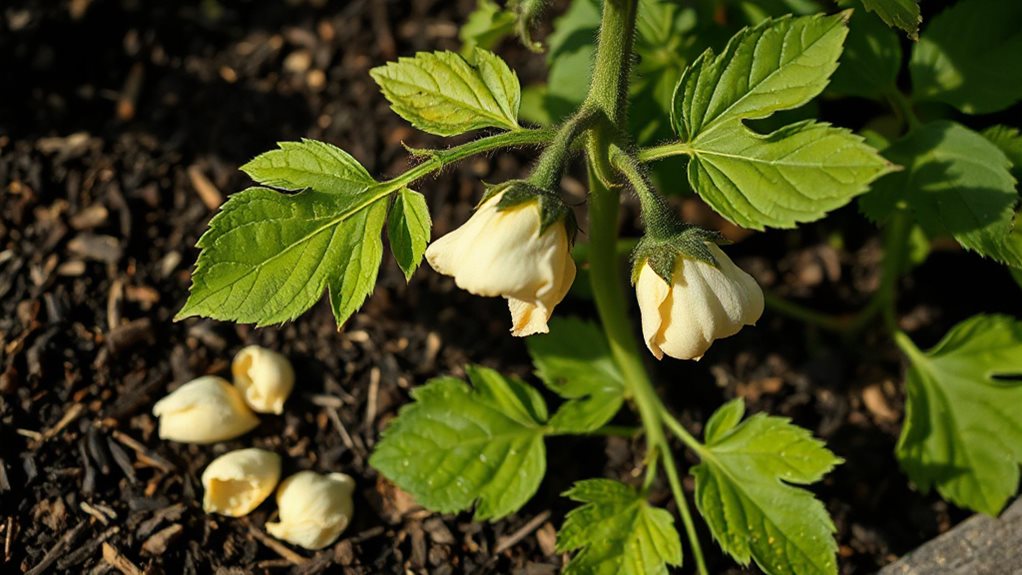
When you’re watching your tomato plants turn into a leafy jungle and suddenly wonder why the blossoms vanished, the culprit is often a nutrient imbalance that’s quietly sabotaging the flower‑to‑fruit pipeline.
Too much nitrogen fuels jungle growth, starving flowers; too little nitrogen leaves vines spindly and weak.
Phosphorus deficiency curtails bud formation, while calcium shortfalls—especially after irregular watering—prevent fruit set.
Balance your feed, switch to bloom formulas, and test soil to keep blossoms thriving.
Identifying Thrips, Mites, and Aphids Causing Flower Drop
After you’ve sorted out the nitrogen‑and‑phosphorus drama, the next mystery that can make your tomato blossoms disappear is a tiny army of pests—thrips, mites, and aphids—each with its own sneaky way of turning a garden party into a wilted‑flower disaster.
Spot torpedo‑shaped thrips on petals, white specks from mites, and honey‑dew‑covered aphid clusters; note browning streaks, stippling, and distorted buds to diagnose the culprits.
Spotting Fungal Diseases That Lead to Premature Shedding
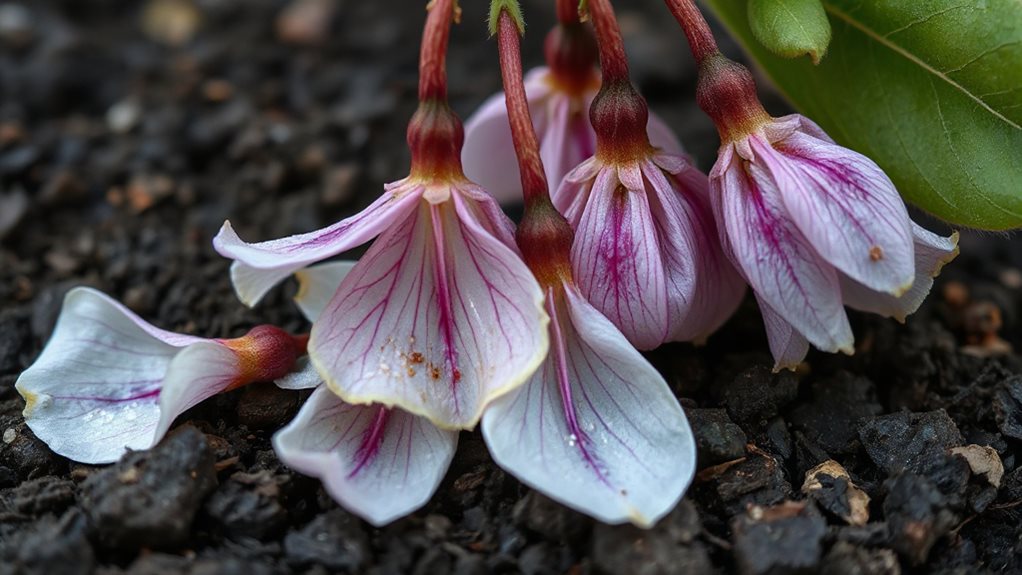
Wondering why your garden’s blossoms are vanishing like a campsite gone overnight?
You’ll spot powdery mildew’s white dust on leaves and buds, downy mildew’s yellow patches and fuzzy underside, anthracnose’s dark sunken lesions, black spot’s feathered dots, and botrytis’s gray fuzz on petals—each fungus rots tissue, forces leaves to abscise, and makes flowers drop prematurely, so check moisture, airflow, and sanitation before the next bloom.
Step‑by‑Step Checklist for Diagnosing Flower‑Drop Causes
Ever wondered why your garden’s blossoms seem to disappear faster than a campsite’s fire after a sudden rainstorm? First, check temperature: note daytime highs above 85°F, night lows under 55°F, or any dip below 45°F, then gauge water: feel soil moisture, ensure steady drip or soaker, and look for mulch.
Next, test nutrients: balance NPK, avoid excess nitrogen, add compost.
Finally, examine pollination and pests: watch for missing bees, sticky pollen, thrips, or aphids, and act with gentle sprays.
Overall
You’ve got the tools now, so keep an eye on temperature swings, water habits, and pesky critters—think of it like prepping for a camping trip where you check the forecast, pack the right gear, and scout for wildlife. If you spot wilting buds, ask yourself: is it too hot, too dry, or a bug invasion? Adjust watering, shade the plants, or treat the pests, and you’ll see those blossoms stick around longer, turning your garden into a thriving expedition.