Why Do Squirrels Chew Garden Hoses?
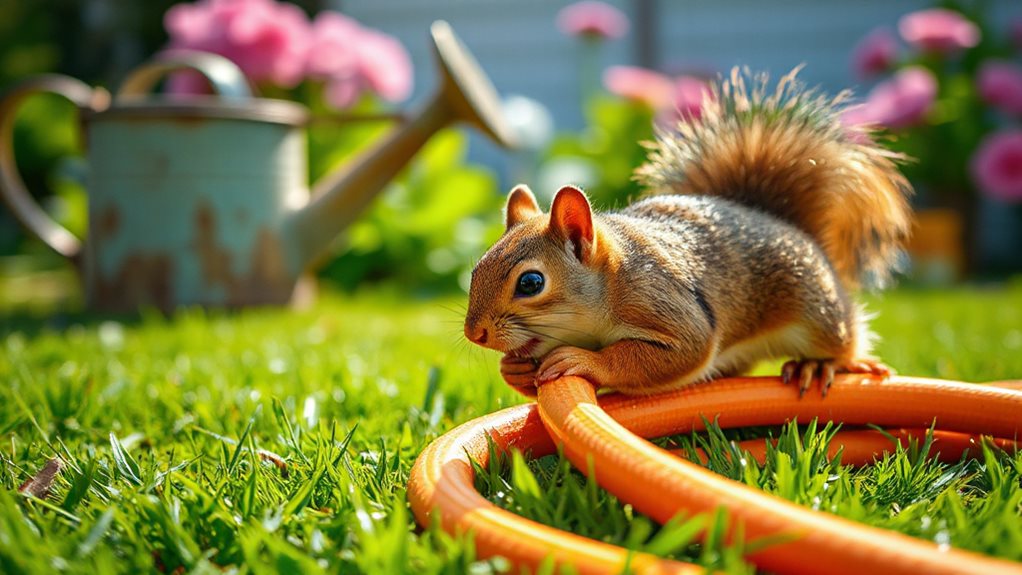
You see squirrels chewing garden hoses because their ever‑growing teeth need constant gnawing, and the soft, water‑slick insulation feels like a tasty, vibrating snack that even smells a bit like soy—so they bite, splash, and treat the hose like a giant chew toy, especially when food’s scarce or curiosity spikes. The gentle vibrations mimic insects, the moisture looks like dew, and the hose’s easy‑to‑chew material lets them wear down their incisors while having fun. If you keep reading, you’ll discover how to stop them.
TLDR
- Squirrels chew hoses to wear down continuously growing incisors and prevent overgrowth.
- Soft, moisture‑laden hose insulation mimics food cues, attracting their curiosity.
- Water flow creates vibrations that resemble insect movement, prompting exploratory gnawing.
- The soy‑scented coating and damp surface resemble edible seeds, making hoses appear snack‑like.
- Limited natural food or seasonal shortages increase gnawing as a teeth‑maintenance behavior.
Why Squirrels Target Garden Hoses
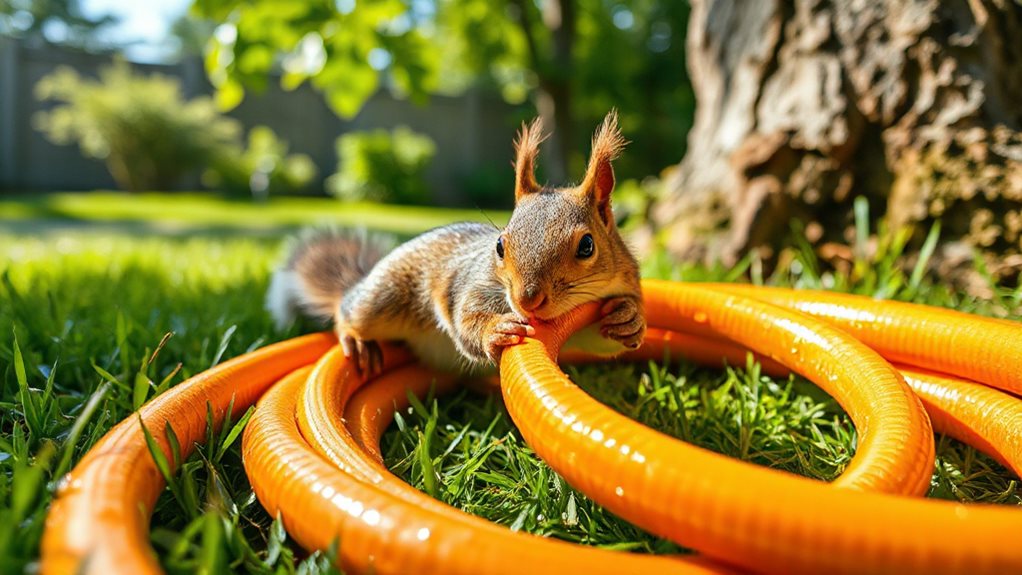
Ever wonder why those cheeky squirrels seem to have a secret love affair with garden hoses? You’ll notice they chase soft‑plastic tubes that feel like chew toys, especially when those hoses snake along garden paths, fences, or trees you use for camping trips. The gentle vibrations, occasional drips, and even soy‑scented coatings mimic food, so they bite, gnaw, and splash, turning your irrigation system into a squirrel playground. Squirrels chew on soft insulation because their teeth grow continuously and need daily gnawing. Choosing durable, rust-resistant materials for outdoor gear can help reduce damage from persistent gnawing.
Why Squirrels’ Growing Teeth Force Them to Gnaw
You’re probably wondering why squirrels can’t just let their teeth grow forever, and the answer is that their incisors keep sprouting about six inches a year if they don’t constantly wear them down. That’s why you’ll see them gnawing on anything hard—garden hoses, wooden fences, even frozen nuts—because the constant wear keeps the teeth from overgrowing into their jaw and causing painful, life‑threatening problems. So next time you hear a squirrel chomp, think of it as a tiny, enthusiastic camper on a never‑ending road trip to keep its smile in shape. Applying soil amendments like improved drainage can be important for gardeners dealing with compacted, clay-rich beds where chewed hoses are often used during watering.
Eververging Incisor Growth
Because squirrels’ incisors keep growing no matter what they chew, they’re basically forced to gnaw everything in sight—especially garden hoses that feel like a juicy, flexible snack. You’ll notice hard nuts shrink teeth quickly, dropping lengths to about 7.5 mm, while soft seeds let them swell past 10 mm, so you can imagine their constant quest for fresh, chewable material, like a camper hunting for snacks on a trail.
Constant Wear Required
Ever wonder why squirrels never seem to quit chewing, even on garden hoses that feel like a juicy, flexible snack?
You’ll love how their constantly growing incisors demand nonstop wear, so they gnaw everything from nuts to garden hoses, keeping teeth sharp and pain‑free.
This relentless chewing also sharpens their skills for food processing, nest building, and even exploring new camping spots, making every bite a vital survival adventure.
Water, Moisture & Vibration: What Makes Hoses Irresistible
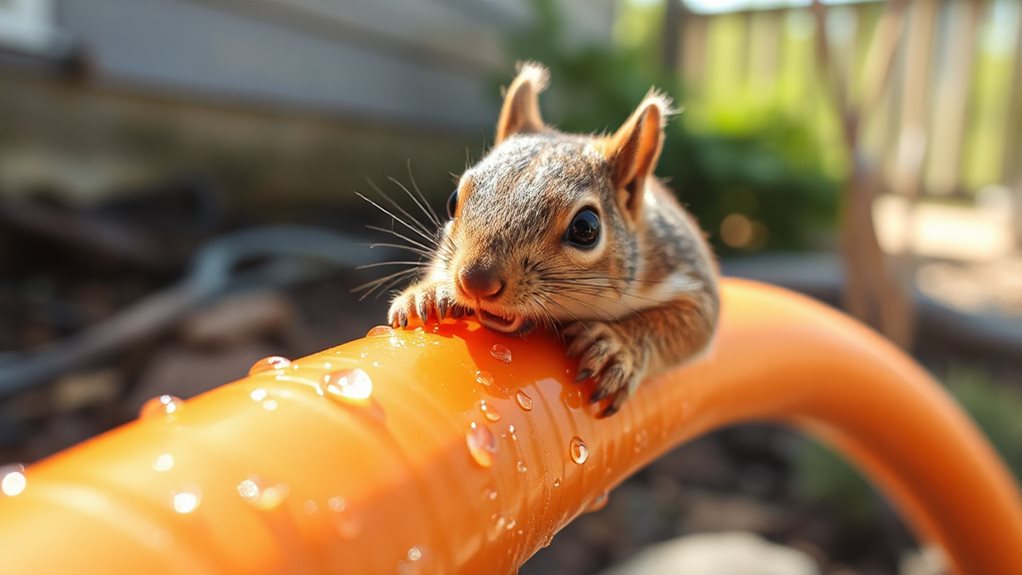
You’ll notice that a damp hose glistens like a hidden spring, and that shiny moisture signal practically screams “snack” to a squirrel’s nose, right?
Imagine the faint hum and rhythmic thump of water flowing through the pipe—those vibrations mimic the buzz of insects, so the critters think they’ve struck a buffet of moving prey.
Fences and nearby structures can create a cooler, moister microclimate that helps retain that dampness, making hoses more attractive to rodents and small mammals like squirrels, especially in sheltered zones.
Vibrant Moisture Signals
Ever wonder why a garden hose looks like a magnet for squirrels? You’ll notice that the sleek, tubular shape mimics water‑rich vines, and the soft plastic holds lingering moisture that smells like fresh dew or even soy‑based insulation, tempting their noses. When rain or irrigation leaves droplets, the hose glistens, broadcasting a juicy scent trail that says, “Here’s a reliable drink—chew me!”
Hidden Vibration Cues
Why do those humming hoses seem to whisper “come check me out” to every squirrel that passes by? You’ll notice the water’s tiny tremors mimic insect scurrying, and your squirrel’s ears pick up those subtle vibrations, sparking curiosity.
The flexible plastic tubes transmit the buzz with almost no dampening, making the hose feel like a living root, urging you to investigate and, ultimately, gnaw.
Water‑Rich Pipe Texture
Ever noticed how a soggy garden hose feels like a soft, bendy noodle in a squirrel’s tiny paws?
You’ll see that the water‑rich texture mimics juicy vines, and the lingering moisture makes the plastic pliable, so their teeth glide effortlessly.
When you sprinkle a little extra water, the hose practically whispers “snack,” and the squirrel can’t resist gnawing, especially after a long hike.
How Food Shortages and Curiosity Lead Squirrels to Chew Hoses
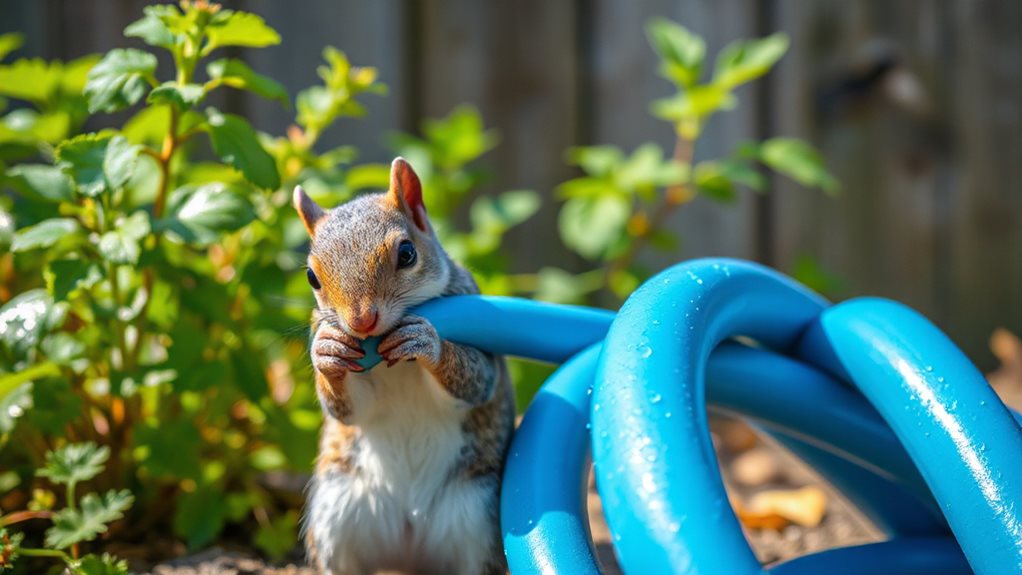
Ever wondered why a squirrel might start gnawing on your garden hose when the pantry looks empty? You’ll see it when hard foods vanish, so the critter grabs rubber to grind those ever‑growing teeth, just like bark.
Curiosity spikes when water vibrates, tricking the squirrel into thinking insects are inside; it bites, investigates, and keeps chewing, turning your hose into an accidental snack station.
Snow mold and winter injuries can weaken garden plants and attract pests such as voles that further damage roots and nearby vegetation.
When Squirrels Are Most Likely to Chew Garden Hoses
When do squirrels decide it’s time to turn your garden hose into a chew‑toy, you ask?
You’ll find them most active in spring and early summer, when they emerge from winter dormancy, hunt for den material, and face food scarcity, so they gnaw hoses for resistance and tooth‑care.
Warm weather, nearby trees, and habitual targeting amplify this peak, making your hose a tempting, seasonal snack.
Fixing yard issues like poor drainage and removing nearby shelter can also reduce visits and chewing.
Garden Layout & Pipe Placement That Invite Squirrels to Chew Hoses
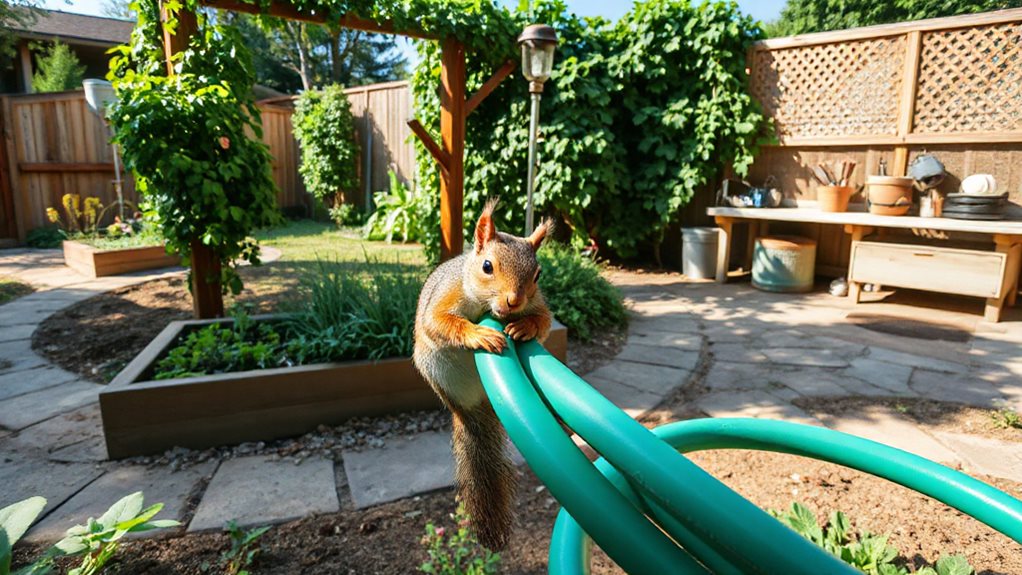
So, why does your garden layout feel like a squirrel‑sized amusement park for chewing? You’ll notice dense shrubs and mulch hide hoses, making them look like secret tunnels; bare‑soil runs mimic roots, while sun‑baked rubber glows like tasty treats. Tree‑adjacent lines give quick escape routes, and clustered hoses near vegetable beds turn the area into a snack buffet, inviting curious gnaw‑marathons.
Physical Barriers: PVC, Metal, and Protective Sleeves
If you’ve ever felt like your garden is a squirrel‑run amusement park, the secret to turning it into a calm campsite is simple: slap on a physical barrier. You can halve PVC pipe and slide it over hoses, bury it, or use colored PVC for style; roll chicken‑wire or hardware cloth over beds, build wooden frames, or drape sleeves on drip lines; metal or PVC sleeves protect heavier irrigation, and burying them under mulch locks squirrels out for good.
Deterrents and Alternative Water Sources to Keep Squirrels Away
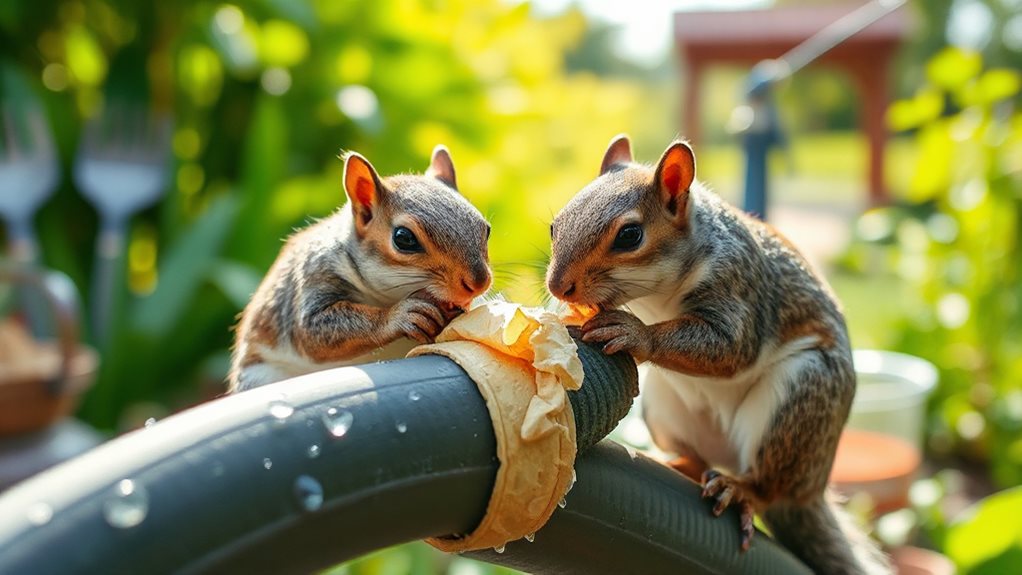
You might think a squirrel’s love for a garden hose is just another quirky wildlife habit, but actually it’s a perfect opportunity to turn your yard into a “no‑squirrel‑zone” while still keeping everything watered—think of it as setting up a campsite where the only critters you invite are the ones you actually want to see, like fireflies, not the chewing‑obsessed rodents.
Use I‑or‑castor repellent spray on hoses, sprinkle granular deterrent in soil, and install a motion‑activated sprinkler that sprays water when a squirrel approaches, giving you a safe, pet‑friendly, and fun garden that feels like a camp quest.
How to Manage Habitat for Long‑Term Protection
After we’ve got the squirrels away from the hoses, the next step is to think like a campsite planner and shape the whole yard into a wildlife‑friendly zone that keeps the critters you don’t want out for good. Trim trees, keep branches ten feet from houses, install metal baffles, plant oaks and hickories, seal vents with hardware cloth, fence gardens with one‑inch mesh, and inspect seasonally—your yard becomes a safe, tidy campground for everyone.
Overall
By now you’ve seen why squirrels treat garden hoses like a tasty, chew‑worthy snack—those ever‑growing teeth, the cool moisture, and the irresistible vibrations all combine to make hoses a perfect playground. So, next time you’re setting up camp or a backyard BBQ, remember to protect your pipes with sturdy sleeves or metal guards, give the critters a water source elsewhere, and keep an eye on where you lay your hoses. A little prep now saves you a soggy mess later, and you’ll still get to enjoy the great outdoors without any sneaky, gnawed‑up surprises.