
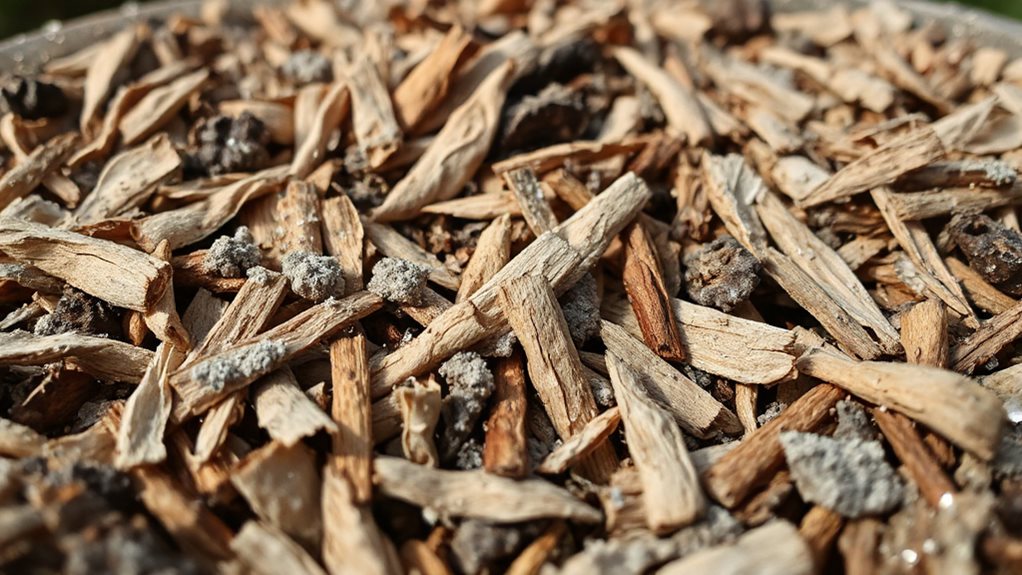
Why Does Mulch Turn White and Moldy?
You’re seeing that fluffy, snow‑like coating because extra water, shade, and a thick, compacted mulch create a humid, low‑oxygen spot where slime mold—especially Fuligo septica—thrives, just like cotton‑candy fuzz after a rainy campsite night; the moisture clings to the wood fibers, the shade traps humidity, and the dense layer blocks air, so the mold spreads in cotton‑like threads and bright yellow foam that dries into a powdery crust, and while it’s mostly harmless, it can irritate noses and pets, so if you want to keep your garden looking fresh and avoid the “camp‑site” vibe, you’ll uncover plenty of tricks and tips ahead.
TLDR
- Excess moisture from over‑watering, rain, or poor drainage creates a humid environment that encourages white mold growth on mulch.
- Shady, compacted, or overly deep mulch layers reduce airflow, trapping humidity and fostering slime mold development.
- Certain fungi, such as Fuligo septica (slime mold) and Sphaerobolus (artillery fungus), naturally colonize damp organic mulch.
- Mulch that stays wet for extended periods can turn white and fluffy, but it dries and fades when conditions become drier.
- Improving drainage, keeping mulch thin (≈2 in), fluffing regularly, and watering plants at the base early in the morning prevent mold formation.
Why Does White Mold Appear on Mulch?
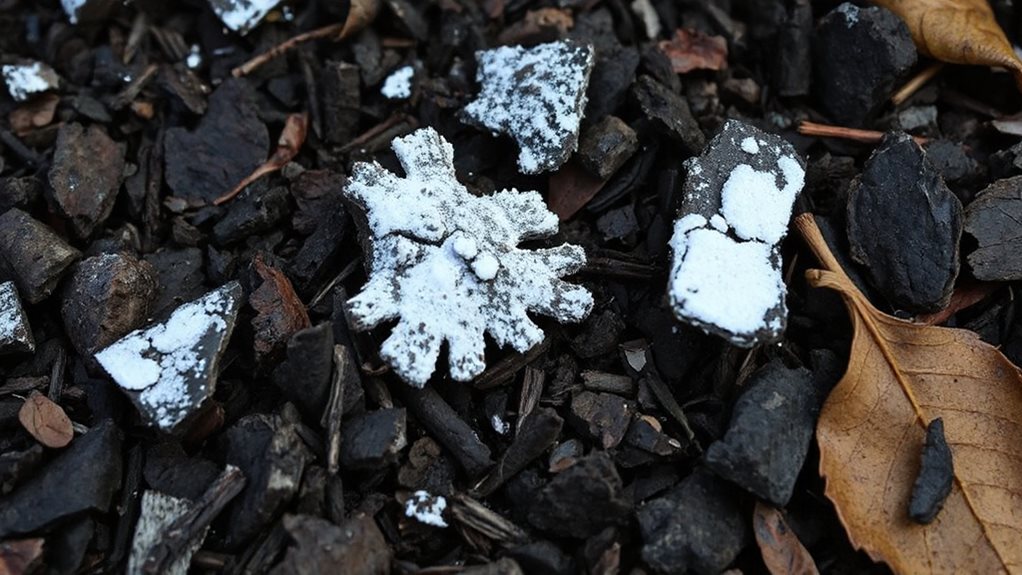
Ever wonder why your garden mulch sometimes looks like a fluffy, white cloud straight out of a camping‑trip postcard? You’re seeing slime mold thriving on moist, warm wood chips—think rain‑soaked camping gear left out overnight.
Over‑watering, shady spots, and compacted mulch trap humidity, letting bacteria‑eating fungi bloom into cotton‑like threads, just like the “scrambled‑egg” foam you spot after a spring rain. Excess moisture creates the damp conditions that promote mold growth. This is often worsened by poor drainage in the soil or mulch layer.
Is White Mold Harmless or a Threat to Your Garden?
So, is that fluffy white mold on your mulch just a harmless camp‑fire souvenir or a sneaky garden villain? You’ll find it’s mostly a friendly decomposer, recycling wood into nutrients, so plants stay happy; however, it can trigger sneezing or skin irritation in sensitive folks, and pets might need a vet check if they munch it. Keep it dry, wear gloves, and enjoy your garden’s natural cleanup crew. If mulch stays constantly wet it can promote poor soil aeration which may harm nearby plant roots.
How to Spot White Mulch Mold: A Quick Visual Checklist
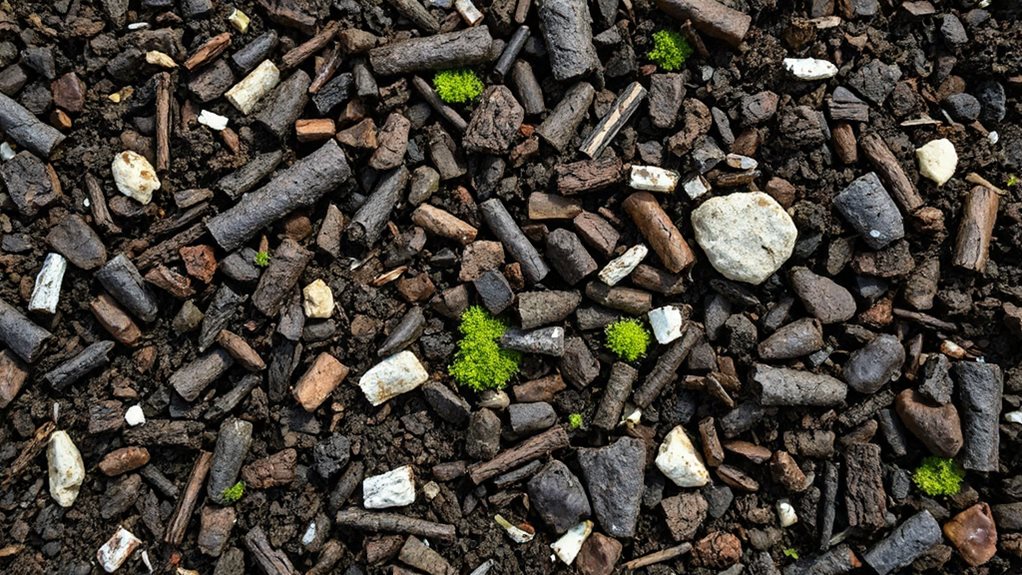
You’ll know you’ve got white mulch mold when you spot cotton‑like threads spreading across the surface, looking like a fluffy blanket that’s just settled after a night of camping, and you might also see bright yellow foam peeking through the top, kind of like the foam on a fresh cup of hot chocolate you left out in the sun; have you ever wondered why those colors pop up together, especially after a rainy spring when the mulch stays damp and shady, and the answer is that the foam is the early stage of the slime mold that later dries into the powdery white you’re hunting for?
– so grab a flashlight, walk around the garden, and check for those tell‑tale threads and foamy spots before they spread any farther. Mosquitoes are also attracted to standing water that accumulates in shaded, damp mulch areas, which can increase yard pest problems.
Cotton‑Like Threads
Spotting those cotton‑like threads in your mulch is a lot like hunting for hidden treasure on a camping trip—except the treasure is a fluffy white fungus, not gold. You’ll see a soft, cottony film spanning inches, especially in shaded, damp spots; rake gently to expose thin threads, feel the powdery residue after drying, and remember it’s not yellow foam or black spores, so aerate, thin, and keep moisture balanced.
Bright Yellow Foam
Ever wondered why a patch of mulch suddenly looks like a sunrise‑colored slime trail? You’ll spot bright yellow foam—like dog vomit or scrambled eggs—spreading in irregular blobs up to two feet wide, sticky and wet, moving a couple feet each day as it hunts bacteria.
It fades to brown, then hardens like a dinner plate, leaving yellow flecks beneath when you disturb it.
How Moisture and Poor Drainage Trigger White Mold
Ever wondered why your mulch looks like a ghostly blanket after a rainstorm? When rain lingers and drainage sucks, water pools under the mulch, turning it into a cozy spa for white mold.
You’ll see spores sprouting like cotton candy, especially in shady spots that stay damp.
Rake, space plants, and avoid over‑watering to keep the mold at bay.
How Mulch Thickness and Compaction Boost White Mold on Mulch
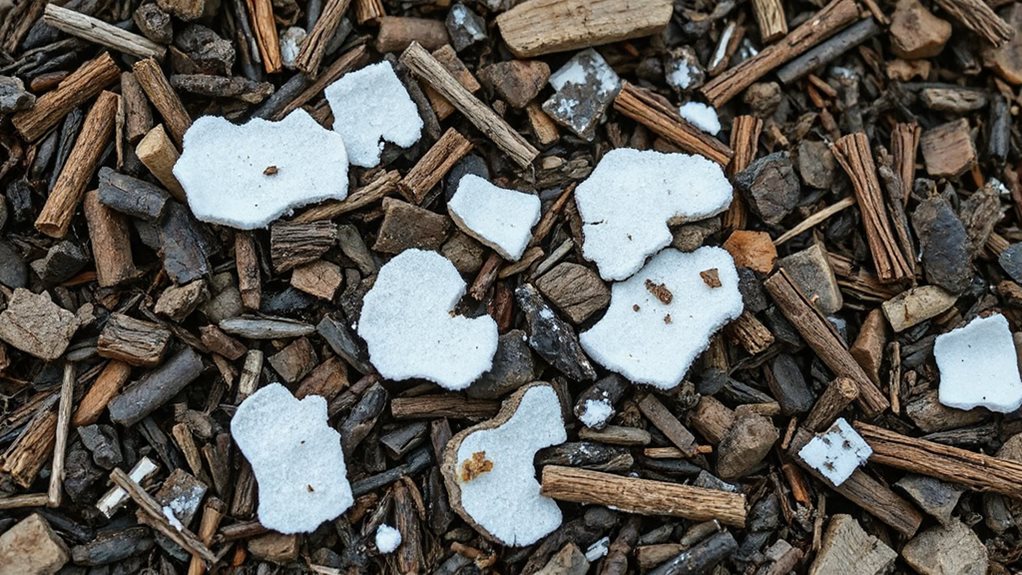
So why does a pile of mulch suddenly look like a fluffy snowdrift of white mold after a weekend of camping‑style rain?
You’ll notice that layers over two inches trap water, and when you compact them, air can’t circulate, so humidity builds, turning your mulch into a cozy fungal hotel.
Fluff it twice a year, keep depth shallow, and you’ll keep the mold at bay.
Higher-quality mulch and proper care can reduce how quickly mold develops, much like how proper care and maintenance extend the lifespan of appliances.
Which White Mold Species Commonly Colonize Mulch?
You’ll quickly notice that the most common white molds on mulch are the slime‑mold Fuligo septica and the quirky artillery fungus Sphaerobolus, which both love damp, shady piles after a rainstorm; have you ever seen those bright yellow‑orange ooze that dries into a powdery white carpet, or those tiny black‑spored “tar‑balls” that shoot up like mini rockets? I’m always amazed how Fuligo spreads like a living blanket, feeding on bacteria without hurting your plants, while artillery fungus turns your garden into a sticky‑spore fireworks show—just imagine camping in the woods and finding a whole mulch‑field of it! Next, let’s compare their looks, life cycles, and the tell‑tale signs that help you spot each one before they become a mess. Inspect valve seals as soon as you notice signs of moisture, because small leaks can signal deeper issues.
Common White Mold Species
A handful of white‑mold culprits love hanging out in fresh mulch, and you’ll probably spot them when you’re out on a backyard camping excursion or just checking the garden after a rainstorm.
You’ll see Sphaerobolus artillery fungus, shooting tar‑like spores, Sclerotinia’s cottony white patches on lettuce, Verticillium’s vascular wilt in shrubs, and Rhizoctonia causing seedling rot, plus slime molds drying to powdery crusts that harmlessly munch bacteria.
Identifying Fuligo Septica
Ever wondered why that fluffy, egg‑white carpet on your campsite mulch sometimes looks like a living cloud of slime? That’s Fuligo septica, a slime mold, not a true fungus, forming a yellow‑gray, foamy plasmodium that spreads like scrambled eggs across bark and mulch after rain. It releases pinkish‑brown spores via aethalium, attracting beetles and wind, then fades as weather dries, helping nutrients recycle.
Recognizing Artillery Fungus
Ever wondered why the glossy white mulch around your campsite sometimes ends up speckled with tiny black dots that look like miniature tar spots? That’s artillery fungus, Sphaerobolus stellatus, shooting 1‑mm spores onto anything bright, especially wood‑rich mulch.
Spot the orange‑brown cups, feel the gummy off‑white center, and remember they love cool, damp shade—so keep mulch dry, clean surfaces, and you’ll protect your gear from those stubborn black specks.
Immediate Steps to Stop New White Mold From Forming
Let’s tackle that stubborn white mold right away, because nobody wants a garden that looks like a damp campsite after a rainstorm. First, scoop out any visible patches with a shovel and toss them away, then use a leaf blower or hose to dry the area fast; avoid watering the mulch directly, and water plants at the base early in the morning so the sun can dry the surface before night.
Long‑Term Prevention: Mulch Choices and Bed Design Tips
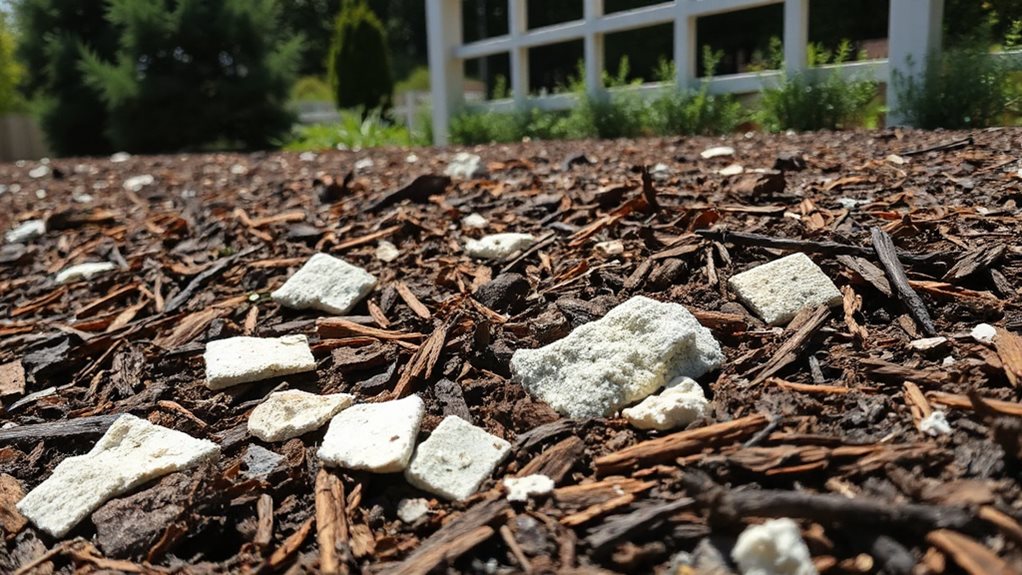
You’ll love picking mulch that fights mold—cedar’s natural oils, rubber’s water‑shunning texture, or a mushroom‑compost blend can keep spores at bay, especially when you spread it no deeper than two inches and keep it fluffy.
Have you ever tried raising your beds a few inches and adding a sand‑mix drainage layer? Give it a go, and remember to leave a clear buffer around trees and shrubs so air can circulate, because a well‑ventilated bed is the secret to a mold‑free garden adventure.
Choose Mulch Types
So, which mulch should you pick for a bed that stays fresh and mold‑free year after year? You’ll love wood chips for pest control and soil health, but they break down slowly, so keep them moist.
Rubber mulch beats mold, stays durable, yet heats up.
Straw works fast, adds nutrients, and keeps veggies clean.
Inorganic gravel or fabric never mold, but lacks organic benefits.
Choose based on your garden’s needs and your service‑oriented goals.
Bed Elevation and Drainage Design
Ever wondered why a well‑designed garden bed feels like a cool campsite, where water drains away just as smoothly as a river flowing past a tent?
You’ll love raising beds 12‑24 inches—think of them as tiny hills that keep roots dry, pests out, and soil airy.
Keep beds under four feet wide, level the ground, add 18‑inch paths, and position for full sun, so every plant gets a happy, camp‑ready home.
Safe, Non‑Chemical Removal Methods for White Mulch Mold
Ever wondered how you can kick that white, fuzzy mold off your mulch without pulling out a chemistry set? Grab a rake, loosen the top layer, then leaf‑blow the damp spots dry—quickly exposing spores to air.
Pull away soggy leaves, avoid watering the patch, and repeat daily; you’ll see the fuzz fade, keeping the garden safe for everyone.
Frequently Asked Questions About White Mulch Mold
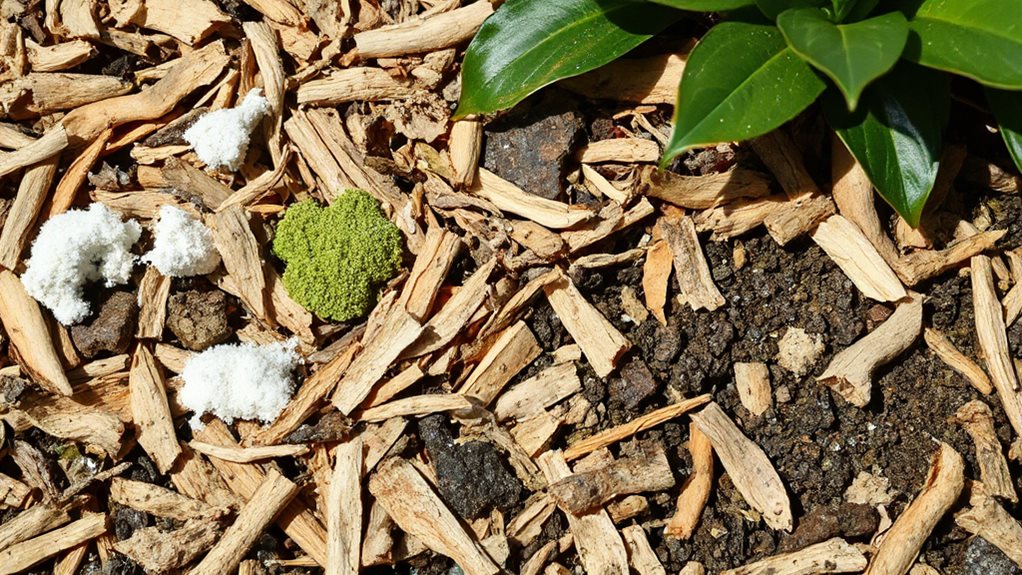
Curious about why your garden’s mulch sometimes looks like a snow‑covered campsite covered in cotton‑candy fuzz? You might wonder if it’s dangerous, how to stop it, or why it appears after rain; the answer: white mold is harmless, thrives in humid, cool conditions, and disappears when mulch dries. Keep layers thin, rake often, water early, and enjoy a clean, camp‑ready garden.
Overall
Now you’ve got the scoop on white mold—keep your mulch airy, dry, and not too thick, and you’ll dodge those pesky spots faster than a campfire spark. Remember, a little aeration and proper drainage are your best friends, and if mold does show up, a quick rake and a sunny day will send it packing. So grab your gloves, enjoy the garden, and let your beds stay fresh and mold‑free, just like a perfect campsite under a clear sky.


