How to Make a Fun Dig Box for Your Bearded Dragon
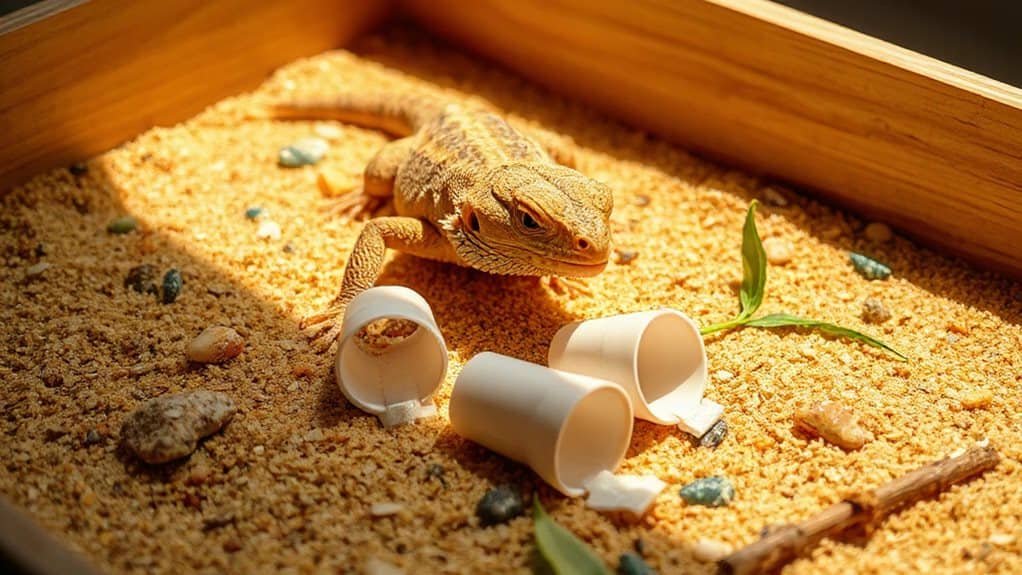
Grab a sturdy 12‑pack cardboard box or a 12‑gallon plastic tub, cut the top off, tape the rough edges, and line it with a 70 % peat‑moss‑and‑30 % play‑sand mix blended with a bit of coconut husk so it holds together like a sandcastle without getting soggy. Add a 4‑inch foam ramp and a wooden cave for climbing, keep the box out of the basking lamp, and maintain a low‑70s to mid‑80s atmosphere with a coconut brick for humidity; soon you’ll have a mini desert journey that your dragon will love, and if you keep going you’ll learn even more tips.
TLDR
- Choose a sturdy 12‑pack cardboard box or 12‑gallon plastic tub, cut the top off, and tape rough edges for safe access.
- Mix a substrate of 70% peat moss, 30% play sand, plus coconut husk; aim for 2–3 inches depth and dampen until it holds together like a sandcastle.
- Add a gentle 4–6‑inch foam or wood ramp and a rustic wooden cave to encourage climbing and hiding, keeping wall heights consistent.
- Place the dig box away from the basking lamp in a spot with low‑70s to mid‑80s air temperature, using a coconut brick nearby to maintain humidity.
- Introduce gradually: start with shallow substrate, a tiny sand trail, and a treat near the rim; deepen substrate over days, cleaning weekly and replacing every six months.
Choose the Right Materials for a Safe Bearded‑Dragon Dig Box
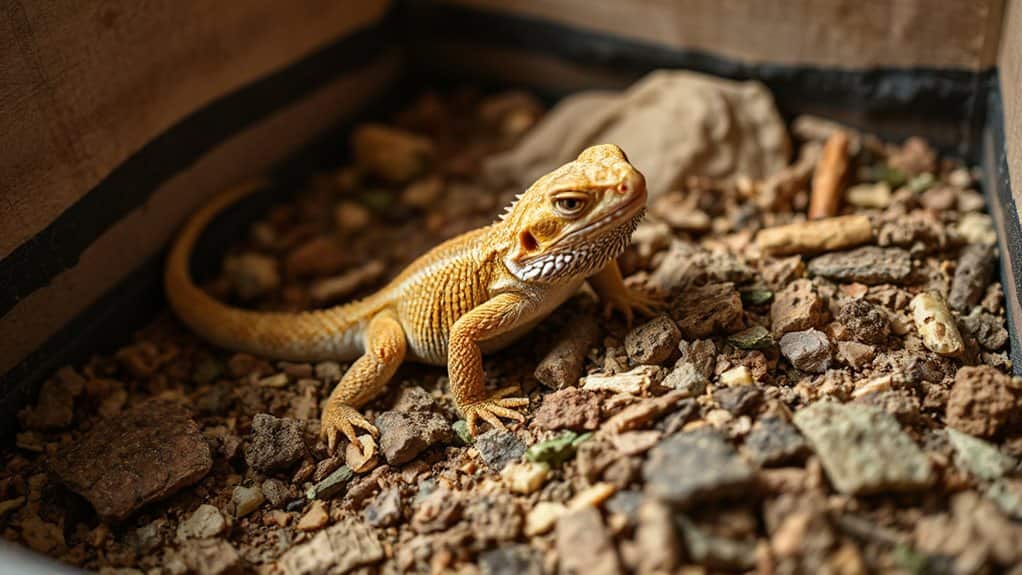
One of the first things you’ll notice when you start planning a dig box is that the container itself can make or break the whole experience, so pick a sturdy base like a 12‑pack cardboard box or, even better, a 12‑gallon plastic tub that can hold 4‑6 inches of substrate without spilling over while still letting your dragon slip in and out with ease.
Choose reusable plastic for moisture‑heavy setups, line it with 70% peat moss and 30% play sand for texture, and add coco husk for moisture‑holding burrows—your dragon will thank you, and you’ll feel like a camping‑gear guru. Consider adding a moisture reservoir under a portion of the substrate to help maintain consistent humidity levels for longer.
Norman’s natural digging instinct is satisfied by providing a dedicated burrowing area.
Prepare Your Cardboard or Plastic Container for Easy Access to the Dig Box
Start by grabbing a sturdy 12‑pack beer carton or a clean plastic tub, then clear out any leftover brew—because nobody wants a soggy dig box, right?
Cut the top off, leaving four to six inches of wall, tape rough edges, and add a ramp or bark for climbing; if you use a plastic tub, remove the lid, line the sides with tape, and position a Tupperware cave for easy entry.
Consider using a shallow 10–25 ft equivalent of hose-length thinking when planning placement to minimize clutter and ensure easy access to the box for cleaning and maintenance with short hoses.
Mix and Fill the Substrate for Your Bearded‑Dragon Dig Box
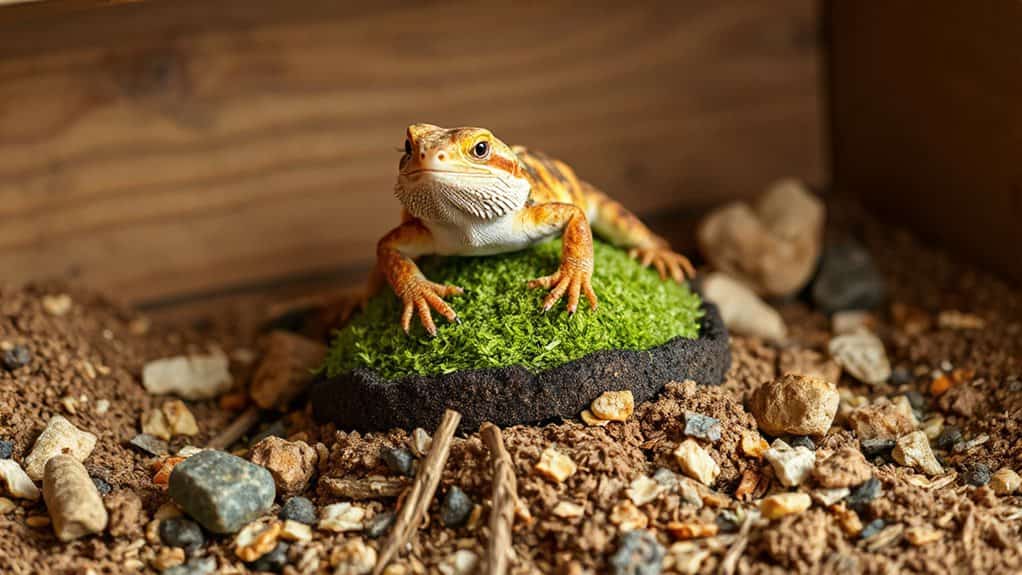
Imagine you’re setting up a mini‑adventure camp for your bearded dragon, and the first thing you need is the perfect “ground” for digging—so grab your coconut husk, play sand, and a bit of topsoil, then start mixing them like you’d blend trail mix for a weekend hike, because a well‑balanced substrate not only feels like a natural burrow but also keeps your dragon safe from accidental nibbling; aim for a 2‑3‑inch depth, dampen the mix just enough to hold together like a sandcastle (not a soggy mess), and don’t forget to sprinkle in extra peat moss if the blend gets too wet, because a little moisture control goes a long way in creating a sturdy, fun‑filled dig box that’ll have your scaly friend seeking out like a tiny explorer on a camping trek. Store any unused substrate in a cool, dry, airtight container to maintain quality and prevent mold growth, especially keeping humidity below 60%.
Add Ramps and Hides (Including Proper Height) to Encourage Natural Exploration in the Dig Box
Now that your substrate’s mixed and ready for a mini‑expedition, it’s time to give your bearded dragon some “trail maps” and “campsites” inside the dig box—ramps and hides that turn a simple pit into a wilderness trip.
Use 4‑6‑inch foam or wood ramps for safe climbs, angle them gently, and place rustic wooden caves nearby for easy entry and exit.
Ensure walls stay the same height to keep the exploration stress‑free.
Consider adding passive scent deterrents like essential oils in nearby areas to discourage pests from invading the enclosure.
Place the Dig Box Where It Stays Cool and Moisture‑Balanced
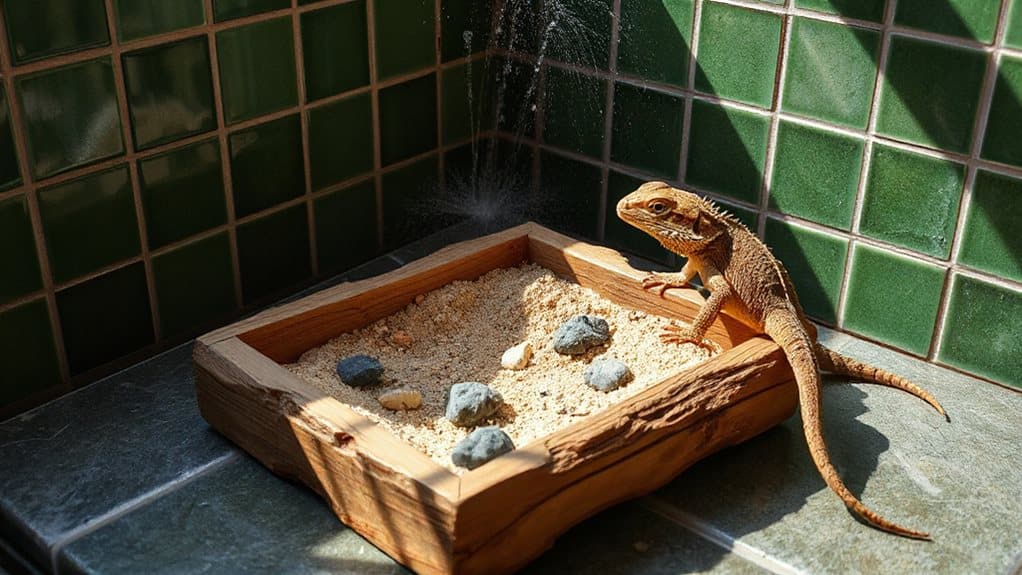
When you tuck the dig box into the cooler corner of the enclosure, you’re basically giving your bearded dragon a shady campsite where the temperature stays comfy and the moisture stays just right—think of it as a mini‑desert oasis that won’t turn into a sauna.
Choose a spot away from the basking lamp, where air hovers in low‑70s to mid‑80s, and use coconut brick to hold humidity.
The shade‑walled box will stay cool at night, keeping your dragon happy and healthy.
Some plants with thick, fleshy leaves can survive for weeks without soil, so consider adding safe, drought‑tolerant greenery nearby to help stabilize enclosure humidity.
Introduce Your Bearded Dragon to the Dig Box Gradually
Even if your bearded dragon’s first reaction is a cautious sniff, you’ll want to ease it into the new digs like a careful campsite setup, so start by placing the box in a cool corner away from the basking lamp, add a shallow layer of substrate, and sprinkle a tiny trail of sand leading right to the entrance—think of it as laying out a breadcrumb path for a tiny adventure.
Then, during a calm morning, let the box sit empty for a day, add a few familiar hides nearby, and gently toss a treat near the rim; watch his paws and nose venture, keep sessions short, and praise him when he nudges the sand, gradually deepening the substrate as his confidence grows.
Maintain Cleanliness and Replace Substrate in the Dig Box When Needed
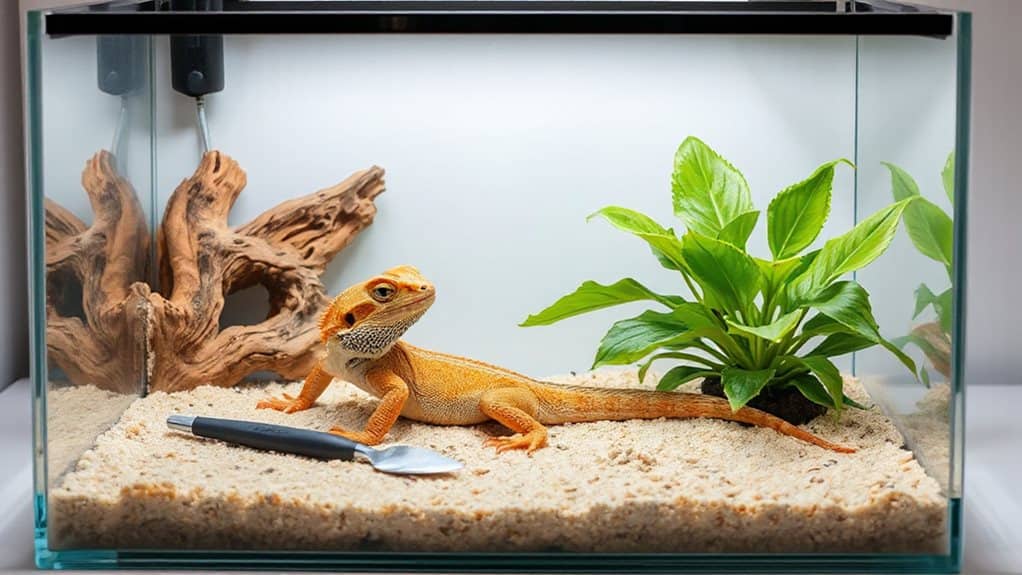
You’ll want to give the dig box a quick once‑over each week, checking the sand for clumps, droppings, or any funky smells, because spotting a problem early saves you a whole lot of hassle later.
When you notice the substrate getting soggy or discolored, swap it out on the regular six‑month schedule—or sooner if you spot a poop nest—just like you’d change a campsite’s sleeping pad after a rainy night.
Trust me, keeping the box fresh feels as satisfying as packing a perfect camping trip, and your dragon will thank you with extra digging enthusiasm.
Weekly Substrate Inspection
If you’ve ever set up a mini‑campground for your bearded dragon, you know the dig box is the ultimate “wild‑camp” spot where they burrow, dig, and investigate—so keeping it clean is just as necessary as packing the right gear for a real trek.
Each week, pull aside clumps, spot‑clean waste, sniff for ammonia, and lift the substrate to check for mold or compaction; if anything looks off, replace that section immediately, because a tidy camp means healthier journeys for your reptile friend.
Regular Replacement Schedule
After you’ve finished weekly substrate inspections and cleared out the obvious messes, the next step is getting a solid replacement schedule down so the dig box stays fresh and safe for your bearded dragon’s next “camping” trip.
Aim to swap sand every 3‑6 months, spot‑clean daily, and switch to tile if you’re using ointments; remember to adjust volume—80‑120 quarts for a 4×2 enclosure, 120‑180 quarts for 6×2—so burrows stay deep enough and bacteria stays at bay.
Troubleshoot Common Dig‑Box Problems and Keep Your Dragon Happy
A dig box can turn a bored bearded dragon into a happy, burrowing *adventurer*, but when it starts acting like a stubborn campsite tent that won’t set up, you’ll need a quick troubleshoot checklist.
First, check substrate depth—2‑3 inches for beginners, 8+ for heavy diggers. If it smells or clumps, replace it.
Make sure entry holes fit, walls are sturdy, and placement isn’t too hot.
Spot‑clean daily; if you see loose stools or lethargy, remove the box and monitor for impaction signs.
Rotate the box or add a brick for renewed interest, and keep the environment clean and inviting so your dragon stays happy and active.
And Finally
Now you’ve got a cool, comfy dig box that’ll make your bearded dragon feel like it’s on a mini‑adventure every day, so why not set it up today, watch your reptile roam, and enjoy the smiles that come with a happy, healthy pet? If you ever spot a soggy patch or a bored dragon, just tweak the substrate or add a new hide—think of it as camping gear upgrades for your scaly camper. Keep it clean, keep it fun, and your dragon will thank you with endless curiosity and maybe a few goofy basking poses.