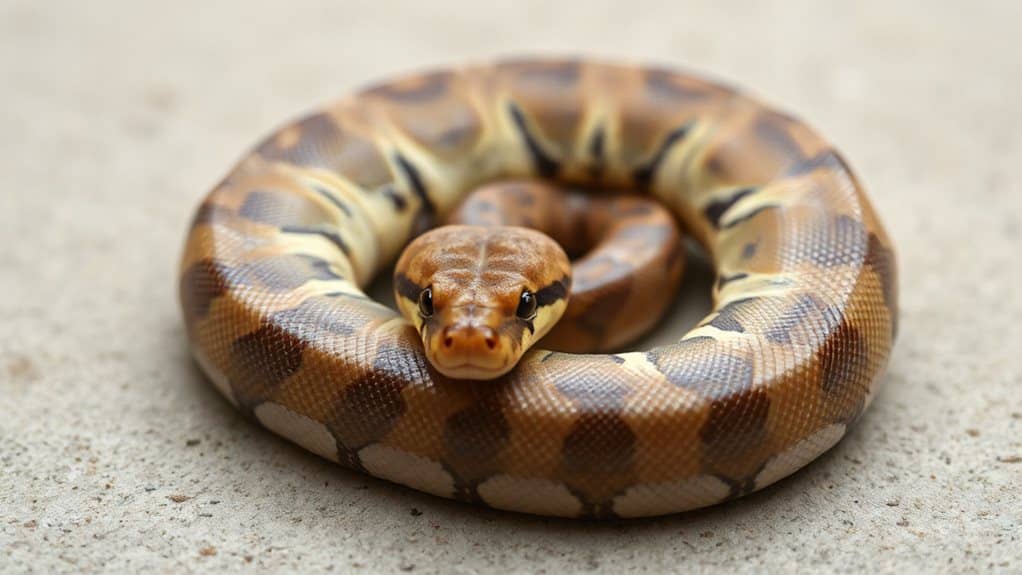
How Often Do Ball Pythons Poop? Normal Frequency
You’ll usually see a healthy ball python dump a solid, brown‑black stool about a week after each meal, then repeat the process roughly every four to six weeks if the enclosure stays warm, the prey isn’t too big, and stress stays low; juveniles might go a day earlier, and cooler temps or larger meals can stretch the interval, while warm water soaks and frequent feeding can speed it up, so keep an eye on the timing, check for blood or odd colors if a week passes, and you’ll find more tips if you keep exploring.
TLDR
- Healthy adult ball pythons typically defecate every 4–6 weeks, usually about 6–8 days after a meal.
- Juveniles may pass stool a day earlier, often within 5–7 days post‑feed.
- Larger prey, cooler temperatures, or stress can lengthen the interval, while smaller meals, warm water soaks, or frequent feeding can shorten it.
- Normal stool is light brown to near‑black, firm enough to hold shape, and may contain a few stray hairs.
- If no stool appears for two weeks, a warm bath and gentle massage are recommended; seek veterinary care for red or blood‑colored feces or lethargy.
How Often Do Ball Pythons Poop Under Ideal Conditions?
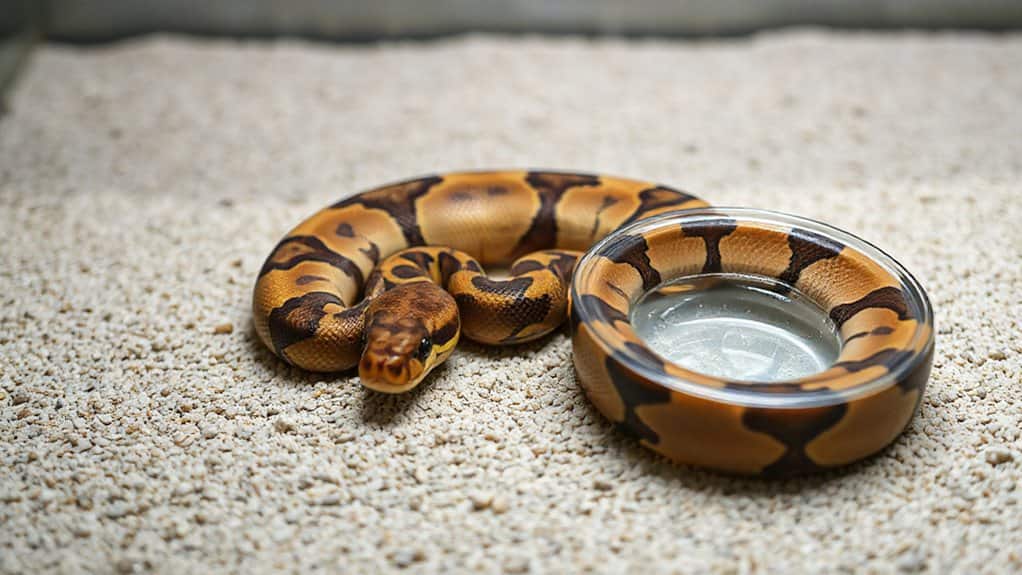
If you’ve ever wondered when a ball python will drop its first “camp‑fire” after a meal, the answer is pretty simple: under ideal conditions it usually happens about a week later, give or take a couple of days.
You’ll see a solid, brown‑black stool roughly 6–8 days post‑feed, sometimes a day earlier for juveniles, and most keepers notice this rhythm syncing with regular feeding and shedding cycles. Ball pythons typically defecate every four to six weeks.
Using proper environmental control and monitoring tools can help keep their digestive schedule consistent.
Factors That Lengthen or Shorten a Ball Python Poop Schedule
You’ve just learned that a ball python usually drops its first “camp‑fire” about a week after a meal, but the real adventure begins when you start tweaking the variables that can stretch or shrink that timeline.
Bigger prey, cooler temps, or stress lengthen digestion; smaller meals, warm water soaks, and frequent feeding zip it up.
Adjust age‑appropriate portions, keep the enclosure cozy, and watch the schedule dance.
Compost boosts soil biology and provides nutrients when mixed with topsoil for raised beds, so aim for a balanced blend like 60% topsoil and 40% compost to get structure and fertility.
How to Recognize Healthy Ball Python Poop
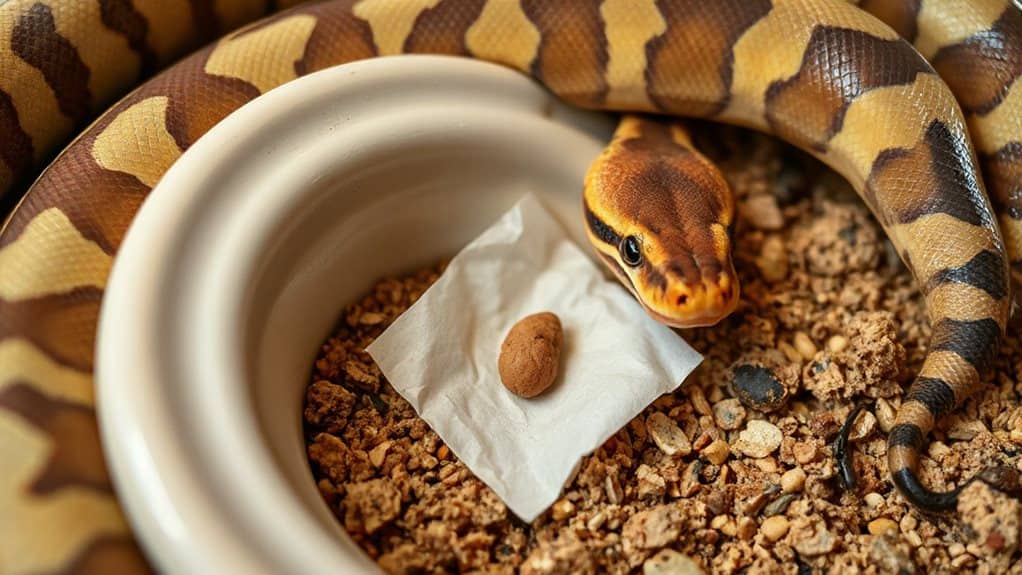
Envision this: you’re on a weekend camping trip, and just as you’re setting up the tent, your ball python drops a little “camp‑fire” that looks just right—light brown to almost black, firm enough to hold its shape, with a few stray hairs from its rodent snack.
You’ll know it’s healthy when it’s solid, hair‑filled, appears about a week after feeding, and shows no blood or strain, while urates follow the same weekly rhythm.
What to Do When a Missed Ball Python Poop Signals a Problem
Ever wonder why a ball python suddenly skips its weekly “camp‑fire” drop and you start to panic like you’ve lost your trail map on a hike?
Check for blood or odd colors, note urates, and compare to shedding cycles; if two weeks pass, give a warm bath, gently massage, and monitor activity.
Call a vet if poop stays absent, colors turn red, or lethargy appears.
Basements often attract creatures after heavy rain because they offer a moist, dark refuge similar to natural habitats, so also inspect your snake’s enclosure for moisture problems and proper drainage.
Tracking Meals, Shedding, and Temperature for Consistent Poops
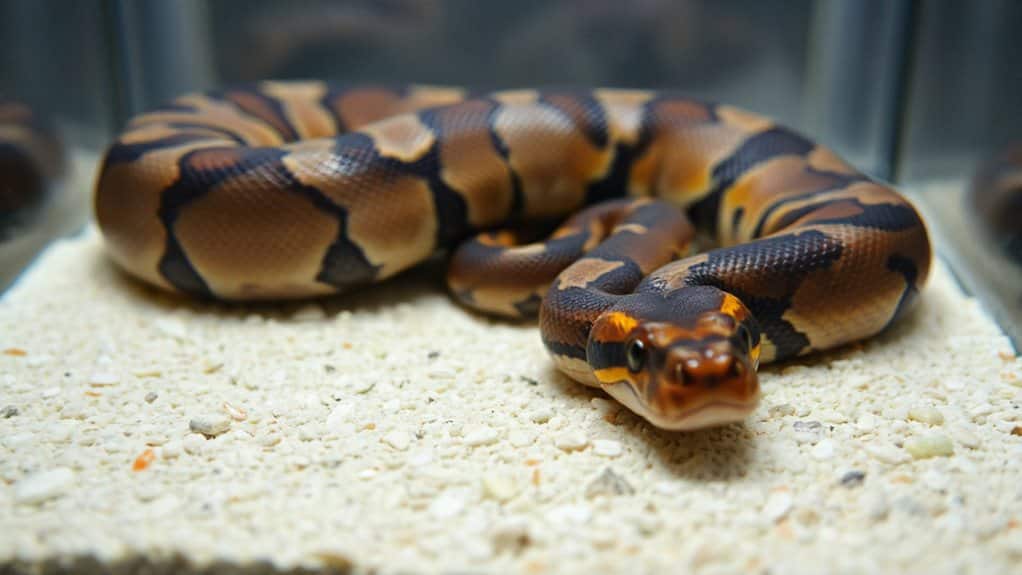
Usually, you’ll notice that a ball python’s poop schedule lines up like a well‑planned road trip—meals, sheds, and temperature all act as checkpoints on the map to consistent defecation.
Log each feeding date, then count six to eight days for digestion; note shedding weeks, because poops often hitch a ride with skins.
Keep the enclosure warm, because cooler temps stretch the interval beyond a week, and you’ll spot hair‑filled, solid turds that confirm you’re on track.
Monitor recovery signs weekly, since factors like temperature and shedding influence digestion and defecation timing.
And Finally
So, if you keep your ball python’s tank comfy, feed on schedule, and watch the temps, you’ll see regular poops—usually once a week, sometimes a bit more or less. Spotting a missed dump? Check the diet, humidity, and shedding cycle, and act fast before things get messy. Remember, a happy snake means clean habits, so keep the enclosure tidy, track meals, and you’ll be the ultimate reptile road‑trip guide!