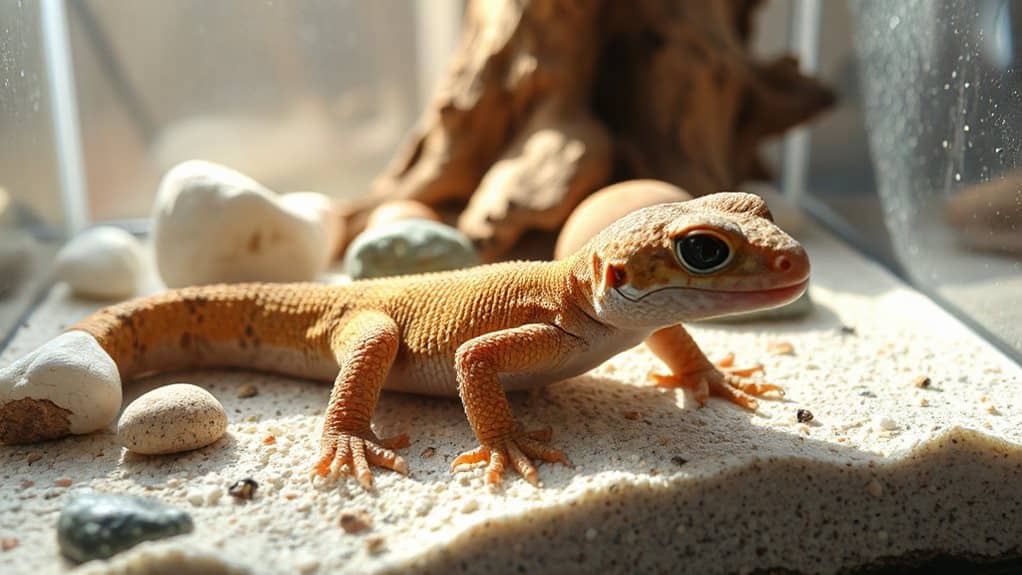
Leopard Gecko in a 10 Gallon Tank: Is It Enough?
A 10‑gallon tank can work for an adult leopard gecko if you pick a low‑profile, wide‑footed model, set a warm basking corner on one side and a cool retreat on the other, and keep humidity around 70‑80 % RH with a dimmable lamp and a pulse thermostat for any ceramic emitter. You’ll need to watch the weight—once it hits 10‑12 g it’ll feel cramped, so plan a 20‑gallon upgrade before aggression spikes. Stick to proper heat gradients, and you’ll have a happy camper; stick around and you’ll uncover even more tips.
TLDR
- A 10‑gallon low‑profile tank provides adequate floor space for a juvenile leopard gecko but becomes cramped as the adult reaches 10‑12 g.
- Ground‑dwelling geckos benefit from a horizontal enclosure; tall, narrow tanks waste vertical space and limit natural movement.
- Maintain a proper heat gradient with a basking spot on one side and a cool retreat on the opposite side, using a dimmable lamp and thermostat‑controlled ceramic emitter.
- Humidity should be kept at 70‑80 % in a moist hide, while nighttime temperatures should drop to around 70 °F.
- Upgrade to a 20‑gallon or larger (ideally 34‑gallon) tank before the gecko outgrows the 10‑gallon to prevent stress, aggression, and limited climbing opportunities.
Can a 10‑Gallon Tank Meet an Adult Gecko’s Needs?
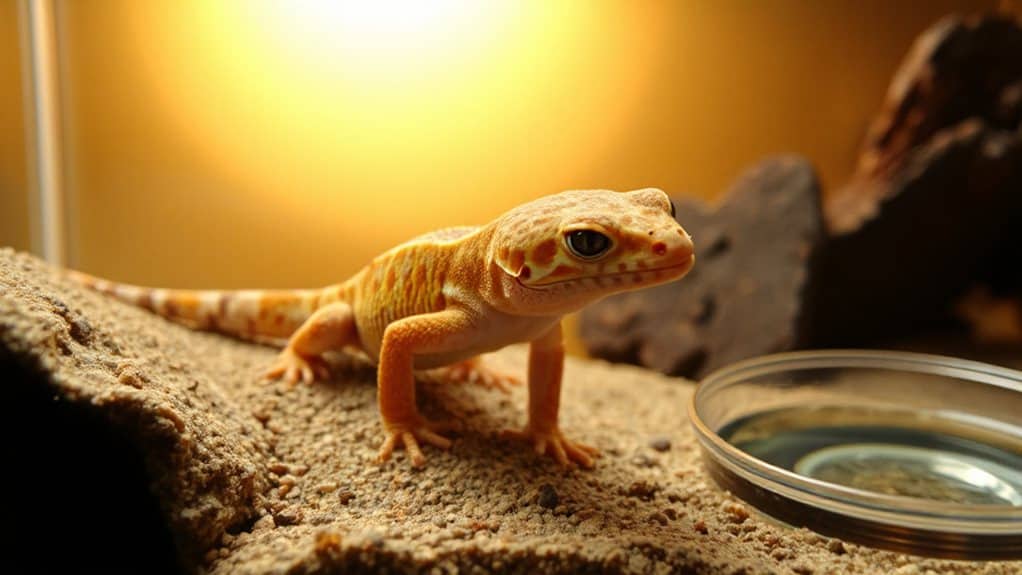
So, can a 10‑gallon tank really meet an adult leopard gecko’s needs? You’ll find it’s a solid minimum, especially if you set up a proper heat gradient, water dish, and humidity hide; many breeders swear by it, and Zoo Med even sells a dedicated kit. Just remember, as your gecko hits 10‑12 g, you might outgrow the space, so keep an eye on growth and consider a larger tank later. A heat gradient is essential for thermoregulation. Proper substrate and hiding options also support humidity control and overall health.
How Does Tank Shape and Floor Space Affect a 10‑Gallon Gecko Enclosure?
Imagine you’re packing a tiny camper for a road‑trip, and you quickly realize that the shape of the trailer matters just as much as the amount of space inside; a horizontal, low‑profile 10‑gallon tank gives your leopard gecko a sprawling floor to roam, while a tall, narrow tank wastes precious vertical room that a ground‑dwelling reptile simply won’t use.
Choose a wide, shallow layout, set up a warm corner at one end, a cool retreat at the other, and place hides and rocks side‑by‑side so your gecko can survey, burrow, and regulate temperature without feeling cramped.
Consider adding a patch of ground cover like artificial turf or reptile-safe substrate to create texture and help retain humidity where needed.
When Should You Upgrade From a 10‑Gallon Tank?
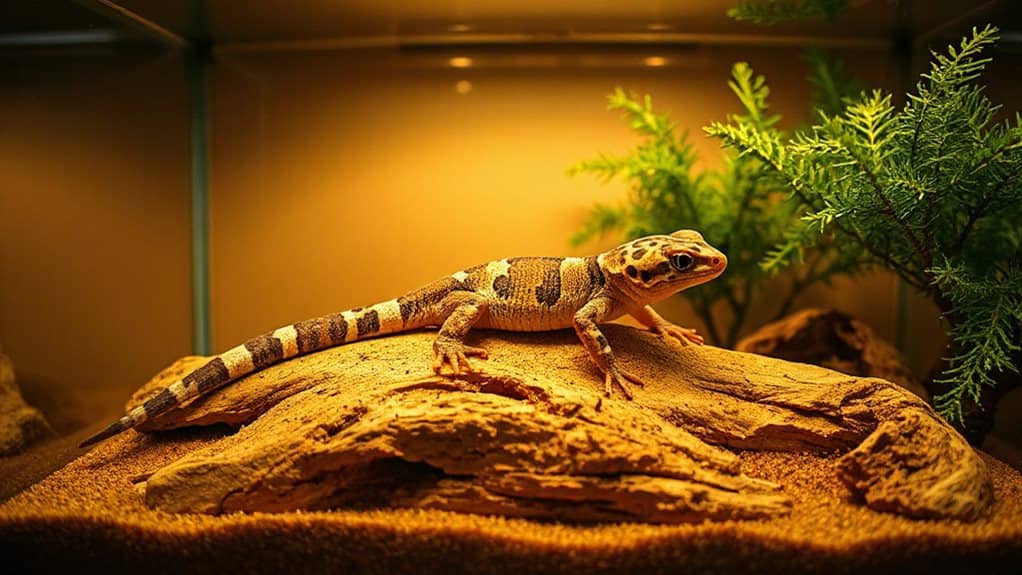
After a few months of watching your little gecko grow from a tiny hatchling into a spry juvenile, you’ll start noticing that the 10‑gallon tank feels a bit snug—especially when the critter reaches the 10‑12‑gram mark, which is the usual cue that it’s outgrown its starter home.
At that point, upgrade to a 20‑gallon or larger, preferably 34‑gallon, to give space for exercise, health, and future companions.
How to Keep Humidity and Heat Right in a 10‑Gallon Tank?
Keeping the humidity and heat just right in a 10‑gallon tank is a bit like setting up a tiny campsite for your gecko—you need a sunny spot for basking, a cool shade for relaxing, and a touch of moisture so the air doesn’t feel like a desert.
Use a dimmable basking lamp on one side, a pulse thermostat for any ceramic emitter, and a screen‑topped humid hide at 70‑80% RH.
Check with a digital hygrometer, add a small fan if needed, and keep nighttime temps around 70°F.
Also monitor room humidity with a hygrometer to verify the dehumidification and humidity-control strategy is maintaining the target range.
What Are the Real Pros & Cons of a 10‑Gallon Leopard Gecko Tank?
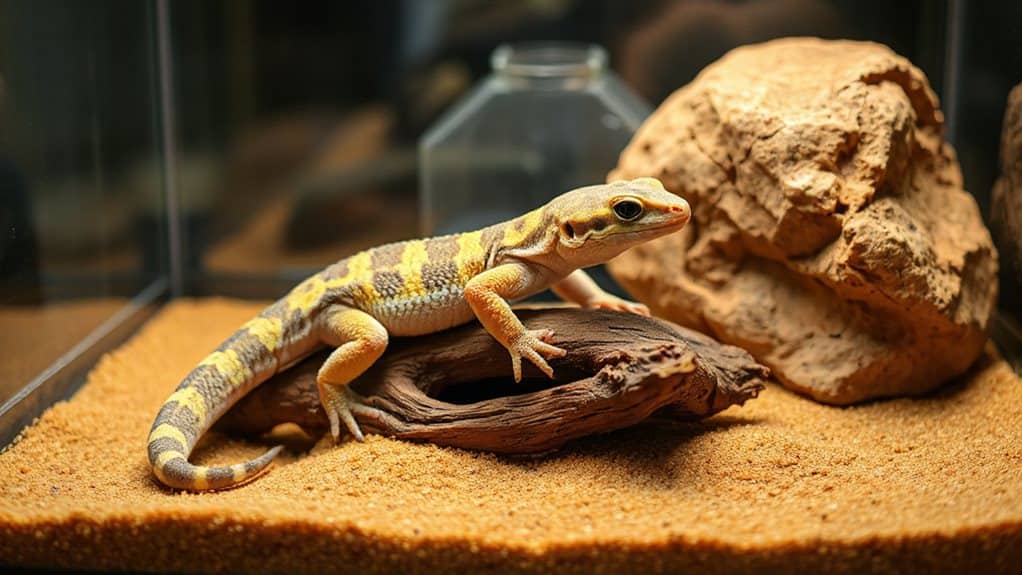
Now that you’ve got the humidity and heat dialed in, let’s talk about the real upsides and downsides of squeezing a leopard gecko into a 10‑gallon tank.
You’ll love the cheap, compact setup and easy cleaning, but expect limited floor space, reduced climbing, and a risk that adults outgrow it fast.
Juveniles thrive, yet multiple adults will fight, so upgrade before aggression spikes.
And Finally
So, if you’ve got a 10‑gallon tank, you can totally make it work for a happy leopard gecko—just keep the space tidy, the humidity on point, and add a few climbing spots. Watch the temperature, give fresh water, and remember to upgrade when your gecko outgrows the floor space. Think of it like a cozy campsite: small but perfect when you pack smart, and you’ll both enjoy the journey together!