Perfect 40 Gallon Bearded Dragon Tank Setup Tips
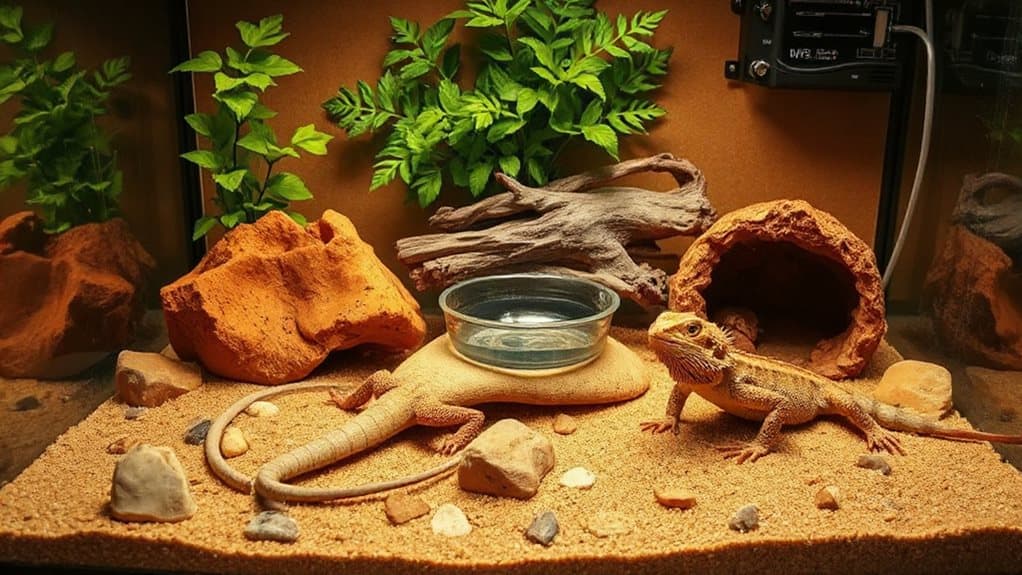
Grab a 40‑gallon tank, set a 105‑115°F basking rock about 6‑24 inches high, and keep a cool zone around 75‑85°F with a ceramic heat emitter at night—just don’t put a heat mat under the substrate. Use slate tile or paper towels for juveniles, then switch to a 4‑6‑inch mix of fine sand, topsoil, and excavator clay for digging, avoiding calcium or silica sand. Place hides on the cool side, stack lava rocks and slate for climbing, and sprinkle a few java‑wood branches for extra fun—if you keep going, you’ll find even more tricks.
TLDR
- Use a 40‑gallon tank with a basking spot at 105‑115 °F and a cool zone around 75‑85 °F, maintaining a 30‑40 % humidity range.
- Provide a low‑impact substrate such as slate tile or paper towels for juveniles; for digging, use a 4‑6 inch mix of fine sand, topsoil, and excavator clay, avoiding calcium or silica sand.
- Install a basking lamp 6‑24 inches above a heat‑absorbing stone, and place a thermometer on that stone to verify spot temperature.
- Add a ceramic heat emitter or low‑wattage under‑tank heater with a thermostat for night temperatures above 55 °F, keeping the heat source away from the sleep area.
- Arrange hides on the cool side opposite the basking rock, include climbing branches and cork platforms, and secure lava rocks with silicone for a natural, multi‑level layout.
Choose the Right Tank Size for a Bearded Dragon Enclosure
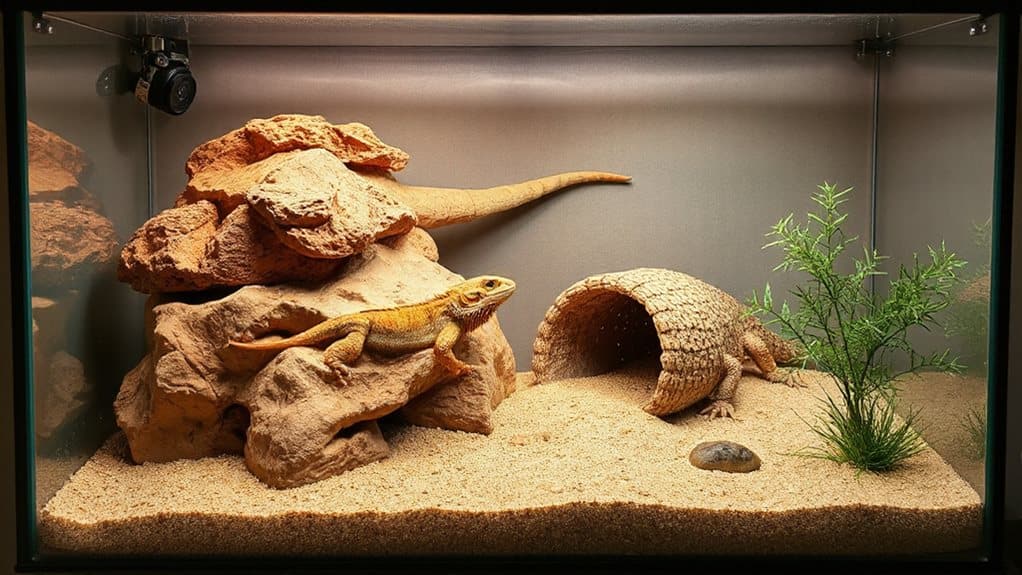
Choosing the right tank size for your bearded dragon is kind of like planning a road‑trip trip: you want enough room for the travel, but you don’t want to pack a house on wheels.
Start with a 20‑gallon for hatchlings, upgrade to 40‑gallon as they hit three months, then move to 75‑gallon for adults.
Bigger spaces keep them happy, healthy, and easy to feed—no stress, just journey!
A larger enclosure supports proper thermoregulation, allowing distinct basking and cooler zones.
Pair your enclosure with well‑draining substrate to help maintain clean, healthy conditions.
Pick a Safe Substrate for Your Bearded Dragon Enclosure
Now that your bearded dragon’s “road‑trip” tank is the right size, it’s time to think about what kind of ground they’ll be strolling on—because a good substrate is like the perfect campsite floor: comfy, safe, and ready for exploration.
Choose slate tile or paper towels for juveniles; they’re heat‑friendly, easy to clean, and low‑impaction.
If you want digging, mix fine sand, topsoil, and excavator clay, but keep depth at 4‑6 inches and avoid calcium or silica sand.
Replace substrates regularly and monitor for changes in texture or appearance to ensure continued safety, as regular replacement helps maintain effectiveness and hygiene.
Set Up Lighting & Heat for a Bearded Dragon Enclosure
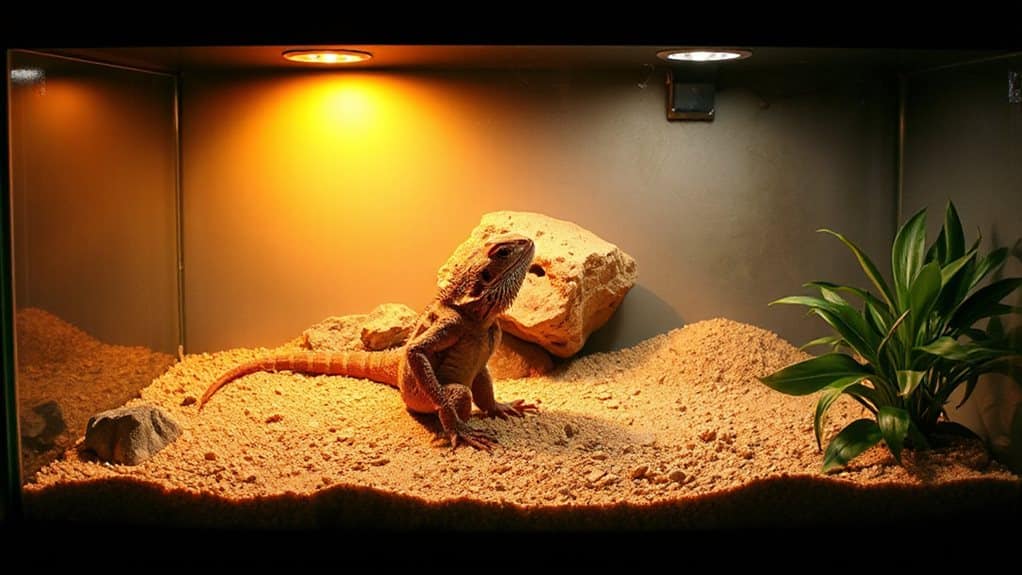
You’ll want the basking spot to hit 105‑115°F, so set the heat lamp just right and keep a thermometer on the stone or rock where your dragon loves to sunbathe; if it’s too cool, crank up the wattage, and if it’s scorching, dial it down with a dimmer.
At night, a ceramic heat emitter or a low‑wattage under‑tank heater will keep the enclosure above 55°F—just make sure you’ve got a reliable night‑time thermostat so your dragon stays cozy without overheating.
And don’t forget to place a second thermometer on the cool side, because watching the temperature gradient is like planning a perfect camping trip: you need a warm campfire spot and a cooler shade, and you’ll know exactly when to move your reptile buddy around for the best excursion.
Monitor the heater’s amperage to prevent circuit overloads and keep your home electrical system safe by knowing the heater amp draw.
Basking Spot Temperature
When you set up the basking spot, think of it like planning the perfect campsite for a tiny, fire‑loving explorer—your bearded dragon—so you’ll want a sunny “clearing” that hits just the right temperature range for its age.
Use a laser thermometer to hit 38‑40 °C on its back, adjust the bulb 6‑24 inches high, and check both hot‑side and cool‑side probes to keep the whole enclosure balanced and happy.
Nighttime Heat Source
If the night gets chilly in your room—say it dips below 65 °F—you’ll need a quiet heat source that keeps your bearded dragon cozy without turning the enclosure into a midnight disco.
Use a ceramic heat emitter mounted high, away from the sleep spot, and clamp it with mesh to avoid burns.
Skip colored night lights, because they mess with circadian rhythms, and never place a heat mat directly under substrate.
Thermometer Placement Tips
Envision this: you’ve just set up the perfect basking lamp, and now you need to make sure the temperature readings are as spot‑on as a GPS on a road trip.
Stick the probe directly under the bulb, secure a second thermometer on the cool side, and attach a sensor one‑third from the hot end on the back wall.
Verify gradients with a flat temp gun, adjust until you hit 95‑110°F basking and 75‑85°F cool zones.
Arrange Hides, Rocks & Logs in a Bearded Dragon Enclosure
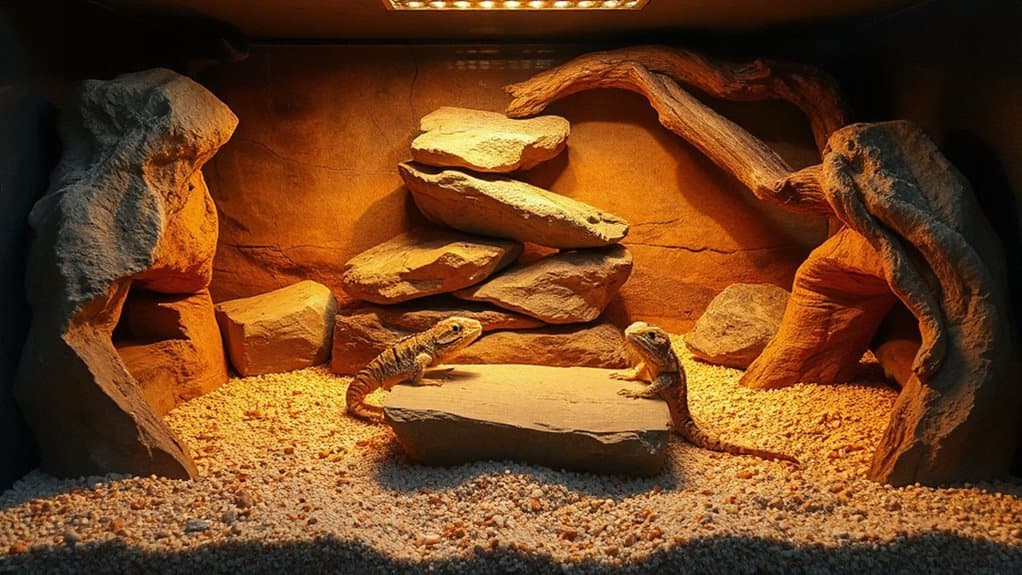
You’ll want to stash hides on the cool side of the tank, opposite the basking rock, so your dragon can dash between warm and chilly zones just like a tiny camper swapping tents for a sunny spot; have you ever tried arranging a stack of flat rocks and a half‑log to create a perch that doubles as a hide, then adding a few natural logs for extra climbing fun?
Try placing a sturdy basking log right under the heat lamp, lean a couple of logs against the wall for stability, and sprinkle a few corner‑fit reptile hides throughout the enclosure to give your bearded dragon plenty of secret spots to seek and unwind.
I’ve found that mixing natural rocks with a few decorative branches makes the tank feel like a miniature desert journey, and your dragon will thank you with happy sprints and relaxed basking sessions.
Native shrubs provide year‑round nectar sources and protective hideouts for pollinators, making them valuable additions to surrounding gardens to support local wildlife and biodiversity; consider planting native shrubs to create habitat continuity.
Strategic Hide Placement
When you imagine a bearded dragon’s terrarium, think of it as a tiny journey park where every hide, rock, and log has purpose—just like setting up a campsite with a warm fire pit, a cool shady nook, and a secret stash for snacks.
Place a warm‑side hide next to the basking rock, anchor it with bricks, and add a cool‑side hide far from heat.
Include a third, central hide near a climbing branch for extra security, and always test stability before letting your dragon explore.
Natural Rock & Log Arrangement
After setting up the perfect hide spots, it’s time to turn your bearded dragon’s tank into a miniature wilderness of rocks and logs, where every slab and branch feels like a campsite pit‑stop on an epic road trip.
Bury sturdy lava rocks, secure them with silicone, and stack slate under the basking light for heat.
Lay java‑wood branches horizontally, lock them together, and add cork bark flats for sleeping platforms, creating multi‑level climbing zones that mimic wild terrain while keeping everything safe and stable.
Maintain Temperature & Humidity in a Bearded Dragon Enclosure
If you set up the tank like a mini‑campground, you’ll quickly see why a solid temperature gradient and steady humidity are the secret sauce for a happy bearded dragon—think of the basking spot as the sunny clearing where your dragon soaks up the heat, while the cool end acts like a shady pine forest for a relaxing retreat.
Use a 90‑watt halogen for 40‑42°C bask, keep the far side 22‑25°C, drop to 15°C at night, and monitor with digital thermometers and hygrometers; a 30‑40% humidity range, water dish, occasional misting, and non‑absorbent substrate prevent infections. Adding proper weatherproofing for any outdoor electricals and ensuring fixtures stay dry helps avoid nuisance trips from moisture intrusion.
When to Upgrade Your Bearded Dragon Enclosure?
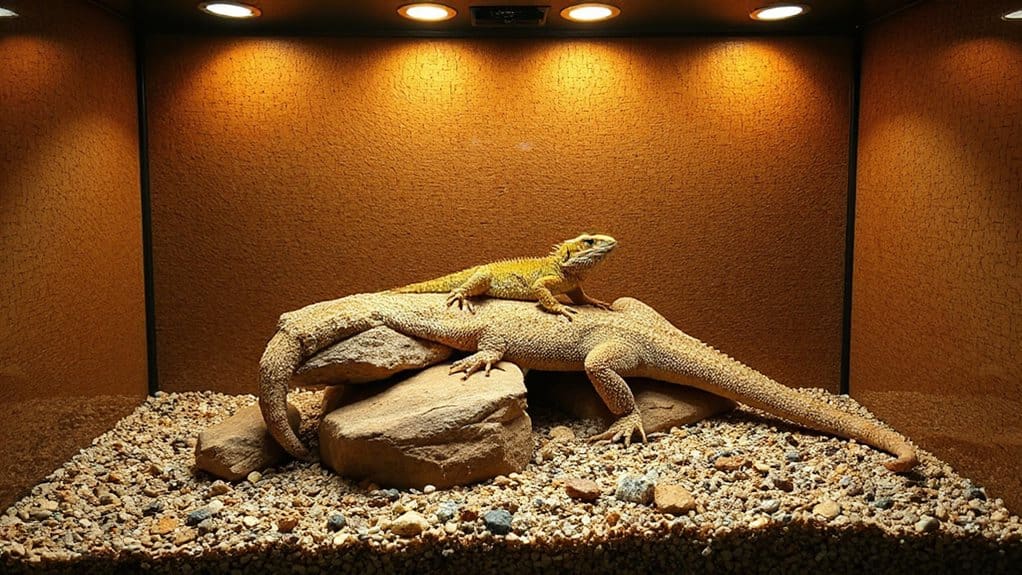
Keeping the temperature and humidity on point is great, but soon you’ll notice the little “campground” you set up starts feeling cramped as your dragon grows—think of it like a backpack that’s perfect for a day hike but not for a weekend trek.
You’ll spot glass‑surfing, sighs, and territorial hisses around six months, when your dragon hits 14‑20 inches.
Upgrade to at least 4 × 2 × 2 ft, add vertical hides, and enjoy a stress‑free, adventurous habitat.
And Finally
You’ve got the perfect 40‑gallon setup, so your dragon will feel like it’s on a mini‑adventure every day—think right, rocks, and a cozy hide that screams “home sweet home.” Keep the heat steady, humidity balanced, and don’t forget the UVB; your reptile will thank you with colorful colors and happy basking. Ready to upgrade? Just add a few extra branches or a new perch, and watch your dragon roam like a tiny, scaly explorer on a camping trek!