The Best Companion Plants for Tomatoes That Actually Work
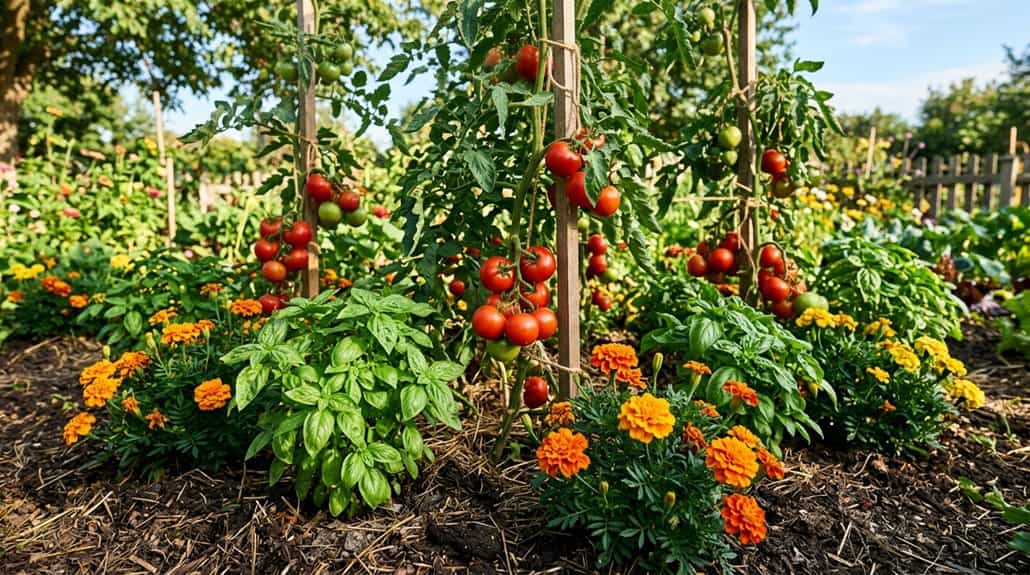
If you want your tomatoes to reach superstar status, you’ve got to try pairing them with basil (hello, extra-flavorful pasta sauce and fewer bugs!), marigolds that scare off pests like little flowery bodyguards, and reliable friends like beans, lettuce, and carrots for richer soil and bigger harvests—seriously, your garden will look and work like it’s on a camping expedition. Just don’t let potatoes or fennel crash the party. Want to know how to reveal even more tomato magic?
TLDR
- Basil, chives, and parsley naturally repel tomato pests while enhancing flavor and attracting beneficial insects.
- Marigolds and calendula deter nematodes and harmful insects, supporting tomato health and garden biodiversity.
- Carrots and root vegetables improve soil aeration and maximize space when grown alongside tomatoes.
- Leafy greens like lettuce and spinach thrive in tomato shade, serving as fast-growing ground cover and weed suppression.
- Avoid planting fennel, brassicas, potatoes, and black walnut trees near tomatoes due to allelopathic effects and nutrient competition.
Best Companion Plants for Tomatoes: Quick List
If you’ve ever dreamed of growing the juiciest, most flavorful tomatoes right in your backyard, you’re definitely not alone—and guess what? Choosing the right companion plants makes all the difference!
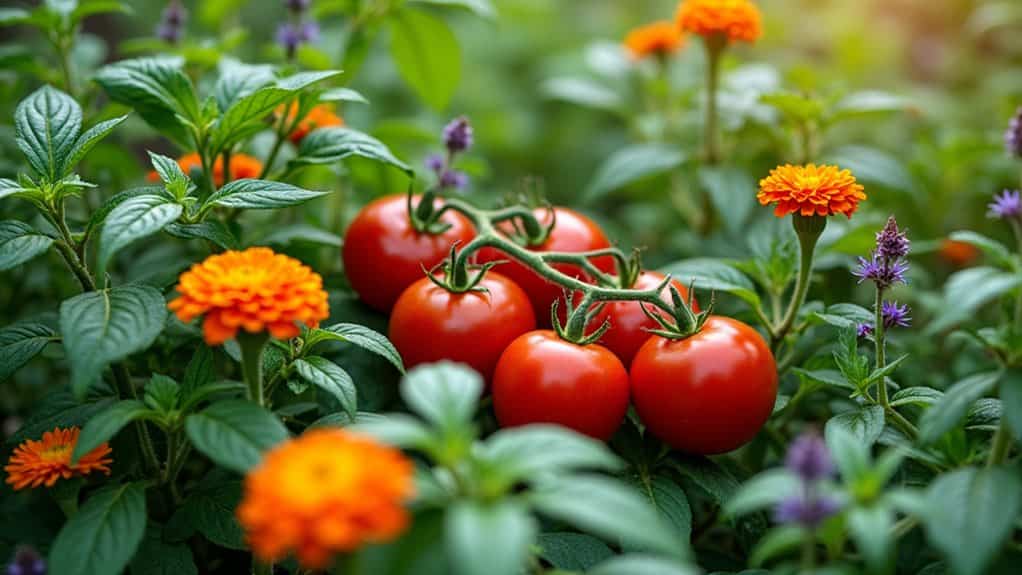
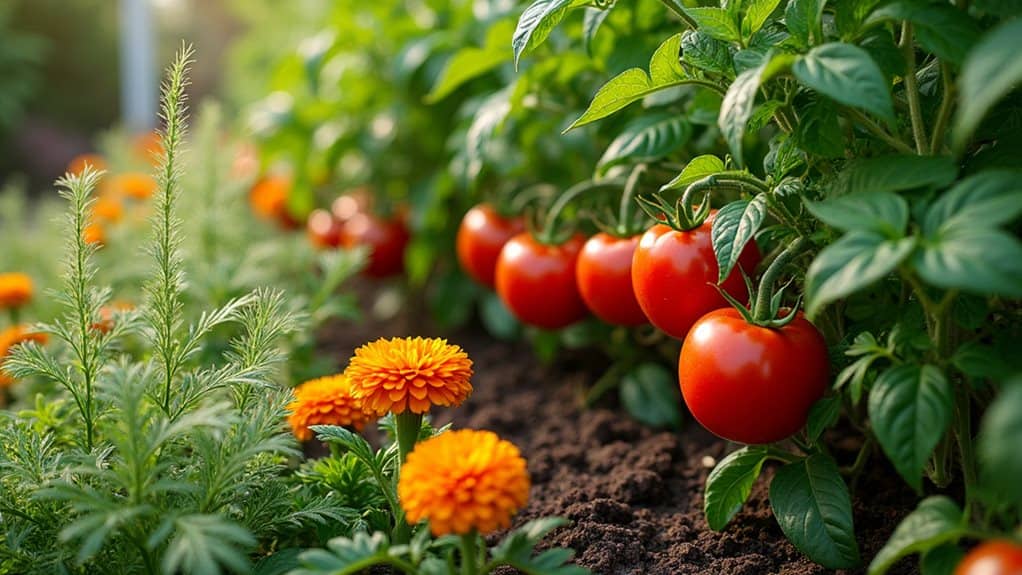
Plant marigolds and basil for epic pest control and flavor. Toss in herbs like parsley for beneficial insects, and try borage or calendula to enhance soil health.
Garlic and onions? Super-star pest repellents you’ll love planting!
Why Use Companion Plants With Tomatoes?
Although tomatoes are the true stars of the summer garden, they don’t actually love being the center of attention all on their own—trust me, they’re way happier with a few good friends by their side!
When you use companion plants, you enhance tomato growth, attract pollinators and beneficial insects, and help with pest prevention, soil health, nutrient fixation, disease prevention, and a balanced garden ecosystem—pretty incredible, right?
Top Herbs for Tomato Health and Pest Control
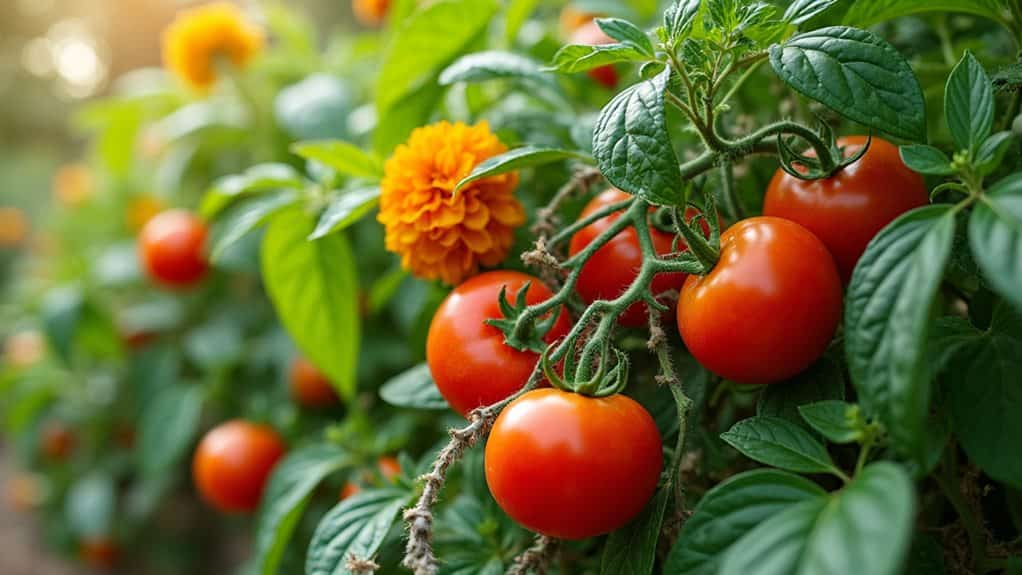
Let’s be honest—tomatoes love a busy neighborhood, and herbs might just be their favorite neighbors on the block! If you want to serve up healthier tomatoes, plant basil, chives, and parsley nearby. These herbs are powerhouses for pest control, driving away aphids and spider mites, while inviting pollinators and creating an aromatic environment. Incorporating plants with spiky textured leaves or strong scents can also help create a natural barrier against pests and unwanted visitors. Trust me, with these herbal repellents, you’ll enhance overall plant health!
Flowers That Boost Tomato Growth and Pollination
Ready to make your tomato patch the hottest hangout spot for bees, butterflies, and even ladybugs? Let’s talk about how daisy family flowers like calendula, zinnias, and marigolds work double duty by pulling in pollinators and showing garden pests the exit.
Trust me, I once watched a marigold party turn my tomato jungle into an insect campground! For your next gardening journey, try mixing these colorful blooms around your tomatoes and see just how much happier, healthier, and more productive your plants can get. Incorporating timing and plant selection techniques can further enhance your garden’s health and productivity.
Daisy Family Pollinator Magnets
Have you ever wondered why some gardeners always seem to have tomato plants bursting with juicy, perfect fruit while yours look a little lonely? Here’s a secret: planting daisy family flowers like marigolds, cosmos, zinnias, and calendula attracts bees and other pollinators, turning your patch into a butterfly garden.
These blooms enhance pollinator activity, support beneficial insects, and increase garden biodiversity—plus, they’re fantastic for natural pest control!
Marigolds for Pest Defense
Even though marigolds might look like just another pretty flower in the garden, they’re actually secret superheroes when it comes to protecting your tomato plants from pests.
By planting these bright flowering plants, you’ll attract beneficial insects for pest defense, repel bad bugs with their scent, and use natural pesticides to fight nematodes.
Trust me, your soil health and pest control will seriously level up with marigolds around!
Leafy Greens and Root Veggies for Tomato Beds
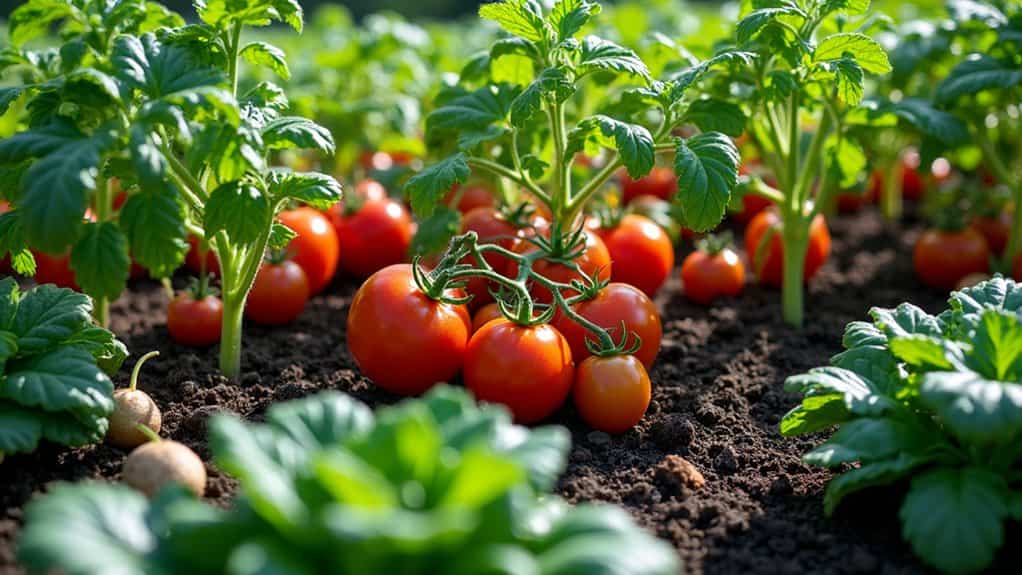
If you want your tomato beds to feel like a lively campground full of friendly neighbors, you’ve got to try adding leafy greens and root veggies—it’s like inviting the perfect travel buddies who share their snacks and never hog the tent! Visualize lettuce, spinach, and carrots hanging out under the tomato plants, soaking up just the right amount of shade, and not picking any fights over water or nutrients. Proper soil testing can help ensure your soil is just right for both tomatoes and their new friends, making your garden more productive and easier to manage. Trust me, your garden will be more productive, easier to manage, and you’ll be munching fresh salads long before your tomatoes even think about turning red—how cool is that?
Benefits of Leafy Greens
While you’re dreaming big about those juicy, homegrown tomatoes, don’t overlook the magic that leafy greens can bring to your garden beds—they’re like the friendly neighbors who never steal your Wi-Fi but always bring snacks to the block party.
Spinach and looseleaf lettuce thrive in tomato shade, using shallow roots and low nutrient demand to maximize space, serve as fast-growing ground cover, and enhance your garden ecosystem’s health.
Root Vegetables as Partners
Since you’re already giving tomatoes the star treatment in your garden, why not invite some root vegetables to the party and let everyone get along? Carrots, for example, pull double duty: early season planting maximizes space utilization.
Their underground crops improve soil health and aeration. When you harvest them, soil improvement happens naturally—plus, companion planting like this is mutually beneficial, helping you serve up a thriving, productive garden!
Best Legumes to Enrich Tomato Soil
Even though tomatoes are pretty incredible on their own, they’re absolute rockstars when you team them up with the right legumes—think bush beans, peas, and lentils. These legumes are pros at nitrogen fixation, pumping up soil enrichment and enhancing soil fertility without chemical help. Incorporating beneficial insects like parasitic wasps and nematodes alongside these crops can further support pest control naturally. Try interplanting or using them in crop rotation, because they increase microbial activity and make organic gardening feel like an epic camping trip—nature truly provides!
Companion Plants to Avoid Near Tomatoes
You’ve already seen how teaming up tomatoes with legumes is like bringing your best buds along for a camping trip—everyone’s happier and the experience is way more epic!
But steer clear of fennel and brassicas, which bog things down with allelopathic chemicals and nutrient competition.
Potatoes enhance soil-borne diseases, while black walnut trees crank up plant toxicity.
Avoid pest spread and tomato diseases by keeping these troublemakers away!
Be mindful that early planting can lead to increased soil and water challenges, making it even more important to choose companion plants that thrive under optimal conditions.
Arranging Tomato Companion Plants in Raised Beds and Containers
Although gardening with tomatoes can feel a bit like planning a group camping trip—everyone needs their own tent and snacks for things to go smoothly—arranging your tomato companion plants in raised beds and containers is actually a fun puzzle that’s super rewarding when you get it right!
Give your tomatoes deep space, add marigolds and companion herbs for pest control, provide vertical support, and keep plant spacing generous for airflow and pollination.
To prevent issues like yellowing leaves caused by environmental stress or poor soil conditions, ensuring proper soil drainage and consistent watering practices is essential.
Expert Tips for Thriving Tomato Companion Gardens
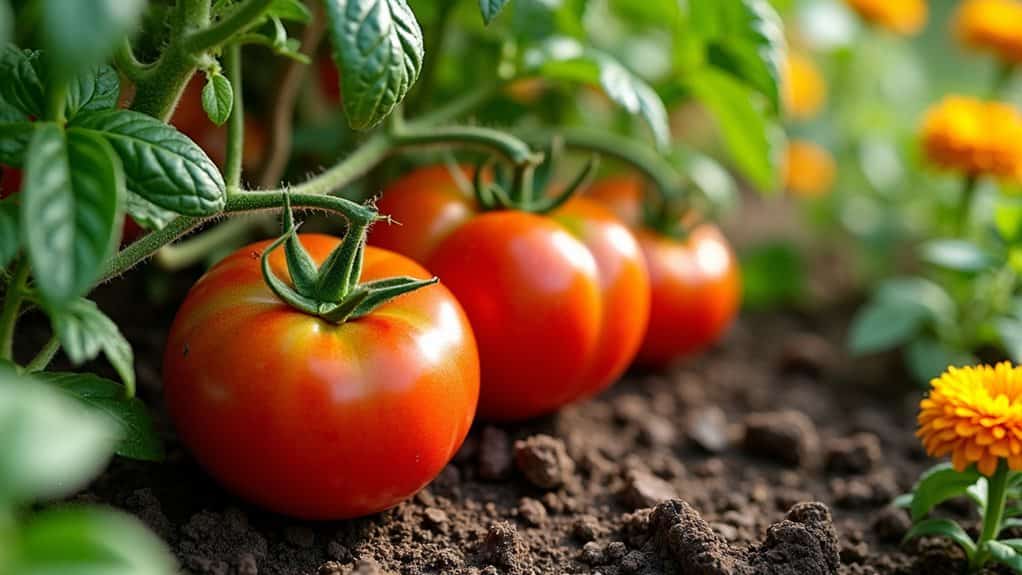
When you’re aiming for a tomato garden that’s the envy of the neighborhood, it really pays to think like a seasoned camper—plan ahead, pack the essentials, and know what gear (or plants!) works best together. Focus on companion gardening by mixing flowering herbs for pollinator attraction, spacing plants for air flow, rotating crops for plant health, and always choosing plant compatibility for natural pest control and nematode prevention. Incorporating well-chosen full-spectrum LED grow lights can also support healthy seedling development and robust plant growth, ensuring your garden thrives from start to finish.
Overall
So, are you ready to turn your tomato patch into the ultimate camping ground for all sorts of cool plants? Trust me, it’s way more fun than pitching a tent in your backyard—plus, you get snacks! Mix in basil for a flavor blast, marigolds for some serious bug-busting, and beans for rich soil. Honestly, companion planting is like planning a garden journey, and you’re the fearless adventurer. Grab your gloves, plant some buddies, and watch your tomatoes totally thrive!