Why Your Grapes Aren’t Ripening on the Vine
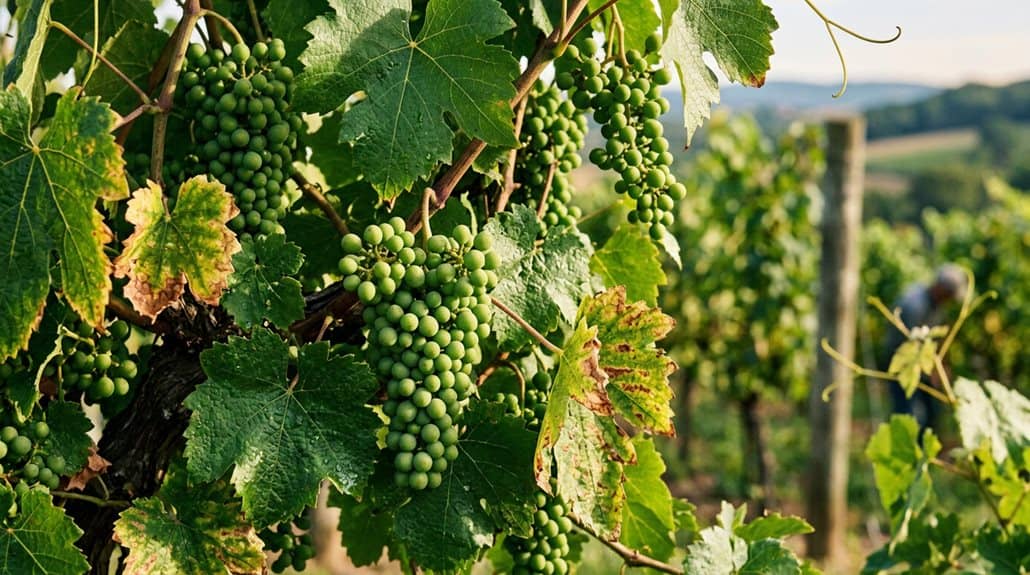
If your grapes just sit there, refusing to turn sweet and plump, you’re definitely not alone—I’ve battled sour, stubborn grapes more times than I can count! Sometimes your vines are tired out from too many clusters, or maybe there’s a jungle of leaves blocking sunlight, or the soil’s too soggy and you’ve been overwatering out of love (we’ve all been there). Pruning at the wrong time, picking the wrong grape for your climate, or missing key nutrients can also be deal-breakers. Want to know how to actually fix it? Stick around!
TLDR
- Over-cropping puts too much stress on vines, leading to small, sour, and unevenly ripened grapes.
- Insufficient sunlight from dense foliage or poor trellis setup prevents grapes from developing proper sweetness.
- Inadequate or excessive watering, especially in poorly drained soil, disrupts grape maturation and delays ripening.
- Improper pruning—either too much or too little—limits airflow and sunlight, hindering fruit development.
- Nutrient deficiencies, particularly potassium, can cause poor fruit growth and slow or incomplete ripening.
Main Reasons Grapes Don’t Ripen Fully
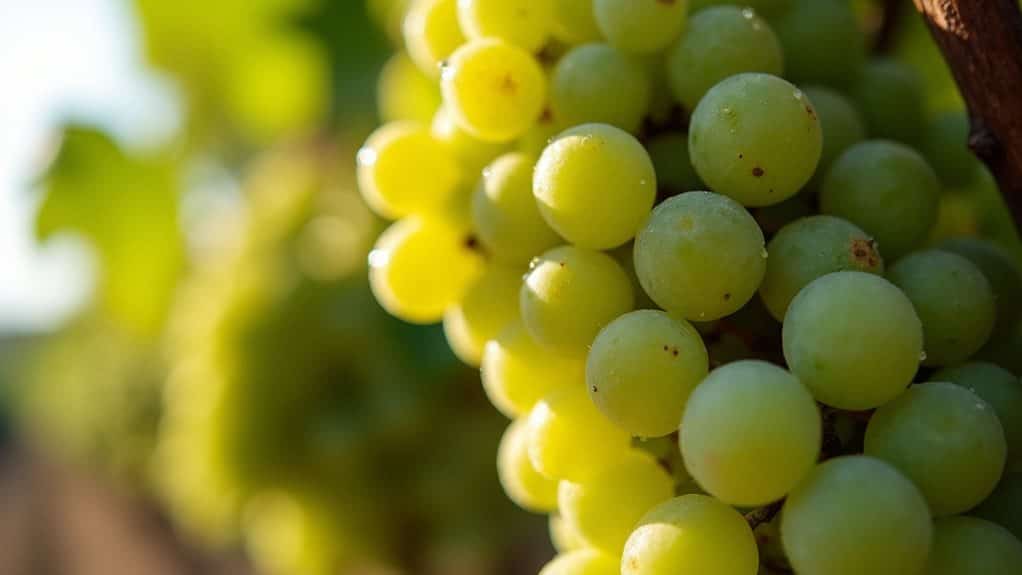
You know, it can be pretty frustrating when you’re out in the garden, dreaming about popping sweet, juicy grapes straight off the vine—only to find that they’re stubbornly staying hard and sour, no matter how much you check on them.
Sometimes, things like insufficient pruning, uneven ripening, or environmental stress—like too much sun or not enough water—team up to keep grapes from reaching their delicious, ripe potential.
Additionally, planting too early or at the wrong time can expose vines to frost or temperature extremes, which disrupts natural growth patterns and delays ripening.
Is Over-Cropping Ruining Your Grape Harvest?
Ever picked a bunch of grapes and wondered why some are plump and sweet, while others look like they skipped breakfast? If your vine’s packed with way too many clusters, it just can’t keep up, kind of like me trying to run a marathon after a big camping breakfast. To help your grapes ripen properly, consider pruning to reduce excess foliage and fruit load, which can improve airflow and sunlight exposure for better ripening.
Recognizing Signs Of Over-Cropping
Although watching your grapevines burst with tons of little clusters might feel like hitting the fruit jackpot, over-cropping can actually sneak up and ruin your harvest faster than a raccoon at a campsite.
If you spot excessive clusters, uneven ripening, or berries that just won’t get plump, your vines are likely stressed out.
Trust me, less is often more when you’re aiming to serve up the sweetest grapes!
Pruning For Cluster Control
While it might seem tempting to let every single grape cluster grow wild and free, smart pruning is actually your secret weapon against over-cropping disaster.
Trust me, if you want juicy, sweet grapes for your next backyard picnic or camping trip, you need to manage crop load by trimming excess buds.
This way, your vine can focus on fruit ripening, giving each cluster the attention it deserves!
Improving Ripening Through Balance
Let’s be real—nothing kills the vibe of a backyard grape-picking escapade faster than biting into a bunch of tiny, sour grapes that look like they missed the memo about ripening.
If you want to serve up sweet, juicy grapes on your next camping trip, focus on limiting fruit clusters and proper pruning.
Trust me, grape ripening improves big time when your vine isn’t overworked!
Is Your Pruning Helping or Hurting Ripening?
Let’s talk about pruning—because believe it or not, how you snip those vines can totally make or break your grape journey, kind of like packing your tent but forgetting the poles on a camping trip! If you prune too much or at the wrong time, your vines might just grow a jungle of leaves instead of juicy grapes. But if you find the sweet spot, you’ll help your plants balance their energy between fruit and growth like a pro. Proper timing and technique, such as heading cuts, are essential to avoid over-pruning and ensure healthy ripening.
Balancing Fruiting and Growth
Sometimes, when you’re trying to grow the juiciest, plumpest grapes ever, it all comes down to how you balance the wild jungle of leaves and stems with the clusters of fruit you actually want to eat—think of it like packing for a camping trip: you’ve got to decide what’s essential and what’s just taking up space!
Smart pruning, controlling vine vigor, and summer shoot thinning really make ripening magic happen!
Annual Pruning Best Practices
When you’re out there in your backyard, sizing up your grape vines and picturing big, sweet bunches ready for a snack—or maybe a little picnic under the sun—it’s easy to wonder if your pruning style is actually helping those grapes get ripe, or secretly working against you.
Pruning each winter is your vine health secret weapon; it encourages grape ripening, prevents wimpy fruit, and keeps vines picnic-ready!
Risks of Over-Pruning
Even though hacking away at your grape vines might feel like you’re giving them a fresh haircut before a big expedition, over-pruning can actually backfire and turn your backyard vineyard dreams into a bit of a camping mishap.
When you remove too much, you zap vine vigor and shrink the leafy “solar panels,” so grape ripening slows down, berries stay small, and your harvest just isn’t ready to serve others.
Are Your Grapes Getting Enough Sunlight and Warmth?
Honestly, have you ever wondered if your grapevines are soaking up enough sunshine to turn those green little marbles into sweet, juicy treats?
Grapes need at least 6-8 hours of sunlight and plenty of warmth each day for ripening. If your vines hide out in the shade or behind thick leaves, those grapes might stay tart.
Try adjusting your trellis—your future picnics will thank you! Ensuring proper sunlight exposure can significantly impact soil conditions, which also play a crucial role in fruit development.
How Watering and Soil Drainage Impact Ripening
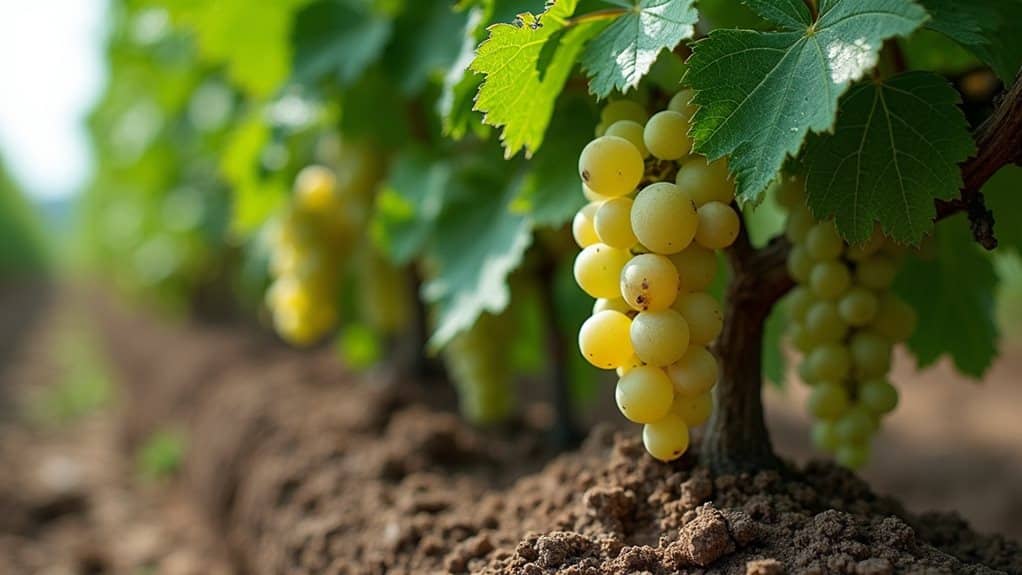
While sunshine is definitely a grape’s best friend, let’s not forget about another key ingredient—water! If you want to serve up the juiciest grapes, pay close attention to soil drainage and watering.
Think of well-drained soil like a cozy campsite for roots—no soggy socks allowed! Keep moisture steady, avoid overwatering (especially near greedy trees), and you’ll help grape ripening stay on schedule. Proper microclimates and structural features around your vineyard can also influence how well your grapes mature.
Which Grape Varieties Ripen Best in Your Climate?
If you’ve ever dreamed of wandering through your own backyard vineyard, basket in hand like some grape-picking explorer, you’ll want to make sure you’re actually planting the right varieties for your local climate—otherwise, your voyage could end with some pretty disappointing, sour little guys!
Early-ripening grapes like Reliance or Somerset Seedless are great for northern gardens, while variety selection and climate suitability make all the difference for ripening success.
How to Spot and Fix Grape Nutrient Deficiencies
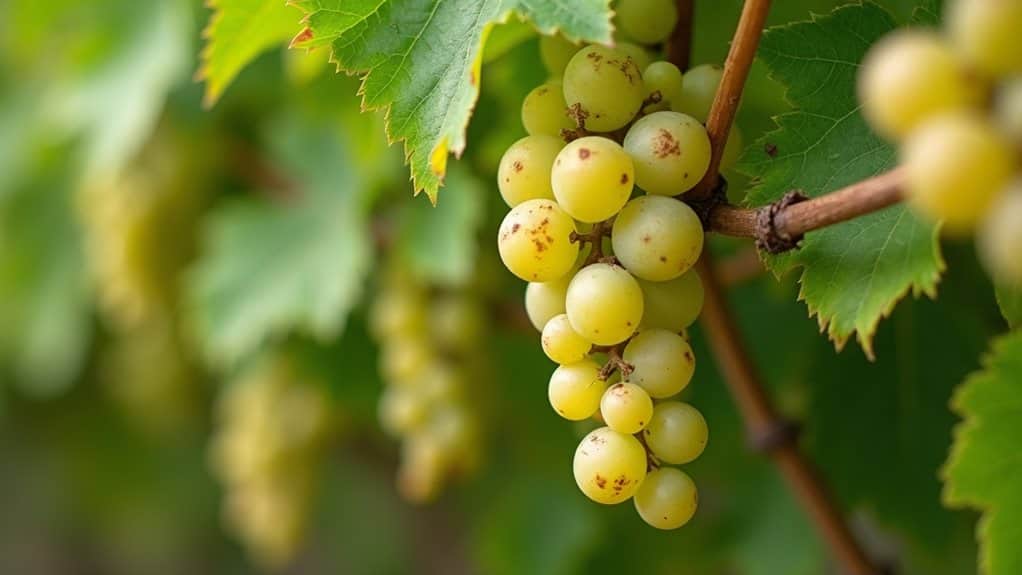
Even though grapevines can look lush and leafy from a distance, sometimes the real action—those juicy, sweet clusters you’re dreaming about—just isn’t happening. And trust me, it’s not always the weather’s fault! If you spot yellowing leaves or sad-looking grapes, you might have a potassium deficiency or other nutrient deficiencies. Don’t just guess—test your soil, add some potash, and watch grape ripening improve! Proper filter selection and maintenance practices can also help ensure your vines stay healthy and productive.
Actionable Steps to Ensure Even Grape Ripening
Getting those grapes to ripen all at the same time can feel a bit like trying to get your whole family to agree on a camping destination—tricky, but totally possible with the right plan! Start with smart pruning in late winter, limit your buds, and immerse yourself in leaf management. Divide your vineyard into blocks, tweak the microclimate, and don’t forget: sometimes, staged harvesting saves the day! Additionally, understanding how the size and layout of your vineyard can impact house plan layout and division of space is essential for creating an environment that promotes uniform ripening.
Overall
So, if your grapes are stubbornly staying green, don’t freak out—think of it as a grape-growing journey! Maybe you need to trim a few vines, give them more sun, or just pick a variety that loves your climate as much as you do. I’ve totally messed this up on my own camping trips, forgetting to water or accidentally shading my plants with tents, so learn from my mistakes—try these fixes and watch your grapes finally sweeten up!