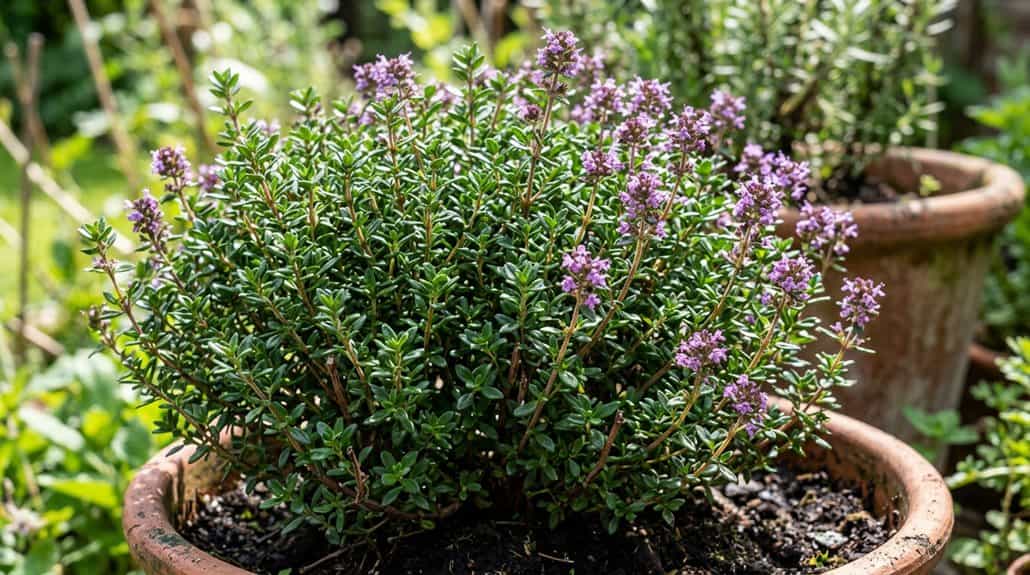
How to Keep Thyme From Getting Leggy
If you want to keep your thyme from looking like it’s trying to escape the pot, give it bright, direct light—at least 600 lux, trust me, it makes a big difference! Snip off flower buds before they hog all the energy, and don’t drown it; thyme likes well-draining soil, not muddy boots. Use sharp, clean scissors and trim above leafy spots for bushiness. With just a little attention and regular pruning, you’ll have compact, fragrant thyme—just wait until you see how easy it can be!
TLDR
- Provide thyme with at least 600 lux of full-spectrum light or supplement with grow lights to prevent etiolation.
- Prune stems regularly above leafy nodes and remove flower buds to encourage bushy, compact growth.
- Rotate the plant weekly to ensure even light exposure and balanced development.
- Use well-draining soil and avoid overwatering to maintain healthy roots and prevent weak, leggy stems.
- Space plants properly and conduct regular inspections to catch and correct early signs of legginess.
How to Fix Leggy Thyme Fast
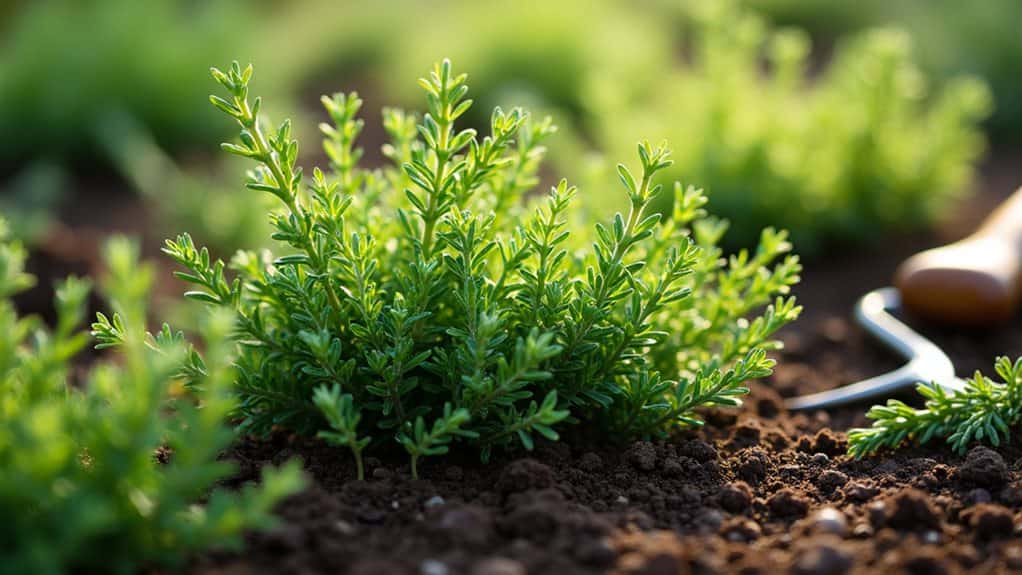
If you’ve ever glanced at your thyme plant and thought, “Whoa, why does it look like it’s trying to win a stretching contest?”—don’t worry, you’re definitely not alone!
To fix it fast, prune stems above leafy nodes for bushier growth, rotate for better light exposure, and use supplement lighting.
Space plants well in well-drained soil, harvest thyme often, avoid excess nitrogen fertilizer, and try top pruning regularly.
Additionally, ensuring proper maintenance and inspection can help prevent your thyme from becoming leggy by keeping the plant healthy and vigorous.
Why Does Thyme Become Leggy?
Even though thyme might seem like a super low-maintenance herb, it can get surprisingly leggy faster than you’d expect, especially when it’s hanging out in less-than-ideal conditions—kind of like you after too many days stuck inside without a camping trip!
Leggy thyme usually happens from insufficient light, etiolation, skipping pruning, or letting flowering shift plant energy, all of which lead to long stems and reduced plant health.
Best Lighting for Bushy, Fragrant Thyme
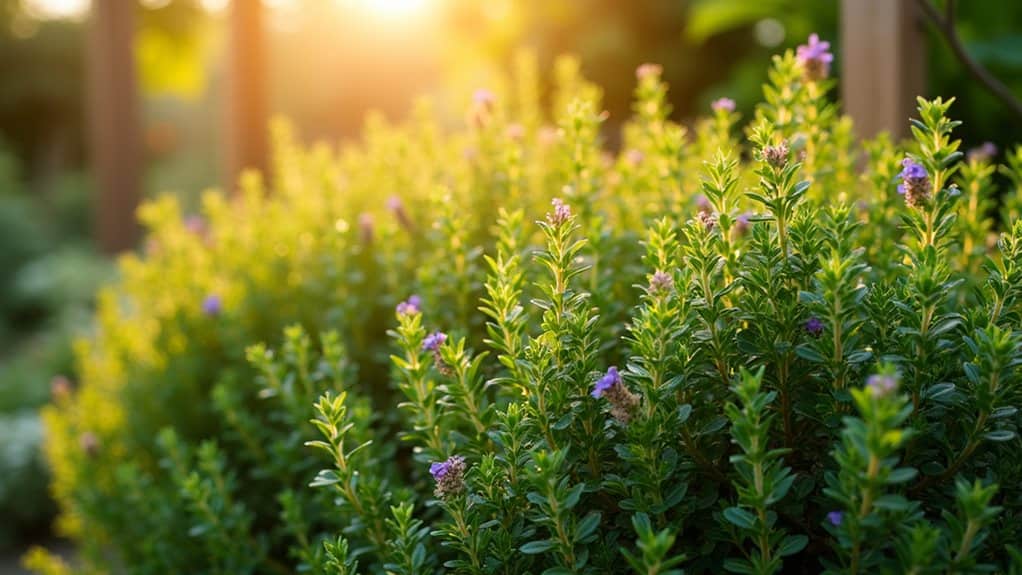
While you might dream of your thyme basking in the sun like you on your first day at summer camp, the truth is, thyme is kind of picky about its lighting if you want it to stay bushy and extra fragrant.
To meet thyme’s light requirements, use full-spectrum LED grow lights, make certain of at least 600 lux light intensity, rotate your plant weekly, and always check for even light distribution to prevent leggy thyme!
How to Prune Thyme to Prevent Legginess
Although it might sound a little intimidating at first, pruning thyme is honestly a lot like giving your plant a fresh haircut before heading off on a big camping trip—it’s all about keeping things neat, tidy, and ready for exploration! Use sterilized tools, trim stems and flower buds regularly, and rotate your plant for even growth. This plant maintenance prevents leggy thyme, encourages healthy regrowth, and creates a compact shape. Regular pruning also helps maintain proper air circulation, reducing the risk of mold and pests.
Soil and Watering Secrets for Compact Thyme
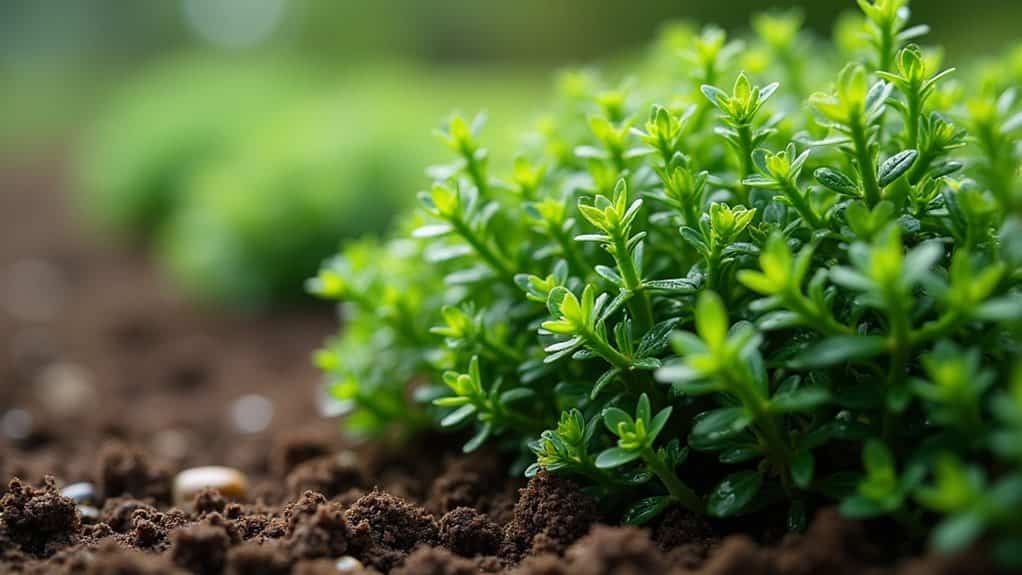
If you’ve ever tried to keep your thyme looking as tidy as a well-packed camping backpack, you know that soil and watering habits can make or break your plant’s compact style.
Use well-draining soil—think 60% sand or perlite—and never overwater; root rot is the enemy!
Test soil pH, add organic compost, and stick to a smart watering schedule.
Don’t forget container drainage for happy, compact growth!
Overall
So, if you want your thyme to look like it’s ready for a camping trip—bushy, strong, and not floppy—just remember to give it loads of sunlight, trim it like you’re giving it a cool haircut, and don’t drown it in water. Trust me, I once forgot to prune mine and it looked like it was auditioning for a spaghetti commercial! Keep these tips in mind, and your thyme will be the star of your herb garden expedition.