Why Your Clematis Vine Isn’t Blooming
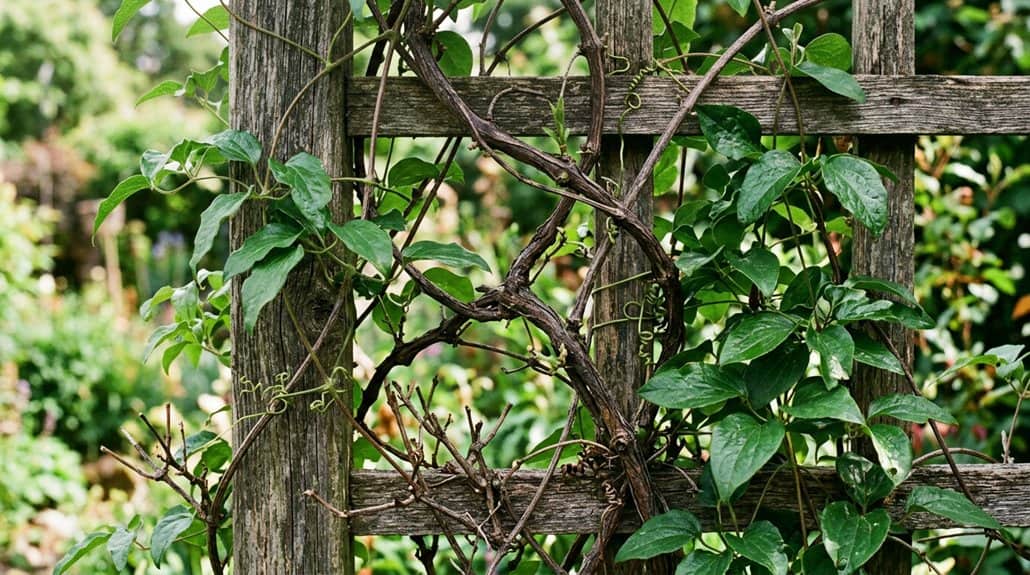
If your clematis vine isn’t blooming, don’t worry—you’re definitely not alone! You might be camping in the shade, since clematis loves sunlight, or maybe you’ve pruned it at the wrong time (I’ve trimmed mine too early before—total rookie mistake). Are you tossing on too much leafy fertilizer or letting the soil get out of whack? Young plants, especially wild varieties, also need time to settle in. Stick around, because there’s a lot you can do to turn things around!
TLDR
- Insufficient sunlight limits blooming; ensure your clematis receives at least six hours of direct light daily.
- Incorrect pruning, especially cutting old wood on certain varieties, can prevent flowers from forming.
- Excess nitrogen in fertilizer promotes leaf growth instead of blooms; use a phosphorus-rich formula for better flowering.
- Young plants or specific cultivars may require several years to mature before they start blooming.
- Poor soil conditions or improper pH can hinder flowering; test and amend soil for optimal nutrient balance.
Why Your Clematis Isn’t Blooming: The Most Common Causes
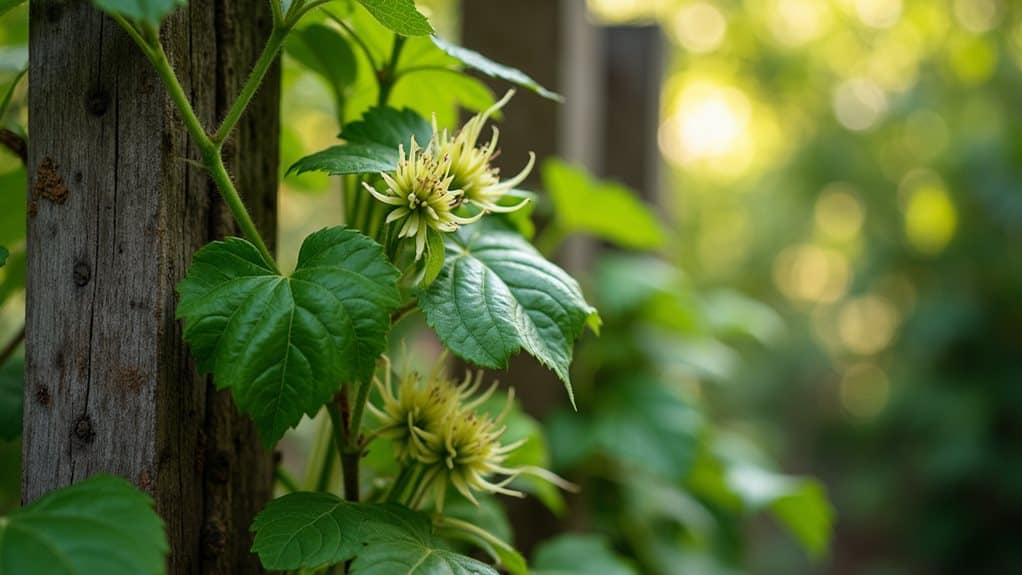
Even if you’ve done your best to give your clematis a great home in your garden, sometimes those gorgeous blooms just refuse to show up—and boy, is that frustrating! You might be dealing with insufficient sunlight, incorrect pruning, or tricky growing conditions.
Maybe you snipped the wrong stems, or your vine’s hiding in too much shade. Don’t worry, though—every great gardener faces these challenges, and you’ll learn tons!
How Sunlight and Location Affect Clematis Flowers (And How to Fix It)
While you might dream of your clematis bursting with blooms like a fireworks show, the truth is, sunlight has a starring role in making that happen—seriously, it’s like the difference between camping under a bright, sunny sky or pitching your tent in a deep, gloomy cave. If your location’s too shady, your clematis won’t be blooming. So, consider relocating it or trimming nearby plants for best results! Additionally, ensuring your plant’s safety from hazards such as gas leaks or damage can help maintain its overall health and flowering potential.
How to Prune Clematis for More Blooms
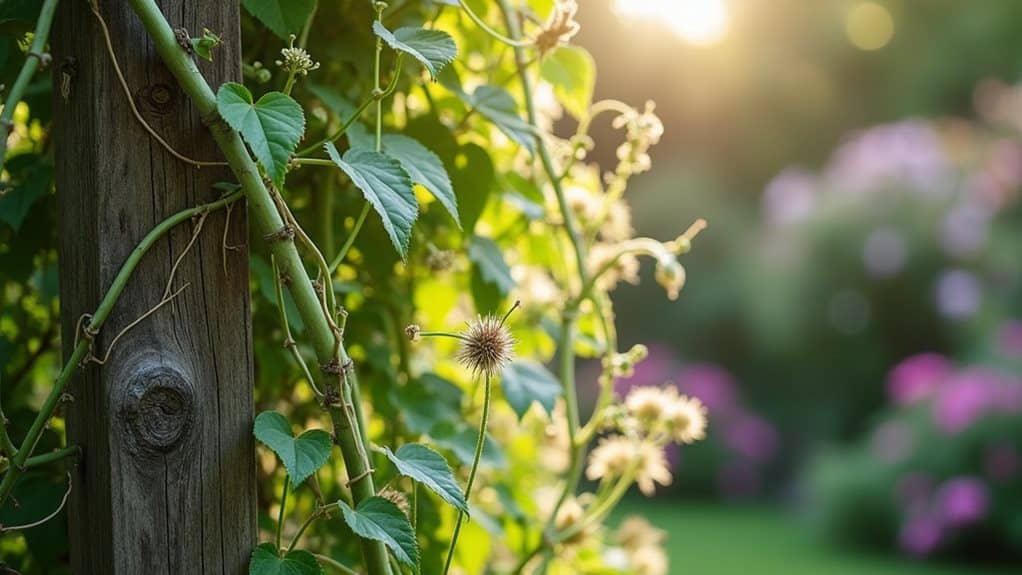
If you’ve ever felt like your clematis is stubbornly refusing to bloom, it might just need a little haircut at the right time—think of it like giving your plant a fresh start before it heads off on a big expedition! First, identify its group. Prune Group 1 after flowers fade—don’t chop old wood! For Group 2, trim lightly to spark new growth. Group 3? Cut back hard! To ensure healthy development and more vibrant blooms, consider testing your soil’s pH and nutrients with a soil test kit, so your plant gets the optimal conditions it needs to thrive.
How to Solve Fertilizer and Soil Problems That Limit Flowering
Alright, so you’ve perfected the art of clematis pruning—snip, snip, hooray!—but what if your vine still acts like it’s on a permanent vacation from blooming? Check your fertilizer and soil game.
Too much nitrogen means leafy campers, not flowers. Choose a fertilizer with more phosphorus, like 5-10-10, and keep soil pH between 5.5 and 7.0.
Compost helps, too—think of it as trail mix for roots! Ensuring proper soil pH and nutrient balance is crucial for encouraging vibrant blooms.
How Plant Age and Variety Affect When Clematis Bloom
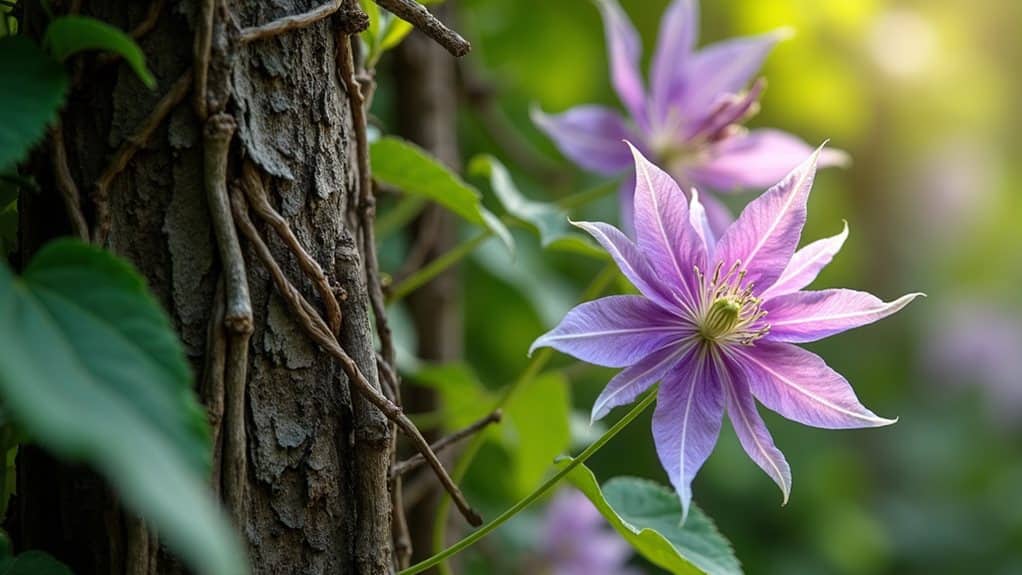
Even the most dedicated plant parents can feel like they’re stuck at base camp, staring longingly at their clematis vines and wondering when the real voyage—those magical blooms—will finally begin.
Here’s the deal: plant age and cultivar matter a ton! Young vines, especially under three years, are busy setting roots. Some cultivars, like Montana, need extra time, so don’t rush the blooming time—enjoy the expedition!
Overall
So, if your clematis is being stubborn and won’t bloom, don’t panic—think of it like a mystery you get to solve! Check the sunlight, give it the right haircut (a.k.a. pruning), feed it with good soil and fertilizer, and make sure it’s the right age and type. I once camped beside a fence covered in blooming clematis—trust me, it’s worth the effort when your vine finally explodes with color! Go give your plant some love!