How to Grow Asparagus From Crowns Like a Pro
If you’re dying to grow asparagus like a pro, here’s the deal: pick a super sunny spot with well-drained, rich soil (think neutral pH—weird but important!), mix in loads of compost, and plant disease-free crowns about a foot apart in trenches. Water regularly, slap on some mulch, and keep weeds far, far away—trust me, asparagus hates competition! Harvest spears when they’re 6-8 inches, then care for your patch, and soon enough, you’ll be feasting every spring. Want the nitty-gritty? Stick around!
TLDR
- Choose a sunny, well-drained site with fertile, neutral pH soil and improve it with compost or well-rotted manure.
- Test and adjust soil pH to 6.5-7.5, mixing in organic matter for optimal asparagus growth and drainage.
- Plant healthy, disease-free crowns 12 inches apart in deep, well-drained trenches, covering them with soil and watering thoroughly.
- Mulch and water consistently, inspect for weeds and pests, and use organic methods for disease and pest control.
- Harvest spears at 6-8 inches, stop when spears thin, and annually mulch, fertilize, and remove old ferns to maintain bed health.
Choose the Best Location for Your Asparagus Bed
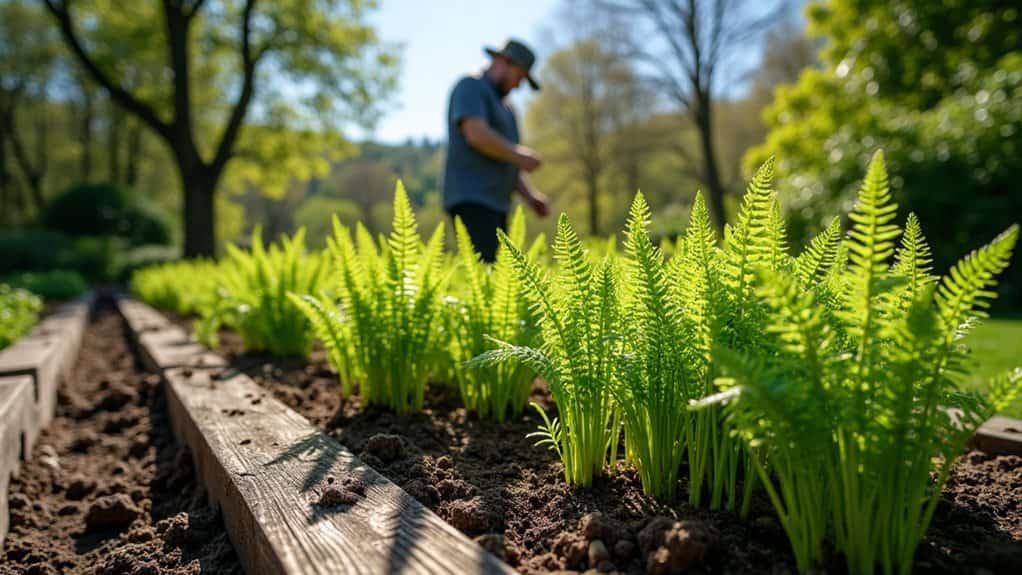
When it comes to picking the perfect spot for your asparagus bed, think of it like choosing the best campsite for a long expedition—because asparagus is in it for the long haul! Pick a planting site with full sun, well-drained and fertile soil, and a neutral soil pH. Soil preparation is key to ensuring healthy growth and a bountiful harvest. Avoid shallow soils, frost-prone areas, and shade. Trust me, asparagus hates soggy “sleeping bags” and gloomy “tents”!
Prepare and Amend the Soil for Planting
Before you start planting, you’ll want to check your soil’s pH, aiming for that sweet spot between 6.5 and 7.5—think of it like making sure your tent is on level ground before camping, or your marshmallows aren’t burnt (nobody likes sour soil or burnt snacks!).
To ensure optimal growth, consider performing a soil test to accurately determine your soil’s nutrient levels and pH, helping you make precise amendments.
Go ahead and mix in a good layer of compost or well-rotted manure, because asparagus is basically a foodie and loves nutrient-rich soil. Plus, this helps with drainage so your crowns won’t be sitting in a puddle after every rain.
Trust me, your asparagus will thank you for this five-star treatment, and you’ll be off to a great start for a delicious harvest!
Test And Adjust pH
Although it might sound a little bit like a science experiment from your last camping trip, testing and adjusting your garden soil’s pH is actually one of the coolest steps you’ll take to set up your asparagus patch for major success.
Grab a soil test kit for soil analysis, and remember, if your soil pH needs a enhancement, add lime. If it’s too high, try sulfur or peat moss.
Keep monitoring!
Enrich With Organic Matter
If you’ve ever packed your backpack for a camping trip and made sure to bring all the essentials for a good time—like a warm sleeping bag, your favorite snacks, and maybe some marshmallows for roasting—think of enhancing your soil with organic matter as prepping your asparagus bed for an epic expedition.
Mix in well-rotted compost and organic amendments for soil improvement, better drainage, increased soil fertility, extra nutrients, and lasting plant health.
Select and Store High-Quality Asparagus Crowns
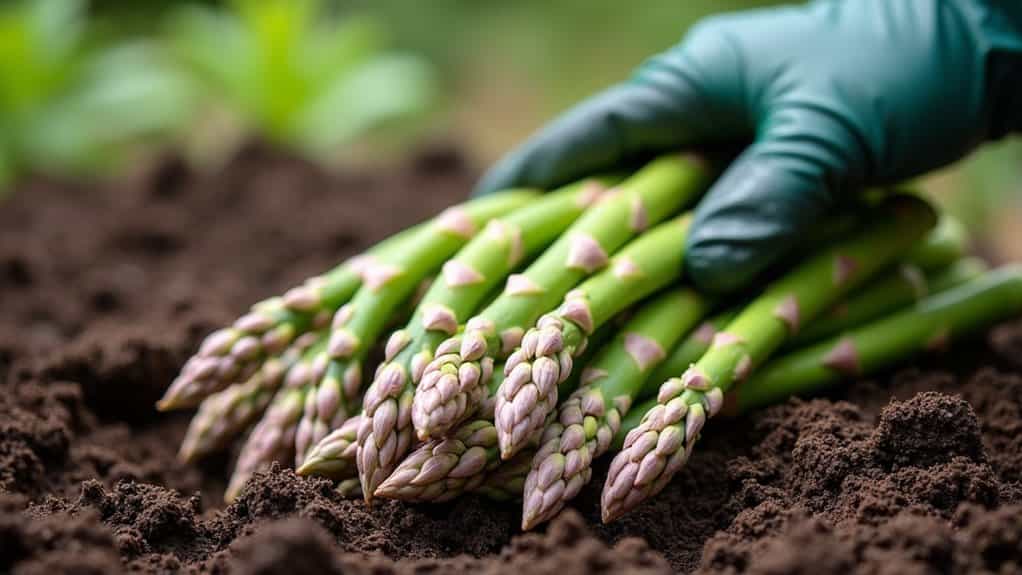
Let’s plunge right into the escapade of picking out asparagus crowns—trust me, it’s almost as exciting as prepping for a camping trip (well, minus the marshmallows, but still pretty cool).
Always grab high-quality, healthy, and disease-free crowns from trusted sources, making sure they’re firm with no signs of rot.
If you must store them, keep them cool and moist—damp peat works wonders until planting time!
Plant Asparagus Crowns the Right Way
Once you’ve got your hands on those awesome asparagus crowns, it’s time to roll up your sleeves and get planting—think of it like setting up base camp for a long expedition, where every step counts toward future harvest feasts.
Dig trenches at your planting site, ensuring good soil drainage and proper planting depth. Then space your crowns 12 inches apart, nestling each on a cozy mound of soil, and start watering!
Water, Mulch, and Care for Young Asparagus Plants
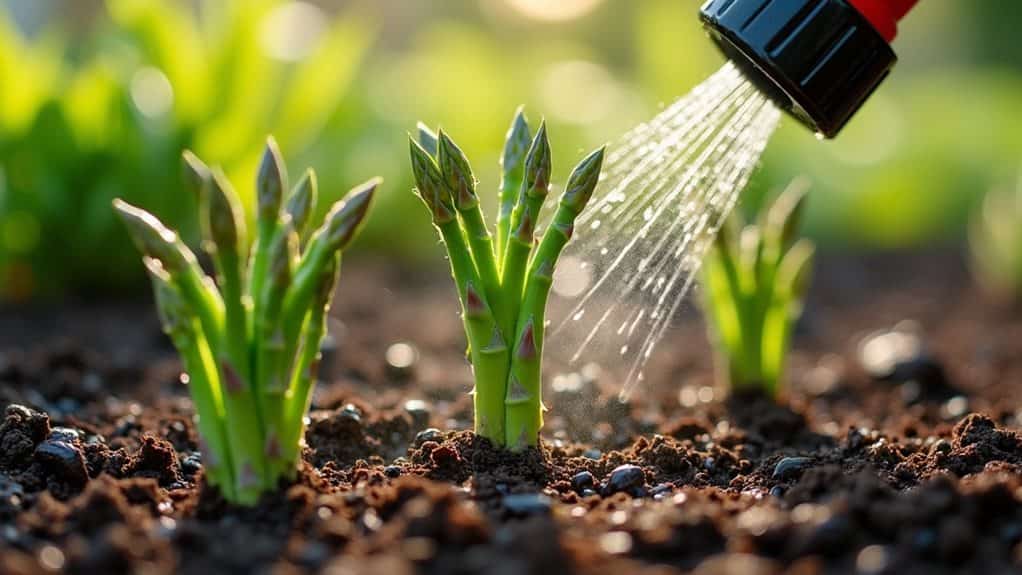
Even though your asparagus crowns are tucked in like campers in cozy sleeping bags, you can’t just forget about them and hope for the best—these young plants need some TLC to thrive!
Stick to a steady watering schedule, aiming for at least an inch of moisture weekly, and always check soil moisture.
Mulch with organic mulch like straw to lock in moisture, keep the soil cool, and encourage healthy roots and awesome spear development.
Control Weeds, Pests, and Diseases in Asparagus Beds
Although asparagus beds might look peaceful, like a quiet campsite at sunrise, you’ve actually got a whole lot of action happening just below the surface—sneaky weeds, hungry bugs, and invisible diseases are all trying to crash the party!
For top weed control, hand-removing weeds and using organic mulch is key.
Keep pests like asparagus beetles away with beneficial insects, rotate crops for disease prevention, and destroy diseased plants fast!
Regular inspection and maintenance of the bed can help spot potential issues early, preventing larger problems down the line.
Additionally, be mindful of signs of a gas leak or damaged equipment, which can pose safety risks and affect your gardening efforts.
Harvest Asparagus Spears at the Right Time
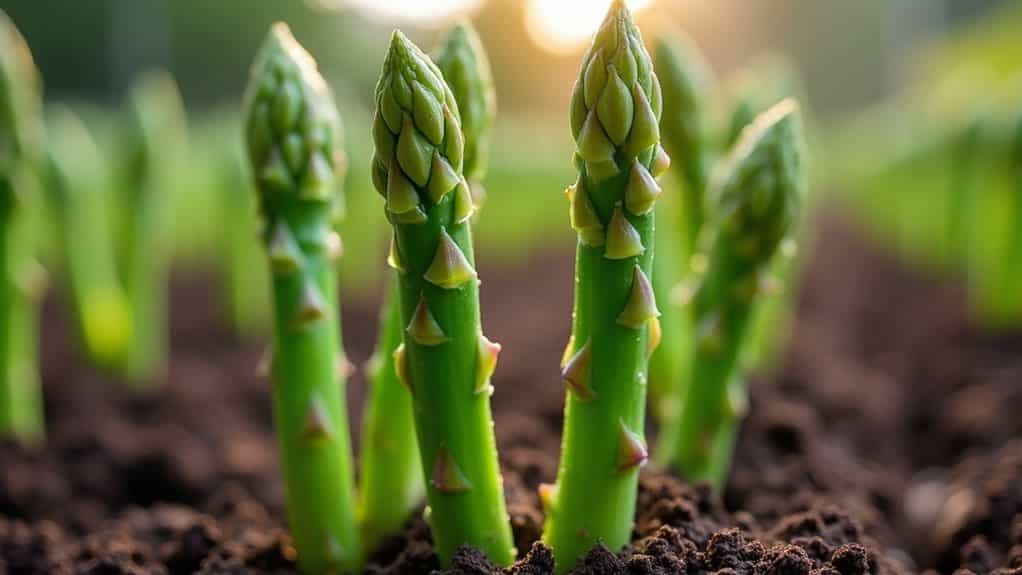
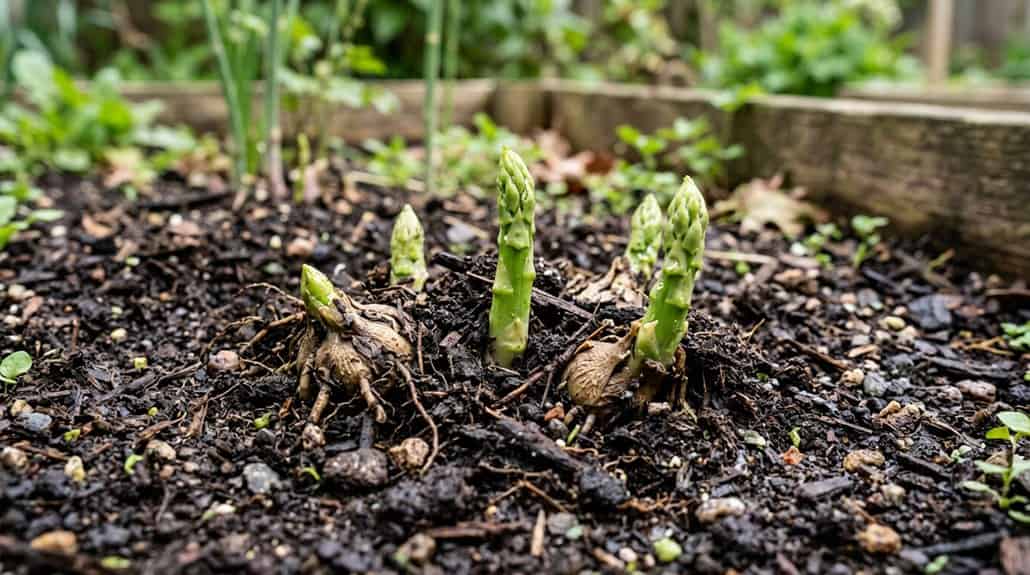
When that first warm breeze of spring rolls in and you spot those bright green asparagus spears poking out of the soil like little tent poles at a campground, it’s honestly hard not to grab your garden gloves and jump for joy! For the best harvest, wait until spears are 6-8 inches tall, firm, and straight. Cut them at soil level, and stop harvesting at the end of season when spears thin. Be mindful of frost damage risks, as planting too early can cause setbacks and reduce your yield.
Keep Your Asparagus Bed Healthy Year After Year
If you want your asparagus patch to be a campsite you can visit year after year—imagine those spears popping up like loyal little tents each spring—you’ve got to put in a bit of TLC to keep it thriving! Lay down mulch for weed control and soil moisture, water regularly, and fertilize annually. Incorporate deep root systems by avoiding disturbance to promote drought resilience. Remove old ferns, monitor for pests, and practice smart bed maintenance for plant health and disease prevention.
Overall
So, now you’re basically an asparagus-growing pro, right? Imagine camping out by your garden, watching those skinny green spears shoot up like little alien fingers—pretty wild! Don’t forget, keep the soil rich, water like you care, and show those weeds who’s boss. Trust me, the first time you harvest your own fresh asparagus, you’ll feel like a farmer-explorer uncovering new territory. Stick with it, and you’ll have delicious spears for years—way cooler than store-bought!