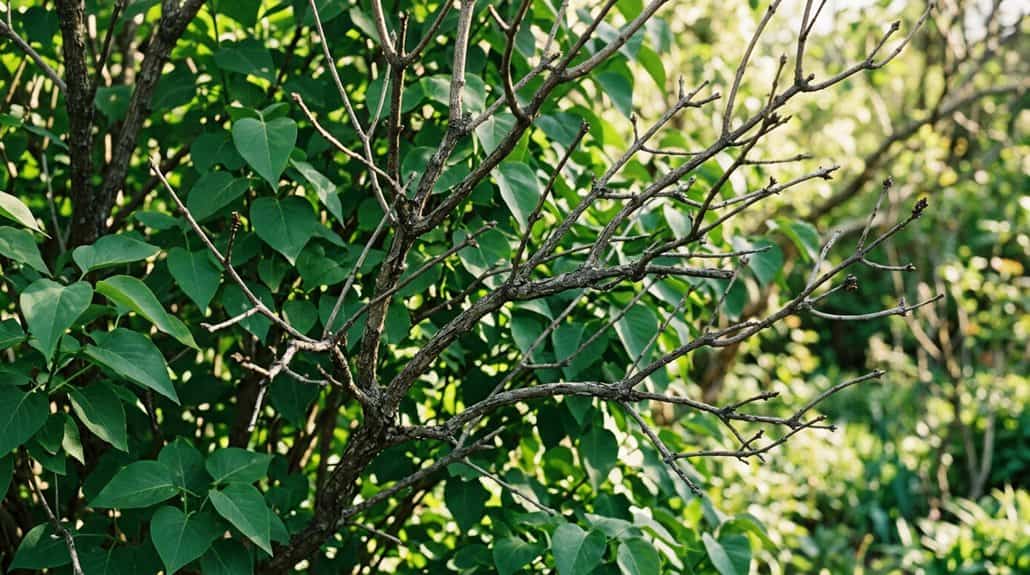
Lilac Bush Not Flowering? Here’s What to Check
If your lilac bush is stubbornly refusing to bloom, start by checking if it’s sunbathing enough—it needs at least six hours a day, like the biggest camper at the campground. Don’t go wild with the fertilizer, especially high-nitrogen stuff, or you’ll just get leaves, not flowers. Did you prune right after spring flowers faded, or did you go Edward Scissorhands in fall? Too young, too old, pests, late frosts—there’s a lot to uncover, and the fixes are pretty satisfying! Stick around for the nitty-gritty.
TLDR
- Ensure your lilac receives full sun, as insufficient sunlight leads to poor blooming.
- Prune immediately after flowering in spring to avoid cutting off next year’s flower buds.
- Avoid over-fertilizing, especially with high-nitrogen fertilizers, which promote leaf growth instead of flowers.
- Rejuvenate old or overgrown lilacs by cutting back woody stems to encourage new growth and blooms.
- Check for pests, diseases, and environmental stress like late frosts, which can damage buds and reduce flowering.
Is Your Lilac Getting Enough Sunlight?

Even though lilacs look tough, they’re actually total sun-lovers at heart, kind of like how I feel when I’m camping and chasing that perfect patch of sunlight for my morning cocoa! If your lilac isn’t blooming, check if it’s getting full sun, because insufficient sunlight—or too much shade from trees or buildings—means you’ll be serving up leaves, not flowers, come spring. Additionally, ensuring proper maintenance and inspection can prevent issues like disease or poor growth that might affect flowering.
Are You Pruning at the Right Time?
While you might think grabbing your pruning shears whenever you’ve got a spare minute is a great idea, lilacs are a bit pickier about their haircut schedule—kind of like how I only want marshmallows in my cocoa at *just* the right time while camping! Prune lilacs right after flowering in spring to protect next year’s bloom. Remember, timing is everything—bad pruning timing means no showy flowers! Proper pruning also helps maintain soil balance, which is essential for healthy plant growth.
Are You Using Too Much Fertilizer?

Let’s talk about fertilizer, because if you’re anything like me on a camping trip, you might think more is always better, but with lilacs, that’s just not true—too much nitrogen is like giving your bush an endless supply of energy drinks, making it shoot out leaves instead of those gorgeous flowers you want.
Have you been piling on the plant food, hoping for a big bloom, only to get a jungle of green instead? Try holding back next spring and use just a light touch, since lilacs actually do their best flower show when you skip the heavy feeding routine!
Additionally, understanding the nutrient balance in your soil can help prevent over-fertilizing and promote healthier flowering.
Excess Nitrogen Suppresses Blooms
If you’ve ever loaded up your lilacs with extra fertilizer, hoping they’d burst into bloom like a fireworks show at summer camp, you’re definitely not alone—but here’s the twist: too much nitrogen actually works against you!
Excess nitrogen from fertilizing can cause bloom suppression, giving you a non-flowering bush with lots of green leaves. So, check your fertilizer routine—less really can be more for lilacs!
Minimal Fertilizer Encourages Flowers
Ever wonder why your lilac bush looks like it’s ready to win “Most Leaves” at summer camp but totally flunks the “Best Blooms” competition?
Over-fertilized lilacs, especially with too much nitrogen, can go wild with leaves but barely give you any flower buds.
Stick to minimal fertilizing—just a light touch in spring. Less food means more energy for bud formation, and hopefully, beautiful blooms!
Is Your Lilac Too Young, Old, or Overgrown to Bloom?
Although lilacs are famous for their gorgeous, fragrant blooms, they don’t always burst into flower as soon as you might hope—sometimes, it’s like waiting for a friend who’s always late to the camping trip!
Young lilacs can take years to join the blooming cycle, while overgrown lilacs may need rejuvenation pruning. Don’t be afraid to give those woody stems a haircut—new growth means more flowers!
Additionally, ensuring proper filter compatibility and regular maintenance can also support healthier growth and flowering.
Could Pests or Disease Be Affecting Your Lilac?

While you might be dreaming of your lilac bush showing off with a cloud of purple blooms every spring, sometimes those flowers seem to vanish like s’mores at a campfire—gone before you even get a taste!
Pests such as scale insects or borers can sneak in, causing damage to buds and branches. Even soil-borne disease can throw off flowering.
Check for sticky residue, bugs, or wilted areas—catching issues early really helps! Additionally, the health of the soil, including factors like soil composition, can impact flowering and overall plant vitality.
Has Weather or Watering Stressed Your Lilac?
Bugs and diseases aren’t the only party crashers when it comes to lilacs missing their blooming moment—sometimes, Mother Nature or the way you water can really throw things off, too!
If you’ve ever seen a late frost or forgotten about watering during a dry spell, your lilac might be under stress.
Keep the soil moist but not soggy, mulch well, and watch those flower buds thrive!
Be mindful of overwatering, which can cause root issues and stress that prevent blooming.
Overall
So, if your lilac bush is being stubborn and refusing to bloom, don’t panic or threaten it with a shovel just yet! Check for sunlight, prune at the right time, skip the fertilizer overload, and see if it’s just too young (or maybe a grumpy old-timer). Keep an eye out for pests or weird weather, too. I once camped near a lilac that only bloomed after a rainstorm—so, hey, a little patience and attention really pay off!