Why Does My Outdoor Faucet Pressure Drop Suddenly?
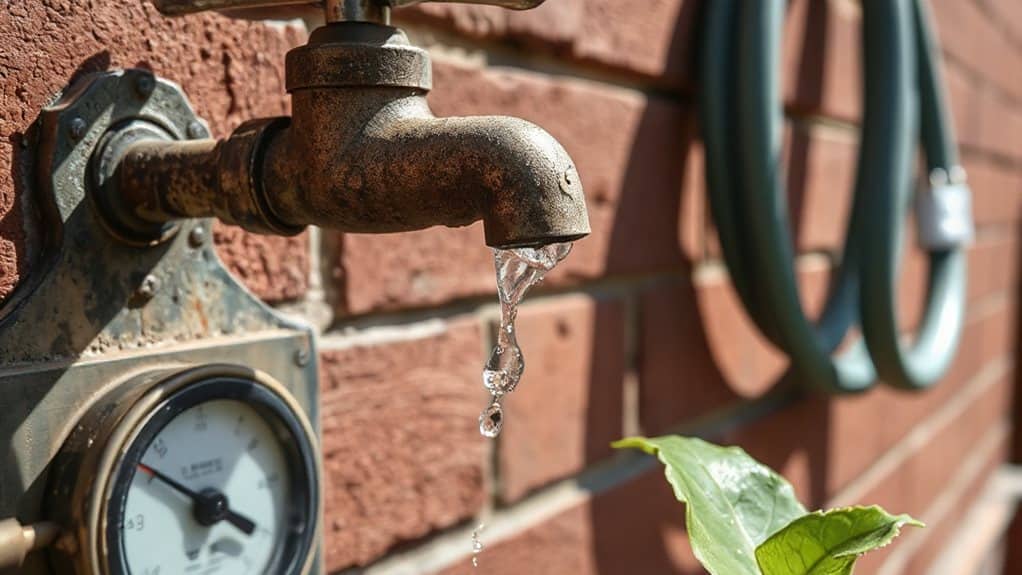
You’re probably seeing a weak whisper from your outdoor faucet because the aerator’s clogged with mineral crust, the shut‑off valve is only half‑open, or a kinked hose is throttling flow, and any of those can make your camp‑trip water feel like a trickle. First, unscrew the faucet tip and soak it in vinegar to dissolve scale, then check the valve lever—make sure it’s parallel to the pipe— and straighten any bends in the hose. If the pressure still sputters, look for hidden leaks behind walls or under the yard, because a sneaky drip can steal the push you need. Keep these tricks in mind and you’ll have a strong, steady spray again, plus a few more tips waiting for you.
TLDR
- Mineral scale from hard water can clog the aerator and reduce flow, especially if white crusts appear on the spigot.
- A kinked, damaged, or sediment‑filled hose throttles water, so inspect and replace the hose or its connections.
- The shut‑off valve may be partially closed or obstructed; ensure the lever is parallel to the pipe and the gate wheel is fully tightened.
- Hidden leaks or damaged pipe sections cause pressure loss; look for damp spots, use moisture meters, or professional leak‑detection methods.
- Quick fixes include cleaning or replacing the aerator, washers, and vacuum breaker, and swapping to a full‑flow hose‑splitter.
Why Your Spigot Feels Weak – First Check
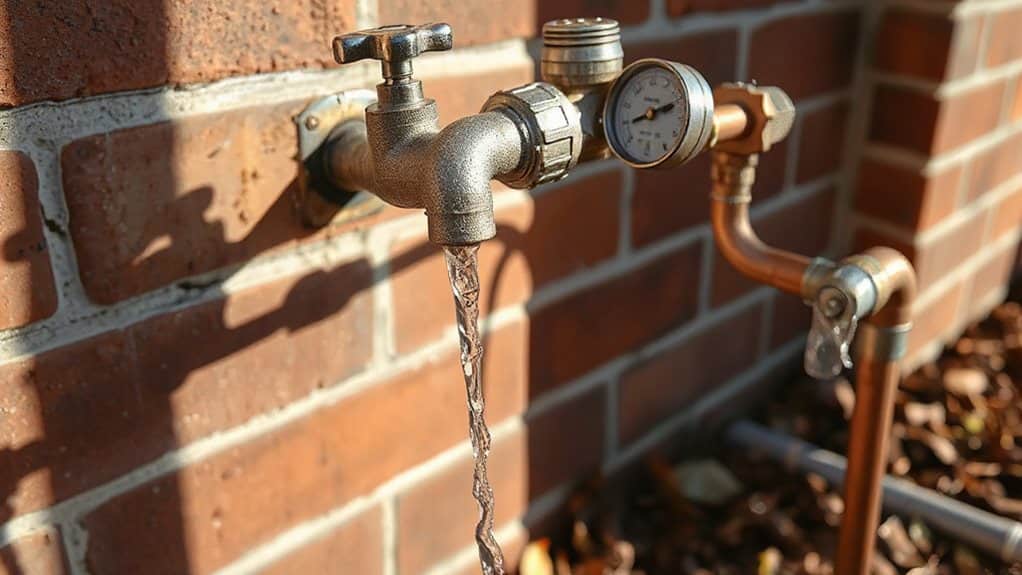
Ever wonder why your backyard spigot feels more like a trickle than a torrent when you’re trying to rinse off a muddy bike after a weekend hike? First, check for mineral buildup—hard water leaves calcium and magnesium crusts that choke the flow, especially in the spout and hose connections. Also, inspect the hose for kinks or clogs, because a twisted tube can turn a cascade into a drizzle. If you spot sediment or a bent hose, clean or replace it, and you’ll restore that satisfying gush for your next adventure. The back‑end valve in a sillcock can also become partially obstructed, reducing pressure. If your outdoor water fixtures are near electrical outlets, be aware that nearby moisture-related hazards can indicate broader outdoor maintenance issues worth inspecting.
Inspect Shut‑off Valve Settings for Spigot Pressure
After you’ve cleared out any mineral crusts or kinked hoses, the next thing to check is the shut‑off valve that sits right by the spigot’s wall connection (or sometimes hidden in the utility room or crawl space).
Make sure the lever is parallel to the pipe, not a quarter‑turn perpendicular, because a partially closed valve throttles flow and mimics a pressure drop.
Test the gate wheel—tighten clockwise until it can’t turn further.
If the valve is stuck, debris may be the culprit, so wipe it clean.
Basements and other indoor areas can indicate broader moisture problems that drive changes in water pressure and should be inspected if issues persist.
Check for Mineral Buildup That Narrows the Spigot
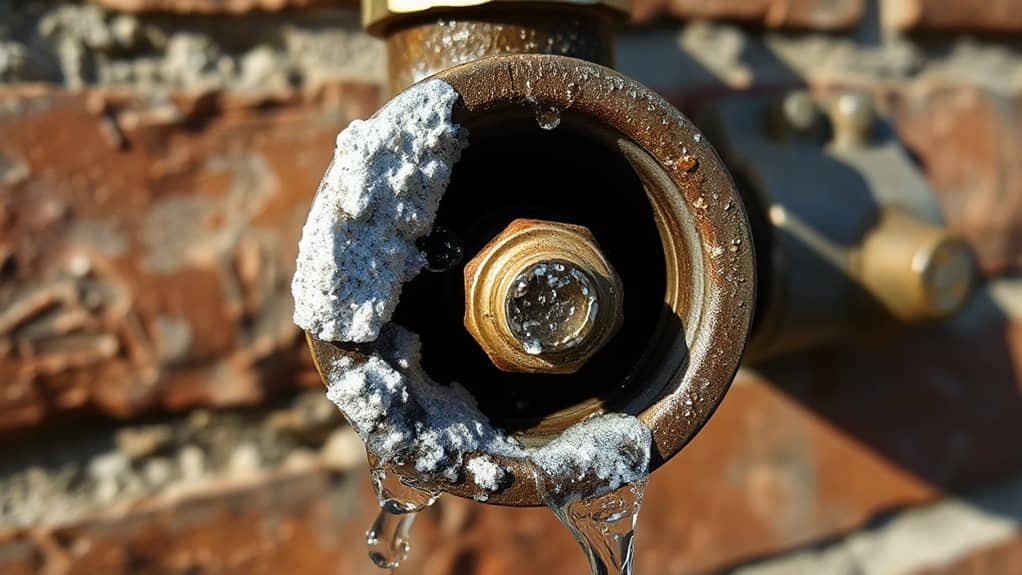
You’ve probably noticed those stubborn white crusts on your outdoor faucet—hard‑ water deposits can shrink the spigot’s opening faster than a leaky tent, and you’ll feel the pressure drop the moment you turn the handle.
Have you ever taken the aerator apart and watched the chalky buildup spill out like sand from a desert oasis?
Grab a wrench, disassemble the spigot, soak the parts in vinegar, scrub away the scale, and you’ll be back to a strong, steady stream for your next camping adventure.
This quick fix can save time and money compared with replacing fixtures, and it’s similar to how simple, shallow gardening setups like a 4 x 4 feet lettuce table use efficient, low-maintenance design to get big results.
Hard Water Deposits
Imagine this: you’ve just set up your campsite, pulled out the trusty outdoor faucet, and—whoops!—the water sputters like a nervous squirrel. Hard‑water calcium and magnesium evaporate, leaving chalky limescale on aerators, which quickly narrows the nozzle. You’ll see white crust, feel weaker flow, and notice sputtering after a couple of years, especially in hot weather. Spotting this early saves your guests’ drinks.
Disassemble and Clean Spigot
A clogged outdoor spigot can turn a refreshing campsite shower into a frustrating drizzle, but the good news is you can fix it yourself in just a few minutes.
First, shut the supply valve, loosen the packing nut, and pull the handle off.
Inspect the stem and seat for white crust, soak parts in vinegar, scrub, rinse, then reassemble, tighten, and test flow.
Identify Pipe Kinks or Collapses Reducing Water Pressure
Ever wondered why your outdoor faucet suddenly feels like it’s sputtering through a straw? You might’ve a kinked or collapsed pipe, especially if you used thin ½‑inch tubing that bent sharply without a swoop, and higher water makes PVC soften fast. Those tight bends flatten the hose, crank up friction, and drop PSI dramatically—so check routing, add elbows, and swap to larger, kink‑resistant tubing before your next campsite excursion. Choose durable tubing and fittings that match your local water pressure needs to prevent repeat issues.
Detect Hidden Leaks Behind Walls or Under the Yard
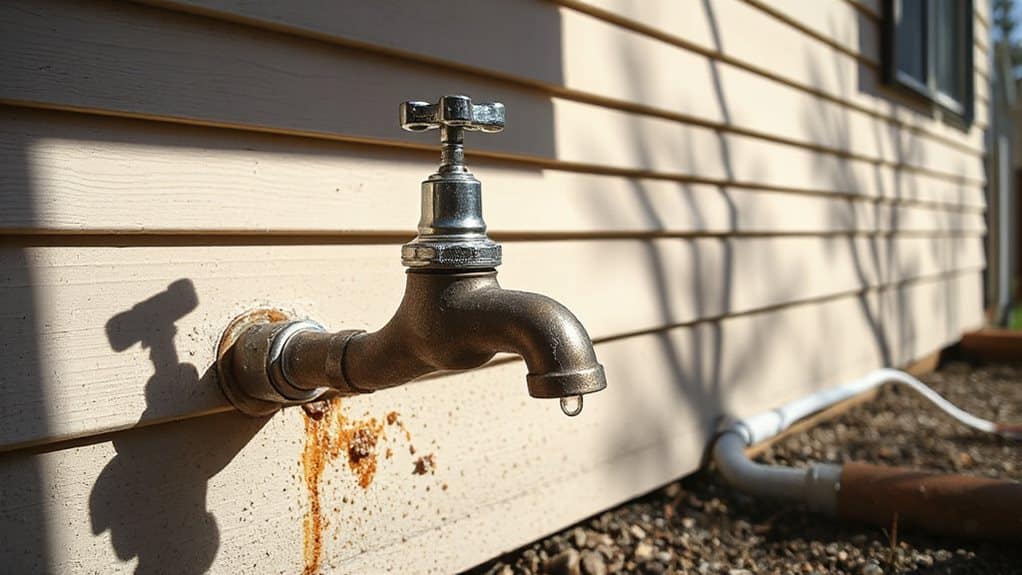
You’ll notice that a damp spot on a wall or a weirdly cool floor tile can be a visual clue that water’s sneaking around, so grab a moisture meter and start mapping the wettest zones before the ceiling starts sagging. Have you ever tried listening to a house like a detective? Using a sensitive microphone or a ground‑sensor, you can hear the tiniest drip echo through drywall or concrete, turning an invisible leak into a clear, audible “plip‑plip” that points you right to the culprit. And when you’ve got the clues, call a pro who can combine those readings with acoustic maps and thermal scans to pinpoint the leak’s exact path—no need to rip up the yard or tear down walls, just a quick, high‑tech treasure hunt. Sudden pressure spikes from a water hammer can also indicate hidden line damage or loose fittings, so consider inspecting for water hammer when you hear banging or notice abrupt pressure drops.
Visual Moisture Indicators
Ever wondered how a simple water stain on your wall can actually be a secret clue that a hidden leak is lurking behind the drywall or under your backyard?
You can spot mold, puddles, or a green lawn patch, then use a pinless meter to map moisture gradients, compare readings, and verify with a targeted pin check—quick, non‑destructive, and perfect for helping neighbors avoid costly repairs.
Sound Detection Techniques
Seeing a damp spot on the wall is just the tip of the iceberg—once you’ve got the visual clues, the next step is to listen for the whisper of water slipping through pipes, and that’s where sound detection shines. You’ll use high‑sensitivity microphones, probe rods, and acoustic sticks, then filter noise with frequency analysis and cross‑correlation to pinpoint hidden leaks, even under concrete or grass.
Professional Leak Mapping Methods
Ever wondered how pros track down that sneaky leak hiding behind a wall or under the yard without tearing everything apart? You’ll love infrared thermography’s color‑coded heat maps, video pipe inspection’s tiny cameras, pressure decay tests that listen for drops, tracer‑gas detectors that chase invisible bubbles, and electronic probes that amplify tiny sounds—each method pinpoints hidden water so you can fix it fast and keep everyone smiling.
Quick‑Fix Checklist to Restore Spigot Flow
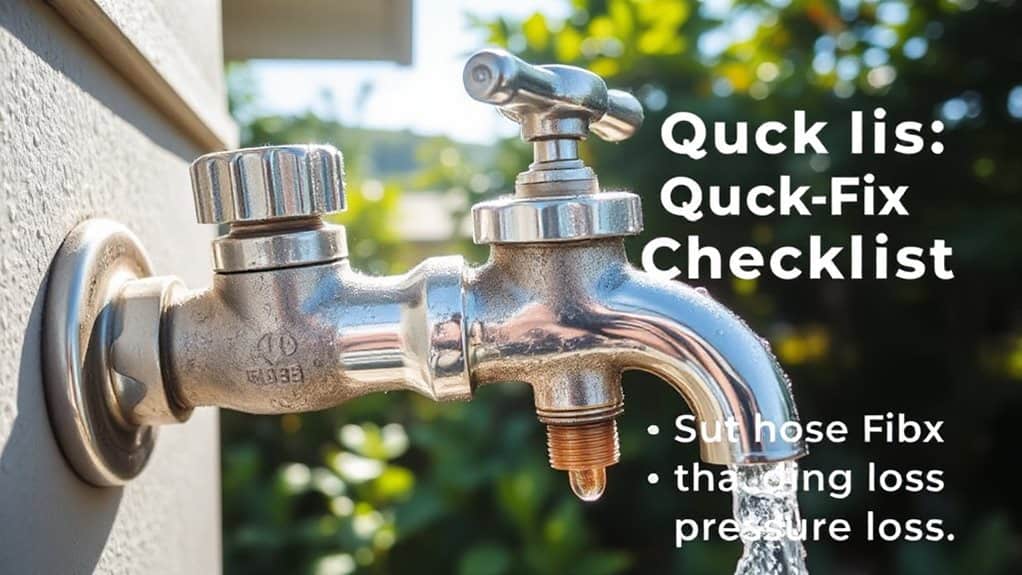
Ever notice how your backyard spigot sputters just when you’re about to rinse off the camping gear after a day on the trail?
First, turn off the water and unscrew the faucet to replace worn washers or nuts; a quick wrench job often revives flow.
Next, check the vacuum breaker—if it leaks, swap the whole assembly.
Finally, swap any hose‑splitter for a full‑flow version, and you’ll be spraying again in minutes.
Overall
Now that you’ve checked the valve, cleared the buildup, straightened any kinks, and sniffed out hidden leaks, you’ll see that spigot’s pressure bounces back like a fresh‑water splash on a camping trip—so why not give it a quick test, enjoy the steady stream, and feel confident you’ve tackled the mystery before the next expedition? If it’s still lazy, call a plumber; otherwise, grab a hose, head outdoors, and let the water flow!