Deck Joists Cracking Causes and When to Worry
You know that sinking feeling when your deck creaks like a haunted house? Cracked joists could be the culprit—thanks to sneaky water damage, hungry termites, frost heaves, or even that epic BBQ party that overloaded the structure. Weak wood, bad screws, or poor spacing make it worse, and yep, cheap materials can totally bail on you. If you spot sagging, mushy spots, or hear drum-like taps, it’s time to act—because no one wants a deck that quits mid-campfire story. Stick around, and you’ll uncover how to outsmart these issues before they crash your outdoor vibe.
TLDR
- Thermal changes and wood drying can cause deck joists to crack over time.
- Overloading or improper joist spacing increases stress, leading to cracking and structural issues.
- Water damage and poor drainage weaken joists, raising the risk of rot and failure.
- Visible cracks, loose joints, or sagging decks signal serious structural concerns needing immediate attention.
- Regular inspections and timely repairs prevent hazards and extend the deck’s safe lifespan.
What Causes Deck Joists to Crack?
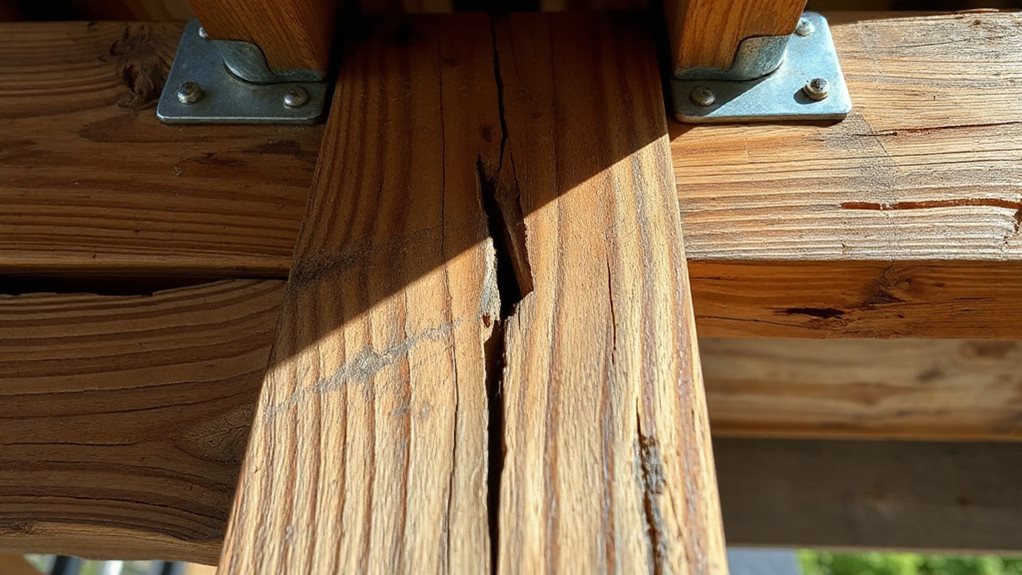
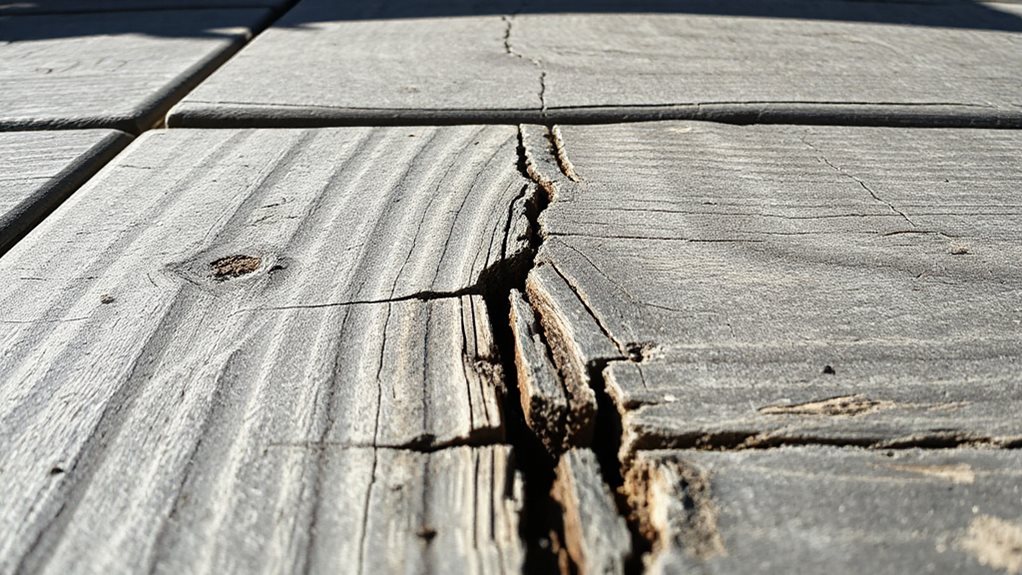
Ever slammed a heavy cooler down on your deck after a long camping trip, only to hear a suspicious *crack* beneath your feet? Yep, that’s your joists talking—thermal shifts, wood drying, or poor installation might’ve set them up to crack.
Overloading, bad fasteners, or weak supports add stress, especially if you love hosting trail-weary friends. Check spacing, sealing, and structure—your deck’s got stories to hold, not break! Structural movement or weak supports can lead to excessive flexing and contribute significantly to cracking over time. Excessive moisture or poor drainage can accelerate decay and weakening of joists, so address drainage issues promptly.
How Moisture and Water Damage Weaken Joists
Envision this: you’re back from an epic weekend of camping, your boots are muddy, the cooler’s still dripping, and you plop down on your deck like it’s your personal victory throne—only to notice a dark, squishy spot near the railing. Yikes!
That soggy patch? It’s not just gross—it means water’s been sneaking into your joists, softening the wood, inviting rot, and weakening support. Left unchecked, that tiny leak could turn your sturdy deck into a wobbly mess faster than you can say “mosquito bite.” Time to act before things get *really* shaky! A common cause is poor ventilation under the deck which traps moisture and accelerates rot and decay.
Termites and Pests That Destroy Deck Joists
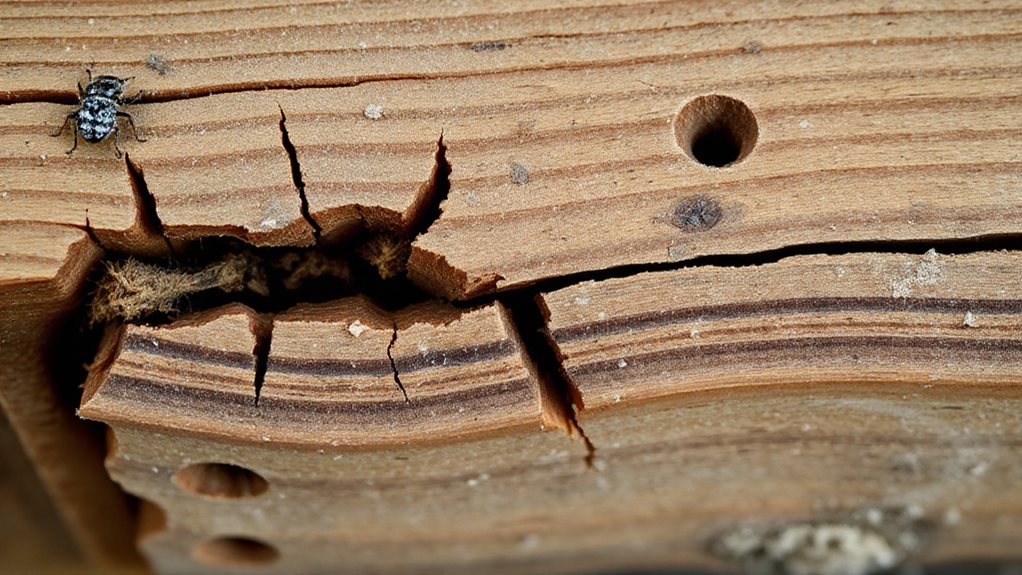
You know those tiny invaders that can turn your deck joists into a maze of tunnels without you even noticing? Yeah, termites are like uninvited camp crashers—they chew through wood from the inside out, leaving behind mud tubes, piles of frass that look like pepper, or even discarded wings near windowsills, and if you tap on a joist and it sounds like a hollow drum, uh-oh, they’ve probably thrown a full-on underground rave in your wood.
Keep an eye out for carpenter ants too, because while they don’t eat wood, they’ll still carve out their own cozy highways where no one asked for an exit ramp!
Dry conditions alone won’t attract these pests—excess moisture or nearby damp wood often signals an active infestation, so address any moisture problems promptly.
Termite Infestation Signs
Okay, let’s pull back the curtain on one of the sneakiest deck destroyers out there—termites. You hear a hollow *tap* on your deck? See weird mud tubes snaking up posts? That’s not art, it’s an invasion!
Soft spots, warped boards, or tiny wood pellets mean trouble. Don’t wait till your deck caves—inspect now, protect your space, and keep those camping vibes alive and stable!
Carpenter Ant Damage
Spotting a big black ant scurrying across your deck railing or peeking out near a support beam? That’s carpenter ants on the move!
They don’t eat wood, but they tunnel through it, leaving behind sawdust piles and hollow-sounding joists.
Hear rustling at night? See frass near cracks? Yikes—those ants are throwing a demolition party!
Get help fast, or your dream backyard campout might turn into a collapsing disaster.
Hidden Pest Destruction
Think your deck’s standing strong, but something sneaky’s munching away beneath the surface? Termites could be tunneling through joists, turning them into hollow shells—tap the wood, and if it sounds like a drum, uh-oh.
Mud tubes, tiny holes, or frass near joints? Classic signs.
These silent destroyers love damp, dark spots, especially where wood meets soil—prime real estate for subterranean squatters.
How Shifting Foundations Break Deck Joists
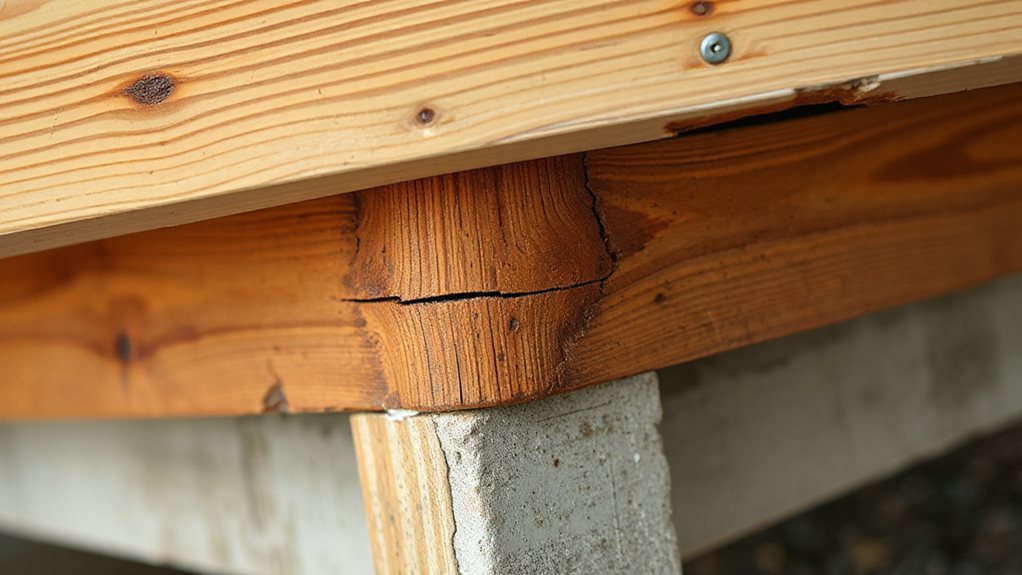
When winter’s freeze-thaw dance gets rowdy beneath your deck, those quiet little shifts in the ground can turn into a full-on structural showdown—kind of like nature playing Jenga with your joists, and trust me, you don’t want to be around when the tower wobbles.
Frost heaves lift posts unevenly, soil erodes, and foundations shift, stressing joists until they crack. You’ll hear creaks, see dips, or notice wobbly railings—clear signs to act fast. Temporary shoring can prevent collapse by maintaining support for affected members and preserving structural integrity.
Cheap Materials and Bad Installation That Crack Joists
You know that awesome feeling when you’re about to fire up the grill or head out camping, but then—*crack*—your deck groans like it’s auditioning for a horror movie?
Yeah, cheap composite blends with too much filler and not enough gluey stuff (okay, plastic resin) can’t handle the heat, sun, or even your dog chasing a squirrel, leading to cracks faster than you can say “outdoor s’mores disaster.”
And if your installer used random screws from the garage instead of proper deck hardware, or spaced joists so far apart you could park a bike between them, well, no wonder things are wobbling like jelly on a trampoline!
Using materials and methods suited to local conditions, such as selecting durable, drought-tolerant native species in nearby landscaping, helps reduce moisture and temperature extremes that can stress decking materials.
Low-Quality Composite Blends
While you’re out there dreaming of weekend barbecues and backyard hangouts, the last thing you want is your deck throwing a tantrum under your feet—literally cracking up like it’s heard a bad joke.
If your composite blend’s loaded with too much wood dust or sketchy recycled plastic, it’ll snap easier than a campfire twig. Skimp on binders? Now you’ve got weak spots. And without room to breathe, heat makes boards push, shove, and buckle—yikes!
Improper Fastener Selection
Alright, let’s talk about what’s *really* holding your deck together—because if you think it’s just the boards and some good vibes, think again. You’re risking wobbly railings and cracked joists if you’re using deck screws meant for planks on structural spots, or skipping galvanized fasteners near salt air.
Trust me, I learned the hard way during a camping trip when a buddy’s deck swayed like a rollercoaster—scared the marshmallows right out of our hands!
Poor Joist Spacing Practices
When your deck’s joists are spaced too far apart—like they’re avoiding each other at a campfire singalong—you’re basically rolling out the red carpet for cracks, sagging, and worse.
Skimping on spacing or using weak wood? That’s asking for trouble.
Follow codes, match the manufacturer’s specs, and keep those joists cozy—12 inches apart for diagonal decks, 16 for most others.
Your future BBQs—and friends—will thank you!
How Weather, Overload, and Impact Damage Joists
You know how your favorite camping tent starts sagging after too many rainy weekends? Well, your deck joists feel the same way when weather, overload, and flying debris hit hard.
Heat, rain, and snow sneak in, warping and cracking wood; too many friends dancing causes stress; and storms throw surprises that punch through supports—yikes!
Watch for splits, sagging, or wobbles, because catching issues early keeps everyone safe and the good times rolling.
Signs Your Deck Joists Need Immediate Repair
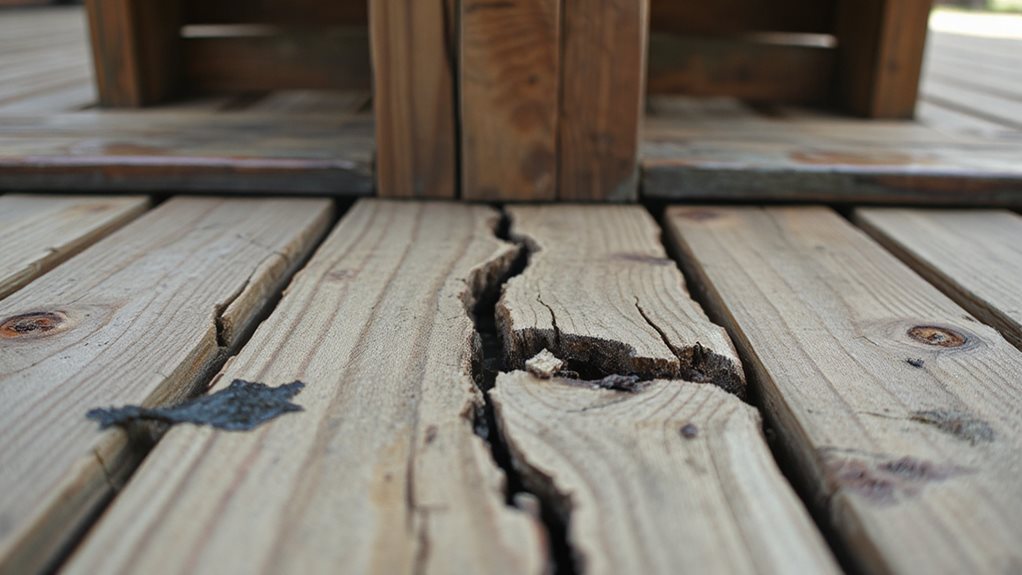
So you’ve seen how rainstorms, heavy weekend barbecues, and rogue baseballs can beat up your deck joists like an overused campsite after a long summer—but what happens when those joists start crying for help?
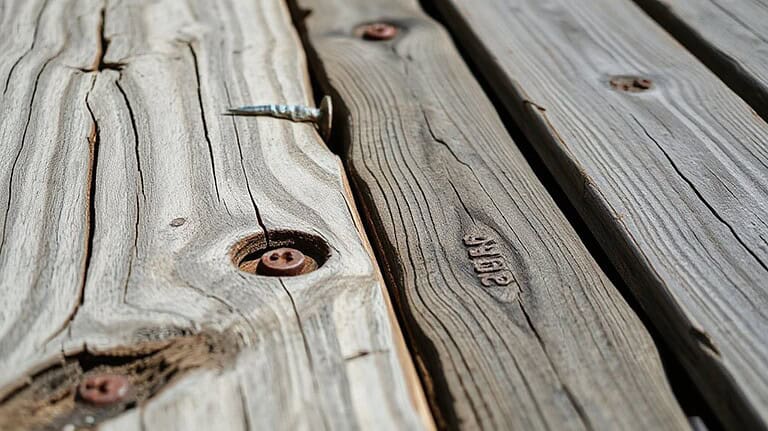
Cracks, sags, soft spots, rusted screws, or wobbles mean it’s time to act—don’t wait for a deck disaster. Your family’s safety is worth more than a quick fix.
Check those beams, replace rotted wood, and tighten loose joints—your future backyard campouts depend on it!
Overall
So, now you know—cracked joists aren’t just a “meh” issue; they’re a big deal, especially if you love backyard hangouts or dream of camping right off your deck! Water, bugs, bad wood, or too much weight can wreck them fast. But hey, spotting trouble early? Total win. Fix it quick, and you’ll keep your deck safe, solid, and perfect for s’mores, stargazing, or that epic water balloon fight. Don’t wait—check those joists, friend!