Why Does Water Pressure Fluctuate in a House? Common Causes and Fixes
You’re probably seeing your shower sputter and faucets drip because mineral crusts, clogged aerators, or a partially closed valve are choking the flow, while a failing pressure regulator or trapped air pockets can make the pressure jump or dip like a roller‑coaster; leaks in old pipes also steal water, and when everyone in the neighborhood showers at the same time the municipal mains get overloaded, so the pressure drops. Clean the aerators, open all valves fully, tighten or replace the PRV, seal any leaks, and you’ll usually tame the chaos—keep going and you’ll uncover even more tricks.
TLDR
- Partially closed main or fixture valves throttle flow, causing low or variable pressure.
- Failing pressure regulator (PRV) or mis‑tuned adjustment screw leads to pressure spikes and drops.
- Sediment, mineral buildup, or corrosion narrows pipes, increasing friction and creating intermittent flow.
- Leaks or air infiltration in pipes introduce pockets that disrupt steady pressure and cause sputtering.
- Peak‑hour demand and municipal supply limits temporarily reduce pressure, especially when multiple fixtures run simultaneously.
What Common Issues Lower Home Water Pressure?
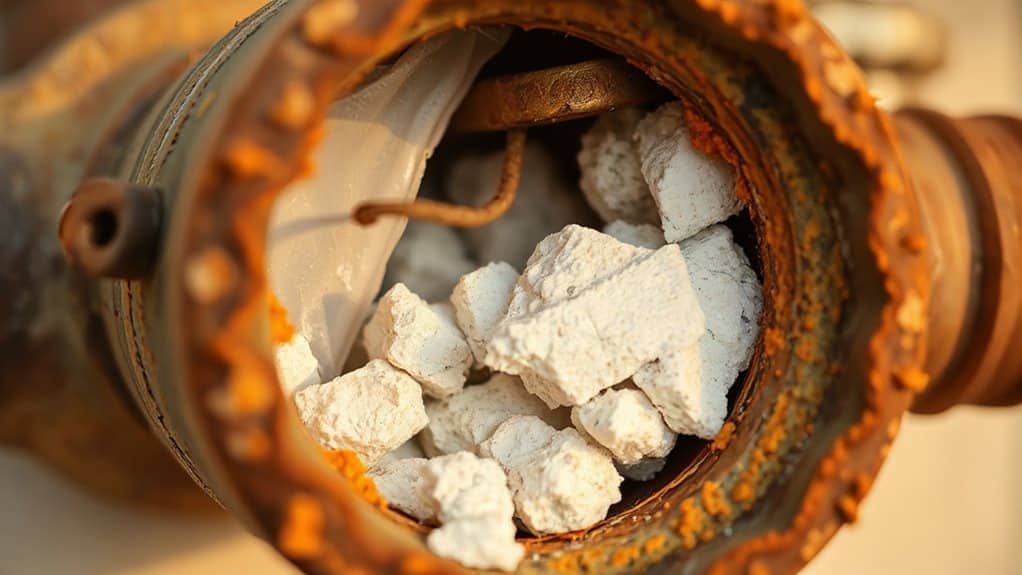
Ever wonder why your shower suddenly feels like a trickle when you’re trying to wash off the day’s escapade? You might’ve mineral buildup in old galvanized pipes, or a sneaky leak diverting water like a hidden pipe. A failing pressure regulator, a partially closed valve, or corroded plumbing can also starve fixtures, so check each source before calling a pro. Pressure can drop when the main supply line is partially blocked by debris.
Why Does Peak‑Hour Demand Drop Your Pressure?
When everyone in the neighborhood hits the showers and dishwashers between 7 am‑9 am or 5 pm‑7 pm, the sudden surge in demand overwhelms the limited supply capacity, so you feel the pressure dip right in your own faucet. The municipal system, which already has constraints like aging mains and finite flow rates, can’t keep up with all those simultaneous pulls, and that’s why your water feels like it’s trying to sprint uphill.
Try shifting a shower to a later hour or using a low‑flow head, and you’ll see the pressure bounce back—plus you’ll save water and maybe even get a laugh out of your neighbors’ surprise when the flow finally steadies! Cold soil produces weaker root systems that struggle with water absorption, increasing irrigation needs in early-planted crops and garden beds weaker root systems.
Peak‑Hour Demand Surge
Why does your water pressure seem to dip right when you’re trying to rinse off after a morning hike or get ready for an evening camp‑fire dinner?
During the 7‑9 AM and 5‑7 PM windows, every neighbor showers, runs dishwashers, and fills tubs, so the shared main feeds hundreds of gallons at once, causing a temporary pressure dip.
Limited Supply Capacity
So, why does the pressure dip just when you’re trying to rinse off after a morning hike or prep dinner for a camp‑fire? Your municipal system can only push a certain amount of water at once, and when many neighbors turn on showers, the supply hits its limit, especially if old, narrow pipes or a mis‑calibrated pressure regulator are in play, so your flow slows down dramatically.
Municipal System Constraints
Ever wonder why your shower turns into a trickle just as you’re about to rinse off after a sunrise hike? When everyone showers, cooks, and brews coffee at once, the municipal system gets swamped, so pressure drops. Industrial zones, fire‑hydrant flushes, and construction add extra demand spikes. Your neighborhood feels the dip because the network can’t keep up.
How Faulty Pressure‑Regulating Valves Cause Spikes?
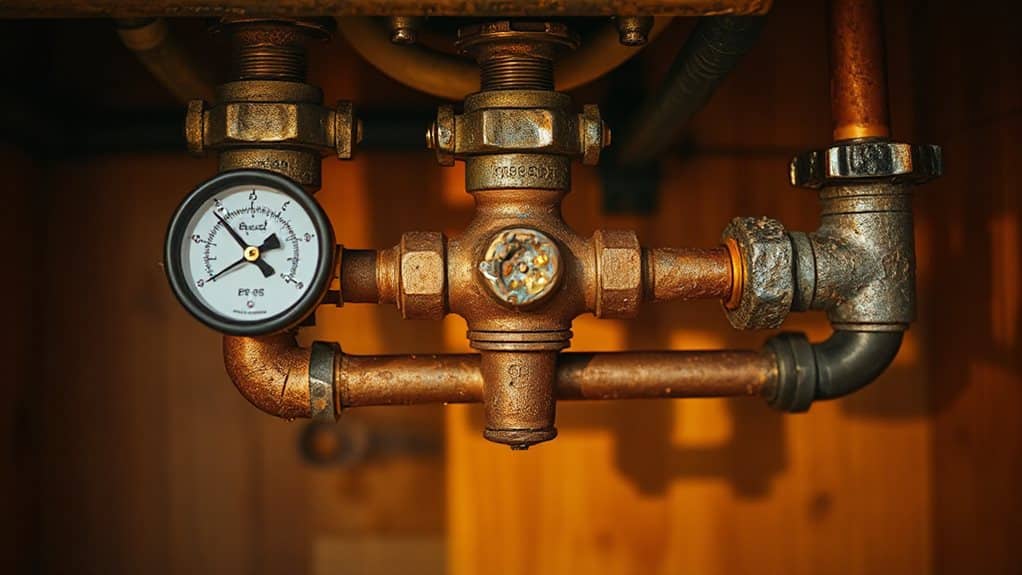
Ever wondered why your shower feels like a roller‑coaster after a fire truck rushes by? A faulty PRV’s diaphragm can’t react fast enough, so when the city line spikes, the poppet stays too open, letting pressure surge past 60 PSI.
If the adjustment screw loosens or the spring’s mis‑tuned, you’ll hear the “whoosh” of pipes straining—replace it, and your home’s water will stay calm, just like a campsite at sunrise.
Check the system with a pressure gauge at the faucet to confirm readings and diagnose pressure regulator issues.
When Main or Fixture Valves Are Partially Closed?
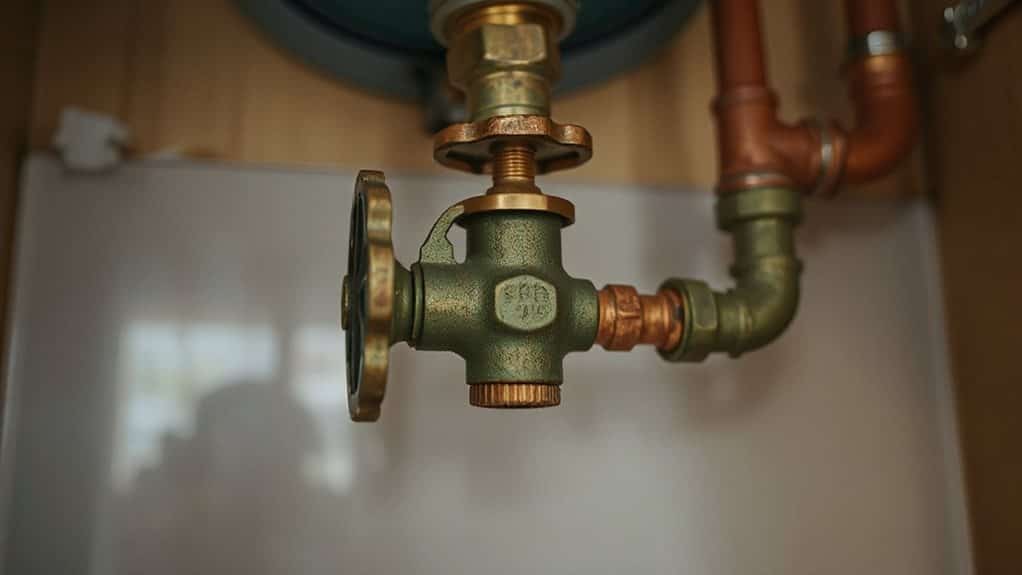
Imagine you’ve just finished a weekend camping trip, and now you’re back home, trying to get a steady stream of water for a quick shower before school—only to uncover the pressure’s wobbling like a canoe on a choppy lake.
You probably left the main shut‑off or a fixture valve half‑closed during a repair, throttling flow everywhere. Open each valve fully, especially those under sinks or behind appliances, and the water will surge back to a calm, reliable stream, letting you serve your family without a hiccup.
Why Leaky Pipes Reduce Flow at Every Faucet?
You’ll notice that even a tiny leak can shrink the pipe’s cross‑section, so the water has to squeeze through a narrower tunnel and you feel a slower stream at every faucet, right?
Imagine the leak sucking in air like a busted camping tent; that air bubbles up and disrupts the steady flow, making the pressure wobble all over the house.
A loose packing nut can also cause leaks near valves and handles that contribute to these pressure fluctuations.
Reduced Pipe Cross‑Section
Why does a leaky pipe feel like a busted water‑slide on a camping trip, draining your shower’s enthusiasm at every faucet? When a pipe’s cross‑section shrinks, water speeds up, friction spikes, and pressure drops dramatically—think 400 % more loss per 100 ft for a ¾‑inch to ½‑inch cut. That bottleneck robs every faucet of flow, so you’re left with a weak spray instead of a powerful cascade.
Air Infiltration Through Leaks
When the pipe’s cross‑section narrows, the water rushes like a zip‑line through a tight canyon, but the real kicker shows up when air sneaks in through tiny leaks, turning your plumbing into a bumpy off‑road expedition.
You’ll notice sputtering faucets, weak showers, and noisy pipes because air pockets compress, expand, and steal pressure, so tighten fittings, replace worn gaskets, and prime the pump to keep the flow steady for everyone you serve.
How Sediment and Scale Create Pipe Bottlenecks?
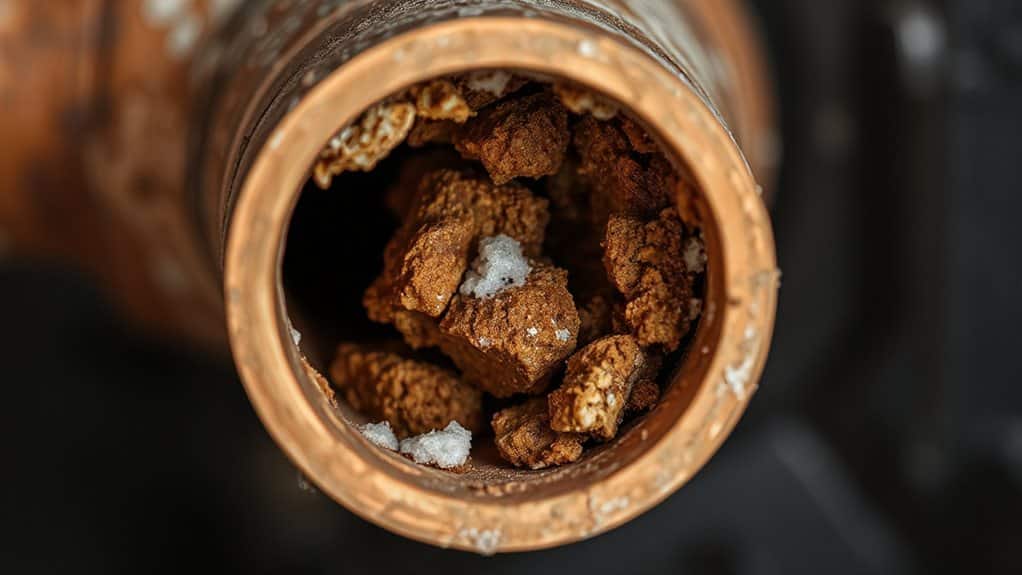
Ever wondered why your water sometimes feels like it’s sputtering through a straw? Sediment and scale act like tiny roadblocks, shrinking pipe diameter and raising friction, so flow slows just like a crowded campsite trail.
When particles jam at narrow spots, you get unpredictable pressure dips, and mineral crusts add roughness that traps more grit—making every faucet feel like a reluctant escapade. Ants nesting under pavers can worsen pressure issues by causing soil shifting that disturbs underground pipes and joints.
Why Air Trapped in Pipes Causes Pressure Sputtering?
Ever notice how a faucet can feel like a shady campfire after a night of rain? When air sneaks into your pipes—through a leaky suction line, a low‑water well, or a faulty check valve—it forms pockets that resist flow, so water bursts out in sputters, rattles, and gurgles. Those bubbles act like tiny roadblocks, causing pressure drops and hammering noises, just like a campfire sputtering when wind blows. Release the air, and the flow steadies, letting you serve guests without surprise splashes. If air in the plumbing comes from a faulty check valve it can also indicate worn or damaged components that need professional inspection.
How Simultaneous Fixture Use Overloads the System?
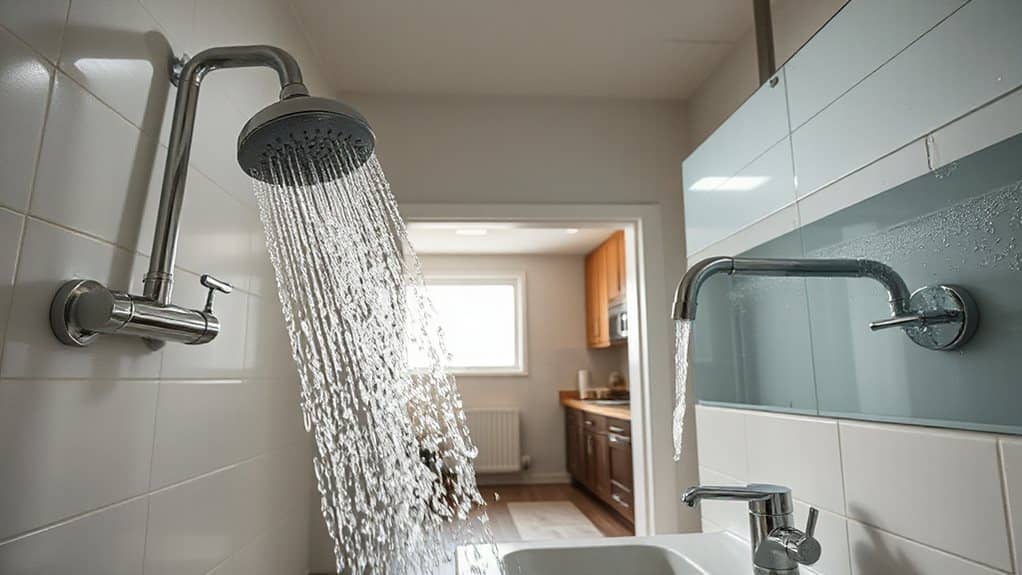
Ever wondered why turning on the shower, the kitchen faucet, and the dishwasher all at once feels like trying to squeeze water through a tiny straw?
When you run those fixtures together, the total demand outpaces your pipes’ capacity, especially if they’re old or narrowed by corrosion. The pressure drops dramatically—think 55 PSI to 20 PSI—so each faucet feels weak, and you hear the dreaded water‑hammer thuds.
How Water‑Softener or Pump Problems Cut Pressure?
Why do your showers sputter and your faucet drip when the water‑softener decides to take a nap? If the resin bed clogs with minerals, flow slows, and every faucet feels weak; an undersized unit can’t keep up with your family’s demand, turning showers into drips. Regeneration cycles steal pressure temporarily, while sediment filters block water entry. Keep the softener sized, cleaned, and timed right, and you’ll avoid those low‑pressure surprises.
DIY Checks & Pro Fixes for Stable Pressure?
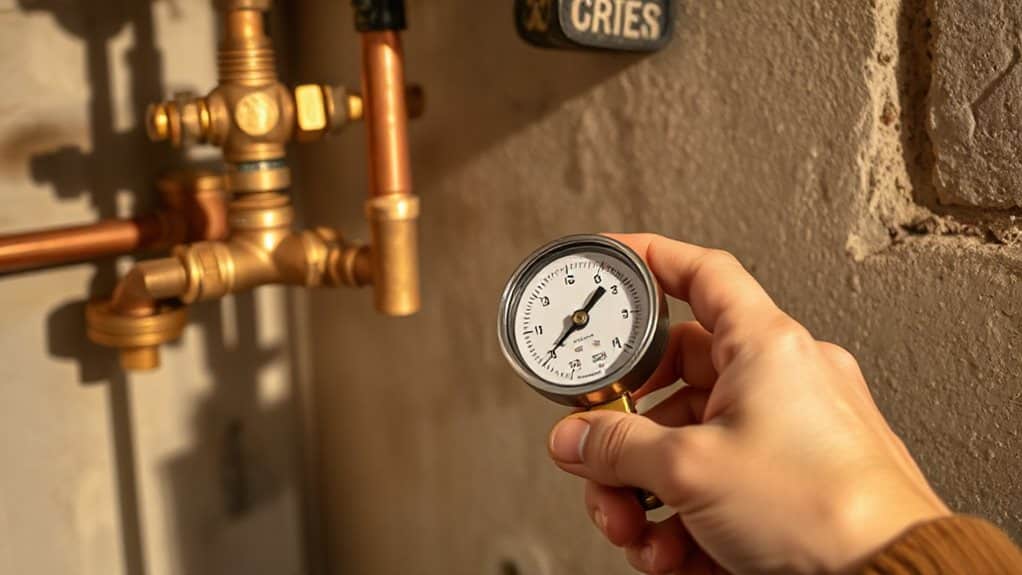
When the water‑softener decides to nap, you’ve already felt the sputtering showers and drippy faucets, and now it’s time to roll up your sleeves and make sure the pressure stays steady across the whole house. Test gauge on the outdoor spigot, open the main valve fully, clean clogged aerators with vinegar, tweak the regulator screw, and hunt leaks—each step a quick fix that keeps everyone happy.
Overall
Now you’ve got the low‑down on why water pressure can act like a roller‑coaster, so next time the shower sputters you’ll know whether it’s a clogged valve, a sneaky leak, or just too many fixtures battling for the same flow; remember to check the pressure regulator, clear any air pockets, and keep those pipes fully open—think of it as prepping your gear before a camping trip, because a steady stream is the secret sauce to a happy home, and fixing it yourself feels as rewarding as reaching a summit after a long hike.