Why Do Decks Grow Algae in Shady Areas?
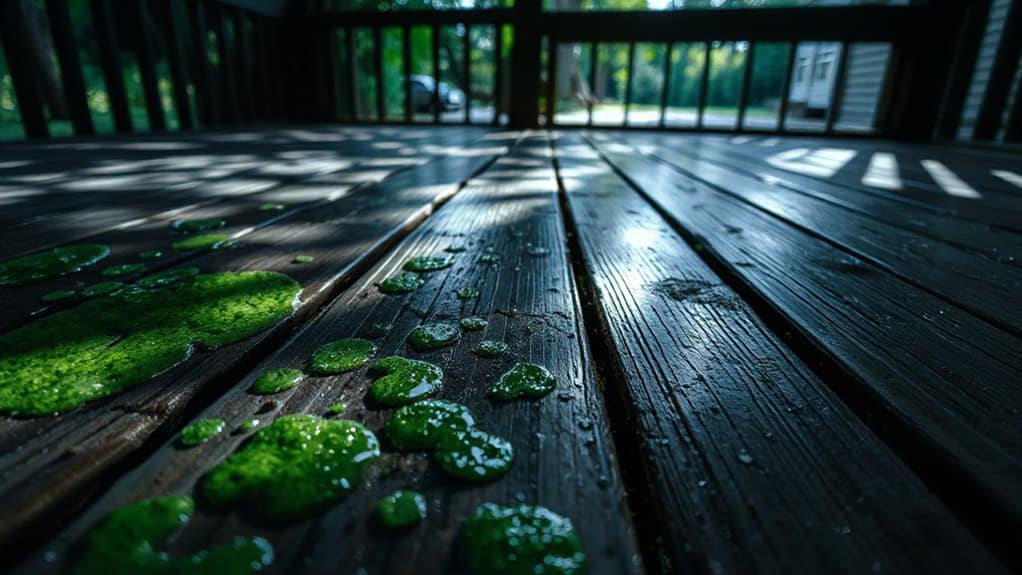
You see algae on a shady deck because the sun’s missing, and the damp, dark blanket made by leaves, pine needles, and trapped rain creates the perfect playground for spores; the wood’s pores soak up moisture, poor drainage lets water pool, and the cool, humid micro‑climate slows evaporation, so the green invaders multiply faster than you can sweep them away. If you keep the deck dry, trim overhanging branches, and give it a good scrub, you’ll banish the algae—keep reading for the exact steps.
TLDR
- Shaded decks receive limited sunlight, slowing evaporation and keeping surfaces damp.
- Accumulated leaves, pine needles, and debris trap moisture and provide nutrients for algae.
- Poor drainage and water pooling create consistently wet wood pores where algae spores settle.
- Cooler, humid microclimates under overhanging branches or on north‑facing sides favor shade‑loving algae.
- Porous or unsealed decking materials retain water longer, allowing algae to colonize and spread.
Why Algae Grows on Shaded Decks
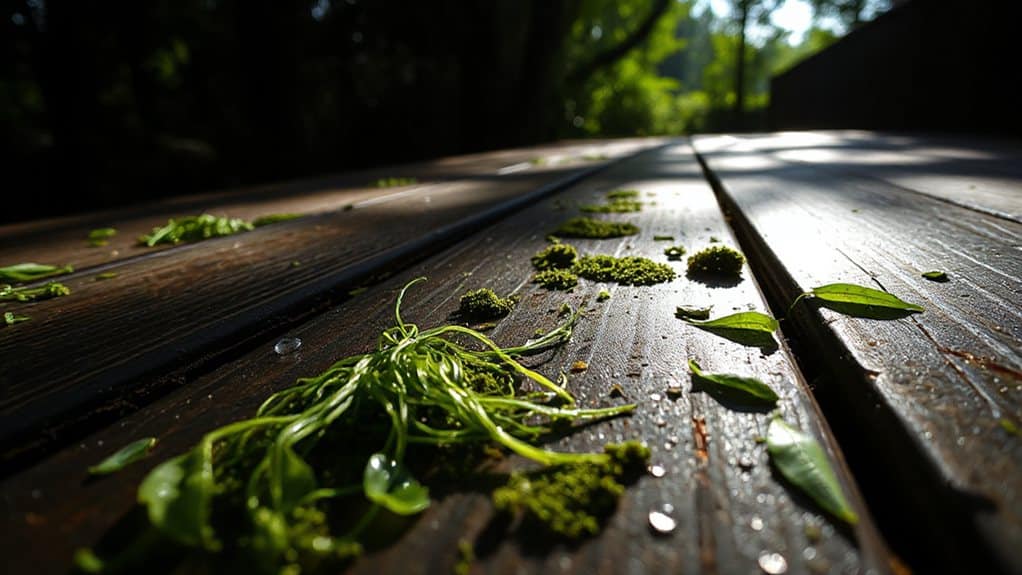
Ever wonder why your backyard deck turns into a slimy green carpet whenever you set up a camp‑style picnic under a shady tree? You’ll see leaves and pine needles trapping moisture, creating a dark, damp blanket where algae thrives. The debris feeds mold and mildew, while poor drainage lets water pool—so the wood stays soggy, spores spread, and the deck becomes a slippery, green hazard. Regular sweeping helps keep sunlight reaching the surface and inhibits growth. Aeration and removing compacted debris can improve drainage and reduce the moisture retention that encourages algae growth.
How Sunlight Deficiency Fuels Deck Algae
When you set up a picnic under a leafy canopy, the shade that feels cool and cozy also steals the sun’s energy that algae need to grow, and that’s why the deck turns into a green carpet. You’ll notice that limited light slows evaporation, so moisture clings longer, and cooler temps keep algae thriving; the occasional sunbeam barely sparks photosynthesis, letting shade‑loving algae dominate the surface. High moisture retention can also worsen problems by promoting trapped air pockets and surface deterioration that aid algal persistence.
Wood Porosity and Moisture Retention: The Algae Magnet
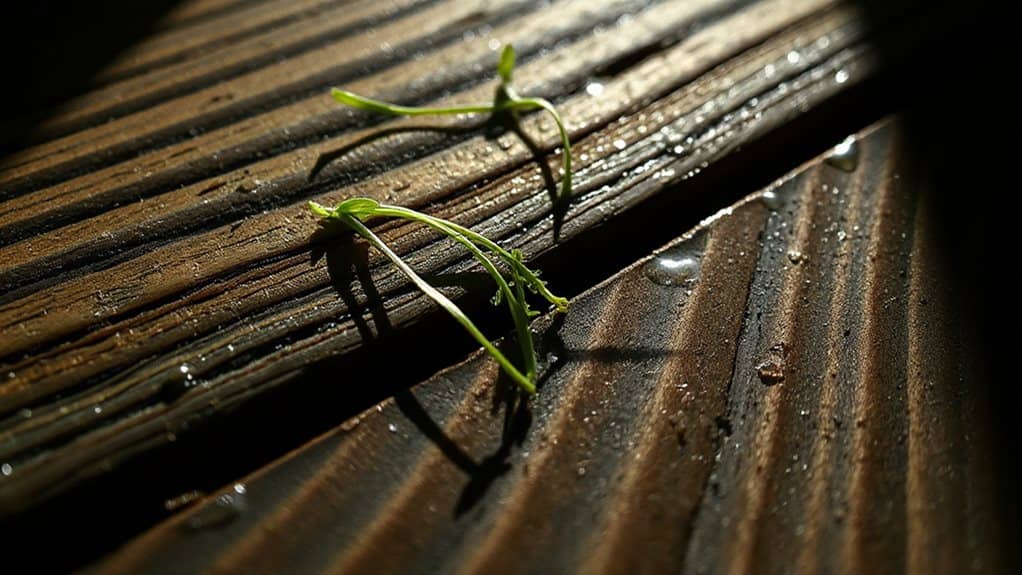
Some of those tiny wood pores act like secret hide‑outs for water, and when you’ve got a shady deck they turn into a perfect algae magnet. You’ll notice pores soaking up rain, then clinging in shade, so algae spores settle and feast, swelling wood, cracking boards, and even causing rot.
Seal the surface, use water‑repellent stains, and you’ll keep everyone safe and happy on the deck.
Overhanging Branches: Blocking Light and Trapping Dampness
Ever wondered why a shady canopy of overhanging branches turns your deck into a soggy, algae‑loving playground? Those branches block sunlight, so the wood stays dark and damp, while leaves and pine needles pile up, trapping moisture like a tiny rainforest.
You’ll notice algae thriving in that humid pocket, so trimming the limbs and sweeping debris regularly lets sun dry the deck and keeps the algae at bay. Ants may also transport and protect sap‑feeding insects like aphids that increase surface moisture and organic residue on nearby plants, encouraging sooty mold growth.
North‑Facing Deck Sides: Why They Stay Wet Longer
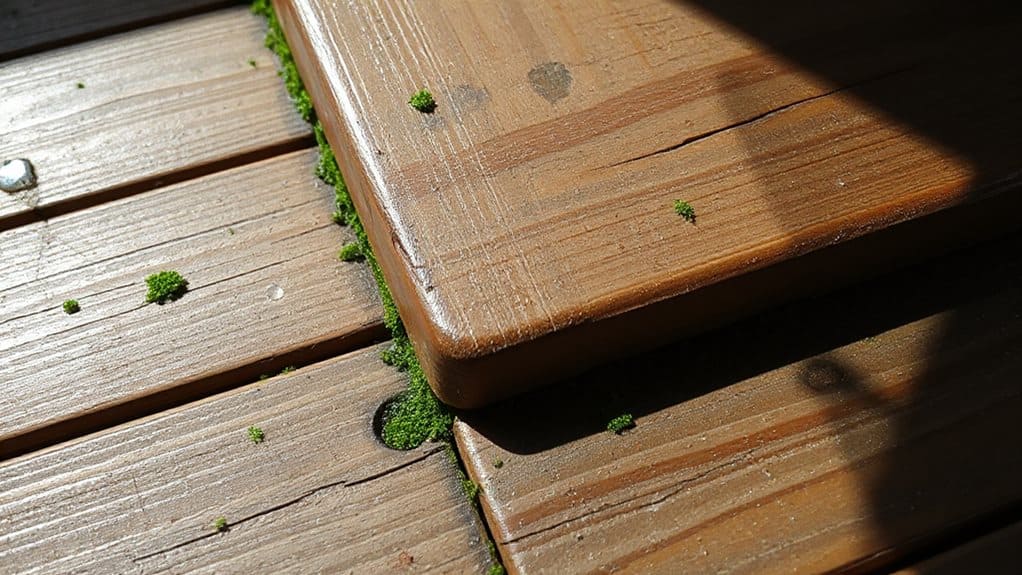
You’ll notice the north‑facing side of your deck stays soggy way longer because it barely catches any sunshine, so the wood stays cool and the dew clings like a stubborn sticker after a rainstorm. The lack of direct light means the moisture can’t evaporate quickly, and the shade from the house blocks the breeze that would normally whisk the dampness away, turning the surface into a perfect playground for algae. So, when you’re planning your next camping‑style backyard hangout, remember to check the drainage and maybe give that north side a little extra love, or you’ll end up with a green, swampy surprise! Damp spots under slabs can attract pests like ants after rain, so address standing moisture and drainage issues promptly.
Sunlight Exposure Reduction
Ever wonder why the north‑facing side of your deck stays soggy way longer than the sunny side? You’re seeing sunlight reduction at work; the shade blocks UV that would normally dry the wood, so moisture clings, creating a perfect algae playground.
Imagine camping trips where you’re always under trees—same damp vibe, same green growth. Add a little shade‑loving algae humor, and you’ll understand why those north spots stay wet and wild.
Drainage and Moisture Retention
When the sun’s rays get cut off on the north‑facing side of your deck, the water that lands there doesn’t just disappear—it hangs around like a camp‑fire that won’t die down. You’ll notice tight gaps trap rain, while vegetation blocks airflow, so moisture clings for days; sloping rails and proper flashing help, but without them, algae thrives, turning your deck into a soggy campsite.
Algae‑Friendly Deck Materials to Avoid
You’ll quickly see that composite wood decking, porous concrete pavers, and unsealed natural stone are practically algae magnets, especially in those shady corners where moisture hangs on like a stubborn camp‑fire ember.
Ever noticed how the tiny gaps in those materials trap rain and leaf litter, turning your deck into a humid, dark hideout that even the most enthusiastic camper would avoid?
Skip them and pick something that laughs at shade—your future self will thank you when the deck stays clean and you can actually relax instead of battling green slime.
Trim overhanging branches and improve airflow to help shaded decks dry faster and resist algae growth.
Composite Wood Decking
A composite deck is basically the superhero of outdoor flooring, because its moisture‑resistant formulation keeps algae from setting up camp even in the shadiest corners where sunlight barely reaches.
You’ll love how the cap layer blocks water, so slip‑risks vanish and cleaning’s a breeze—just soap, water, and a quick pressure wash every few months, no chemicals, no warping, and the deck stays safe for kids and pets.
Porous Concrete Pavers
Even though composite decking laughs at algae, porous concrete pavers have a different story—those little holes love to hold water, especially under a shady tree, and that’s a perfect playground for green growth.
You’ll see moisture linger, shade limits evaporation, and debris clogs pores, turning your deck into a slime‑party; regular sweeping, proper slope, and sealing keep it safe for everyone.
Unsealed Natural Stone
Ever wonder why a shady stone patio can turn into a green jungle overnight? Unsealed natural stone soaks up water in its pores, so algae spores love it, especially under trees where sunlight barely reaches;
the rough, pitted texture traps debris, creating damp nooks that let algae roots dive deep, and without a sealant the moisture never evaporates, so green films spread fast.
Health and Safety Risks of Algae‑Covered Decks
Ever wondered why a sunny deck that’s turned into a green slime playground can actually be a health hazard? You might get vomiting, diarrhea, skin rashes, or eye irritation after kids, pets, or you touch the algae, and inhaling its spray can trigger coughs and asthma attacks; kids and elderly are especially vulnerable, and severe toxins can damage liver, nerves, or even cause paralysis, so keep decks clean to protect everyone.
How to Spot Algae, Mold, and Moss on Your Deck?
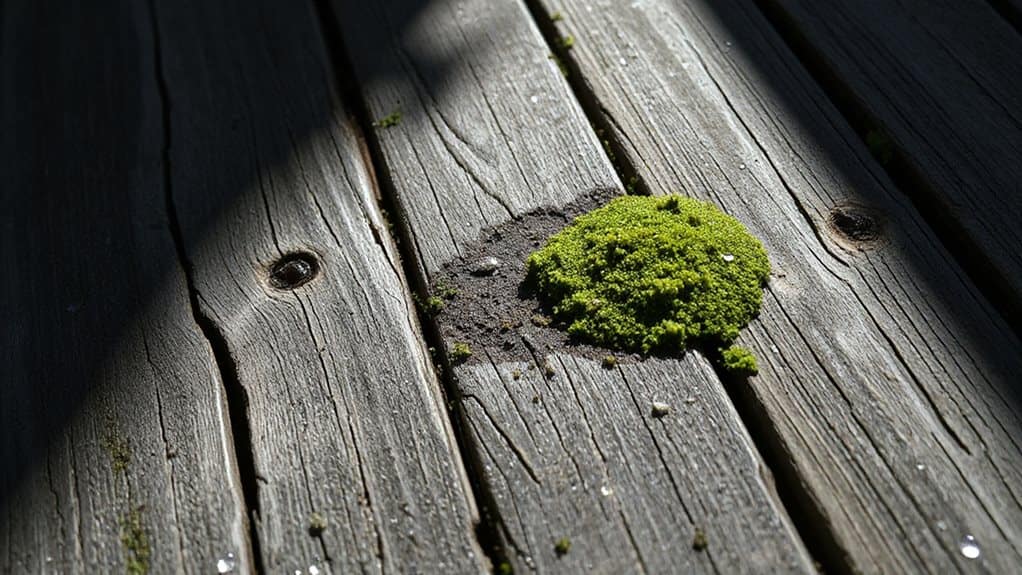
You’ve probably already heard that a slime‑covered deck can make you sick, but now let’s figure out how to actually see what’s growing on it before it turns into a health nightmare. Scan for flat, dark‑green streaks or a slimy film for algae, fuzzy, upright clumps for moss, and dark, musty, slimy spots for mold; powdery white patches hint at mildew. Use a flashlight, get down low, and compare textures—slimy versus powdery—to differentiate, then note any smells. This quick visual check helps you protect friends and family on your next camping journey.
Proven Prevention Strategies for Shaded Deck Areas
So, why let a shady deck turn into a swampy campsite for algae when you can keep it crisp and dry? You’ll slope the surface a bit, trim overhanging branches, and sweep out leaves each week, then seal with algae‑resistant oil that repels water.
Add a gravel layer under raised boards, space the planks, and rinse after storms—simple steps keep the deck fresh for guests.
Year‑Round Deck Maintenance Checklist for an Algae‑Free Deck
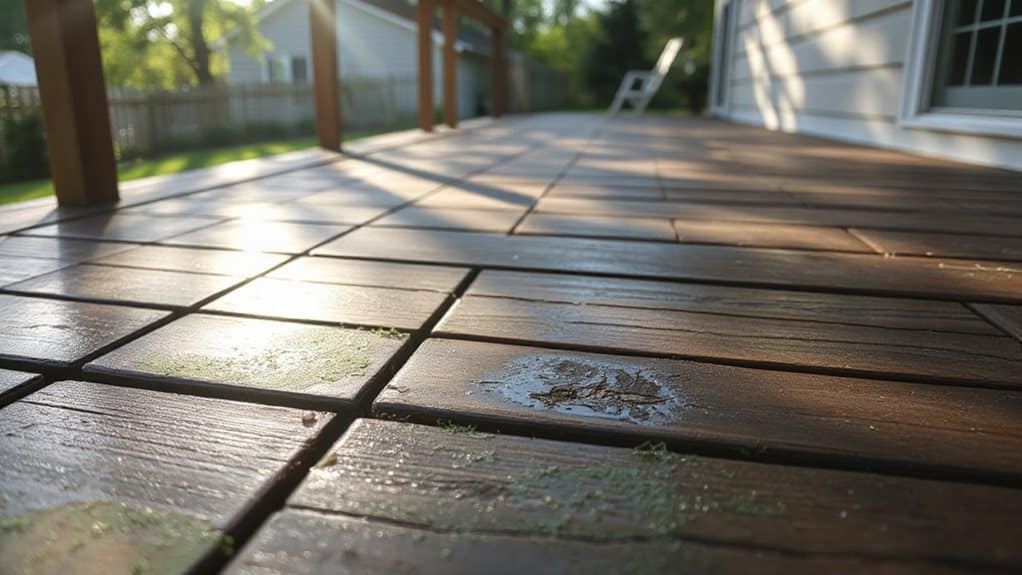
A year‑round deck checklist isn’t just a boring to—it’s your secret weapon for turning a backyard into a campsite‑ready excursion zone that never turns into a swampy mess.
Sweep, scrub, and seal each season; trim vines for sunlight, use oxygen bleach on early algae, clear snow with a plastic shovel, and re‑apply borate before winter, ensuring every board stays dry, safe, and ready for guests.
Overall
So, next time you’re prepping for a camping trip and notice that shady spot on your deck turning green, remember it’s just algae craving the cool, damp vibe—nothing mysterious. Grab a brush, a splash of vinegar, and a sunny day, and you’ll banish those slimey invaders faster than you can set up a tent. Keep the wood dry, trim those overhanging branches, and you’ll have a deck that’s as ready for journey as you are. Happy cleaning!