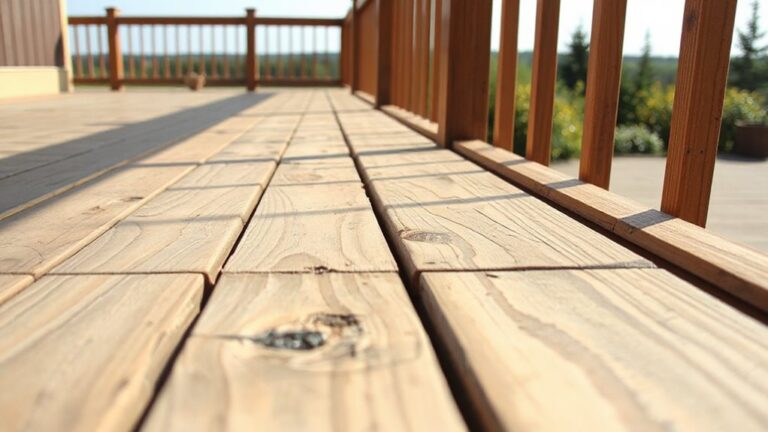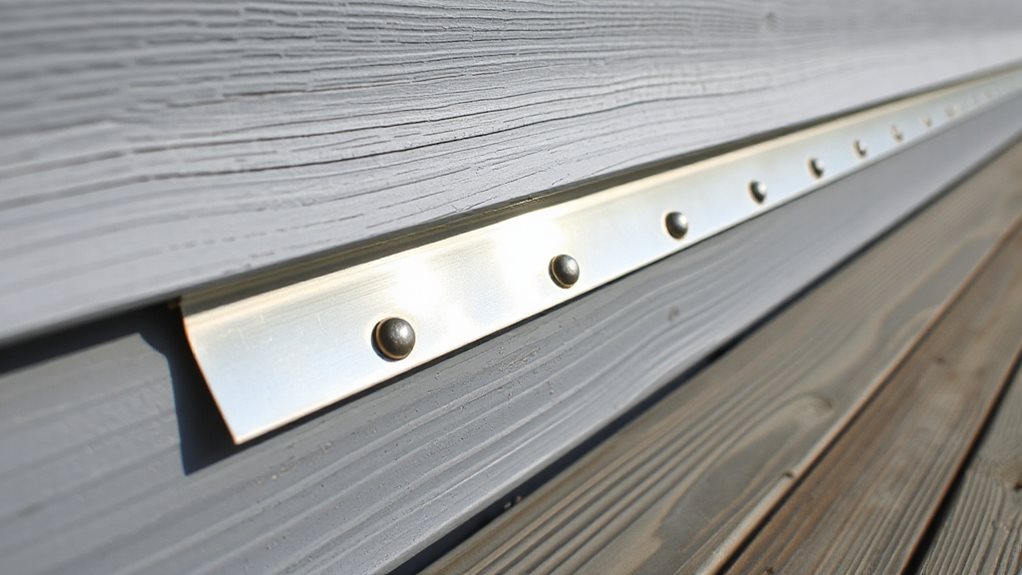
Deck Flashing Explained: Why It’s Important
You’ll want deck flashing because it’s the unsung hero that shoves water away from the ledger, rim joists, and sub‑structure, stopping rot, mold, and pricey repairs before they even start. Think of it as a rain‑shield that seals joints, wraps around joists with a “Z” shape, and lets moisture slide off like a skateboard on a smooth ramp. It’s cheap to install, cheap to replace, and keeps your deck safe for foot traffic and crazy temperature swings—plus, it protects your warranty, so you can keep camping and traveling without worrying about a soggy deck. Keep going and you’ll uncover the best materials and common pitfalls to avoid.
TLDR
- Flashing directs water away from ledger boards, rim joists, and sub‑structure, preventing rot, mold, and decay.
- It seals joints and nail penetrations, stopping rain from infiltrating behind the vinyl membrane.
- Proper flashing accommodates foot traffic and temperature movement, maintaining deck safety and structural integrity.
- Different materials (aluminum, copper, stainless steel) suit various environments, while Z‑type flashing wraps joists for effective shedding.
- Incorrect installation—such as driving fasteners through flashing or using caulk on copper—creates moisture pathways that shorten deck lifespan.
Why Deck Flashing Is Your First Line of Defense Against Water
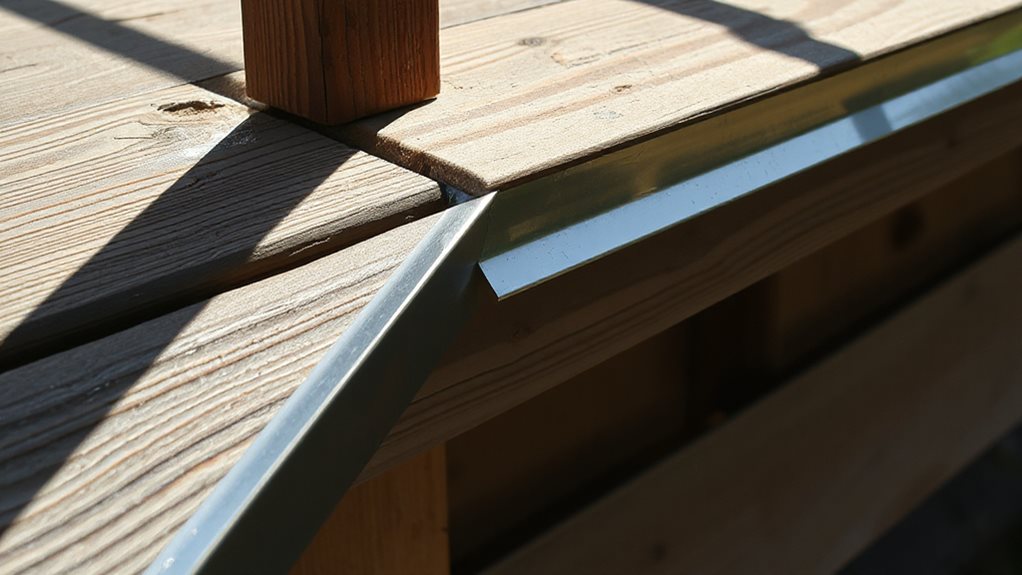
Ever wondered why deck flashing feels like the superhero cape for your outdoor floor? You’ll love how it directs water away from vulnerable edges, sealing joints so rain can’t sneak behind membranes, protecting rooms below from leaks. It stops rot, mold, and decay, while handling foot traffic and temperature shifts—so your deck stays safe, sturdy, and ready for every camping excursion. It also prevents water infiltration under vinyl deck membranes, ensuring the membrane’s warranty remains valid. Heavy rains can create temporary ponds and increased moisture that make proper flashing essential to prevent water intrusion into structures.
How Flashing Protects Ledger Boards, Rim Joists, and Sub‑Structure
Why worry about your deck’s hidden heroes—ledger boards, rim joists, and the sub‑structure—when a splash of smart flashing can turn them into waterproof champions? You’ll seal every nail with self‑adhesive tape, wrap vinyl “Z” flashing around joists, and cap it with metal or plastic to shed water, preventing rot, corrosion, and code violations while you enjoy camping trips without deck‑dripping worries. Proper flashing also helps reduce moisture buildup that can lead to mold growth in shaded, poorly ventilated areas.
Step‑by‑Step Deck Flashing Installation
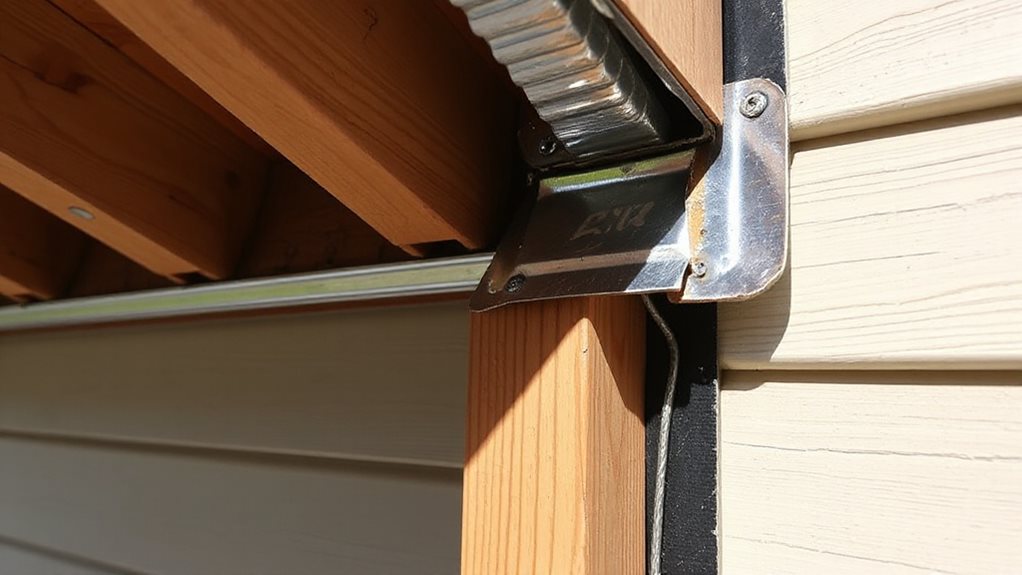
So, ready to turn your deck into a leak‑proof launchpad for your next camping excursion? First, strip siding eight inches above and below the ledger, clean the wall, snap chalk lines, and measure a three‑inch flashing width. Fasten back flashing, then the ledger with partial screws, tack top metal flashing, overlap seams, tape everything, and finish with EPDM foam for a dry, excursion‑ready surface. Check drainage and thatch conditions to prevent water buildup that can cause long‑term damage to the flashing and ledger, especially in humid climates with persistent moisture drainage and thatch.
Common Deck Flashing Types & Ideal Uses
When you’re gearing up for a weekend camping excursion and want your deck to stay dry no matter the weather, picking the right flashing is key—because the right material can turn a leaky board into a rock‑solid launchpad for your tent and grill. Use aluminum for cheap, custom bends; copper for salty breezes and that cool green patina; stainless steel for ocean‑level durability; joist tape to seal wood‑metal joints; and rigid Z or L ledger flashing to protect the house‑deck gap, each serving a specific purpose while you host friends. Proper flashing and drainage help prevent hidden moisture that can accelerate rot in stairs and ledgers, especially where water can pool and stagnate.
Choosing the Right Deck Flashing Material for Durability & Cost
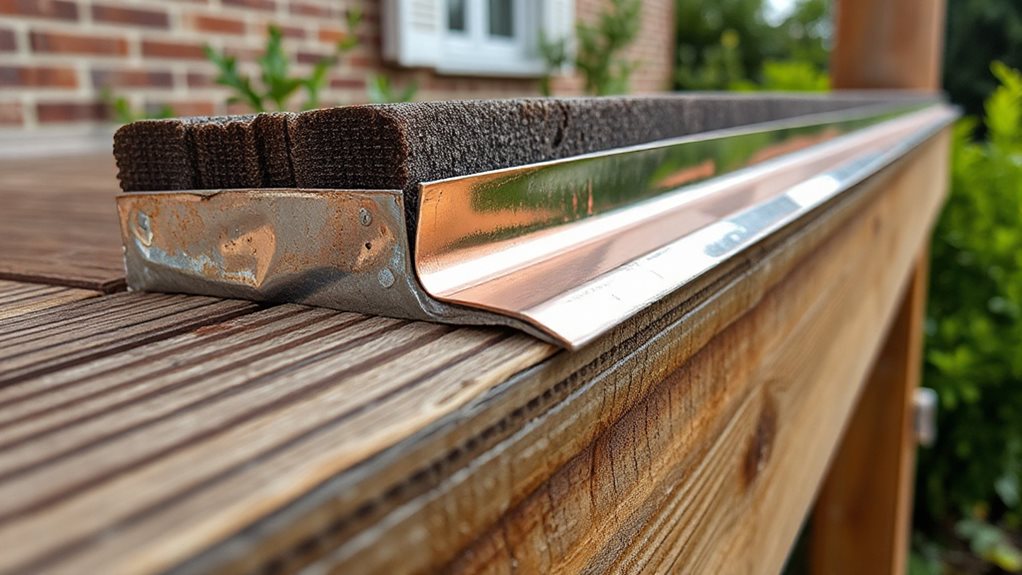
After you’ve sorted out which flashing shape fits each joint, the next step is picking the material that will survive your weekend get while keeping your wallet happy. You’ll love vinyl for its cheap price and easy cuts, but it cracks when it freezes.
aluminum stays light and resists salt, yet can bite steel fasteners.
Steel offers impact strength, while stainless steel and copper bring top‑tier durability—just expect higher costs and tougher handling. Choose based on climate, budget, and how much you value long‑term peace of mind. You should also consider local rules and neighbor responsibilities when work affects shared boundaries and vegetation, such as property line tree branches.
Common Flashing Installation Mistakes & Fixes
Ever wonder why a deck can turn into a soggy mess even when you’ve nailed every board perfectly? You’re probably driving fasteners through flashing, creating tiny highways for water; avoid that by placing screws in the middle third of the ledger, using proper‑size Z‑metal, and blocking between joists.
Skip caulk, solder copper joints, and install flashing before joists so water slides off like a camp‑trip rain guard.
Long‑Term Benefits of Proper Deck Flashing
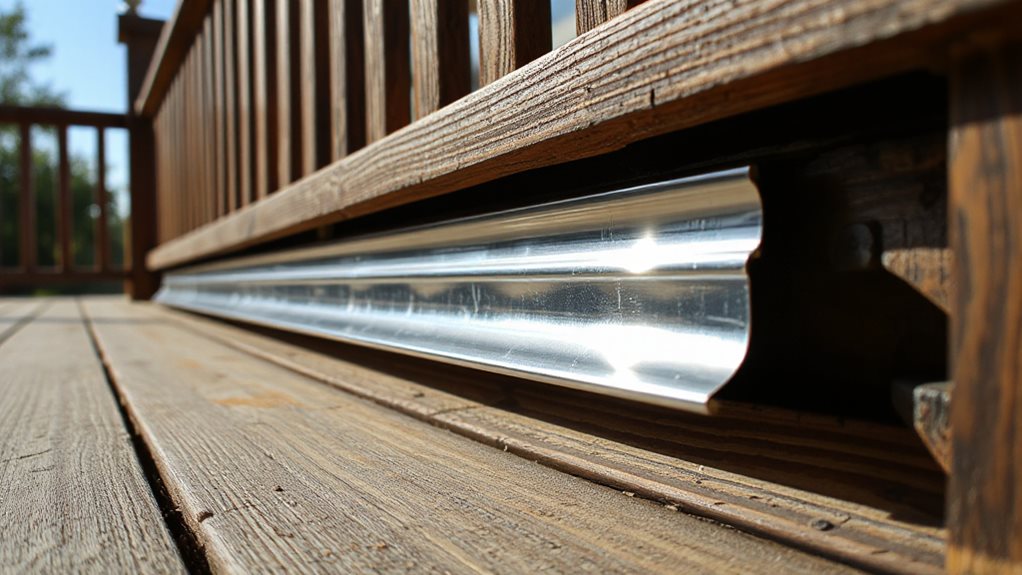
You might’ve just fixed those pesky fastener‑through‑flashing blunders, but the real win shows up months later when you realize your deck isn’t turning into a soggy swamp.
Proper flashing diverts water, shielding ledger and rim board, so rot never sets in; it stretches deck life, slashes future repair bills, and keeps the structure safe for family gatherings and weekend camping trips, all while boosting home value and peace of mind.
Overall
Now you’ve got the low‑down on deck flashing, you’ll see why it’s the superhero cape your deck needs—keeping water out, protecting joists, and saving you from costly repairs. Got a new deck? Grab the right material, follow the steps, and double‑check your work; trust me, it’s worth it. Envision yourself camping under a dry, sturdy deck, feeling proud of a job well done—sounds pretty awesome, right? Go ahead, flash it up and enjoy the peace of mind!