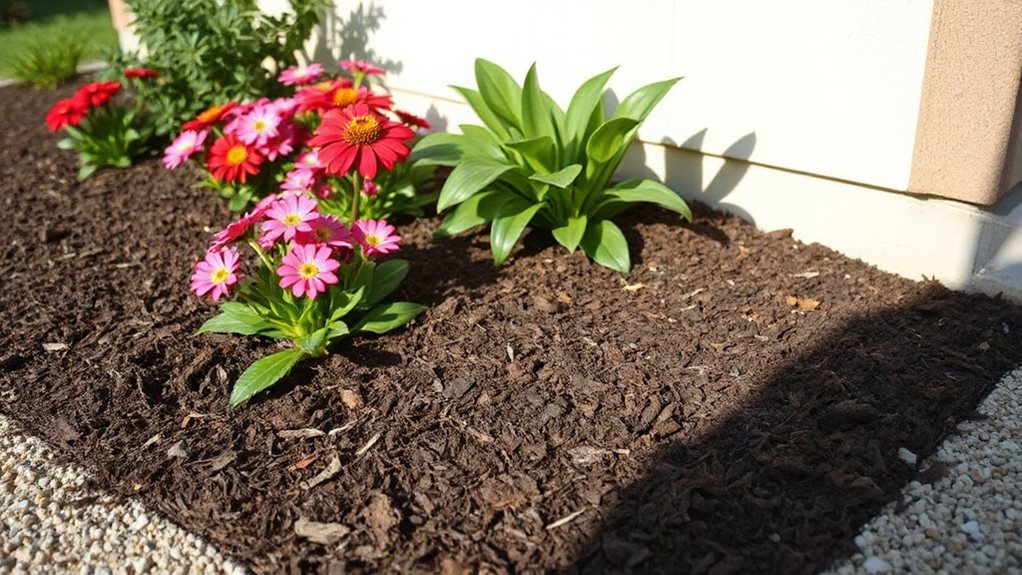
Best Mulch for Flower Beds Near the House
You’ll love cedar mulch for flower beds right by the house—it smells fresh, keeps ants and slugs at bay, and holds moisture for weeks, so your roses stay plump and the foundation stays dry. Spread a 2‑3‑inch layer, keep it six inches away from stems, and water it in to set the bed; it’s a bit pricier than pine bark, but the pest‑free vibe and tidy look pay off fast. Want the full scoop on other mulches and how to install them?
TLDR
- Choose cedar mulch for natural pest deterrence, long‑lasting moisture retention, and a pleasant fragrance that enhances flower bed aesthetics.
- Use shredded hardwood mulch for cheap, easy application and good weed suppression, but monitor for compaction and occasional clumps.
- Opt for pine bark mulch if you prefer a lightweight, easy‑to‑move option; ensure edging to prevent wash‑away on slopes.
- Avoid acidic mulches like pine needles near non‑acid‑loving flowers; instead use neutral‑pH oak leaf mulch or compost to maintain soil balance.
- Maintain a 2‑3 inch depth, keep mulch away from stems and foundations, and water after installation to set the layer and conserve moisture.
Quick Recommendation: Best Mulch for Flower Beds Near the House
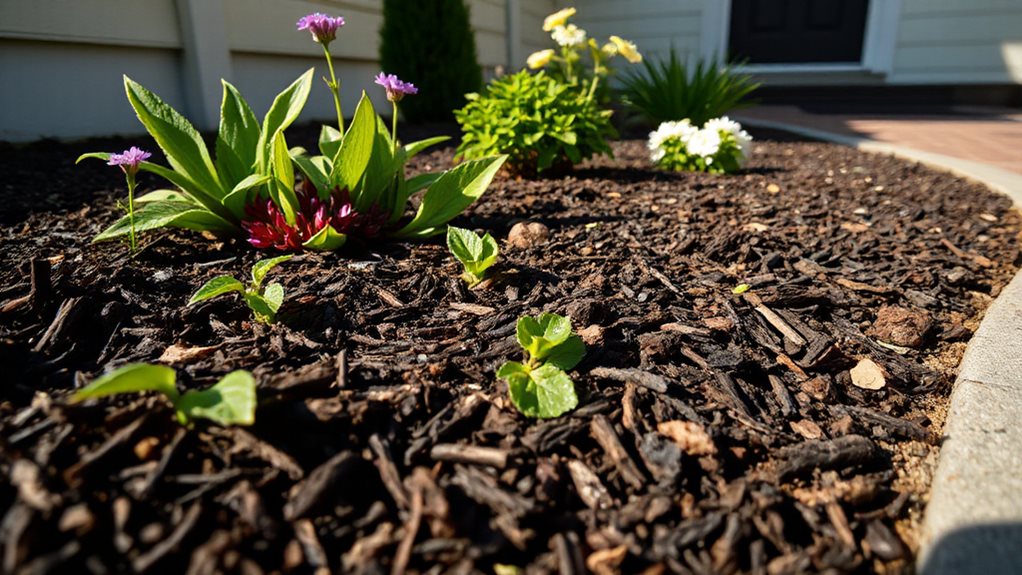
Ever wondered which mulch will make your flower beds look spectacular while keeping the soil happy? You’ll love shredded hardwood: it breaks down, boosts texture, holds moisture, and smothers weeds, plus you can pick natural or bright dyed colors. It’s fine enough to decompose in a couple of years, so you’ll re‑apply occasionally, keeping beds tidy and thriving. It also suppresses weeds effectively because it does not wash away easily. Use a 2–3 inch layer to conserve moisture and reduce maintenance while avoiding contact with plant stems to prevent rot mulch depth.
Choosing Mulch for Acid‑Loving vs. Neutral‑pH Plants
When you’re picking mulch, think of it like packing for a camping trip: you need the right gear for the terrain, and the same goes for acid‑loving versus neutral‑pH plants. For azaleas, rhododendrons, or blueberries, spread pine needles or pine bark three inches deep, keeping it away from trunks.
For veggies and most garden flowers, use oak leaf mulch or standard compost, which stays near neutral and won’t upset the soil.
Avoid lime, hardwood bark, or wood ash, because they’ll raise pH and ruin the vibe. Coffee grounds can also be worked into the soil to enhance fertility and organic matter coffee grounds.
Shredded Hardwood Mulch for House‑Side Flower Beds – Pros & Cons
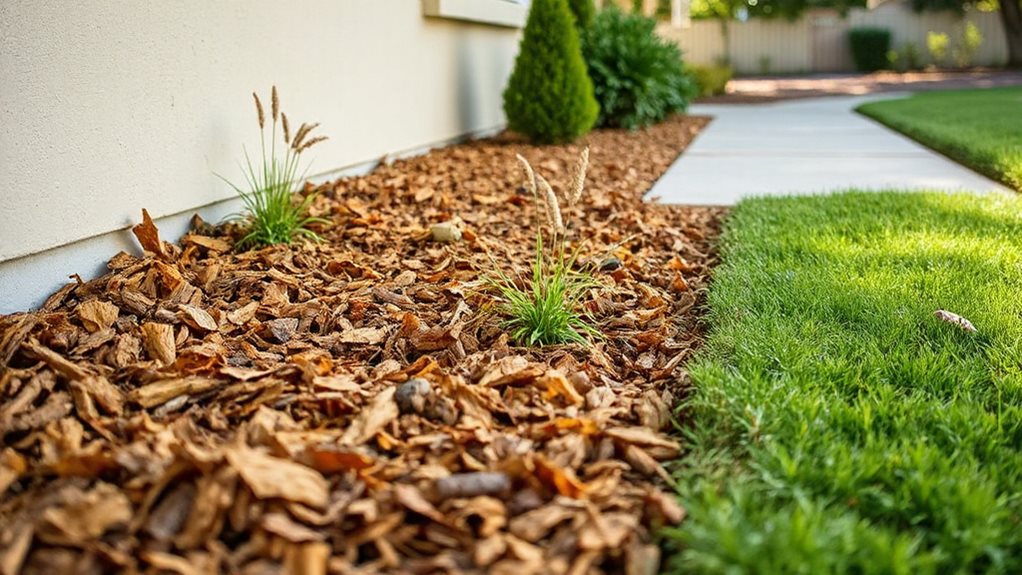
So, why would you pick shredded hardwood mulch for the flower beds right by your house?
You love the cheap, easy‑spread texture that saves labor, and the dyed version keeps colors bright while you’re busy watering less. It traps moisture, blocks weeds, and slowly feeds soil, but watch for compaction, alkaline shifts, and occasional clumps that need a gentle rake. Growing unusual edibles like Malabar spinach nearby can take advantage of that moisture and support diverse backyard plantings.
Pine Bark Mulch: Why It May Not Suit Near‑House Beds
You might think pine bark looks cool, but its lightweight nature means it can get tossed around like a camping tent in a gust, making it a hassle to keep your near‑house beds tidy.
Its acidity will gradually lower the soil pH, which is great for blueberries but can turn your flower mix into a sour mess unless you constantly pH‑balance—talk about a hidden maintenance chore!
And if you live where rain pours down the hill, those bark nuggets will float away, leaving you scrambling to rake them back, so you’ll spend more time playing “find the mulch” than enjoying the garden.
For a more permanent option near foundations, consider using threaded inserts to secure edging or barriers so mulch and soil stay put.
Weed Suppression Challenges
Ever wonder why pine bark mulch sometimes feels like the bad roommate of your flower beds right next to the house? You’ll find that a 2‑3‑inch layer blocks sunlight and traps moisture, yet thin spots let sneaky seeds slip through, and summer heat can dry the barrier, so you must pre‑treat weeds, apply early spring, and refresh yearly to keep suppression solid.
Acidic Soil Impact
What if I told you that the pine bark mulch you love for its rustic look isn’t actually turning your garden soil into a sour lemon patch?
You’ll find that a thin 2‑3‑inch layer barely shifts pH, because microbes neutralize acidity as bark breaks down, and long‑term studies show negligible change, so you can focus on serving neighbors with beautiful beds, not worrying about sour soil.
Potential Wash‑Out Risk
Ever wondered why your pine bark mulch seems to disappear after a storm, turning your tidy flower bed into a soggy mess near the house? You’ll see it float away like a raindrop‑scooted raft, especially on sloped beds where roof runoff rushes downhill. The light pieces slip past denser hardwood, washing onto patios and walkways.
To stop the sog, dig a shallow trench, line it with rocks, and add edging—this anchors the bark and saves you endless re‑mulching.
Cedar Mulch for House‑Side Gardens: Pest‑Free Benefits
You’ll love how cedar’s natural oils keep ants, termites, slugs and even beetles at bay, turning your garden into a pest‑free zone that smells like a forest cabin, and the thick 2‑3‑inch blanket holds moisture like a trusty water‑bag on a hot hike, so you water less and your plants stay happy; have you ever noticed how the scent alone makes insects steer clear, almost like they’re terrified of a campfire?—try spreading it around your house‑side beds and watch the weeds choke out while the soil stays cool and damp, and you’ll feel like you’ve just uncovered the secret shortcut to a thriving, low‑maintenance garden. Professional mounts often recommend using a backing or felt backing to protect underlying surfaces and extend longevity.
Fragrant Insect Deterrence
Ever wondered why the fresh scent of cedar around your house feels like a natural bug‑free zone? You’ll love how thujone‑rich oils vaporize, sending ants, mosquitoes, and termites packing, especially when the mulch is brand‑new and aromatic. I’ve seen fresh cedar keep my garden’s critters at bay, but remember the scent fades, so yearly top‑ups keep the repellent power humming.
Long‑Lasting Moisture Retention
So, why does cedar mulch keep your garden’s soil soggy‑good for weeks on end?
It blocks sunlight, slashing evaporation, while a 2‑3‑inch blanket insulates roots, so you water less even in scorching heat.
Its slow decay means the layer stays effective for years, cutting labor and cost—perfect for helping neighbors keep thriving beds without constant re‑planting.
Pine Straw Mulch: Light‑Weight, Fast‑Decomposing Coverage
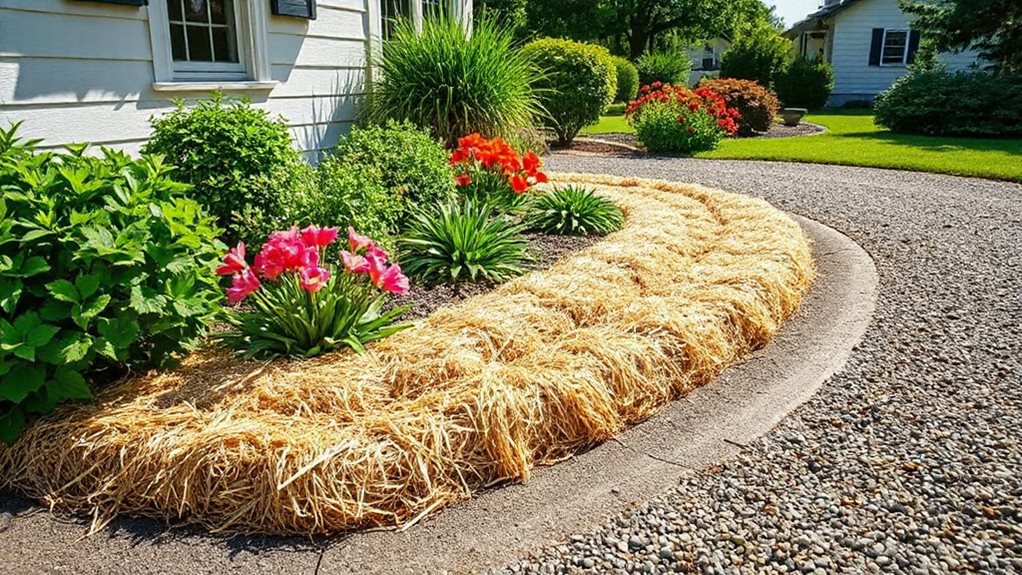
Imagine you’re loading a truck with a bale of pine straw that feels almost as light as a backpack, and you’ll notice right away how little fuel it sips compared to those heavy bark mulches—
this feather‑weight quality means you can haul it to your flower beds without breaking a sweat or needing a bulldozer. You’ll love how it spreads easily, suppresses weeds, holds moisture, and slowly feeds soil, all while you enjoy quick, low‑effort garden upkeep.
Pea Gravel Near the House: Inorganic Option – Is It Viable?
Can pea gravel really hold its own as a garden mulch when you’re right next to the house?
You’ll love its superb drainage, ten‑year lifespan, and weed‑blocking power, especially on pathways or downspout zones, but expect a $45‑$60 per yard price tag and heat‑buildup that can stress thirsty blooms.
Install fabric, edge tightly, and you’ll get a low‑maintenance, stylish border that stays put—just watch the stones scatter if you skip edging.
Organic Mulch Showdown: Compost, Straw, Double‑Shredded
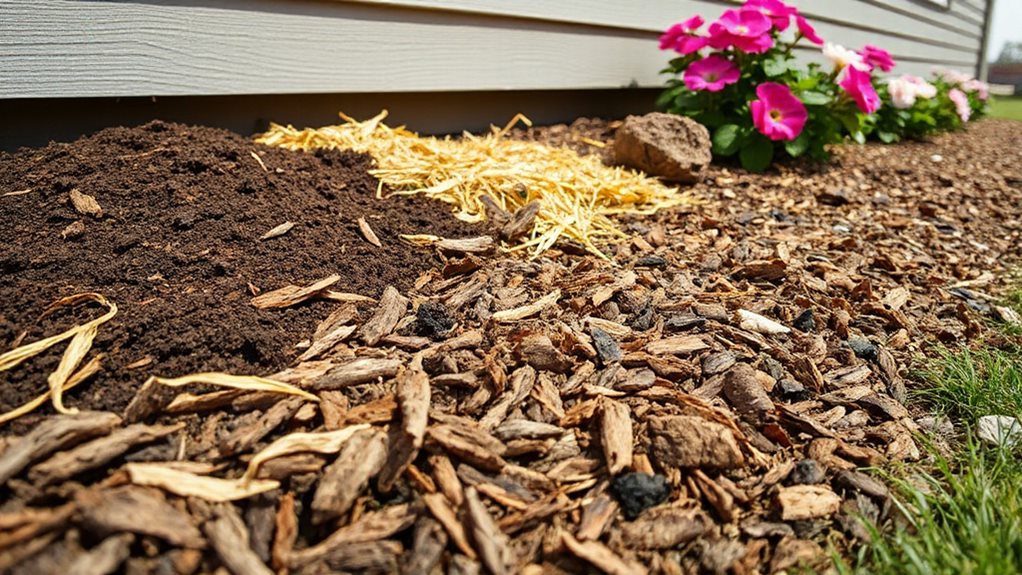
After saying goodbye to the rock‑hard charm of pea gravel, let’s roll out the green carpet of organic mulches and see which one makes your flower beds feel like a cozy campsite.
Compost feeds soil, elevates calcium, and invites earthworms, but fades in months.
Straw stays longer, packs thick, and needs a touch of fertilizer.
Double‑shredded bark holds moisture, endures runoff, and slowly replenishes, making it a reliable, low‑maintenance favorite.
Cost, Longevity & Maintenance: True Value of Each Mulch
So, which mulch really gives you the best bang for your buck while keeping your garden looking fresh and low‑maintenance? You’ll love shredded hardwood’s cheap bulk price and nutrient boost, but expect yearly top‑ups;
pine bark lasts two‑to‑three years and helps acid‑loving plants, yet it flies away in wind.
Rubber mulch’s 12‑year durability means almost no work, but you’ll pay upfront and add fertilizer.
Cedar offers pest‑repellent charm and 2‑4‑year life, though it’s pricey.
Pine straw, super cheap where pines grow, stays cool, and needs only an annual sprinkle.
How to Install Mulch Around House‑Side Flower Beds for Best Results
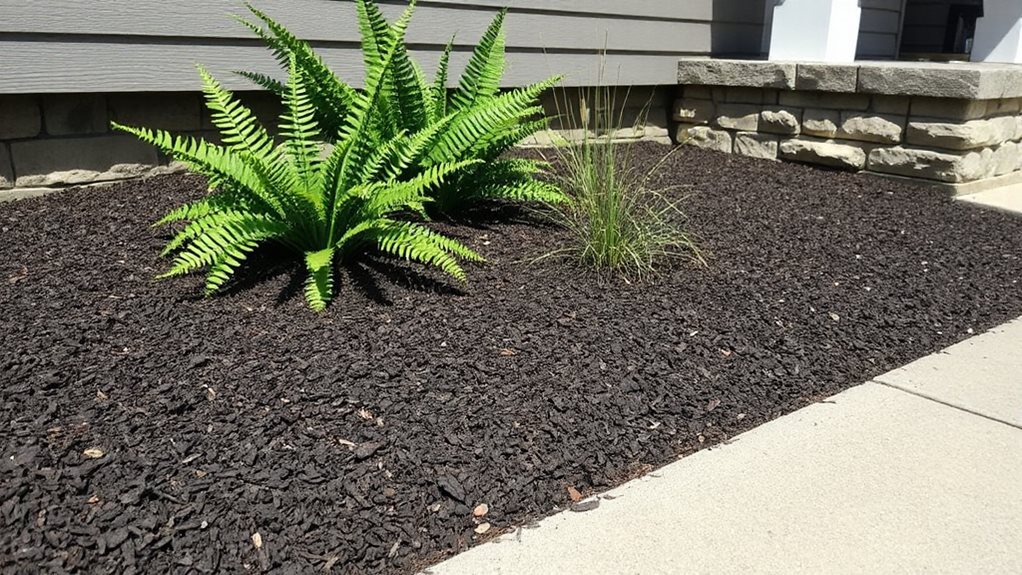
Ever wondered why a perfectly mulched flower bed can feel like a mini‑campground oasis right next to your house?
First, pull out weeds, rocks, and old mulch, then loosen the soil and keep it damp but not soggy.
Spread 2‑3 inches of mulch, rake it evenly, and leave a six‑inch gap from stems and the foundation.
Water it in, and you’ll have a tidy, campsite‑ready garden.
Maintenance Checklist: Keeping Mulch Effective Year After Year
You’ll want to check your mulch depth every few weeks, making sure it stays at that sweet 2‑3‑inch spot so the soil stays cool and the weeds stay out, because who wants a soggy, moldy mess ruining a backyard excursion?
Schedule a quick refresh each season—think of it like packing a fresh tent for a camping trip—by loosening compacted layers, adding a thin new coat, and raking it out to keep air flowing and roots happy.
And don’t forget to keep an eye on sneaky weeds trying to crawl through; pull them promptly, maybe even toss a pre‑emergent herbicide in, so your flower beds stay as tidy as a well‑organized campsite.
Inspect Mulch Depth
Wondering how to keep your flower‑bed mulch working like a champ year after year? Grab a ruler, poke a few spots, and note any thin patches under an inch—those weeds will pop up faster than a campfire spark. If you see 4‑inch piles, rake them back, pull away from stems, and fluff the rest; then add half an inch to hit three inches. This quick check keeps moisture, soil healthy, and your garden thriving.
Schedule Seasonal Refreshes
So, when’s the best time to give your flower‑bed mulch a seasonal tune‑up? In spring, after the last frost, pull back old mulch, rake it loose, then spread a fresh one‑inch layer of bark or compost, watering well;
in summer, top‑dress as it thins, keeping it 2‑3 inches thick;
in fall, add a protective blanket before winter, then clear the top layer early next spring.
Monitor Weed Infiltration
Ever wonder why a few sneaky weeds keep popping up even though you’ve got a fresh blanket of mulch? You should inspect monthly, fluff compacted spots, and pull any sprouts before they steal nutrients.
Keep the layer 2‑3 inches, add more when it thins, and use pre‑emergent herbicide under the chips.
Check slopes after rain, remove debris, and keep stems clear to prevent rot and disease.
Overall
You’ve got the perfect mulch match for your house‑side flower beds, so go ahead and spread it, watch those plants thrive, and enjoy the fresh, earthy vibe you’ve created. Remember, shredded hardwood gives a tidy look, cedar keeps pests at bay, and a dash of compost adds nutrients—pick what suits your garden’s personality. Keep an eye on depth, water occasionally, and you’ll see a burst of color that feels like a mini‑adventure every spring. Happy mulching!