Can Ball Pythons Eat Eggs? What You Should Know
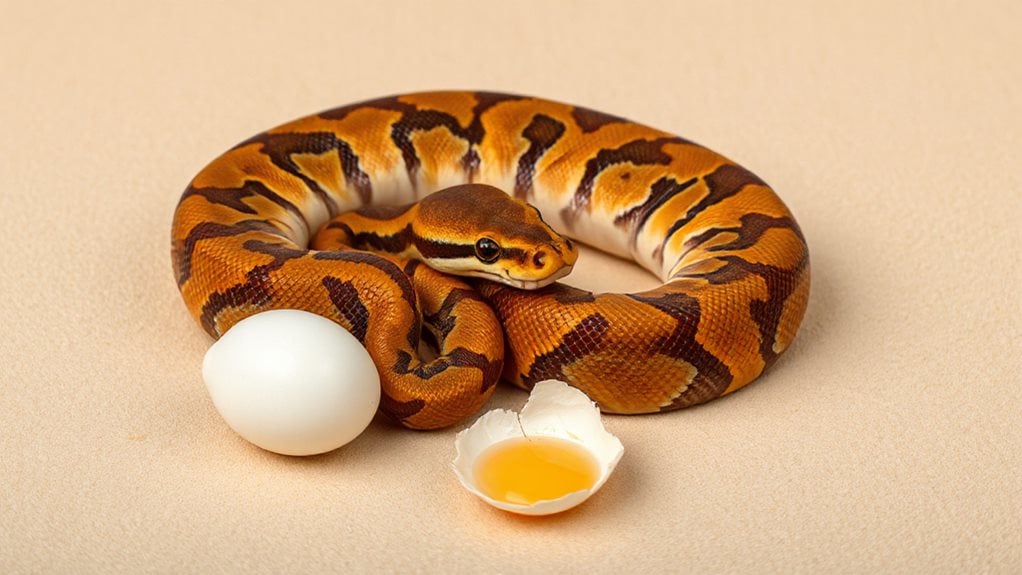
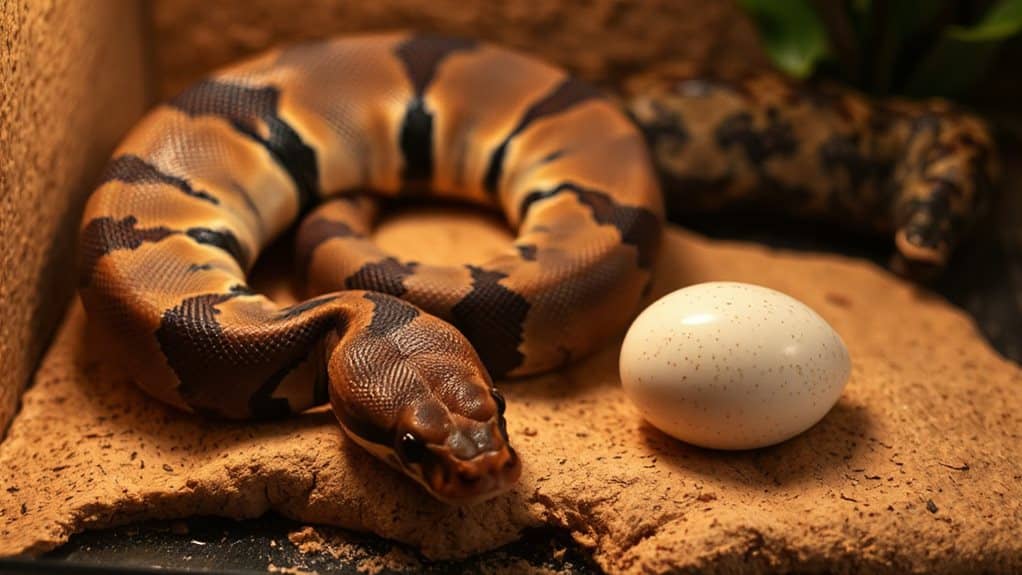
You can toss a fresh, unfertilized chicken egg to your ball python once in a while, but think of it as a rare camping snack rather than a staple—these snakes are hard‑wired carnivores that thrive on properly sized mice or rats packed with essential amino acids and a balanced 60‑40 protein‑fat split. Egg meals can cause jaw impaction, bacterial overgrowth, or nutrient gaps, so keep them occasional, monitor for 24 hours, and always fall back on rodents for reliable growth and health; keep reading for the exact how‑to and safety tips.
TLDR
- Ball pythons are obligate carnivores that thrive on rodent‑sized prey; eggs are not a natural or practical staple.
- Feeding eggs poses risks such as jaw impaction, bacterial overgrowth, nutrient gaps, salmonella, and potential vomiting or starvation.
- If offered, use a single fresh, unfertilized slug egg, rinse it, place it after dusk, and monitor the snake for 24 hours.
- Eggs should be a rare, curiosity‑driven treat—never a regular diet component—and should be limited to “once‑in‑a‑while.”
- After an egg trial, clean the enclosure with diluted bleach or F10, rinse, dry, and replace the liner to remove scent and prevent contamination.
Can Ball Pythons Eat Eggs? (Short Answer)
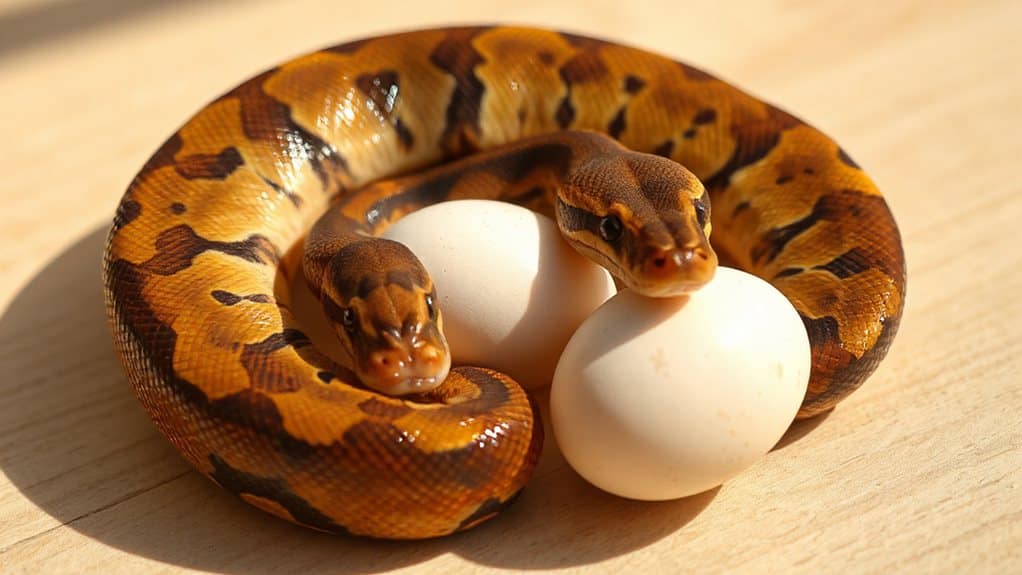
If you’ve ever wondered whether a ball python could swap its usual mouse snack for a chicken egg, the short answer is a res “no,” because those little reptiles are hard‑wired carnivores that thrive on rodent‑sized prey, and tossing an egg into their diet would be like feeding a car a banana—fun to imagine but totally impractical. You’ll keep them healthy by serving proper rodents, just as you’d pack nutritious meals for a camping trek. Egg‑eating snakes are a different group and do not include ball pythons. Fences and sheltered microclimates can influence prey availability by supporting stable soil moisture that benefits small mammal populations.
How Do Wild Ball Pythons’ Diets Differ From Captive Ones?
You’ll notice that in the wild you pythons feast on a crazy mix of tiny mammals, birds, and even reptiles, while in captivity they mostly munch on the same mice or rats day after day, which makes you wonder how that variety shapes their health.
Imagine hiking through the African savanna and spotting a snake slithering into a burrow for a sudden snack—those erratic meals are the opposite of the predictable feeding schedule you set at home, so think about how those spontaneous hunts keep them lean and agile.
Try swapping in a few African soft‑fur meals or frozen‑thawed prey to mimic that natural diversity, and you’ll see your snake’s excitement (and maybe its waistline) change dramatically.
Also, remember that providing a constant source of fresh water is vital for hydration and overall health, since ball pythons can begin to experience dehydration after about a week without drinking and may show dehydration signs if water access is insufficient.
Diverse Wild Prey
Even though you might imagine a ball python snacking on a single mouse in a zoo, wild ball pythons actually feast on a crazy mix of critters—tiny mammals, fluttering birds, squirming amphibians, shrews, and even the occasional reptile—depending on what’s roaming their African home.
You’ll see males hunting birds, females preferring rodents, and everyone opportunistically grabbing reptiles or shrews when chance strikes.
Consistent Rodent Feeding
After exploring the wild buffet of birds, shrews, and the occasional lizard, let’s talk about the steady rhythm of rodent meals that keep captive ball pythons thriving.
You’ll feed hatchlings every 5‑7 days, juveniles every 7‑10, and adults bi‑weekly, using frozen‑thawed rats or mice sized to 1.5× the snake’s width.
This consistency mimics wild opportunism while preventing picky habits and injuries.
Why Are Rodents The Nutritional Gold Standard for Ball Pythons?
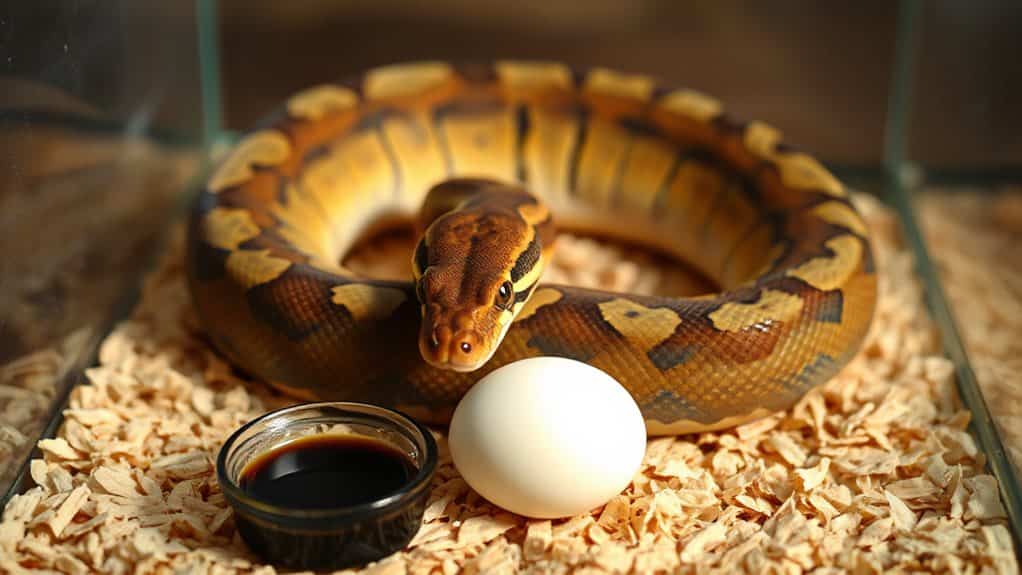
You’ll notice that rodents pack every essential amino acid your python needs, plus a perfect fat‑protein balance that keeps its muscles strong and its energy steady, just like a well‑planned camping menu that fuels a long hike.
Have you ever tried feeding a snake a single egg and watched it struggle for the missing nutrients?
Try swapping in a properly sized mouse or rat and watch the whole‑prey excitement fire up its digestive system, gut flora, and overall health—trust me, it’s as satisfying as finding the perfect trail snack after a day of exploring.
Essential Amino Acid Profile
Because ball pythons are obligate carnivores, they need a full‑spectrum protein source that supplies every essential amino acid—just like a backpacker who can’t hit the trail without a solid, all‑in‑one meal pack.
Rodent muscle delivers leucine, lysine, methionine, phenylalanine, threonine, tryptophan, isoleucine, valine, arginine, histidine, giving a perfect DIAAS‑like score, so your snake gets balanced growth, strong muscles, and happy camping‑style expeditions.
Optimal Fat‑Protein Ratio
A solid 60‑40 split of protein to fat in a ball python’s diet isn’t just a random number—it’s the sweet spot that lets your snake stay lean, strong, and ready for any “camp‑out” trip you throw its way.
You’ll find rodents hit that ratio perfectly, delivering balanced calories without excess fat, so your snake stays agile, healthy, and willing for every experience.
What Nutrients Ball Python Eggs Lack That Rodents Provide?
When you crack open a ball‑python egg, you quickly realize it’s missing the powerhouse nutrients that live rodents pack into every bite—think of it like trying to camp with just a sleeping bag and no food, while a rat is a full‑blown pantry on wheels.
Eggs lack the high‑calorie protein, calcium, and vitamin D that rats deliver, plus the fat stores needed for bone health and growth, so you’ll need supplements or rodents to keep your snake thriving.
Many reptile keepers therefore rely on calcium supplementation to prevent metabolic bone disease in snakes.
What Can Go Wrong If You Feed Your Ball Python Eggs?
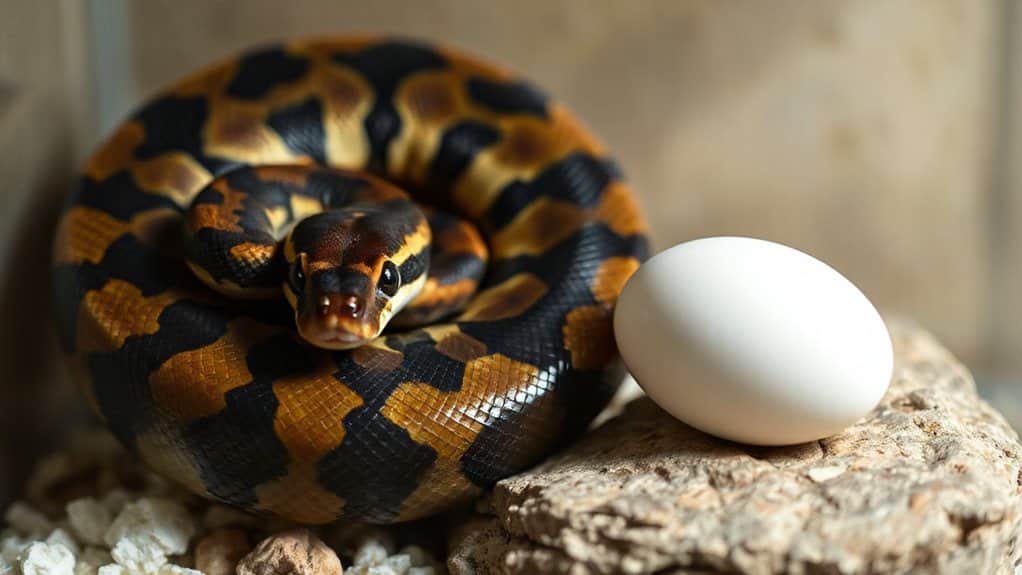
Even if you think feeding your ball python a chicken egg is a fun, “camp‑fire” experiment, the reality can turn into a disaster zone pretty quickly.
Think of a tiny snake trying to wrestle a massive, slippery suitcase.
You’ll risk jaw impaction, blockages, bacterial overgrowth, nutrient gaps, and even salmonella, all of which can cause vomiting, starvation, or long‑term health issues.
Outdoor lighting that attracts insects can also indirectly increase the chance of your snake encountering eggs or other risky food items near porch areas, so keep feeding strictly supervised and indoors to avoid accidental foraging near insect‑rich lights.
When a Ball Python Might Try an Egg (If Ever) and Why
You’ll notice your snake perk up when a faint egg scent drifts through the enclosure, because curiosity can spark a quick sniff‑and‑taste test, especially if its diet’s been a bit thin lately;
have you ever wondered whether a ball python could mistake a slug‑like infertile egg for a snack?
Try offering a small, clean egg when you’ve just cleared the clutch and watch the reptile’s eyes light up—just remember it’s a rare opportunistic moment, not a regular habit.
If you’re feeling adventurous, you can even set up a mini “camping” scene with a hidden egg and see if the excitement of a new smell outweighs the nutritional risks, but keep a close eye on any signs of digestive upset.
Curiosity Triggered by Scent
Ever wondered why a ball python might give an egg a curious sniff before deciding whether to strike?
You’ll notice its tongue flicking, sampling the egg’s faint membrane scent, just like it hunts prey aromas.
If the odor feels unfamiliar, it lingers, gapes, maybe even nudges—yet pheromones from its own clutch usually tell it, “No snack, just brooding.”
This scent‑driven curiosity can be playful, not predatory.
Nutritional Deficiency Risks
Often you’ll wonder why a ball python would even consider an egg, but the truth is that the risk of nutritional deficiencies makes it a pretty bad idea.
Eggs miss taurine, vitamin A, thiamine, and trace minerals like magnesium and selenium that rodents supply, so a snake could develop heart, eye, or metabolic problems, and the shell’s calcium isn’t enough to balance phosphorous.
Rare Opportunistic Feeding Events
Occasionally a ball python will snap at an egg, but it’s more of a “what‑if” moment than a regular habit—think of it like spotting a stray marshmallow on a camping trail and wondering if it’s worth the bite.
You’ll see this only when a snake’s hunting instinct spikes, like after laying or when you randomize prey.
Offer a tiny mouse first, then maybe a chick; the egg stays a rare, curiosity‑driven snack.
How to Safely Offer a Ball Python Egg as a Rare Treat
If you’ve ever wondered how to turn a simple egg into an exciting, “once‑in‑a‑while” adventure for your ball python, you’re in luck—because the whole process is surprisingly easy and surprisingly fun, kind of like packing a tiny snack for a weekend hike. Choose a fresh, unfertilized slug egg, rinse, pat dry, and place it in an open spot after dusk; limit to one, monitor for 24 hours, then remove it, keeping nutrition balanced and your snake thrilled. Roots circle the pot walls after hitting smooth container surfaces, so ensure eggs are offered in a clean, secure area to avoid contamination and stress on your snake’s environment, and consider using a shallow dish to prevent rolling surface texture.
What to Do With Leftover Eggs After a Trial
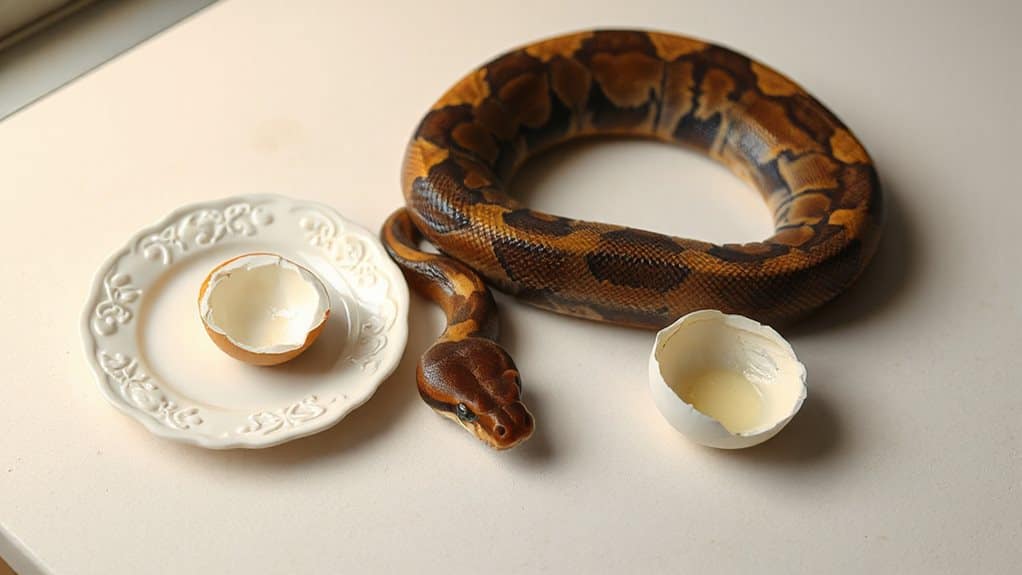
When you’ve finished a ball‑python egg trial and still have a few spare eggs left, you’ve got a handful of choices that can feel a bit like deciding what to do with a leftover camp‑fire marshmallow—don’t just toss it away without thinking!
You can freeze them at a cryobank for future use, donate healthy ones to hopeful parents, send abnormal eggs to research, let clinics use them for training, or discard them safely as medical waste with proper protocols.
How to Clean the Enclosure and Remove Egg Scent After a Female Lays Eggs
You’ve just wrapped up the egg‑trial, and now the big question is how to clean the enclosure without wiping out the egg scent that helps your female feel comfortable.
First, gently move her into a secure, heated container with her favorite hide, then spray the tank with diluted F10 or 3 % bleach, wait ten minutes, rinse thoroughly, dry completely, and finally add fresh newspaper liner—preserving scent while keeping everything spotless.
Expert‑Recommended Alternatives When Rodents Aren’t Available for Ball Pythons
Sometimes you’ll find yourself stuck without the usual rat supply, and that’s when you can get creative and explore into the whole menu of alternatives that still keep your ball python happy and healthy.
Try African Soft‑Fur rats for balanced fat and protein, frozen quail or chicken necks for quick swaps, or even guinea pigs and duck feet from Asian markets; these options keep feeding exciting and nutritious.
And Finally
So, while the occasional egg can be a fun, novelty treat for your ball python, it’s not a nutritional staple—think of it as a quirky snack on a road‑trip, not the main course on a camping hike. Stick to rodents for the bulk of the diet, keep eggs rare and safe, and clean up any lingering scent, and you’ll avoid the pitfalls that could turn your snake’s journey into a disaster. Happy feeding!