Can Bearded Dragons Eat Moths? Find Out Here
You can definitely give your bearded dragon a moth now but treat it like a rare camping snack—just a few times a week, tiny enough to slip between its eyes, and preferably captive‑bred so you dodge wild toxins and parasites. Moths are high‑fat, low‑calcium, so they’re more about sparking hunting instincts and breaking boredom than bulk nutrition. Pair them with crickets or dubia roaches, dust with calcium, and watch your dragon chase the fluttering treat with delighted vigor. Keep portions small, discard leftovers after ten minutes, and watch for any odd swelling or lethargy—if you keep going, you’ll learn the exact species, sizing tricks, and storage tips you need.
TLDR
- Moths can be offered occasionally as enrichment, but they should not replace staple insects in a bearded dragon’s diet.
- Captive‑bred moths (e.g., wax moths, silkworms, butterworms) are safer than wild‑caught ones and must be smaller than the dragon’s eye gap.
- Moths are high in fat and have an imbalanced calcium‑to‑phosphorus ratio, so dust them with calcium and pair with low‑fat insects.
- Juvenile dragons should avoid large or wild‑caught moths; provide soft, captive‑bred larvae instead.
- Feeding moths stimulates natural hunting behavior, reduces boredom, and offers mental enrichment when used sparingly.
Can Bearded Dragons Eat Moths?
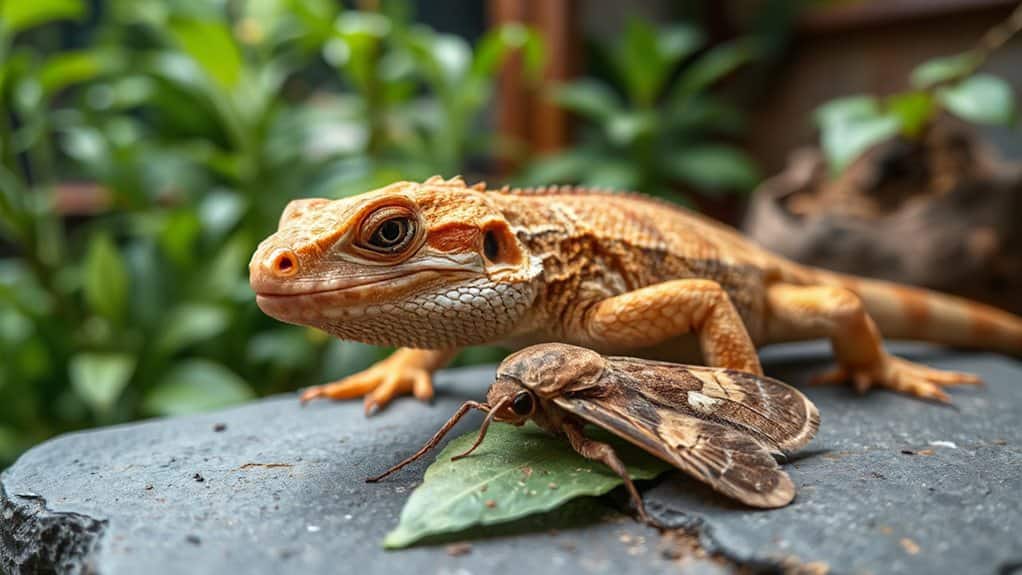
When you’re out camping and spot a fluttering moth, you might wonder if your bearded dragon would love it as a snack, and the answer is a mix of yes and no—yes, they can nibble on certain moths, but no, you shouldn’t make them a regular part of the diet. You can offer captive‑raised hornworm or waxworm moths, keep them smaller than the eye gap, and remember they’re just stimulation, not nutrition. Moths have low nutritional value compared with other insect options. Occasional moths can be offered, but maintain proper feeding practices and regular inspection of your pet’s food and environment.
Why Are Moths Only an Enrichment Treat?
You’ll find that moths don’t really pack the nutrition you need, but they’re perfect for sparking that instinctual hunt you love to see, so why not toss a few into the enclosure to break up the monotony?
Imagine your dragon pouncing on a fluttering moth like you’re on a camping journey, the excitement cutting through boredom and stress in a flash.
Just remember to keep them occasional treats—think of them as the fun side‑quest rather than the main meal.
Consider pairing moths with other safe insects and offering them only occasionally to prevent nutritional imbalance and support overall health, and learn about safe feeders to choose appropriate options.
Low Nutritional Value
Even though a single moth might look like a tasty snack for your bearded dragon, its nutritional profile is pretty underwhelming—think of it as the trail‑mix of the insect world, full of flavor but low on the stuff that really fuels growth.
Moths pack only about 10 g protein per serving, far less than Dubia roaches, and they’re high in fat, so they can tip your dragon toward obesity if you over‑feed.
Their calcium‑to‑phosphorus ratio misses the ideal 2:1 mark, risking bone issues unless you dust them constantly.
Because of these gaps, treat them as occasional treats, not staples.
Stimulates Natural Hunting
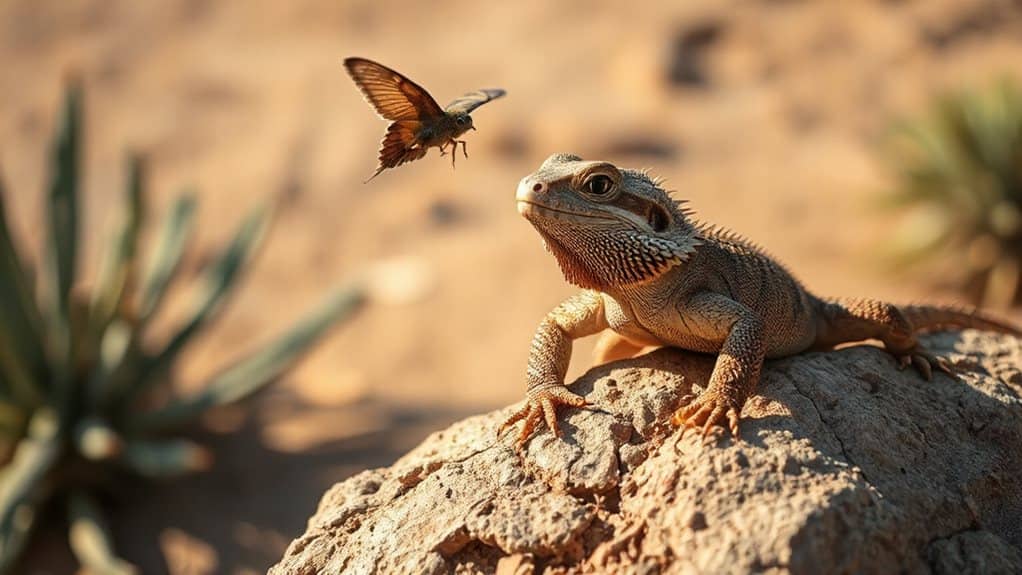
Chasing a fluttering moth around the enclosure feels like a mini‑adventure, and it’s not just fun—it actually fires up your dragon’s predatory instincts that have been honed over millions of years.
You’ll see sharper focus, quicker strikes, and stronger legs as it tracks, swoops, and snaps, turning a simple snack into a full‑body workout that satisfies ancient hunting drives while keeping you entertained.
Reduces Boredom and Stress
When a bearded dragon darts after a fluttering moth, the excitement isn’t just a fleeting sprint—it’s a genuine mental getaway that shatters boredom and eases stress, kind of like a mini‑adventure camping trip for your scaly friend.
You’ll see your dragon perk up, chasing the moth, feeling like a camper uncovering new trails, and that playful chase breaks monotony, enhances mood, and keeps him mentally fit without risking health.
How Does Moth Nutrition Compare to Crickets?
So, how does a moth’s nutrition stack up against a cricket’s?
Moths, especially wax‑moth larvae, pack protein comparable to crickets but boast lower chitin, making digestion easier, while crickets deliver 15‑21% protein and moderate fat.
Both need calcium dusting, yet moths often have higher fat and adjustable nutrients, so you’ll balance energy and minerals for your dragon’s health.
Red light promotes bigger, taller, and bushier growth, and it strongly affects plant hormones like those controlling flowering and storage red-to-blue ratio.
Which Moth Species Are Safe for Adult Dragons?
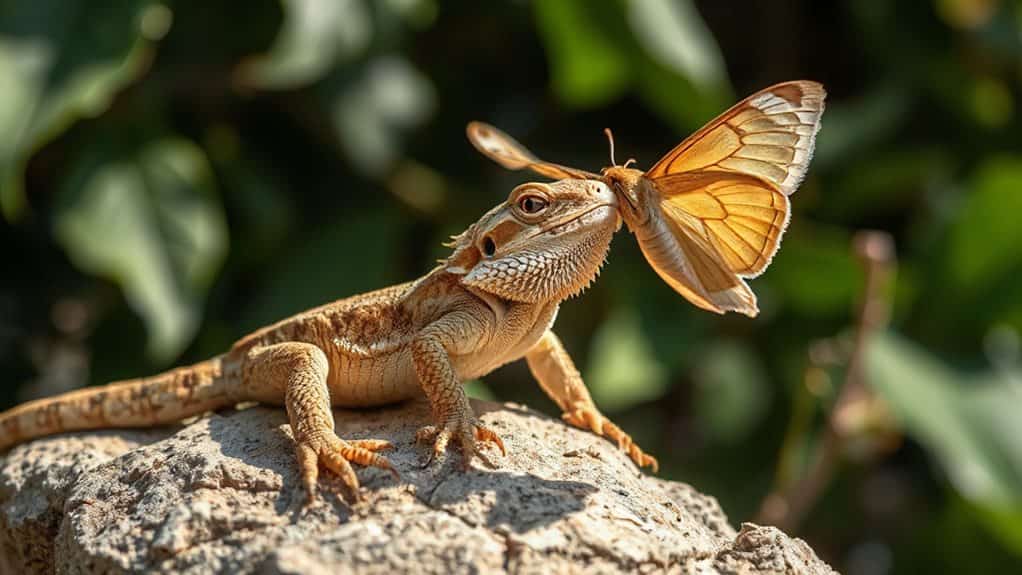
If you’ve ever set up a backyard “camping” exploration for your bearded dragon, you know the excitement of finding the perfect snack, and luckily a handful of moth species fit the bill for adult dragons without turning dinner into a disaster.
Wax moths, silkworms, butterworms, hornworms, and black‑soldier fly larvae all offer safe, digestible treats—just keep wax moths occasional, serve silkworms and butterworms weekly, and let hornworms and black‑soldier flies add moisture and calcium when you want variety.
Which Moth Species Should Juveniles Avoid?
You’ll want to keep juvenile dragons far away from any wild‑caught moths, especially the big, bold Hornworm and Sphinx varieties that adults sometimes munch on, because those bugs can be loaded with plant toxins and nasty parasites you can’t see.
Have you ever tried feeding a tiny dragon a moth that looks like a mini‑camping lantern? It’s a recipe for a sick pet, so stick to soft, captive‑bred caterpillars and treat moths only as an occasional, carefully sourced snack.
Also, remember to provide regular balanced nutrition to support overall health and reduce risks associated with occasional wild prey.
Large Hornworm Moths
Ever wondered why those big, fluttery hornworm moths are a no‑go for your baby bearded dragon?
Their wingspan exceeds the eye‑to‑eye space, so a juvenile can’t even grip them before choking risk spikes, and the hard exoskeleton won’t break down in a tiny gut.
Stick to larvae, crickets, or dubia roaches until the dragon’s throat matures.
Sphinx Moths for Adults
When you’re planning a dinner for your adult bearded dragon, the idea of serving a sleek, hummingbird‑like sphinx moth can sound as tempting as a night‑time camping expedition, but you’ve got to check the guest list first—juvenile dragons should steer clear of the big‑winged species like the white‑lined sphinx, achemon sphinx, tersa sphinx, laurel sphinx, and wild cherry sphinx, because their 6‑inch wingspan and sturdy bodies turn a simple snack into a choking hazard, while their low‑protein, nectar‑drinking diet leaves them nutritionally empty and potentially loaded with nightshade toxins that could upset a young dragon’s delicate gut.
Wild‑Caught Moths Unreliable
Even though grabbing a wild‑caught moth can feel like a mini‑expedition for your bearded dragon, you’ve got to remember that not every fluttering critter is a safe snack for a juvenile—those tiny dragons with their delicate immune systems and growing bodies are especially vulnerable to the hidden dangers lurking in a moth’s wings and gut.
Avoid brightly colored caterpillars like Puss Moth, saddleback, and Io, steer clear of pesticide‑sprayed fields, and gut‑load any wild insects for 48‑72 hours; otherwise, you risk swelling, parasites, and lethargy in your young dragon.
How Should I Size a Moth for My Dragon?
If you’re gearing up to feed your bearded dragon a moth, the key is to treat the insect like a tiny, winged backpack that must fit snugly between the dragon’s eyes—no more, no less.
Measure head‑to‑tail, ignore width, and remember juveniles need even smaller gaps.
Hard shells stay hard, so cut‑ins’t help; soft moth bodies are safer.
Check the eye‑spacing each time, and you’ll keep digestion smooth.
What Dangers Do Wild‑Caught Moths Pose to Bearded Dragons?
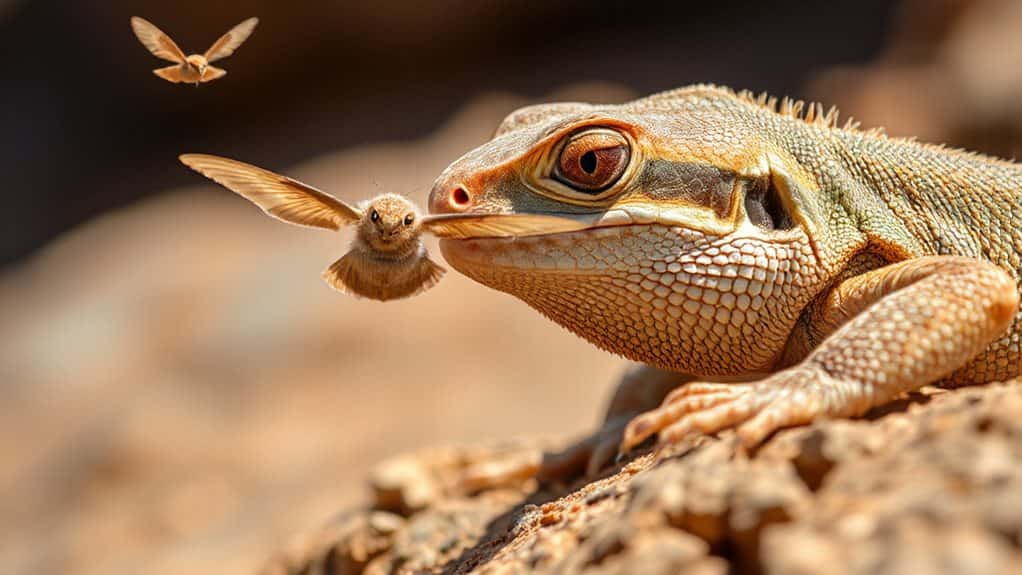
Sizing that moth just right is only half the battle—once you’ve got the perfect fit, the next thing you need to worry about is what’s actually inside that fluttering snack.
Wild‑caught moths can carry plant toxins, parasites, and pesticide residues, causing mouth swelling, drooling, lethargy, or even death; bright species like fireflies or ladybugs are especially dangerous, so always verify source and avoid unknown areas. Improving lawn and garden hygiene, such as removing decaying plant material and controlling moisture, can reduce the likelihood of moths and other pests carrying harmful contaminants remove food sources.
Why Choose Captive‑Bred or Waxworm‑Derived Moths?
You’ll love how captive‑bred or waxworm‑derived moths give you a clean, predictable snack that’s free from pesticides and weird parasites you’d find in the wild, so you can feel confident you’re feeding your dragon the right balance of protein and chitin without any nasty surprises.
Have you ever tried a wax‑moth treat and watched your bearded dragon’s eyes light up like a camper spotting a perfect trail?
Just remember to keep the high‑fat wax moths as an occasional treat—once a week is plenty—and you’ll keep the nutrition steady while still adding a fun, hunting‑style surprise to your reptile’s menu.
Safer Controlled Nutrition
When you’re planning a beetie’s menu, choosing captive‑bred or wax‑moth‑derived insects is like packing a clean, well‑organized camping kit instead of grabbing whatever you find on a random hike—no surprise bugs, no hidden chemicals, just reliable nutrition.
You’ll avoid pesticides, parasites, and unpredictable fat spikes, giving your beardie a safe, consistent protein enhancement while you feel like a seasoned trail chef.
Consistent Quality Assurance
After you’ve packed the clean, well‑organized camping kit of captive‑bred insects, the next step is making sure every “snack” you hand over to your beardie meets the same high‑quality standards—think of it as checking each trail‑mix bag for the right amount of nuts and no surprise rocks.
Choosing captive‑bred or waxworm‑derived moths guarantees verified species, pesticide‑free batches, consistent protein, and low‑fat treats, while reputable suppliers provide health certifications and batch testing, eliminating wild‑moth toxins and parasites for reliable, repeatable nutrition.
How to Clean, Gut‑Load, and Store Moths?
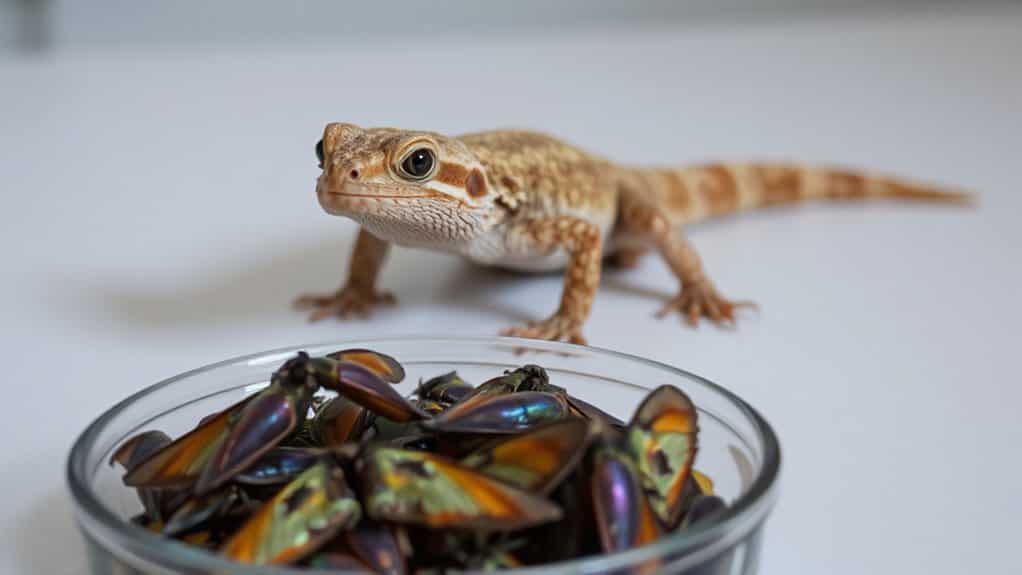
Ever wondered how to keep those crunchy moth snacks fresh, safe, and ready for your bearded dragon’s next adventure?
Spot‑clean daily with organic antibacterial spray, deep‑clean weekly, and monthly bleach‑disinfect when empty; rinse everything hot, then air‑dry.
Gut‑load only from trusted breeders, avoid wild larvae, and treat as occasional treat.
Store in sealed bags, double‑bag for extra safety, and freeze or fumigate annually to kill hidden pests.
How Often and How Much Moth Should I Offer?
Keeping those crunchy moths fresh and safe was just the first step, now let’s talk about how often and how many you should actually toss into your dragon’s dish.
Offer moths only a couple of times a week, two to three head‑sized pieces for adults, and a handful for juveniles, never more than ten minutes before you discard leftovers.
Treat them like a tasty snack, not a staple, and watch your dragon’s excitement grow.
What Signs Show My Dragon Is Reacting Badly?
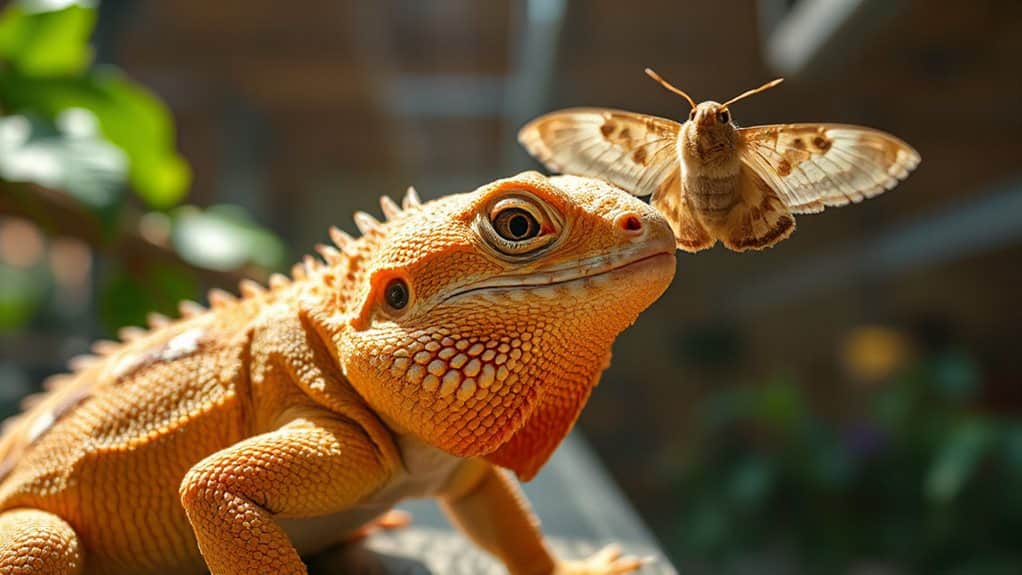
If you ever notice your bearded dragon suddenly turning into a grumpy, puffed‑up puffball that hisses louder than a campfire crackle, that’s a big red flag that something’s wrong.
Look for whipping tails, flattened “pancake” bodies, darkened beards, open‑mouth displays, and color shifts; also watch appetite, lethargy, panting, coughing, and any eye, nose, or ear discharge—these signs scream stress or illness, so intervene fast.
And Finally
So, after all that moth‑talk, you’ve got the gist: adult dragons can enjoy a few captive‑bred moths as a tasty, occasional treat, but juveniles should stick to crickets and other safer bugs. Remember to gut‑load, clean, and store them properly, and keep portions modest—think a sprinkle, not a buffet. If your dragon starts acting weird—vomiting, lethargic, or losing appetite—stop the moths and consult a vet. Enjoy experimenting, but always prioritize your dragon’s health and happiness.