Hydrangea Leaves Turning Yellow? Here’s the Real Cause
If your hydrangea leaves are turning yellow, it’s usually because the roots are either drowning from too much water or thirsty from too little, kind of like trying to camp in a rainstorm or a desert (neither is fun for you or your plant!). Sometimes, the soil’s pH messes with iron absorption, or pests decide your hydrangea’s leaves look like a buffet. Check your watering, peek at the soil, and you’ll be on the right track—there’s a lot more to find out just ahead!
TLDR
- Overwatering or poor soil drainage can suffocate roots, causing yellow leaves due to impaired nutrient absorption.
- High soil pH leads to iron deficiency, often seen as yellow leaves with green veins.
- Nutrient deficiencies, especially nitrogen or iron, are common causes of hydrangea leaf yellowing.
- Pest infestations or fungal diseases can damage leaves and trigger yellowing.
- Consistent watering, regular soil testing, and proper fertilization prevent most yellowing issues in hydrangeas.
Why Are My Hydrangea Leaves Turning Yellow?
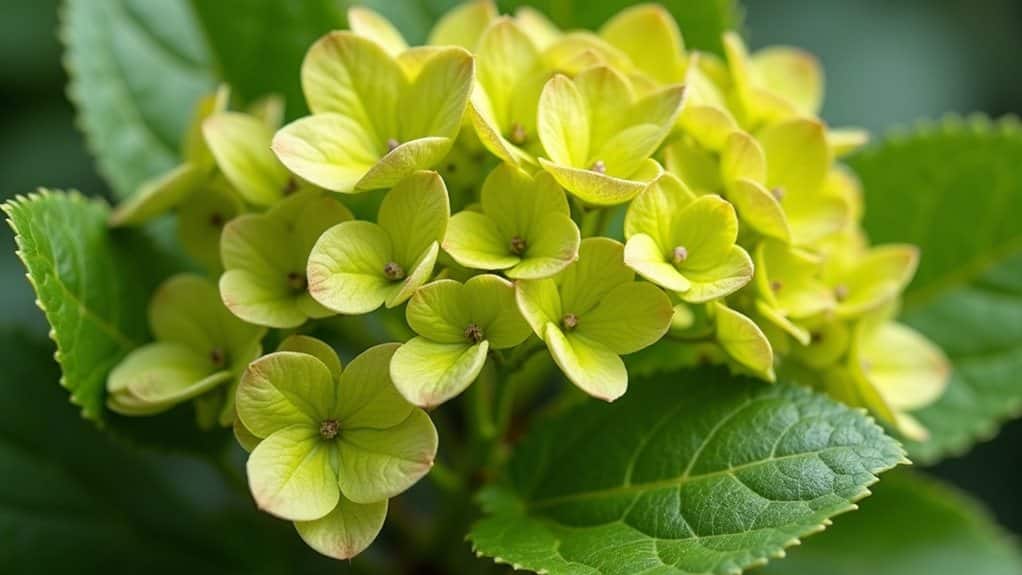
Even though hydrangeas are usually pretty easygoing, it can feel like a total mystery when you spot their leaves turning yellow, especially if you’re used to seeing those big, happy green leaves waving at you every morning.
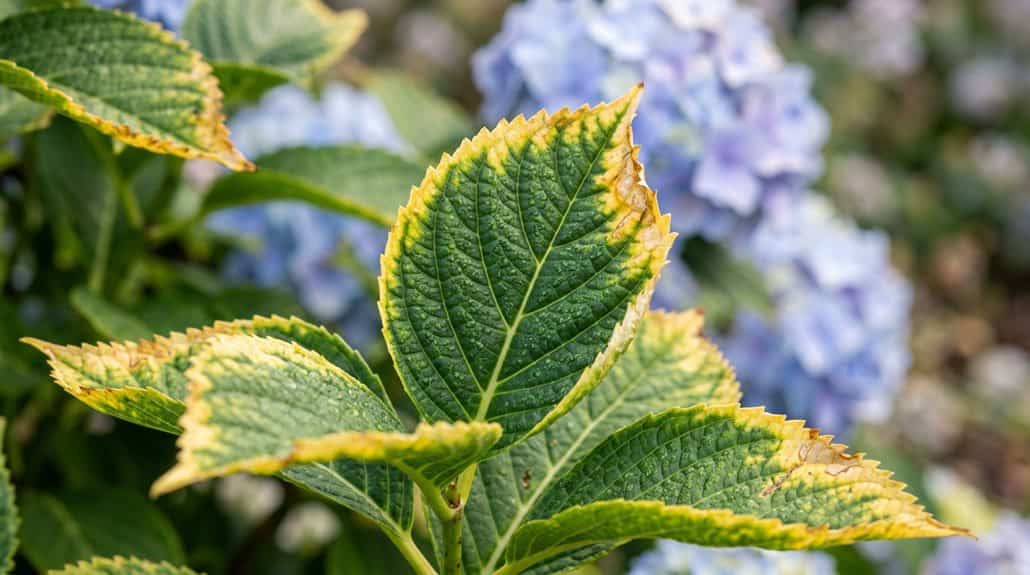
Often, hydrangea leaves turning yellow means the soil pH is too high, causing iron deficiency.
Understanding soil pH variations in your garden can help explain why certain plants, like hydrangeas, struggle with nutrient uptake.
Imagine your plants on a camping trip—if they can’t access iron, they can’t “cook” their food!
How Watering Issues Cause Yellow Leaves in Hydrangeas
You might be surprised, but yellow leaves on your hydrangea can happen if you’re giving it too much water or not enough—it’s a bit like packing way too many snacks for a camping trip, or forgetting them altogether and ending up hangry in the woods!
Overwatering can actually suffocate the roots, making them sad and unable to suck up nutrients.
Meanwhile, underwatering leaves your plant parched and droopy, waving a yellow “help me” flag.
Let’s talk about how you can spot the difference and keep your hydrangea’s roots as happy as you’re when you finally find the perfect campsite.
Overwatering and Root Health
While hydrangeas might look like they’d love a good soaking—kind of like you after a sweaty hike or a long day camping—too much water can actually spell big trouble for these pretty plants.
Overwatering makes their roots feel like they’re drowning, not relaxing by a campfire! When root health suffers, yellowing leaves pop up, signaling that soggy soil is washing away nutrients and stressing out your hydrangea.
Underwatering and Stress Signs
Although it might seem like hydrangeas are tough enough to handle a little neglect—sort of like when you forget your water bottle on a hike—they actually get pretty grumpy if you let them dry out for too long!
Underwatering leads to stress signs like wilting and yellowing leaves, especially when it’s hot. Be their camping buddy—give consistent, deep watering so their leaves stay green and happy!
Spotting the Signs: Is It Iron Deficiency or Something Else?
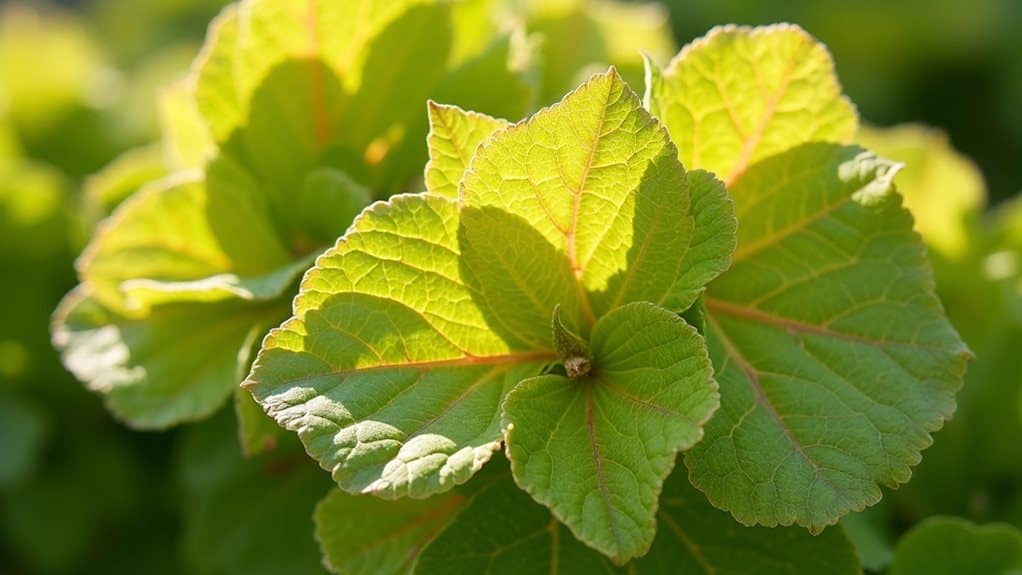
Even if you’re not a plant detective yet, it’s actually pretty fun to play one when your hydrangea leaves start turning yellow—kind of like solving a mystery in your own backyard!
If you spot yellow leaves with dark green veins, that’s classic iron deficiency, often caused by high soil pH.
But don’t forget—overwatering or poor drainage can look suspiciously similar, so always investigate both possibilities before choosing your remedy!
Additionally, testing your soil’s pH level can help confirm whether soil acidity is the underlying issue affecting nutrient availability.
Should You Use Rusty Water to Fix Yellow Hydrangea Leaves?
You might hear that pouring rusty water on your hydrangeas is like giving them a magic camping juice, but the truth is, the iron in that rusty water just isn’t the type your plants can actually use, no matter how adventurous you feel!
A soil pH imbalance can prevent your plants from absorbing vital nutrients like iron, making it ineffective to rely on rusty water as a remedy.
The real secret is all about soil chemistry—if your soil’s pH is off, your hydrangeas can’t soak up the iron they need, so rusty water won’t help and might even bring along some unwanted “hitchhikers” like contaminants.
Instead, let’s talk about smart fixes, like adjusting your soil’s pH or using chelated iron, which is kind of like giving your flowers a first-class ticket to healthy, green leaves!
Rusty Water’s Iron Limitations
Since we’re talking about hydrangeas looking a bit under the weather with those yellow leaves, let’s tackle the big question: Is rusty water some kind of magical iron potion that’ll fix everything?
Spoiler alert—it’s not! Rust water doesn’t solve iron deficiency because the iron isn’t in a form hydrangeas can use.
Plus, soil pH isn’t changed by rusty water, so your plants still miss out.
Soil Chemistry and Absorption
Okay, let’s get into the real science of what’s happening in your garden when those hydrangea leaves start turning yellow—because, honestly, it’s not just about tossing some rusty water on them and calling it a day. Soil chemistry is the real MVP here!
If your soil pH is too high, iron availability drops big time, making rusty water about as helpful as a tent with holes on a rainy camping trip.
Effective Alternatives for Chlorosis
Honestly, why does the old “just toss some rusty water on your plants” advice keep popping up like an unwelcome raccoon at a campsite? Trust me, rusty water doesn’t fix iron deficiency in hydrangeas—it’s just not absorbable!
Instead, check your soil pH, and use chelated iron, which is plant-ready and effective. Your hydrangeas will thank you, and you’ll be the hero of your garden!
Understanding Soil pH and Its Impact on Hydrangea Health
Ever wondered why your hydrangea leaves suddenly look more like a faded map than a lush green forest? It’s all about soil pH!
If the soil’s too alkaline, iron deficiency sets in, and nutrient absorption gets tricky—kind of like trying to pack for a camping trip with only one shoe!
Test your soil pH, adjust if needed, and watch those leaves green up again.
Additionally, environmental factors like standing water and improper watering can also contribute to leaf yellowing and should be monitored.
How to Fix Overwatering and Poor Drainage Problems
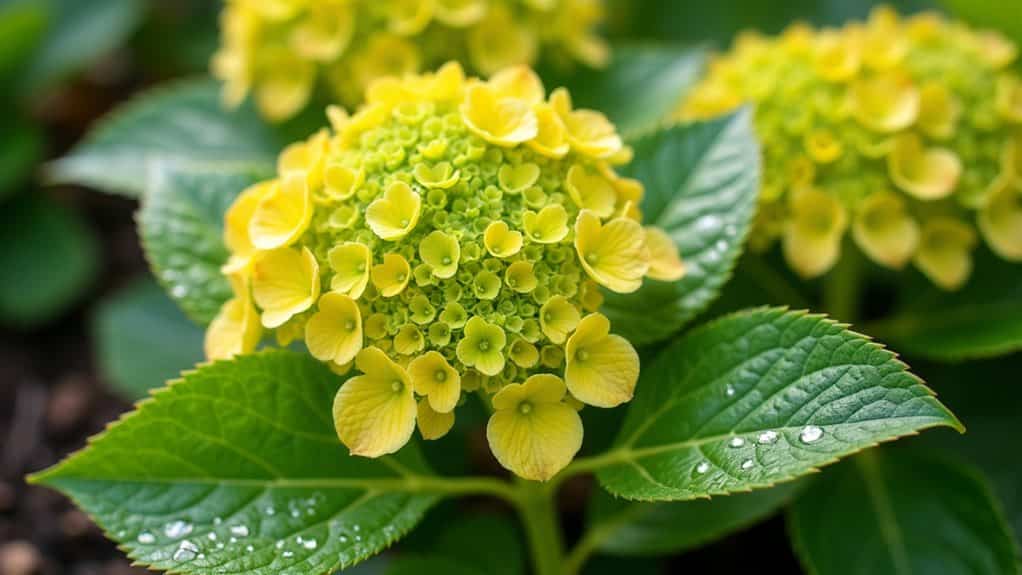
Although you might think giving your hydrangeas a daily dousing is the best way to keep them happy, it’s actually a lot like overpacking your backpack for a weekend camping trip—you can end up causing more trouble than you solve!
Overwatering and poor drainage create waterlogged soil, suffocating roots. Use compost or sand to improve drainage, choose pots with holes, and let the soil dry between waterings. Remember, proper drainage is key to preventing root rot and ensuring healthy growth.
The Best Way to Add Iron for Greener Hydrangea Leaves
You’ve solved the soggy soil problem—great job! Now, let’s tackle iron deficiency, which can make hydrangea leaves yellow like a faded camping tent.
The best fix? Use chelated iron, either as a foliar spray or in the soil, so your plants soak it up fast.
Don’t forget to check soil pH; if it’s too high, try sulfur to help iron work its magic!
Long-Term Strategies for Preventing Yellow Leaves in Hydrangeas
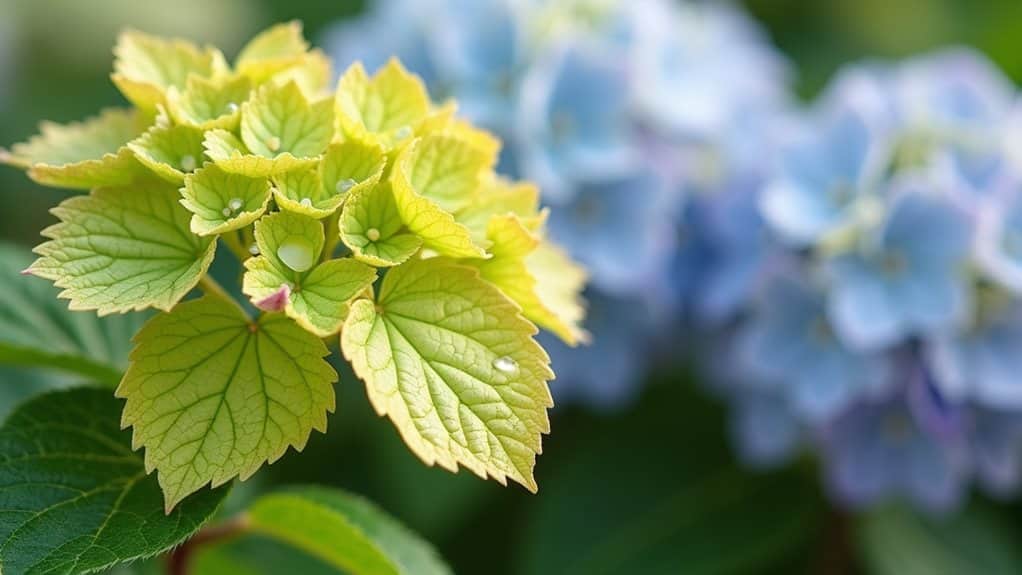
When it comes to keeping hydrangea leaves lively and green for the long haul, think of it like prepping for a camping trip—you want to be ready for anything, not just a sudden rainstorm or a forgotten tent peg!
Test soil pH regularly, aim for that 5.2–6.2 sweet spot, watch your watering, and tackle iron deficiency with chelated iron.
Mulch with pine needles—it’s like packing extra snacks!
Best Soil and Care Tips for Different Hydrangea Types
If you’re the kind of gardener who likes to plan ahead (think of it like mapping out your campsite before you pitch your tent), knowing the best soil and care tricks for each hydrangea type is a total game changer. Test your soil pH often—bigleaf hydrangeas hate high pH, while panicle types are more chill. Prevent leaf yellowing by using chelated iron, soil acidifiers, and regular hydrangea care! Be mindful of cutting times and proper pruning techniques to promote healthy growth and vibrant blooms.
Overall
So, next time your hydrangea leaves start turning yellow, don’t panic—think of it as a mystery to solve! Check for soggy soil, test the pH, and skip the rusty water trick (trust me, that only works in cartoons). Hydrangeas can be a bit dramatic, but with the right moves, you’ll have them looking lush and green again. Honestly, gardening is kind of like camping—be prepared, pay attention, and you’ll have way more fun!