Coneflower Not Blooming? Here’s What’s Going Wrong
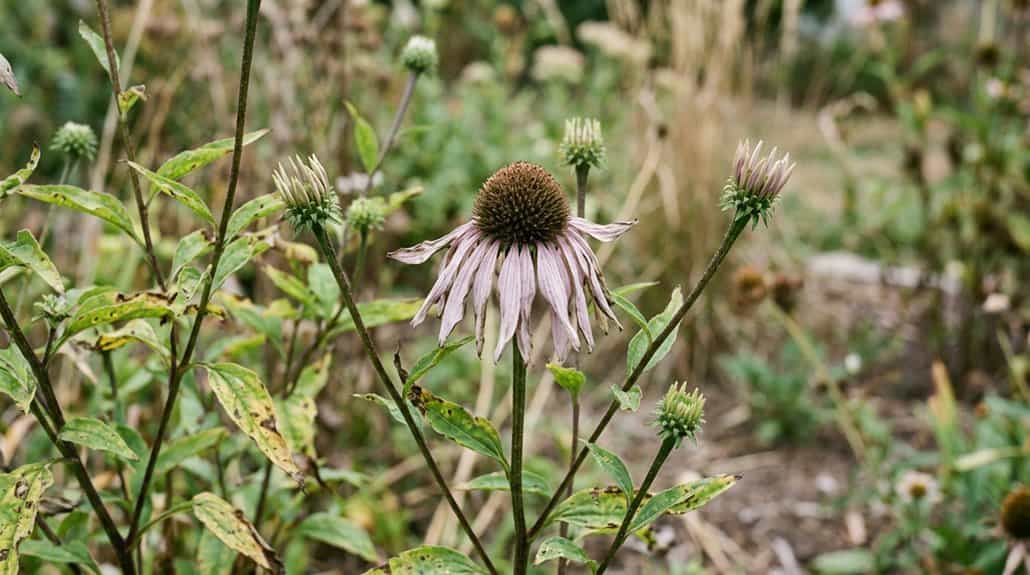
So, your coneflowers are being stubborn and just showing off their leaves instead of those awesome summer blooms? Don’t panic—it’s probably something simple like not enough sunlight (these plants are total sunbathers!), soggy soil, or maybe you hit them with too much fertilizer, thinking you were doing them a favor. Make sure you’re deadheading old flowers, don’t drown them, and keep an eye out for sneaky pests or disease. Curious about how to kick-start those blooms? Stick with me!
TLDR
- Coneflowers need at least 4 hours of direct sun and well-draining soil to bloom well.
- Over-fertilizing, especially with nitrogen, leads to more leaves but fewer flowers.
- Skipping deadheading prevents the plant from producing new blooms during the season.
- Disease or pest problems, such as fungal infections or aster yellows, can stop blooming.
- Improper watering—either too much or too little—causes stress and reduces flower production.
Main Causes of Coneflowers Not Blooming
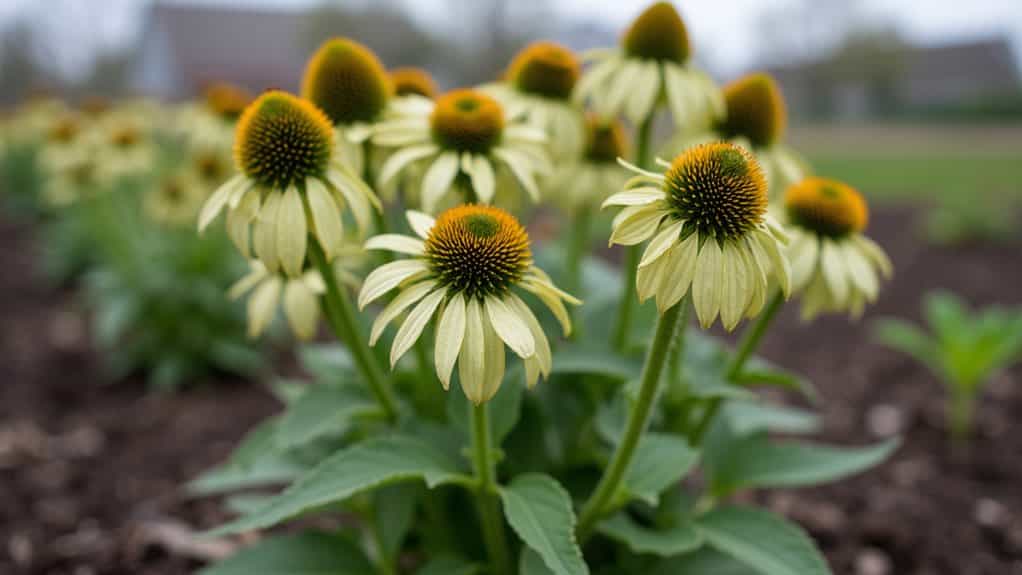
Even though coneflowers are usually the life of the garden party, sometimes they just refuse to bloom, and it can feel like you’re waiting for a friend who keeps hitting snooze on their alarm clock!
If you’ve got poor soil or your plants aren’t getting enough sun exposure, that’s a recipe for flower frustration.
Overfeeding with fertilizer, skipping deadheading, or recent transplanting can also stall those gorgeous blooms.
Additionally, improper watering or neglecting to check for pests and diseases can stress the plants and prevent blooming, so regular inspection is important. Proper maintenance helps ensure healthy growth and flowering.
How Sunlight and Soil Impact Coneflower Flowers
Whenever you’re planning the perfect camping trip, you know how important it’s to pick a sunny, dry spot for your tent—well, coneflowers feel the same way about where they grow!
Coneflowers crave lots of sunlight—at least four hours of direct afternoon sun—plus well-draining soil. If you plant them in shade or soggy soil, you’ll see more leaves than flowers, which nobody wants, right?
Ensuring that they are not exposed to standing water or overly moist conditions helps prevent root rot and encourages blooming.
Common Diseases That Prevent Coneflower Blooms
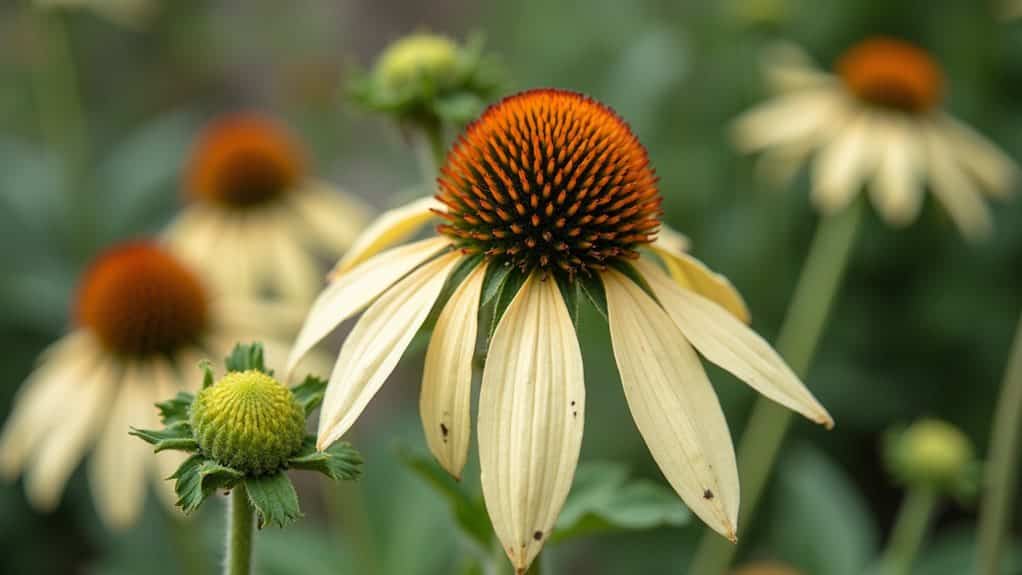
Alright, let’s talk about something that’s honestly as annoying as getting rained out on a camping trip—those pesky diseases that can stop your coneflowers from blooming! You might notice fuzzy white patches or weird brown spots on your plants, and sometimes it feels like every bug in the neighborhood wants to join the party and bring even more trouble, like viral diseases that just refuse to leave.
If you want your garden to look as colorful as a road trip sunset, it’s super important to spot these problems early and take action, so let’s check out exactly what might be messing with your blooms.
Keeping your plants healthy with proper soil conditions can help prevent disease and promote better flowering.
Fungal Infections Impacting Blooms
Although you might expect your coneflowers to burst into colorful blooms each summer, those stubborn buds sometimes refuse to cooperate. Believe it or not, sneaky fungal infections are often the culprits!
If you spot leaf spots, fuzzy white mildew, or browning stems, your coneflowers are likely battling fungi.
Keep air flowing, skip overhead watering, and treat early—think of it as prepping your garden for its own camping journey!
Viral Diseases Hindering Flowering
If you’ve ever checked your coneflowers and found weird, scraggly blooms or leaves that look like they just survived a tornado, you might be facing more than just a bad luck gardening day—viral diseases like aster yellows are probably crashing your flower party!
These viral diseases twist leaves, turn flowers green, and ruin your beautiful blooms. Yank infected plants, clean up debris, and keep your garden looking sharp!
Pest-Borne Disease Transmission
Just when you thought you’d dodged the viral disease bullet, pests like aphids and leafhoppers show up and start stirring up even more trouble for your coneflowers! These sneaky critters are experts at pest-borne disease transmission, carrying viral diseases like aster yellows from plant to plant.
Trust me, nothing ruins your coneflower camping party faster than blooms that never show up—so keep a sharp eye out!
How Pruning and Deadheading Boost Coneflower Blooms
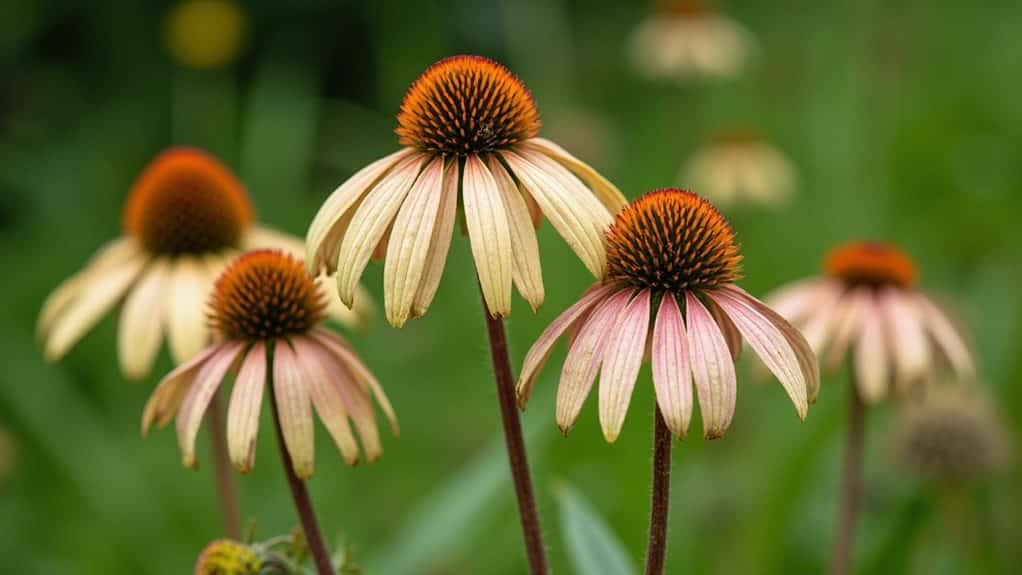
Whenever you’re hoping to see your coneflowers burst into a wild display of blooms—kind of like a fireworks show in your own backyard—pruning and deadheading are your secret weapons, and trust me, it’s way easier than packing for a camping trip!
By snipping off old flowers, you’re telling your plant, “Hey, keep blooming!”
Plus, proper pruning at summer’s end keeps your coneflowers healthy and lively.
Understanding the importance of plant decontamination can help you avoid issues like disease or pest problems that might prevent healthy flowering.
How to Fertilize Coneflowers for More Flowers
Once you’ve gotten the hang of pruning and deadheading—think of it as giving your coneflowers a pep talk before the big show—it’s time to give them the fuel they need to really put on a performance. Use a balanced fertilizer like 5-5-5, and always check your soil conditions. Trust me, compost in spring or fall makes a huge difference, but don’t overdo it with nitrogen! Understanding plant nutrition basics helps you choose the right fertilizer to promote more blooms.
Actionable Steps to Get Your Coneflowers Blooming Again
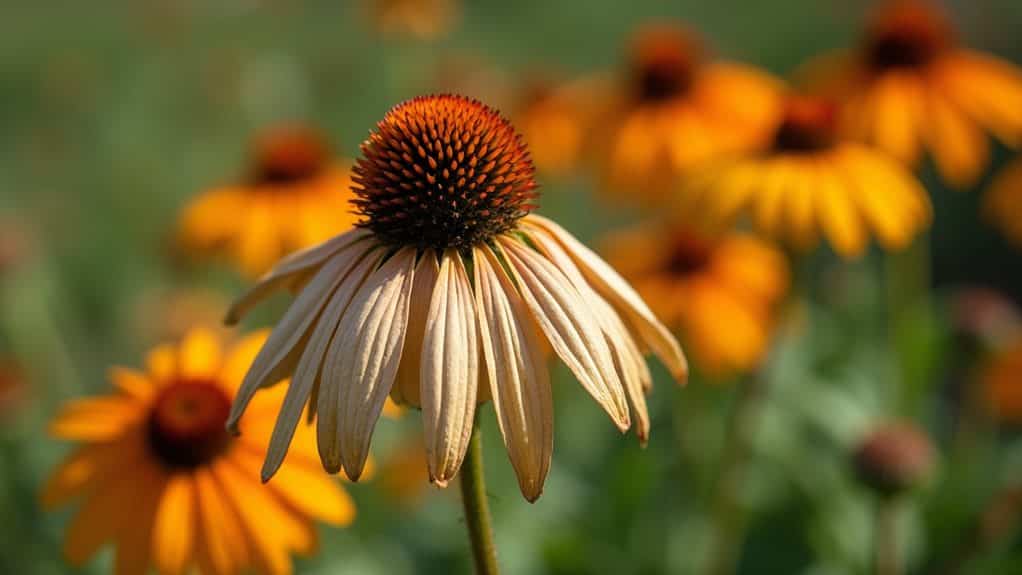
Although it might feel like your coneflowers are being stubborn divas, getting them to bloom again is totally doable if you follow a few simple but important steps—think of it like planning a camping trip where every detail matters!
First, give them at least four hours of afternoon sun. Deadhead faded blooms often. Use well-drained soil, and only water when necessary. Be mindful of damage or wear to ensure your plants stay healthy and encourage blooming.
Remember—happy plants mean happy pollinators!
Overall
So, if your coneflowers are refusing to bloom, don’t freak out—just remember, they might want more sun, better soil, or maybe just a snip here and there. I once camped next to a wild patch and, trust me, they love space and sunshine, not soggy feet! Try these fixes, keep an eye out for sneaky bugs or diseases, and, before you know it, you’ll have a garden bursting with blooms—perfect for showing off after your next camping trip!