Why Rhubarb Stalks Turn Green Instead of Red
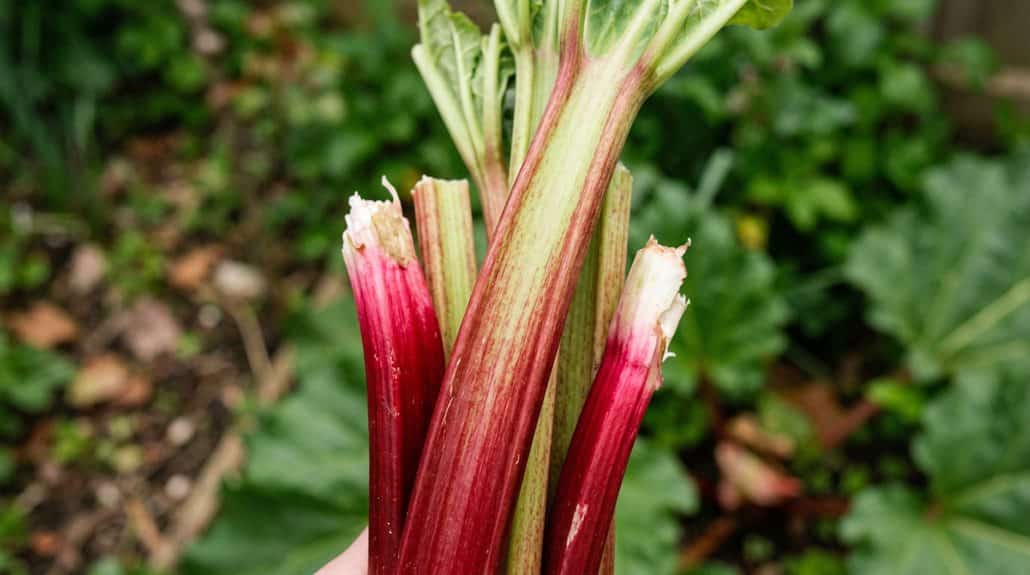
If you’re wondering why your rhubarb stalks are green instead of that rich red you see in pie photos, don’t panic—you didn’t mess up! It’s usually just genetics at play; some rhubarb varieties are born to be green, no matter how much sunshine or miracle fertilizer you throw at them. Soil, crowding, and care play a part too, but honestly, green stalks are still tasty and just as “pie-worthy.” Stick around to find out how you can work with what you’ve got!
TLDR
- Rhubarb stalk color is mainly determined by genetics; some varieties naturally produce green instead of red stalks.
- Environmental factors like high temperatures and crowded roots can limit red pigment formation in rhubarb.
- Soil conditions, including improper pH or nutrient deficiencies, may prevent rhubarb stalks from turning red.
- Damage from rust, dents, or disease can disrupt the development of red coloration in rhubarb stalks.
- No amount of sunlight or fertilizer can turn genetically green rhubarb varieties red.
Why Does Rhubarb Sometimes Grow Green Instead of Red?
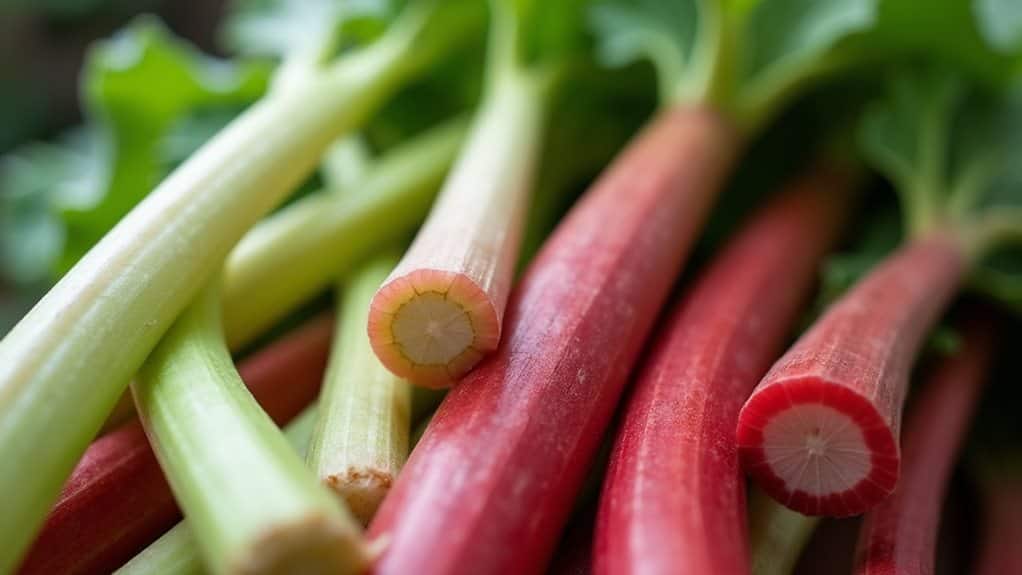
Even though you might expect rhubarb stalks to always show off a bright, flashy red, it turns out there’s a whole progression going on beneath those giant leaves.
Sometimes, your rhubarb ends up more green than red, and honestly, that’s just part of its quirky personality!
Some rhubarb is just born green-stemmed, while others react to heat, crowded roots, or finicky soil, refusing to flaunt their red side.
Additionally, environmental factors like damage to the plant, such as rust, dents, or corrosion, can influence whether the stalks develop their characteristic red color or stay green.
Can You Grow Red-Stemmed Rhubarb If Your Plants Are Green?
Honestly, have you ever stared at your rhubarb and wondered if there’s some secret trick to coaxing those stalks from green to that Instagram-worthy red? I get it—serving a colorful pie at camp sounds incredible!
But if your rhubarb has green stems, it’s probably the variety’s genetics at work. No magic sunlight or fertilizer will turn those green stems red, but they’re still delicious!
Which Rhubarb Varieties Have Green vs. Red Stems?
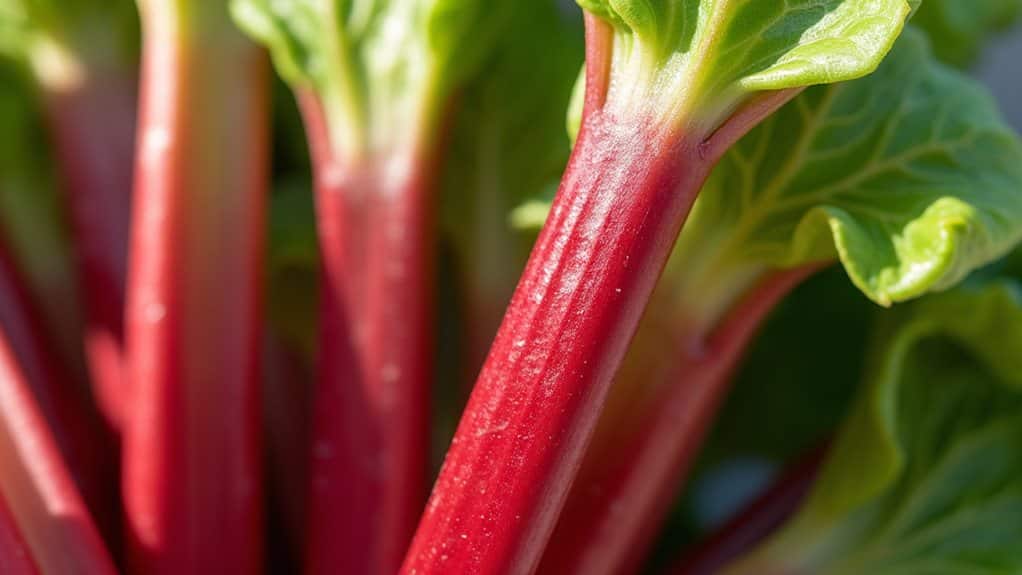
If you’ve ever packed up for a camping trip, only to realize your rhubarb stalks look more like celery than those visually appealing red ones, you’re probably wondering what’s going on.
Different rhubarb varieties have their own personalities—Victoria and Crimson Crimson go green or pinkish, while Wandin Red and Red Regent show off bright reds.
Don’t worry, green-stemmed types are often just as tasty, sometimes even sweeter! Proper watering techniques can also influence the appearance and health of your rhubarb.
How Do Sunlight, Soil, and Care Affect Rhubarb Color?
While you might envision those perfect, ruby-red rhubarb stalks as essential for your next campfire pie, the truth is, their color depends on a whole bunch of outdoor factors that would make any seasoned camper nod knowingly. Give your rhubarb plenty of sunlight, keep the soil pH just right, avoid swampy roots, and don’t overfeed—otherwise, you’ll be serving up green stalks at your campsite! Proper soil testing can help ensure the pH and nutrient levels are optimal for vibrant color development.
Does Green Rhubarb Taste Different From Red?
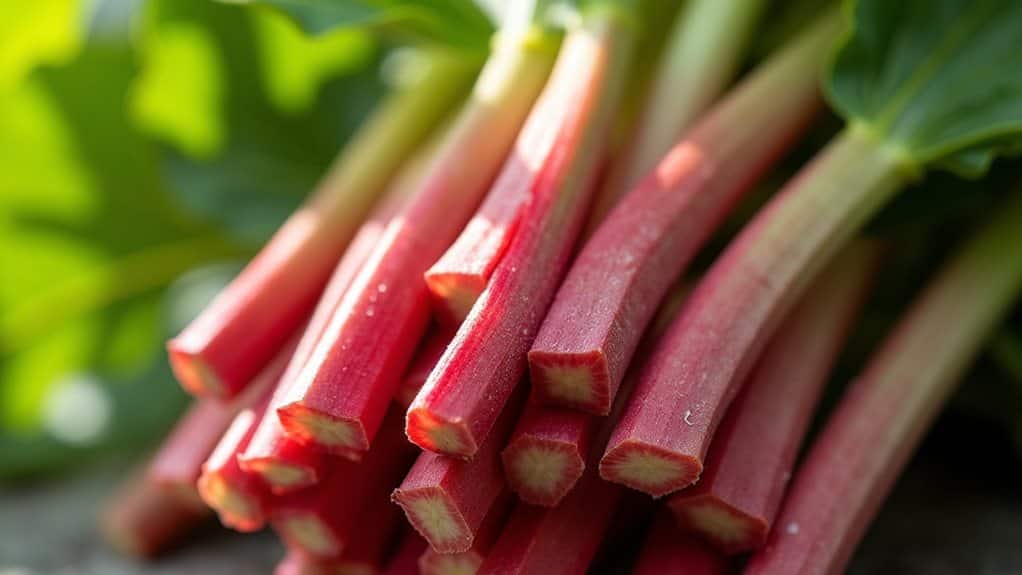
Even though it’s super tempting to think red rhubarb must taste sweeter or somehow different than its green cousin, you might be surprised to learn there’s really not much difference at all—at least when it comes to flavor! Green rhubarb is just as tart and zingy, sometimes even a little milder, but don’t let the color fool you. It’s perfect for sharing in pies after a long camping trip! Light exposure can influence the color of rhubarb stalks, but it doesn’t significantly change their taste.
How Can You Make Green Rhubarb Look Red in Recipes?
Honestly, have you ever pulled a batch of rhubarb stalks out of your camp cooler, ready to whip up a pie, only to realize they’re a little more “frog green” than that gorgeous ruby red you see in recipe photos? Don’t panic!
Add strawberry or raspberry gelatin, a splash of red food coloring, or some berry syrup to get that red rhubarb look everyone loves—it’s camping magic!
Debunking Myths About Rhubarb Color and Flavor

Let’s clear up some wild rhubarb rumors, because picking stalks is a bit like choosing a campsite—you want the best spot, but sometimes you’re fooled by looks!
You might think the redder the stem, the sweeter or tastier it’ll be, but honestly, flavor has way more to do with the type of rhubarb and how much sugar is packed in, not just the color.
Trust me, I’ve been fooled more than once by a bright-red stalk that tasted like pure sour power.
Don’t fall for the myth that green rhubarb is old or ruined either—some varieties are simply born to be green, no matter how much sunlight or fancy soil you give them! Early planting can also influence stalk color, but it’s more about timing and variety than just planting early.
Color Versus Flavor Reality
Have you ever picked up a bunch of rhubarb at the grocery store or farmer’s market and wondered if those bright red stalks are automatically sweeter than the green ones? Don’t fall for that myth!
Whether a stalk is green or red stemmed, the color doesn’t tell you anything about flavor or sweetness. Honestly, I’ve tasted green rhubarb on camping trips that was just as zingy and delicious!
Variety Selection Misconceptions
You might be surprised to hear that not all rhubarb is even supposed to turn red, no matter how much sunshine or fancy gardening tricks you try. Some varieties, like Victoria, just naturally rock their green or pale stalks, and that’s totally okay!
So, if you’re picking rhubarb for that picnic cobbler, remember—varieties matter way more than color.
Green stems can be super tasty, too.
Age and Color Myths
Even though you might hear people say that rhubarb stalks turn green just because the plants are getting old or “past their prime,” that’s really not how it works—trust me, I’ve tripped over more than a few giant, ancient rhubarb patches during my camping expeditions.
Those gnarly old stalks can be just as bright red as the baby ones! Don’t fall for age or color myths—variety and growing conditions matter most.
Overall
So, next time you spot green rhubarb in your garden, don’t panic—think of it as a quirky cousin to the classic red! Honestly, I’ve baked both into pies while camping, and nobody could taste the difference (except maybe my dog, but he’ll eat anything). Whether you’re dreaming up red or green desserts, remember, it’s all about the variety, sunlight, and care you give. So grab your tent, pack your rhubarb, and let escapade—and baking—begin!