Blueberry Bush Leaves Turning Yellow? Here’s What It Means
If your blueberry bush leaves are turning yellow, don’t panic—it’s basically your plant’s way of texting you, “Help, something’s wrong!” Most often, yellow leaves mean the soil pH is too high (blueberries love their soil super acidic, like 4.5-4.8), or they’re missing out on iron or other key nutrients. Overwatering, weird weather, or even just planting at the wrong time can make things worse. Want the real scoop on fixing those leaves? Stick around, exploration awaits!
TLDR
- Yellow blueberry leaves with green veins usually signal iron deficiency, often caused by improper soil pH or poor nutrient availability.
- Soil pH above 5.2 prevents blueberries from absorbing essential nutrients, especially iron, leading to yellowing (chlorosis).
- Overwatering, drought, or recent weather stress can also cause or worsen yellow leaves on blueberry bushes.
- Fungal diseases, pests, or viral infections may cause leaf discoloration, spots, or unusual colors beyond just yellowing.
- Regular soil testing, adjusting pH, and using iron chelate can quickly address yellowing and promote healthy blueberry foliage.
Why Are My Blueberry Leaves Turning Yellow?
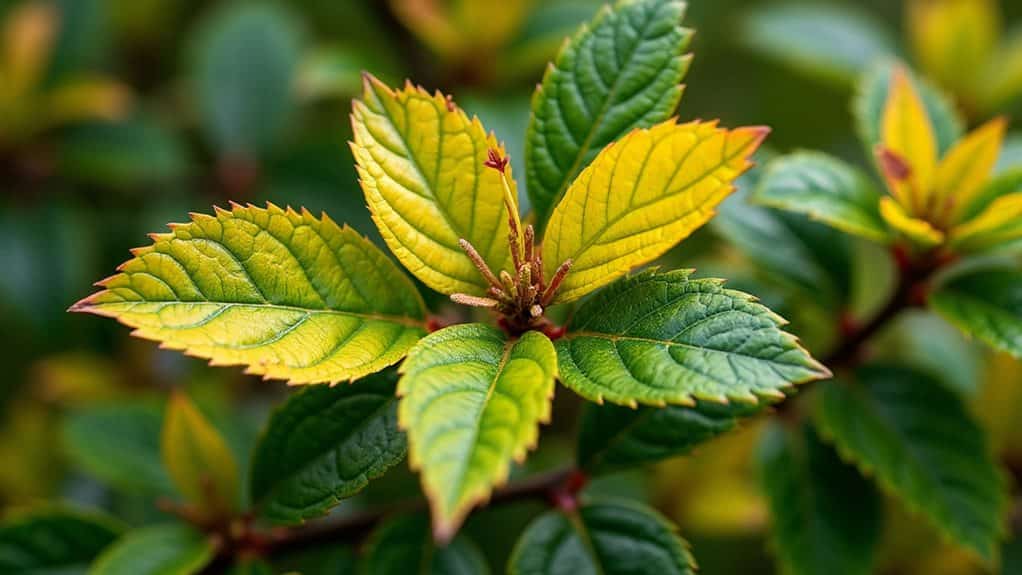
Even if you’re super careful with your blueberry bushes, you might suddenly notice their leaves turning yellow, and trust me, it can feel like a total camping trip gone wrong when you’re expecting bright green but get sad, splotchy yellow instead!
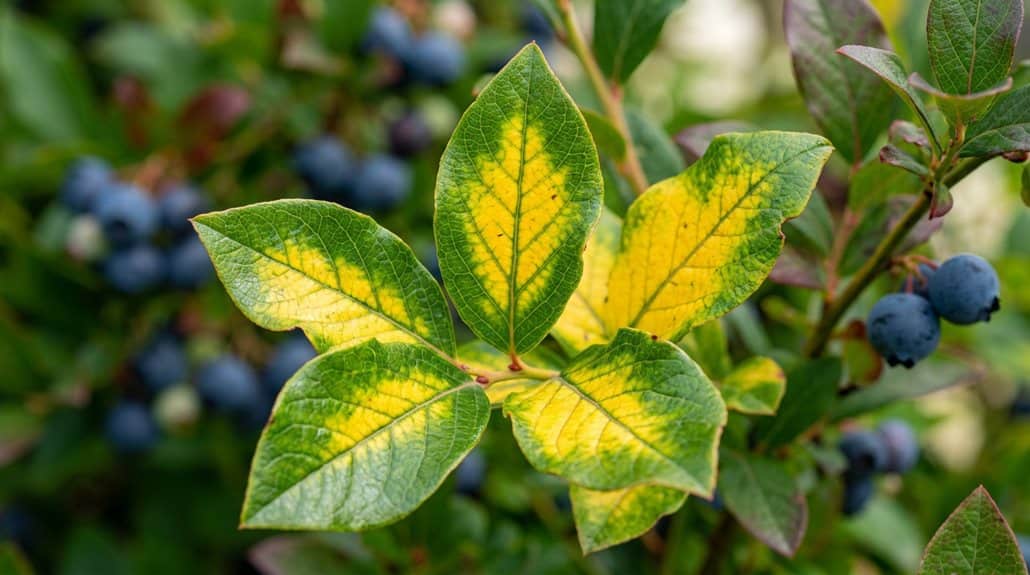
Usually, this means your blueberry’s struggling with iron deficiency—especially if you see green veins with yellow in between.
High soil pH or other nutrient issues often cause this.
How to Diagnose Blueberry Leaf Color Problems
Let’s get ready to play plant detective, because figuring out why your blueberry leaves are changing color is a bit like solving a mystery in the wild—just with less mud on your boots! You’ll want to check for patterns in the yellowing, spot any odd colors or crispy bits, and peek at which leaves are affected, since these clues can tell you a lot about possible nutrient shortages or if your plant’s just grumpy about the soil.
A soil test kit can provide valuable insights into your soil’s pH and nutrient levels, helping you determine whether adjusting soil conditions might improve your blueberry’s health. Don’t forget to grab a soil test kit (seriously, it’s almost as fun as looking for bugs under rocks), because knowing the pH and nutrient levels will help you zero in on what’s really bugging your blueberry bush.
Identifying Leaf Color Changes
When you’re out in the garden, maybe with dirt still under your fingernails from planting new bushes, spotting blueberry leaves that are turning weird colors can feel a bit like finding a mysterious map on a camping trip—exciting, but also a little nerve-wracking if you don’t know what the signs mean!
Pay close attention to leaf color changes—yellowing with dark green veins screams iron deficiency, while purple hues might just be nature’s fall flair.
Common Nutrient Deficiency Signs
Spotting those unexpected bursts of yellow, red, or purple on your blueberry bush leaves might make you feel like you’ve stumbled onto the secret trail during a camping trip—full of clues just waiting to be decoded!
If you see yellow leaves with dark green leaf veins, that’s a classic sign of iron deficiency. Don’t ignore reddish-purple leaves, either—they might be hinting at a phosphorus shortage or magnesium issues!
Recognizing Environmental Stressors
Ever wonder why your blueberry bush suddenly looks like it’s trying out fall colors way too early, even though you’ve given it plenty of sunshine and water? Sometimes, environmental stressors mess with your plants just like a surprise rainstorm on a camping trip.
Check your soil pH—if it’s above 5.2, nutrient absorption suffers. Drought or overwatering can make things worse, so always investigate both soil and recent weather!
The Role of Soil pH in Blueberry Leaf Health
Let’s talk about something that’s way more exciting than it sounds—soil pH, which is kind of like the secret code for happy blueberry bushes. Trust me, getting it right is almost as satisfying as finding the perfect camping spot by a lake!
Blueberries absolutely love soil that’s more on the sour side, with a pH sweet spot between 4.5 and 4.8. If things get too neutral or basic, your plants might start looking a little sickly with yellow leaves because they just can’t grab the nutrients they need, especially iron.
If you want your blueberry bushes to look as lively as you feel on the first day of summer break, make sure you’re keeping an eye on that soil pH. Even the toughest plant can’t outsmart science!
Ideal Soil pH Range
If you’ve ever thought growing blueberries was as easy as tossing a bush into your backyard and letting nature do its thing, well, I hate to burst your bubble, but these little berry-producing champs are surprisingly picky about their soil—especially when it comes to pH.
For blueberries, a soil pH between 4.5 and 4.8 is perfect. Anything higher can cause iron deficiency, so test your soil regularly!
Effects of pH Imbalance
You might be surprised at just how much soil pH can impact your blueberry bush’s happiness—honestly, it’s almost like packing the wrong gear for a camping trip and then wondering why you’re cold and wet.
If your soil pH creeps above 5.2, your blueberries struggle to absorb iron, leading to iron deficiency and yellow leaves.
Test your soil often—think of it as prepping for plant success!
Spotting Iron Deficiency and Chlorosis in Blueberries
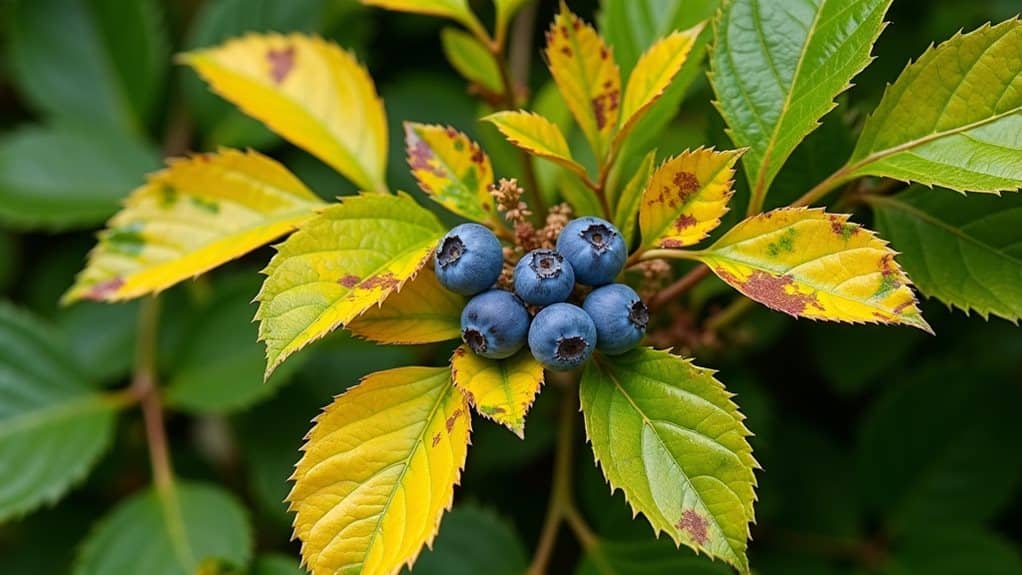
Although it might sound like something out of a botany detective novel, spotting iron deficiency—also known as chlorosis—in blueberry bushes is actually a pretty cool skill to acquire, especially if you love spending time in the garden or camping out in nature, watching things grow. Look for yellowing leaves with green veins, especially on new growth. Test your soil’s pH—if it’s above 5.2, iron deficiency is likely! Understanding how soil pH affects nutrient availability can help you effectively address and prevent such deficiencies.
Identifying Nutrient Deficiencies by Leaf Color
When you’re checking out your blueberry bushes and spot leaves turning all sorts of wild colors—yellow, red, or even a fancy maroon—it’s almost like your plant is waving a tiny flag for help. And trust me, it’s way more dramatic than my last camping trip when my tent collapsed at midnight!
Did you know the exact shade and pattern of leaf color can reveal what your blueberry bush is missing, like a secret code for nutrients such as nitrogen, iron, or magnesium? It’s also important to consider potential nutrient deficiencies and environmental factors that could be causing these color changes.
Let’s break down what each color and pattern means, so you’ll be ready to play plant detective next time your blueberries put on a surprise leaf fashion show!
Decoding Leaf Color Changes
If you’ve ever gone camping and tried to identify mystery plants under the vast sky, you know how tricky it can be to figure out exactly what’s going on just by looking at leaves—blueberry bushes are no different! Noticing leaf color changes can be just like solving a wilderness puzzle.
When leaves turn yellow with green veins, you’re probably seeing iron deficiency, especially in high pH soils.
Nutrient Deficiency Color Patterns
Ever wondered why blueberry leaves sometimes look like they’re trying out for a fall fashion show way before autumn arrives? If you spot yellowing leaves with green veins, it’s probably iron deficiency—they love to show off those wild color combos!
Uniform yellowing screams nitrogen shortage, while reddish-purple hues hint at phosphorus issues.
Keep a close eye, because knowing these patterns helps you help your blueberry bushes thrive!
How to Test and Adjust Soil pH for Blueberries
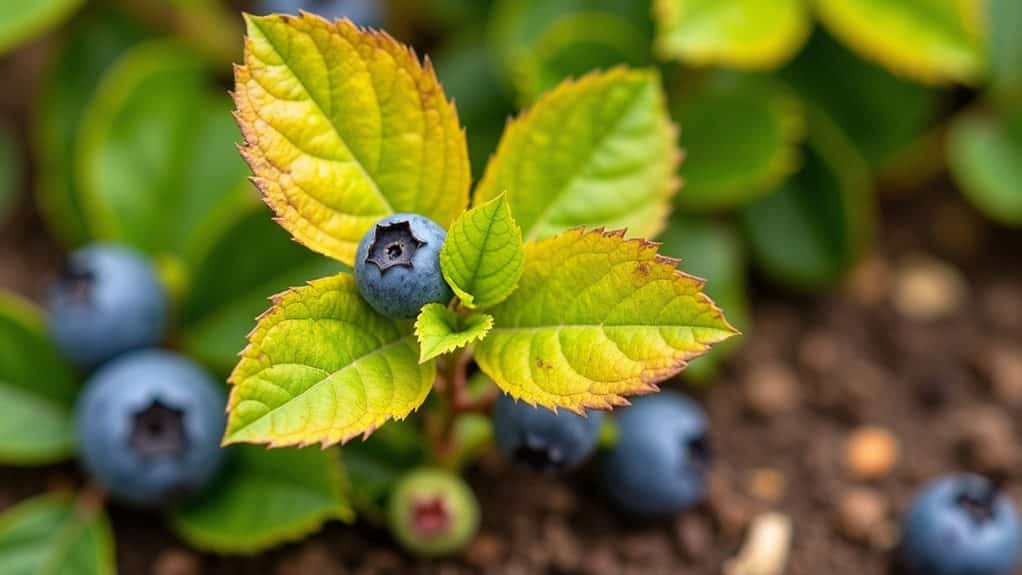
Although it might sound a bit like science class, figuring out your soil’s pH is actually pretty fun—think of it as a detective mission for your blueberry patch! Grab a trusty soil pH meter, scoop samples from 6-8 inches deep, and aim for that sweet spot around 4.5.
If it’s too high, sprinkle in some elemental sulfur or iron sulfate to prevent iron deficiency—your blueberries will thank you!
Watering and Drainage Tips for Healthy Blueberry Leaves
Whenever you’re out in the garden, squishing your toes in the dirt and checking on your blueberry bushes, it’s tempting to think more water = happier plants, right?
Actually, blueberries hate soggy feet! Good drainage is key—water deeply but less often, and use mulch like pine bark to keep moisture even.
Always check for standing water, or your blueberries might just start packing their bags!
Blueberry Leaf Diseases: Spotting and Fixing Problems
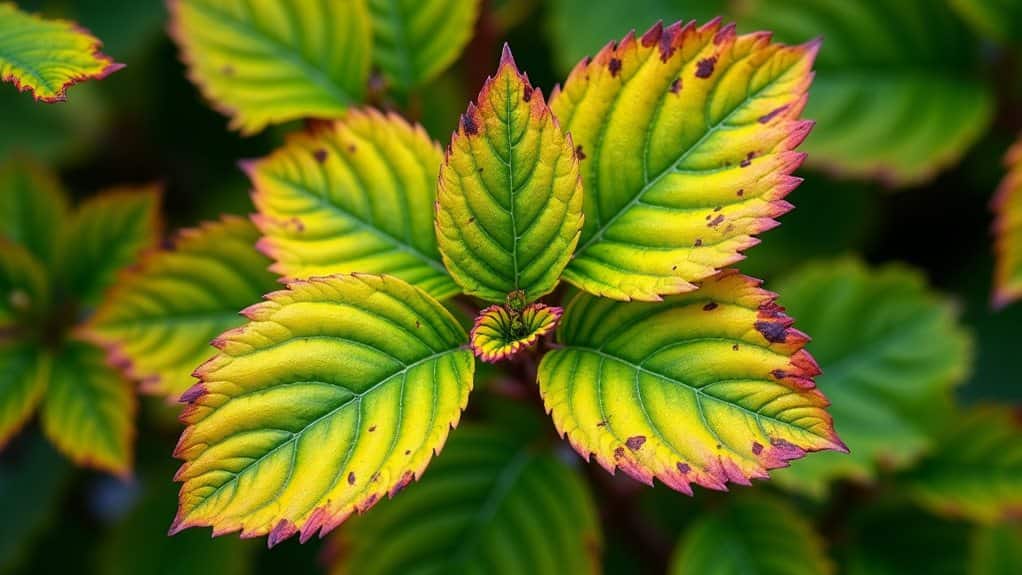
If you’ve ever come back from a weekend camping trip, full of stories about marshmallows and raccoons, only to spot weird patches or yellowing leaves on your blueberry bushes, you know the sense of plant panic that can set in! Leaf spots with purple-brown edges often mean fungal infections, while whitish fuzz means powdery mildew. Sometimes, viruses cause mottling or crinkling. Get suspicious leaves tested for accurate diagnosis! Early planting risks can also make plants more susceptible to diseases and environmental stressors.
How to Fix Yellowing Blueberry Leaves Fast
Just got back from an epic camping trip, only to find your blueberry bush leaves looking more yellow than the marshmallows you roasted over the fire? Don’t panic! Check your soil pH—blueberries love it acidic.
If iron deficiency is the culprit, spray iron chelate right on those leaves. Don’t drown the roots—overwatering’s a no-no.
Yank off the worst leaves, and test your soil for future peace of mind! Also, consider whether your plant is getting enough shade tolerance, as insufficient shade can stress blueberries and cause yellowing leaves.
Year-Round Care Tips for Healthy Blueberry Leaves
Even though it’d be awesome if blueberry bushes could just take care of themselves, the truth is, these little guys need your help all year long to keep their leaves looking lush and healthy—sort of like how we need sunscreen on an epic camping trip, or else we end up looking like a lobster!
Test soil pH often, mulch with pine needles, and use acidic fertilizers—your plant health depends on it!
Overall
So, if your blueberry leaves are turning yellow, don’t panic—just think of it as your plant sending you a leaf-sized SOS! Check the soil pH, peek for iron deficiencies, and make sure you’re not drowning or deserting your bush. I once camped next to a blueberry patch and trust me, happy leaves mean juicy berries! So grab your gardening gloves, investigate like a detective, and soon you’ll be munching on the best blueberries around.