Creative Ways to Grow Food in Small Spaces
If you've ever felt limited by your small living space, you might be surprised by the innovative ways you can grow food right at home. From utilizing vertical gardening techniques to selecting the right crops for containers, there's a wealth of strategies to maximize your yield. You can even investigate companion planting to enhance your garden's productivity. But what about ensuring your plants thrive despite the challenges of limited space? Uncovering the best practices for sun exposure and efficient watering can make a significant difference in your urban garden's success.
TLDR
- Utilize vertical gardening techniques by installing trellises for climbing plants to maximize limited ground space effectively.
- Implement container gardening with appropriate sizes and soilless potting mix for optimal drainage and aeration.
- Practice succession planting to ensure a continuous harvest and make the most of your available growing time.
- Incorporate companion planting to enhance plant health and yield, such as pairing marigolds with vegetables to deter pests.
- Adopt efficient watering practices like drip irrigation and rainwater harvesting to minimize waste and maintain soil moisture.
Choosing the Right Crops
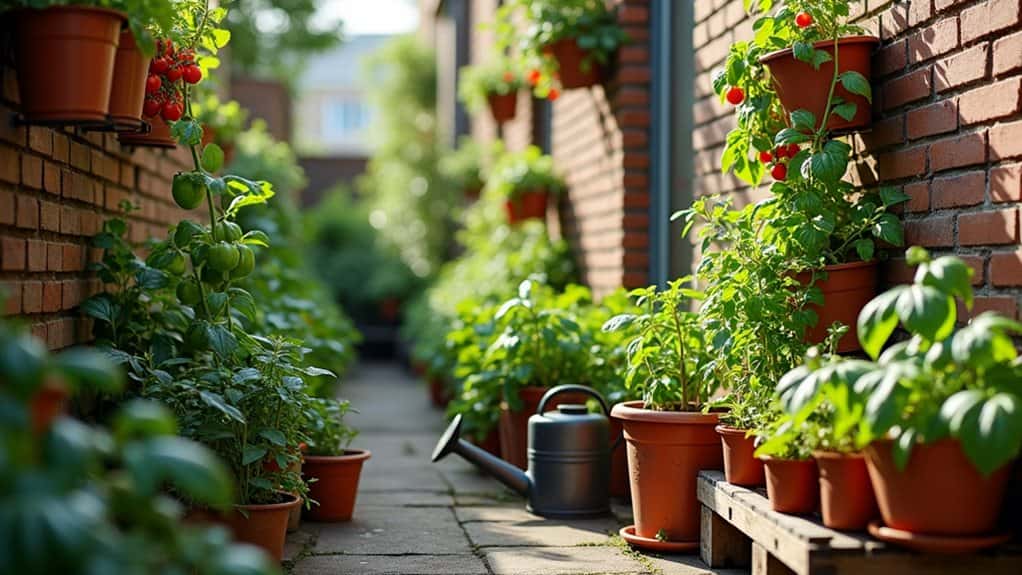
When choosing the right crops for your garden, consider selecting compact varieties, high-yield options, and utilizing succession planting.
You'll love how compact veggies like 'patio' tomatoes or 'baby' cucumbers can fit snugly in your space! Additionally, plants such as deep-rooted varieties are ideal for maximizing limited soil depth in small spaces.
Plus, high-yield crops like zucchini mean fewer plants for more food. Utilizing succession techniques can help ensure that you have a continuous supply of fresh produce throughout the growing season.
Get creative with planting schedules; it's like gardening magic! Who knew growing food could be so fun?
Utilizing Vertical Space
Maximizing garden space can open up a world of possibilities, especially when you start utilizing vertical gardening techniques.
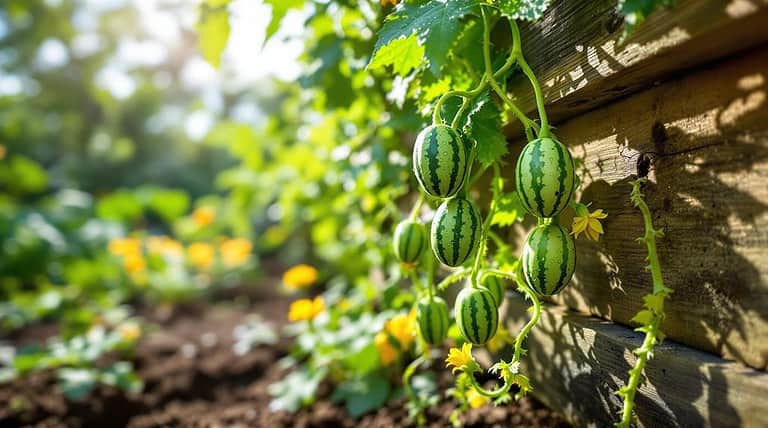
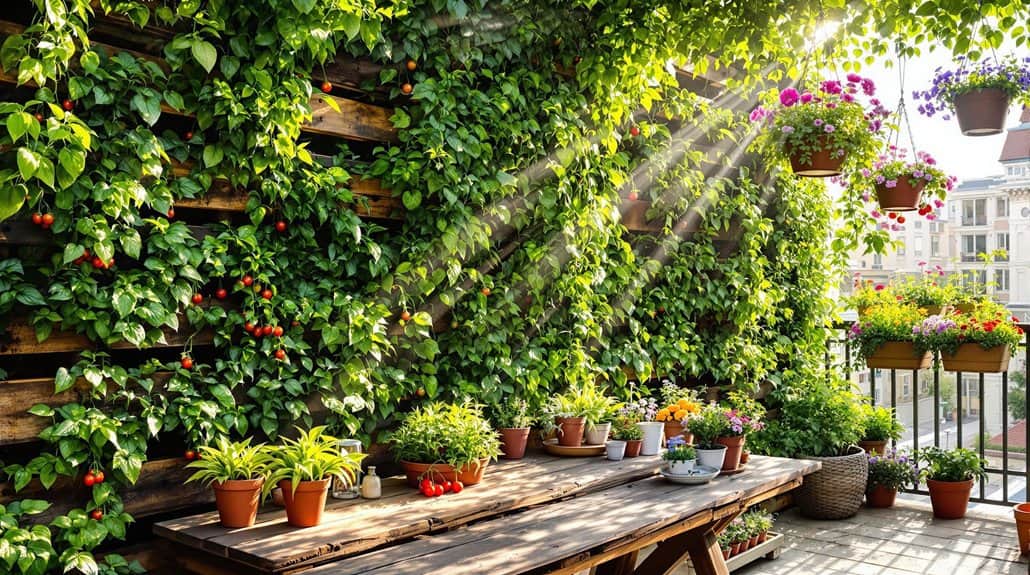
Think about trellises for climbing veggies like cucumbers and tomatoes, or even movable vertical gardens for leafy greens! Climbing and vining plants are the most suitable for vertical gardens, ensuring a thriving and productive setup. Additionally, incorporating coffee grounds into your vertical garden can enhance soil fertility, providing essential nutrients for your plants.
You can even repurpose those old plastic bottles. It's like giving your garden a fun makeover while saving space.
How cool is that? Happy planting!
Companion Planting Techniques
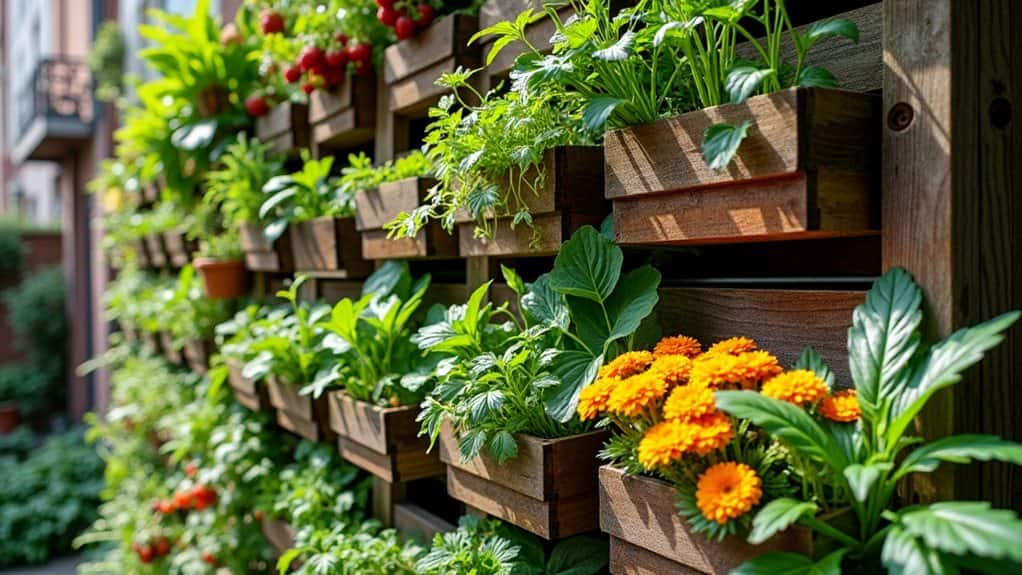
Companion planting techniques can alter your garden into a thriving ecosystem by pairing plants that support each other in various ways.
Imagine marigolds charming beneficial insects to tackle pesky aphids while basil gives lettuce a cozy shade! Plus, those beans in the "Three Sisters" method are like little nitrogen factories. By implementing companion planting strategies, you can enhance nutrient availability and improve overall plant health in your small space garden. Additionally, attracting dragonflies to your garden can help control mosquito populations, further contributing to a healthier environment. Trust me, your garden will thank you with bountiful harvests and fewer pests!
Containers and Raised Beds
When it comes to growing your own food, the right containers and raised beds can make all the difference, so let's get excited about choosing sizes that fit your plants perfectly!
Imagine having a cozy little home for your tomatoes or a spacious penthouse for your peppers, and then think about the benefits of raised beds—less bending and more veggies, yay! Additionally, using soilless potting mix in your containers ensures proper drainage and aeration, promoting healthier plant growth. Moreover, creating mud-free pathways around your garden space can help keep it neat and tidy while you work on your plants.
Plus, layering your plants not only maximizes space but also creates a mini jungle right in your backyard, making you feel like a garden wizard!
Choosing Appropriate Container Sizes
Choosing the right container size is essential for successful container gardening.
You wouldn't want a tiny pot for a big tomato plant, right? For herbs, go small, but citrus trees need big, fancy homes.
Remember, bigger pots hold moisture longer—no one likes a thirsty plant! Container size impacts plant health and growth, so always plan ahead, and don't forget to give your plants some breathing room to grow!
Happy gardening!
Benefits of Raised Beds
Container gardening offers flexibility, but raised beds take your gardening experience to the next height.
With raised beds, you control your soil and extend your growing season—what's not to love? Regularly assessing soil fertility helps maintain optimal conditions for your plants.
They reduce weeds and save your back, making gardening easier and more productive.
Plus, you can grow in tough spots!
Layering for Space Efficiency
To maximize your gardening potential, layering for space efficiency in both containers and raised beds is essential.
Think about using vertical space—trellises and wall-mounted planters can work wonders! Mix deep-rooted veggies with smaller ones for a full buffet in one pot. Container gardening allows for better control over soil quality and drainage, which can further enhance the growth of your plants.
And don't forget drainage; nobody likes soggy roots! Get creative, and let your garden reach new heights—and depths!
Maximizing Sunlight Exposure
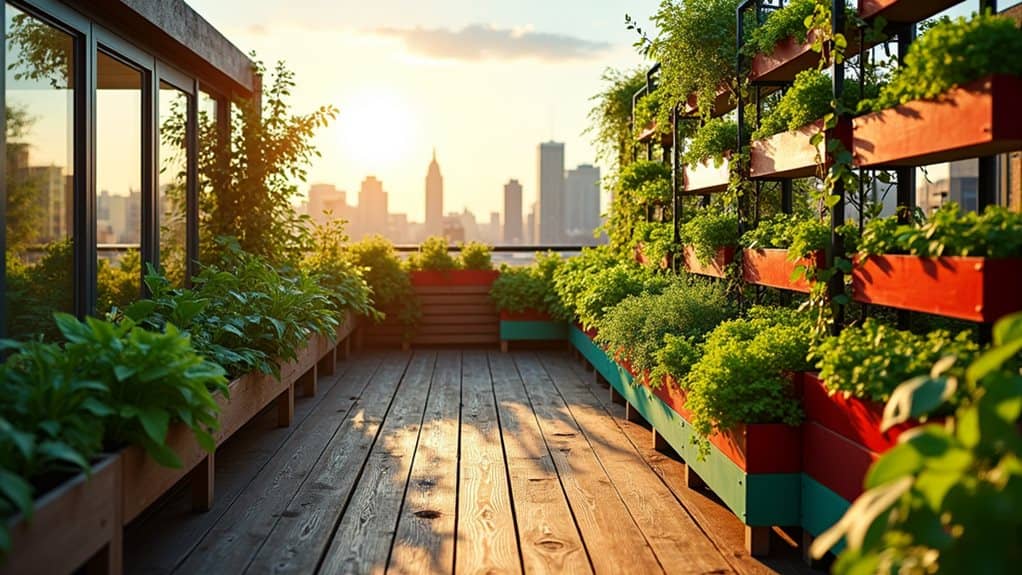
How can you guarantee your plants receive the maximum amount of sunlight?
First, pick a sunny spot—south or west-facing is best!
Avoid those shady north sides.
Position taller plants to the north and use trellises for climbing ones.
And hey, don't forget to prune any trees blocking that golden sunshine. Red light is crucial for promoting larger, bushier growth, so ensure your plants have access to ample sunlight.
Sunlight is critical for plant growth, and your plants will thank you with colorful growth!
Efficient Watering Practices
When it comes to watering your garden, you'll want to think about some super smart methods that can save you time and water, like drip irrigation systems that deliver water right to the roots, keeping those thirsty plants happy without drowning them. Drip irrigation systems can achieve up to 90% efficiency by targeting root zones, ensuring that your plants receive the moisture they need without excess waste. Have you ever considered harvesting rainwater? It's like nature's free refill, and when combined with mulching to lock in moisture, your garden will thrive while you save on that water bill—talk about a win-win!
Drip Irrigation Systems
Convert your garden into a water-efficient oasis with a drip irrigation system.
You'll save water—up to 50%! Plus, it helps deliver nutrients right where your plants need them, cuts down on pesky weeds, and keeps diseases at bay. With a maximum pressure of below 50 PSI, this system ensures optimal performance for your garden.
Just imagine your veggies thriving while you sip lemonade! Set it up with timers, and you've got a low-maintenance garden party!
Rainwater Harvesting Techniques
Drip irrigation systems are a fantastic start to conserving water, but why stop there?
You can set up mini rain barrels under downspouts to catch that precious rainwater, perfect for your small garden! Just make sure to screen the openings—no one wants a mosquito party! Plus, these barrels can hold up to 100 gallons. How cool is that? Integrated Gutter Systems can help direct even more rainwater into your barrels, maximizing your harvesting potential.
Let's get harvesting!
Mulching for Moisture Retention
Mulching serves as a protective blanket for your garden, effectively retaining moisture while keeping weeds at bay.
Imagine your plants sipping water happily instead of gasping for it!
By using organic materials like straw or compost, you'll cut down evaporation and enhance soil health. Additionally, using woody mulches like bark chippings can provide long-lasting benefits for your permanent plants.
Plus, it's like giving your garden a cozy winter coat—who wouldn't want that?
Soil Quality and Fertilization
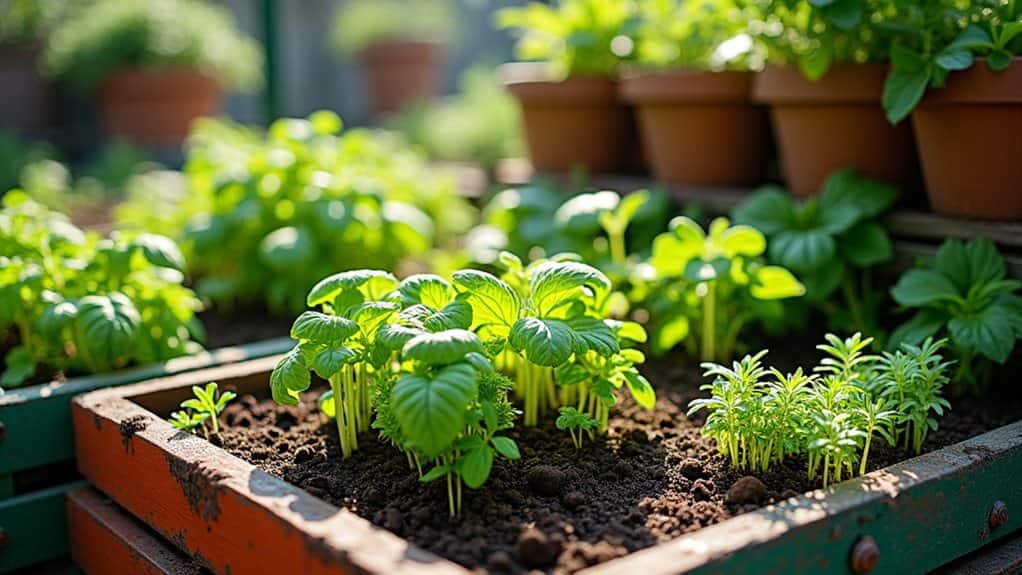
Healthy soil is the foundation of successful gardening and farming, directly influencing how well your plants grow.
You want loamy soil, right? It's the Goldilocks of soils—not too hard like clay, and not too loose like sand!
Always add organic compost to enhance fertility, and remember, a little sprinkle of love (fertilizer) goes a long way. Fertile soil is crucial for all gardening efforts, especially in limited spaces.
Your plants will thank you!
Creative Harvesting Strategies
Harvesting isn't just about picking your crops; it's a strategic art that can greatly enhance your yield.
You'll want to choose compact veggies, like radishes, to maximize space. Think vertical with trellises or hanging baskets, and don't forget about companion planting—tomatoes and basil make a great duo! Implementing vertical gardening techniques not only saves ground space but also allows for healthier air circulation around your plants.
Regular harvesting keeps the plants producing, so get out there and enjoy fresh food all season long!
Managing Pests and Diseases
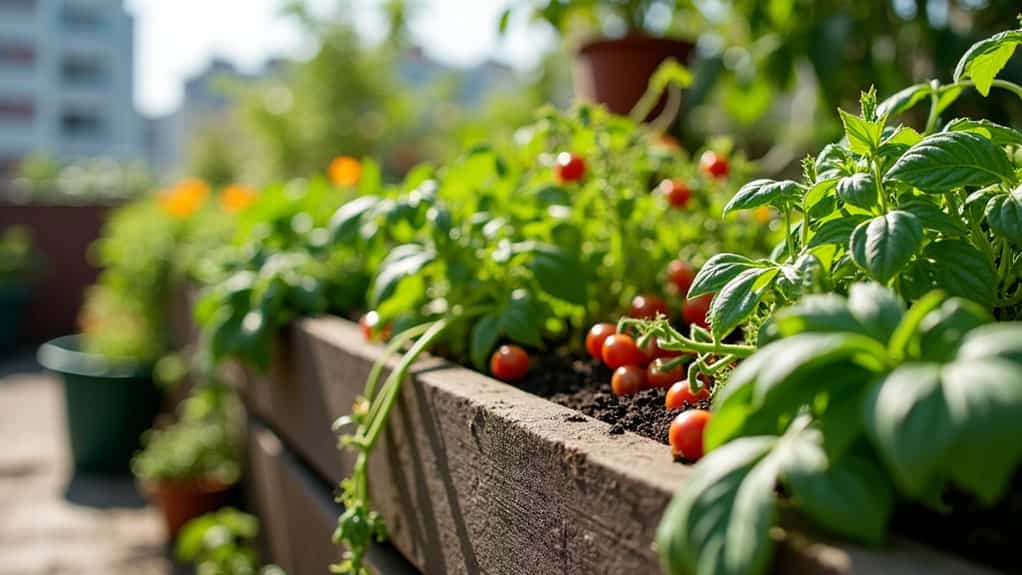
Managing pests and diseases is essential for ensuring your garden thrives and produces a bountiful harvest. You can manually remove pesky caterpillars and snails, or spray plants with soap for those tiny aphids. Companion planting methods can also enhance your pest management strategy by attracting beneficial insects to your garden. Encourage ladybugs to join the party, and don't forget to use hot chili powder to keep rodents at bay. Regularly check your plants, and soon you'll be the pest-fighting champion!
And Finally
So, there you have it! Growing food in small spaces is not just possible, it's super fun and creative. Whether you're climbing those tomato plants up a trellis or mixing marigolds with your veggies, you can turn your little patch into a tasty oasis. Don't forget to experiment, have fun, and maybe even share your harvest with friends—because who doesn't love a fresh salad? So grab your pots, get planting, and let those green thumbs shine! 🌱