How Does a Portable Air Conditioner Work Diagram
Want to know how a portable air conditioner works? It cools and removes moisture from the air by using refrigeration to absorb heat, which is then sent outside through a hose. Inside the unit, cold coils cool the air by absorbing heat. The refrigerant absorbs heat and turns into gas, releasing it outside through hot coils. This cycle continues, making the room cooler. To understand it better, learn about the refrigeration cycle, how it removes moisture, and maintenance tips. Mastering portable air conditioning is within reach!
TLDR
- Portable air conditioners bring in warm air, cool it down using cold coils, and then release the cool air back into the room.
- The refrigerant in the unit absorbs heat, turns into gas, and pushes the heat outside through hot coils, which starts the cooling process all over again.
- One coil makes the air cold (evaporator coil), while the other releases hot air outside (condenser coil), making the room comfortable.
- The air conditioner also takes out extra moisture from the air to reduce stickiness and musty odors by collecting water in a tray.
- To keep the unit running well and lasting longer, it's important to vent it properly with the exhaust hose and clean the coils regularly.
Cooling Process Explained
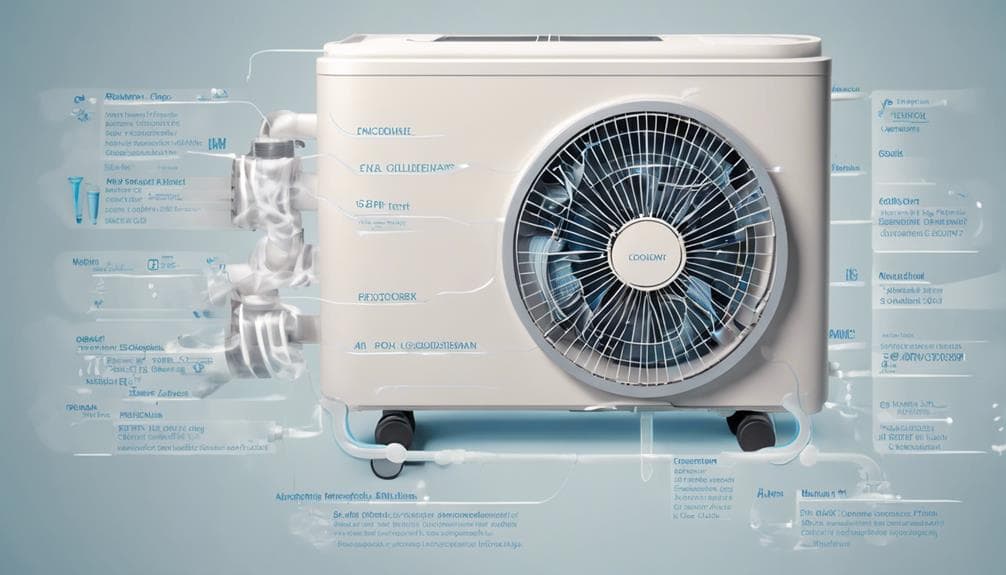
When you switch on your portable air conditioner, it starts by sucking in warm air from the room. This air is then cooled by passing over cold coils inside the unit. The magic happens in these coils – they absorb the heat from the air, making it cooler. The heat is taken away by a special liquid called refrigerant, which turns the absorbed heat into gas. This process cools the air, making your room feel nice and chilly. Afterwards, the refrigerant releases the heat outside through hot coils, finishing the cooling cycle. This cycle repeats, keeping your room comfortably cool.
Refrigeration Cycle Basics
Now, let's dive deeper into how your portable air conditioner works through the refrigeration cycle. This cycle is crucial because it compresses the refrigerant, creating both hot and cold environments. The cold coil, called the evaporator, releases cold air into your room, while the hot coil, known as the condenser, expels hot air outside. This process allows your portable AC to cool the indoor air by blowing out cold air while pushing the hot air outside. In a dual-hose unit, the refrigerant is heated, compressed, and then cooled outside, making the unit more efficient. By understanding this cycle, you can grasp the science behind how your portable air conditioner cools your indoor space.
Dehumidifying Functionality
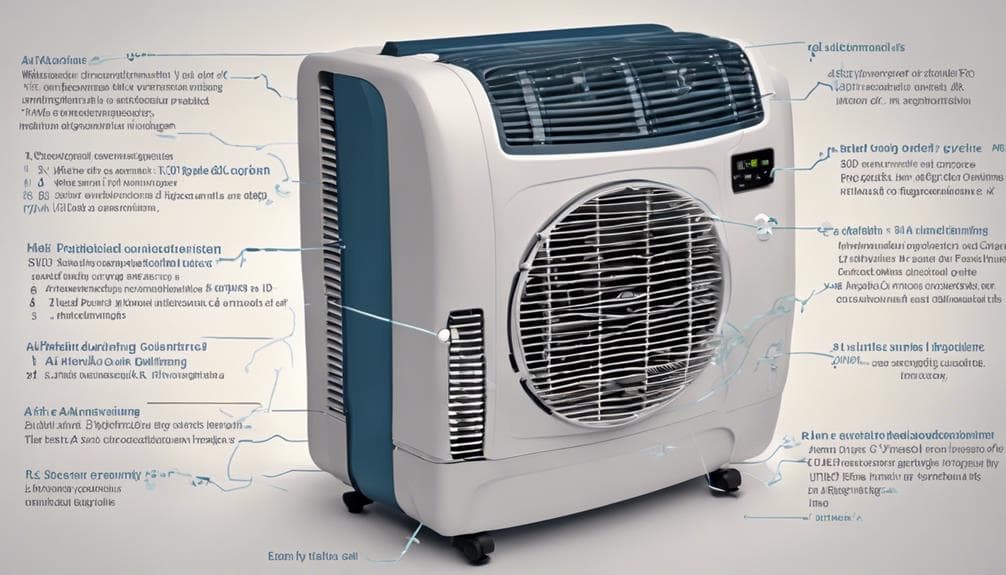
When you check out how portable air conditioners take out extra moisture from the air, you'll see how they make the space more comfy. Let's look at the main parts of this process: getting rid of humidity, collecting moisture, and cleaning the air. Knowing these details will help you understand how portable air conditioners manage humidity levels effectively.
Humidity Removal Process
When you start your portable air conditioner, it quickly gets rid of extra moisture in the air, making your room feel cooler and nicer. This process, called dehumidifying, helps reduce stickiness and musty smells. As the air moves over the cold coils, it removes extra humidity, which then collects as water. This not only improves your comfort but also stops mold and mildew from growing in your room. By getting rid of too much humidity, your portable air conditioner creates a more enjoyable space, especially in damp areas or humid climates.
Moisture Collection Method
Your portable air conditioner takes out moisture from the air by cooling it, which creates water droplets. These droplets are collected in a tray inside the system. Remember to regularly empty this tray to prevent mold and keep the dehumidifying function working well. Some models can evaporate the water they collect. Keeping the filter clean and the tray empty will help your air conditioner work better. Understanding how your air conditioner deals with moisture will help you keep it running smoothly.
Air Purification Role
Your portable air conditioner doesn't just cool the air; it also helps purify it by getting rid of extra moisture. This makes the air more comfortable, especially in rooms that tend to be humid. By taking out moisture, it prevents mold and mildew from growing, which keeps your space healthier. Just remember to empty the collected water regularly to keep it working well. This dry air also helps your body sweat more efficiently, so you feel more comfortable. Portable air conditioners are a simple way to improve the air quality in your home without the need for complicated duct systems.
Exhaust Hose Installation
Now that you understand how important it is to dehumidify, let's focus on installing the exhaust hose. Make sure the hose is the right length, vent it properly, and set up the window kit for effective cooling and dehumidifying. Follow these steps to install the exhaust hose correctly and get the most out of your portable air conditioner.
Hose Length Considerations
When putting in your portable air conditioner, think about how long the exhaust hose is. The length of the hose can affect how well your unit cools. It's best to have a short, straight hose for better cooling. If the hose is too long, it can make the unit work harder and cool less effectively. You can get extension kits if you need a longer hose, but don't use them too much. Make sure the hose isn't bent or twisted, so the airflow stays good and the cooling works well. Setting up the exhaust hose right is important to get rid of hot air from the room. By paying attention to the hose length, you can make your portable air conditioner work better and keep your space cooler and more comfortable.
Proper Venting Techniques
For your portable air conditioner to work well, you need to vent it properly. This means connecting the exhaust hose securely to the unit and extending it to a nearby window. By using the right window adapter, you can push the hot air outside, which stops it from coming back in. Make sure to check the manual for specific venting instructions to get the best cooling results. Remember, good venting is crucial for your portable air conditioner to cool efficiently.
Window Kit Assembly
To set up the window kit, start by connecting the exhaust hose to the portable AC unit securely. This hose is vital because it pushes out hot air, helping the AC cool your room well. The kit also has a bracket to hold the hose and a panel for the window. Follow the instructions carefully for a tight seal. Getting the hose in place right is key for the AC to work well and keep hot air out.
Condenser Coil Maintenance
Taking care of your portable air conditioner's condenser coils is crucial for keeping it cool and working well. These coils release heat, so it's important to keep them clean. If they get dirty, your air conditioner won't cool as effectively and will use more energy. Regularly cleaning the coils will prevent overheating and make your unit last longer. Good maintenance ensures that heat is transferred properly and your air conditioner cools efficiently. Remember to check and clean the condenser coils often to keep your portable air conditioner running smoothly.
Single Vs Dual Hose Designs
When picking a portable air conditioner, you'll find two types: single hose and dual hose models. Single hose ones take air from the room to cool it efficiently, good for smaller spaces and saving energy. Dual hose units bring in fresh air from outside to cool the room quickly, great for larger spaces. In a dual hose design, one hose brings in fresh air, while the other releases warm air outside, making cooling more effective overall.
Venting Options and Placement

When setting up your portable air conditioner, think about where to vent it for the best cooling. You can choose to vent it through a window using window kits or use a dual hose setup for more flexibility. Place the exhaust hose carefully for the most effective cooling.
Window Venting Options
When you get a portable air conditioner, you need to consider how it will vent out hot air. These units need to push out hot air and moisture to work properly. Window venting options help with this. You can use standard window kits with adjustable panels or sliding kits for different window types. These kits let you send hot air outside through the window, so cool air can come in. Placing the venting kit correctly is key for good cooling and airflow. By venting through a window, your portable air conditioner can keep you nice and cool.
Dual Hose Setup
When setting up a dual-hose system, connect one hose to bring in fresh air and cool the unit, and the other hose to push out hot air and moisture. This setup is common in air conditioners for better cooling and airflow. The intake hose cools the coil with outdoor air, while the exhaust hose releases hot air outside. This setup keeps the air pressure steady for top performance. Placing the hoses correctly is crucial for the unit to work well. Understanding how a dual-hose system works will help your portable air conditioner run smoothly and efficiently.
Exhaust Hose Placement
When you set up the exhaust hose, make sure you pick the right way to vent it based on your window type. This is crucial for your portable air conditioner to work well. You can use the adapter provided to vent the exhaust hose out through a nearby window, ensuring efficient cooling. If you have sliding glass windows, you might need extra parts or extension kits to install it properly. Extension kits are handy for venting through sliding glass doors, allowing easy placement of your portable air conditioner. Always check the manual for specific instructions on where to place the exhaust hose to keep your air conditioner working great and your space cool and comfy.
Water Drip Explanation
When the portable air conditioner cools the air, it creates water drips because of the moisture in the air turning into water. There are different ways the AC deals with this water. Some models can evaporate the water by themselves, so you don't need to do much. Others have a hose to collect the water, which you can then empty. Some portable ACs have a pump that removes the water and heat and pushes the water outside. How the water is handled affects how much maintenance the portable air conditioner needs.
Power and Performance Factors

How much cooling power do you need from your portable air conditioner? Portable air conditioners come in different sizes, ranging from 8,000 to 14,000 BTUs. It's important to pick the right one for your space. Air conditioners work by removing hot air, cooling it, and then sending cool air back into the room. The Seasonally Adjusted Cooling Capacity (SACC) rating shows energy efficiency, but other factors matter too. The size of the room, how well it's insulated, and how much sunlight it gets all affect how well the air conditioner works. Bigger BTU units are good for larger areas, while smaller units work well for smaller spaces. Knowing about these power and performance factors helps you choose the best portable air conditioner for your needs, making sure you stay cool when it's hot outside.
Essential Portable AC Parts
There are five important parts that work together in your portable AC to keep you cool: the compressor, condenser coils, evaporator coils, duct, and window kit. These parts are crucial for your AC to work properly. The compressor turns the refrigerant from a liquid to a gas to transfer heat. The condenser coils cool the air and remove humidity, while the evaporator coils release cool air into the room. The duct sends out hot air, and the window kit holds the exhaust hose in place for efficient cooling. Each part has a key role in making sure your AC works well. Understanding how these parts work together will help you see how your AC unit functions. Knowing how these pieces work will make it easier for you to take care of and fix any issues with your AC.
Conclusion
Now that you know how a portable air conditioner works, you can choose the right one for your space wisely. Consider things like power, performance, and venting options for effective cooling. Don't forget to clean the condenser coil regularly to make your portable AC last longer. By following these tips, you can stay cool and comfortable all year.