
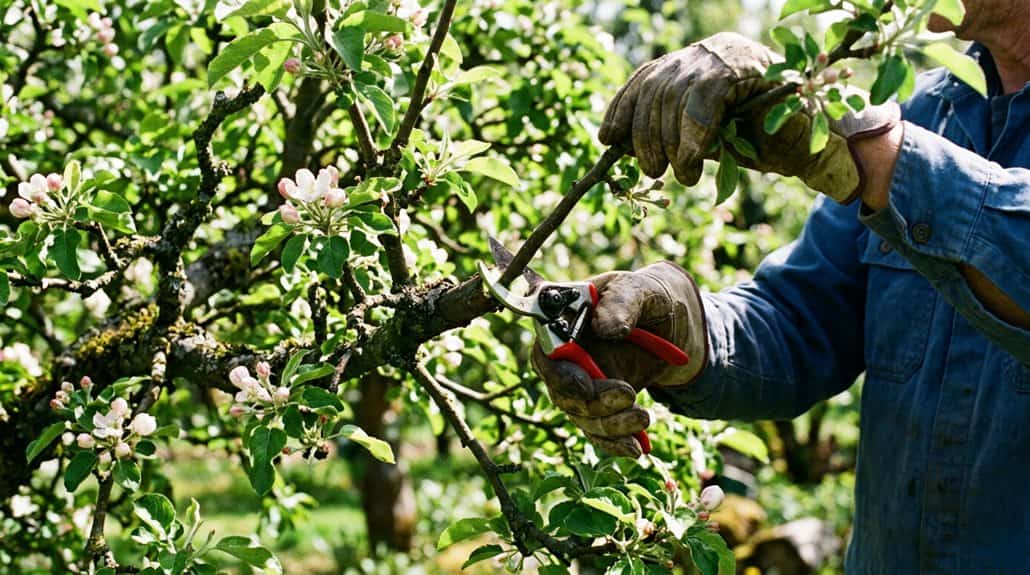
How to Prune Apple Trees for More Fruit
If you want your apple tree to spit out buckets of juicy apples, you’ll need to grab some pruners and start by snipping off dead or crisscrossing branches, especially during the tree’s winter nap. Trim near the branch collar, keep the main trunk strong, and space out branches so sunlight floods every leaf—think of it as giving your tree a healthier haircut! Plus, you’ll get bigger, tastier apples—just like the ones from my favorite orchard camping trip—so stick around for the real how-to!
TLDR
- Prune apple trees during late winter dormancy to stimulate vigorous growth and increase fruit production.
- Focus pruning cuts near the branch collar to promote healthy healing and prevent disease.
- Maintain a strong central leader and well-spaced scaffold branches for optimal structure and light penetration.
- Thin crowded branches to improve airflow, light access, and enhance fruit size and quality.
- Remove dead, diseased, or damaged wood annually to boost overall tree health and productivity.
How to Prune Apple Trees for More Fruit
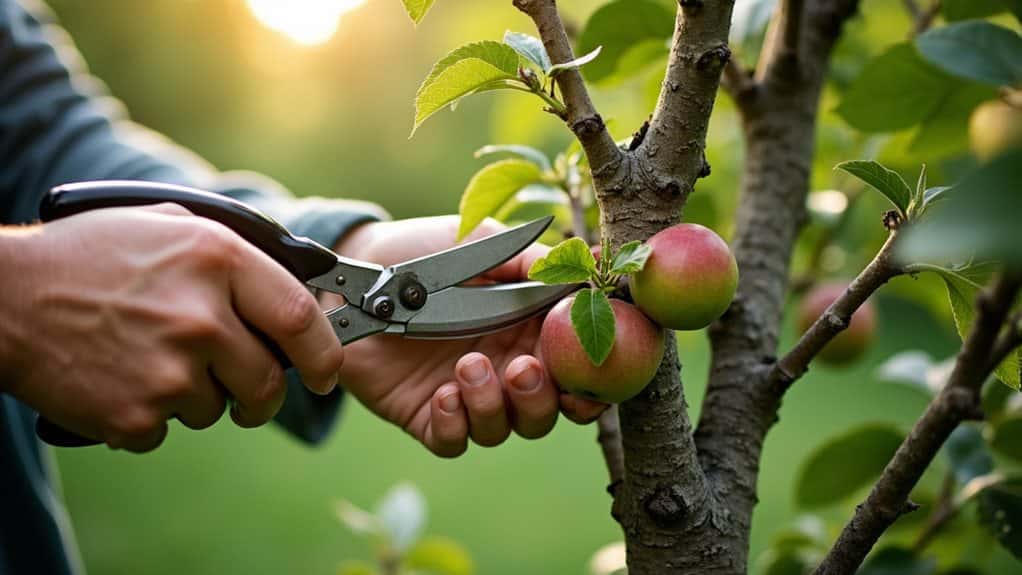
Ever wondered how to get your apple tree to actually reward you with buckets of sweet, crisp apples instead of just a tangle of wild branches? You’ll need to prune apple trees with care—focus on pruning cuts near the branch collar, shaping a strong central leader, and keeping scaffold branches well-spaced.
Thinning helps enhance fruit size, while improved light penetration and airflow can skyrocket fruit production. It’s like camping for your tree! Preventing early pruning during times of frost risk can help avoid frost damage, ensuring your tree remains healthy and productive.
Best Time and Frequency to Prune Apple Trees
Although you might think you can grab your pruners whenever the mood strikes—maybe right after a camping trip when you’re feeling all outdoorsy—timing really does matter if you want your apple tree to thrive.
The best pruning season is during dormancy, usually late winter, to encourage healthy growth and better fruit production.
Young trees need annual pruning for sturdy tree structure, while mature trees benefit from less frequent maintenance.
Additionally, avoiding pruning during periods of stress, such as after heavy watering or sudden temperature changes, helps prevent translucent leaf spots and other stress symptoms that can weaken the tree.
Step-by-Step Apple Tree Pruning Instructions
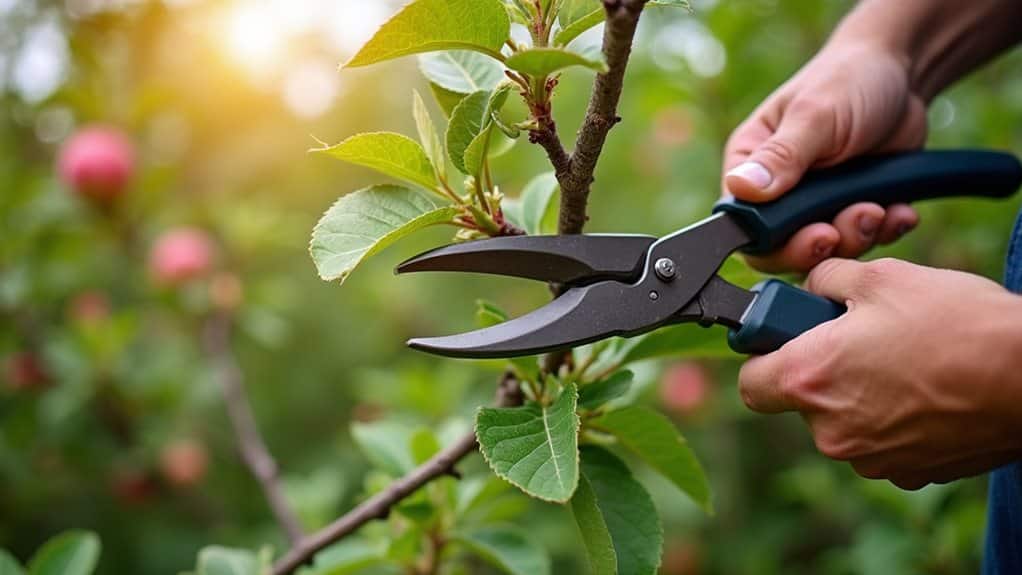
Once you’re finally ready to channel your inner wilderness *adventurer*—maybe still riding high from that last epic camping trip—it’s time to grab those pruners and get down to business with your apple tree.
During the dormant season, start pruning by cutting away any broken or crossing branch. Shape the central leader, trim side branches for better light penetration, and focus on tree structure for awesome fruit production!
How to Prune and Train Young Apple Trees
If you’ve ever come back from a wild camping trip, wishing you could bottle up that sense of exploration and bring it right into your backyard, guess what—pruning and training young apple trees is basically the gardening version of setting up the perfect basecamp!
Pick strong scaffold branches, space them well, and use spreaders for better branch angles.
Prune during dormancy, head the central leader, and you’ll enhance fruit production brilliantly!
How to Prune Overgrown or Old Apple Trees
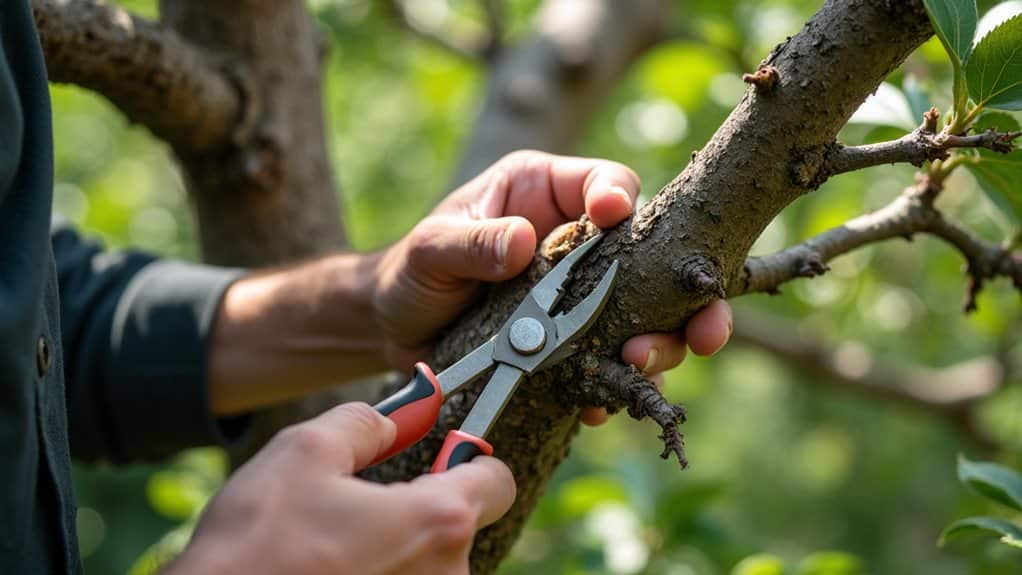
Sometimes you stroll out to that old apple tree in your yard, and it feels like you’ve stumbled into an overgrown jungle straight out of a quest film—branches wild, reaching every which way, and hardly any sunlight making it through the tangled mess!
Start by pruning dead and diseased branches, then use selective pruning for canopy opening, focusing on structural restoration. Spread the process over 2–3 years for happy, fruit-producing old apple trees. Be sure to check for safety hazards such as rust, dents, or corrosion, which can cause leaks or other issues if left unaddressed.
Overall
So, are you ready to grab those pruners and turn your apple tree into a fruit-producing superstar? Trust me, with a little practice, you’ll feel like a tree-whisperer—plus, there’s nothing cooler than climbing a ladder and snipping branches like a pro (just be careful, okay?). Remember, pruning isn’t just a chore; it’s a journey, and every cut gets you closer to bushels of juicy apples for picnics, hiking snacks, or the ultimate camping dessert: apple s’mores!

