Snapped Carrots? Why Good Carrots Go Wrong
Your carrots can snap or become deformed for several key reasons: inconsistent watering, compacted soil, hidden rocks, or pesky root-knot nematodes. When your soil isn’t well-draining or you’ve got irregular moisture levels, those beautiful orange roots might split, crack, or grow into funny shapes. Don’t worry though – even twisted carrots are perfectly nutritious! The secret to growing straight, healthy carrots lies in proper soil preparation and smart water management. Let’s investigate how to give your carrots the perfect growing conditions.
TLDR
- Compacted soil and hidden rocks force carrots to grow around obstacles, causing weakness points where snapping occurs during harvest.
- Inconsistent watering leads to irregular growth and stress points in carrots, making them prone to breaking.
- Poor soil preparation, including inadequate loosening of soil beds, creates resistance that can snap carrots during pulling.
- Harvesting carrots without properly loosening the surrounding soil with a garden fork often results in broken roots.
- Improper harvest timing, when carrots are either overripe or underdeveloped, increases their susceptibility to snapping.
Understanding the Root of the Problem
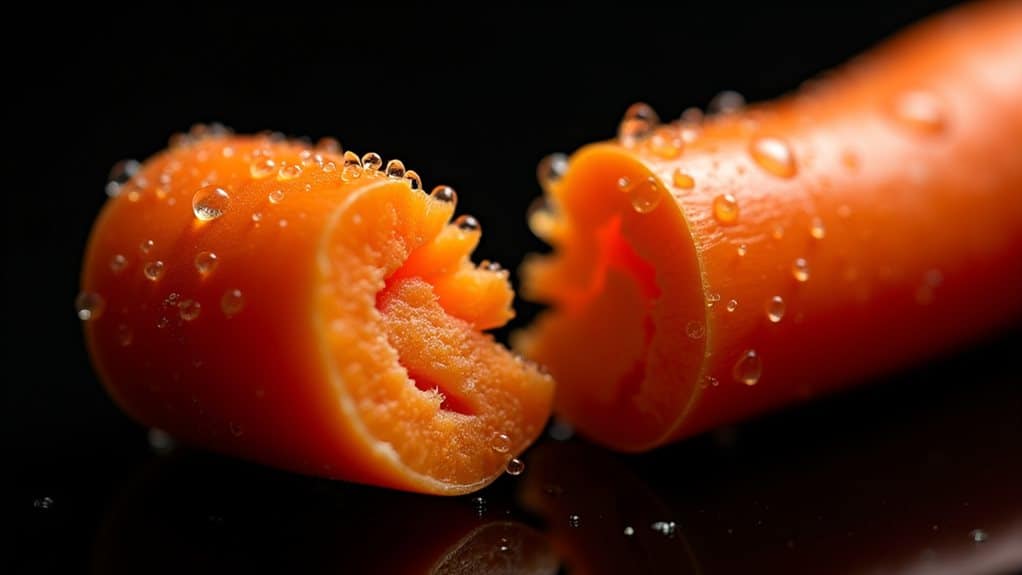
While growing perfect carrots might seem as simple as dropping seeds in the ground, you’re actually commencing on quite an intricate gardening quest that starts deep beneath the soil’s surface!
Your carrot’s quest begins with those tiny seeds needing just the right conditions – think cozy temperatures between 61°F and 75°F, well-drained sandy soil that’s not too acidic or basic, and that perfect balance of moisture that’ll keep your roots happy, not hairy! As your seeds develop into seedlings, farmers typically plant at high densities of 350,000 to 450,000 seeds per acre to maximize their yield potential. To ensure healthy root development, it’s crucial to maintain consistent airflow and proper aeration in the soil.
Common Causes of Carrot Deformities
If you’re noticing misshapen or twisted carrots in your garden, you’ll find that soil conditions are often the main troublemaker, with compacted earth and hidden rocks forcing your carrots to grow in weird and wonderful shapes. Poor soil drainage can stunt growth and development, leading to shallow, weak roots. Additionally, soil compaction can restrict root growth and water movement, exacerbating the deformities in your carrots.
Inconsistent watering can make your carrots split and crack like they’re trying to become identical twins, while those pesky root-knot nematodes (tiny worms you can’t even see!) can turn your straight, beautiful carrots into something that looks more like a pretzel.
Your best shot at growing frame-perfect carrots starts with understanding these common problems, and I’ve learned from my own gardening mishaps that paying attention to these issues can mean the difference between growing Instagram-worthy vegetables and ones that belong in a modern art museum.
Soil Problems and Barriers
Growing perfectly straight carrots can be quite the challenge when you’re dealing with problematic soil conditions in your garden!
Dense, clayey soil and those pesky rocks can force your carrots to twist and turn as they grow, while hard clay layers and compacted soil from walking on your garden beds aren’t doing your carrots any favors either.
Even those sneaky tree roots can redirect your carrots’ growth path!
Moisture and Water Issues
Speaking of soil challenges, you’ll also need to keep a close eye on moisture levels when growing those orange beauties!
If you’re not careful with watering, your carrots might split, fork, or develop weird shapes – nobody wants a carrot that looks like it’s doing yoga!
Too much water makes them mushy and prone to rot, while too little causes cracking and stunted growth, so finding that sweet spot is vital.
Pest-Related Root Damage
While you might think your carrots are safe once they’re in the ground, there’s a whole underground world of tiny troublemakers waiting to turn your perfect roots into something that looks more like abstract art!
Root-knot nematodes create swellings on roots, while wireworms and carrot rust fly maggots tunnel through your precious vegetables, leaving behind winding channels.
And don’t forget those pesky carrot weevils that love carving out their own little caves!
The Impact of Soil Quality
When you’re planning to grow incredible carrots, you’ll want to take a close look at your soil’s structure since the texture and composition play a huge role in how straight and well-formed your carrots will grow.
You’ll get the best results with light, sandy soil that’s free from rocks and debris, as these physical obstacles can cause your carrots to fork or twist into funny shapes (which might look amusing but isn’t ideal for harvesting).
If you’ve got heavy clay soil in your garden, don’t worry – you can improve it by mixing in well-rotted compost and organic matter, which will help create the loose, crumbly texture that carrots love to grow in. Additionally, understanding essential nutrients is crucial for ensuring that your carrots have the nutrients they need for optimal growth.
Soil Structure and Texture
Three key elements make soil perfect for growing carrots: texture, structure, and drainage.
Your soil needs to be loose and crumbly (like a sandy loam) down to about 12-14 inches deep, since carrots hate running into obstacles!
When your soil’s too hard or compacted, those roots will twist and fork in their desperate search for an easier path – and nobody wants a zigzagging carrot.
Minerals and Rock Content
Beyond the physical structure of your soil, those tiny mineral particles and rocks play a fascinating role in growing great carrots!
You’ll want to keep an eye on mineral levels like potassium, phosphorus, and zinc, since they’re essential for healthy carrots.
While some rocks in your soil can help with drainage, too many can actually block those growing roots and make it harder for your carrots to absorb the nutrients they need.
Water Management and Carrot Health

Since growing healthy carrots depends heavily on proper water management, understanding how to keep these orange beauties hydrated is absolutely essential!
You’ll want to provide your carrots with about 0.07 to 0.15 inches of water daily, and remember, timing is everything – they’re especially thirsty during germination and root bulking.
Whether you’re using sprinklers, furrow, or drip irrigation, keeping moisture levels consistent will help you avoid those dreaded split or hairy roots.
Nutrient Balance for Strong Carrots
While water management sets the foundation for healthy carrots, getting your nutrient balance right is what’ll truly make your orange roots shine!
You’ll need to focus on the big three – nitrogen, phosphorus, and potassium – but don’t forget about calcium and magnesium.
These nutrients work together like a team, with nitrogen helping those leafy tops grow strong, while phosphorus and potassium keep your roots healthy and tasty!
Pest Problems and Root Damage
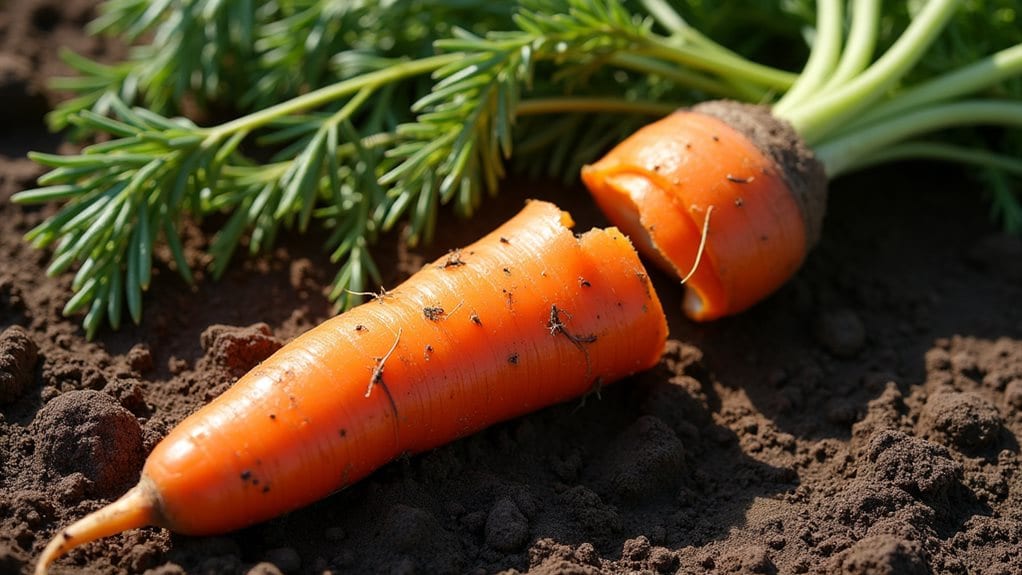
Just when you think you’ve got your carrots growing perfectly, those pesky garden visitors might show up uninvited!
From tunneling carrot flies to sneaky weevils, these unwelcome guests can wreak havoc on your root crops.
What’s worse, you’ll often find the damage too late, when you’re pulling up twisted, discolored, or hole-riddled carrots that aren’t exactly what you’d planned for dinner!
Making the Most of Imperfect Carrots
Every imperfect carrot deserves its moment to shine, and you’ll be amazed at how many delicious possibilities await those less-than-picture-perfect roots!
Whether you’re roasting them with tangy goat cheese and crunchy nuts, altering them into innovative 3D-printed snacks, or tossing them into diverse cultural recipes, these wonderfully wonky carrots still pack the same nutritional punch as their prettier cousins – and they’ll cost you less at farmers’ markets, too!
Prevention Tips for Straight Growth
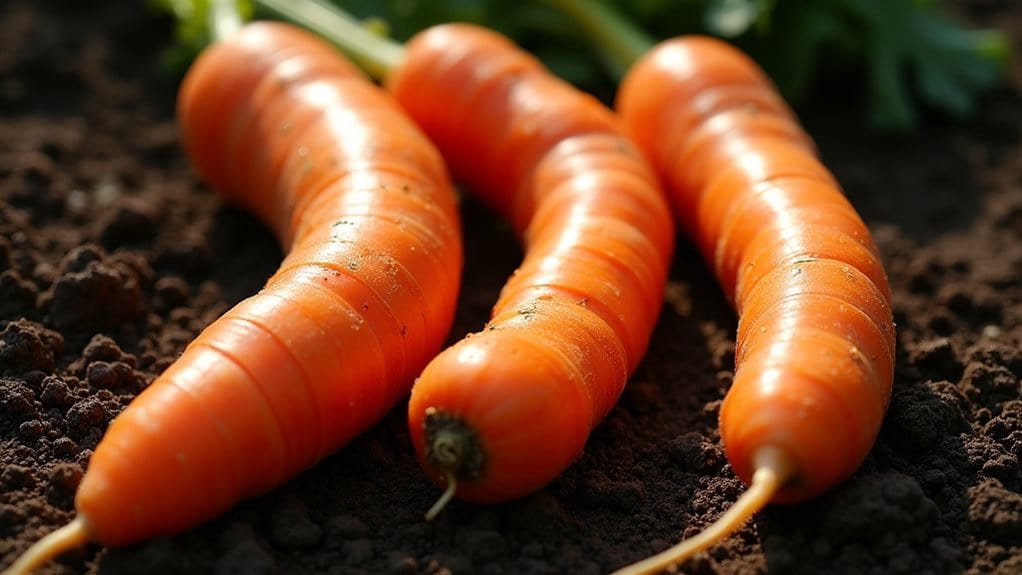
If you’re hoping to grow straight, ideal carrots, you’ll want to start with a well-prepared soil bed that’s loose, deep, and free of rocks or debris.
While you’re tending to your carrot patch, remember that consistent moisture control is key – let those roots work a bit to find water, which encourages them to grow straight down instead of zigzagging all over the place.
Your choice of carrot variety matters too, so pick ones that are known for their straight growth habits and are well-suited to your specific garden conditions, whether you’re working with sandy loam or heavier soil that you’ll need to amend.
Proper Soil Bed Preparation
Preparing your soil bed properly stands as the cornerstone of growing straight, beautiful carrots that’ll make any gardener proud.
To get started, you’ll want to dig down 12-18 inches deep, removing any rocks or debris that could cause your carrots to twist and turn.
Mix in some rich compost to create a loose, well-draining environment, and don’t forget to smooth the surface before planting.
Consistent Moisture Control
While growing straight, healthy carrots requires several key factors, maintaining consistent moisture levels stands as one of the most essential elements you’ll need to perfect.
You’ll want to keep your soil moisture between 5 and 30 centibars, which you can easily monitor using a tensiometer.
Don’t let your carrots get thirsty – aim to provide an inch of water every four days using a reliable sprinkler system.
Smart Variety Selection
Beyond keeping your soil perfectly moist, choosing the right carrot variety for your garden’s conditions can make all the difference between harvesting straight, beautiful carrots and ending up with twisted, forked roots that look like they’re trying to tie themselves in knots.
If you’re dealing with heavy soil, you’ll want to pick Danvers or Chantenay varieties, while Imperator’s your best bet for lighter, sandier soils that let those long roots stretch out beautifully.
Selecting the Right Carrot Varieties

When it comes to growing the perfect carrot, choosing the right variety is absolutely essential to your success!
You’ll want to take into account factors like your soil type, available space, and how you’ll use them. If you’ve got heavy soil, try Chantenay or Danvers varieties, but if you’re dreaming of sweet, crunchy snacking carrots, you can’t go wrong with Nantes or baby carrots.
Harvest Timing and Techniques
Since you’ve put in all that effort to grow your beautiful carrots, you’ll want to make certain you harvest them at just the right time!
Look for roots that are 1/2 to 3/4 inches thick, and gently check one or two to ascertain they’re showing full color.
When you’re ready to harvest, loosen the soil with a garden fork first, and you’ll find they’ll pop right out without breaking!
Soil Preparation Best Practices
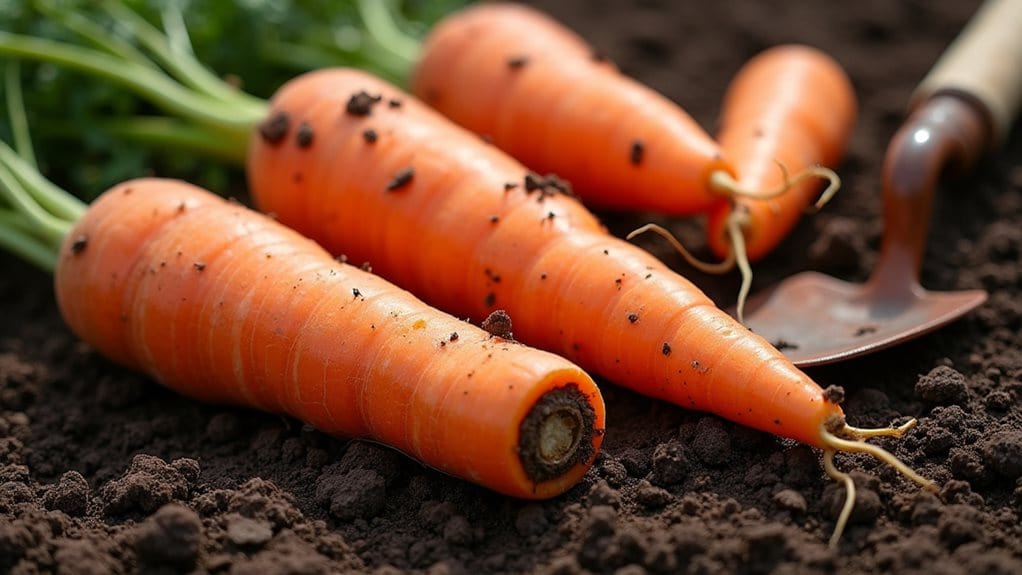
If you’re dreaming of growing perfect, straight carrots that’ll make your neighbors jealous, you’ll need to start with the right soil preparation!
The key is working with loose, sandy loam soil that’s free from rocks and debris, tilling it down to 14 inches deep.
You’ll want to avoid using disks or rototillers since they can compact the soil, making it harder for those roots to grow straight and strong.
From Garden to Kitchen: Using Deformed Carrots
Even with perfect soil preparation, you’ll sometimes end up with carrots that look like they’ve been doing yoga in your garden!
Don’t let their twisted appearance discourage you, though, as these quirky vegetables are perfect for soups, stews, and roasted dishes where looks don’t matter.
You can also convert them into delicious purées, smoothies, or dips, and they’ll still pack the same nutritional punch as their straight siblings!
Overall
Don’t let snapped or deformed carrots discourage you from growing your own garden – they’re still perfectly good to eat! By understanding soil conditions, managing water properly, and choosing the right varieties, you’ll be well on your way to growing straighter, stronger carrots. Remember, even professional farmers sometimes end up with quirky-looking vegetables, so keep experimenting, learning from your garden’s feedback, and enjoying the fruits (or should we say roots?) of your labor!