Sun Exposure Damage to Deck Boards Explained
That hot sun isn’t just for s’mores—it’s zapping your deck every single day, breaking down wood fibers, fading colors, and leaving gray, splintery messes where smooth boards used to be. UV rays chew up lignin like termites, heat expands and contracts joints, and before you know it, cracks sneak in, warping turns boards wavy, and suddenly it’s a hazard zone! But guess what? Some materials fight back better than others—want to know which ones win the deck battle?
TLDR
- UV rays break down wood fibers and lignin, leading to brittleness, fading, graying, and surface degradation over time.
- Repeated expansion and contraction from heat and cooling cause cracks, splits, and warping in sun-exposed deck boards.
- Graying can begin within 72 hours of sun exposure, especially on untreated or lightly finished wood and composite boards.
- Darker finishes and UV-resistant coatings act as protective barriers, slowing fading and structural damage from sunlight.
- Warped, spongy, or cracked boards with loose fasteners may indicate structural risks requiring professional inspection and repair.
What Does Sun Damage Do to Deck Boards?
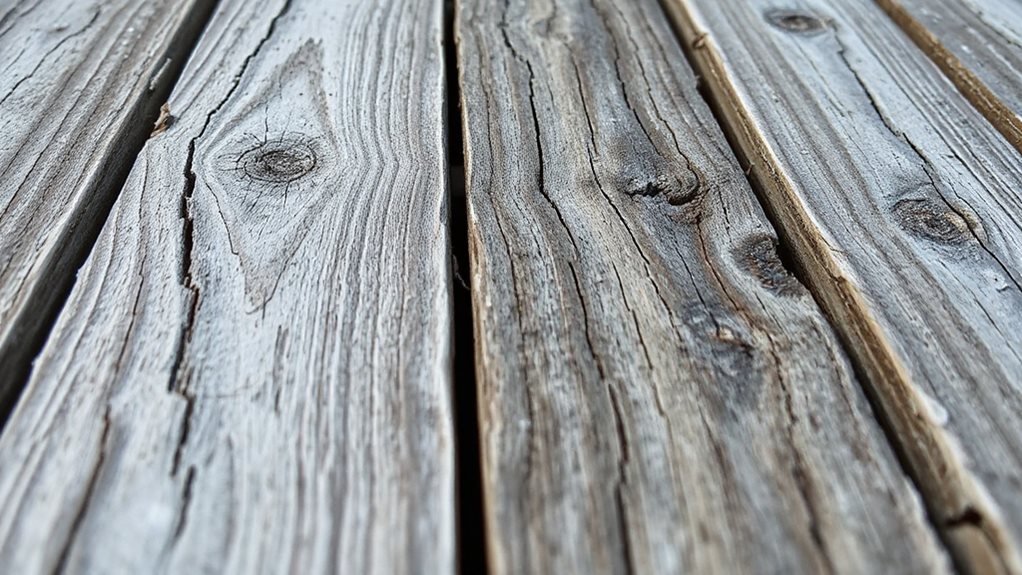
Let’s talk about the silent deck destroyer: sunlight. It zaps your wood’s strength, making boards brittle and prone to cracks—yikes! UV rays break down oils and fibers, leaving surfaces rough and splintery, perfect for surprise barefoot ouch moments. Heat expands wood daily, then cools it, stressing joints. Over time, warping, splitting, and moisture sneak in. This deterioration accelerates as structural weakening reduces the wood’s ability to withstand everyday wear and weather. Protect your deck, so it stays safe and fun for every backyard escapade! Increased exposure also speeds up the drying process in pressure-treated lumber, which can lead to surface checks and more frequent maintenance.
Why Do UV Rays Fade and Gray Deck Wood?
You know how your deck starts looking tired and gray after a summer of sun, like it’s been camping nonstop without a hat?
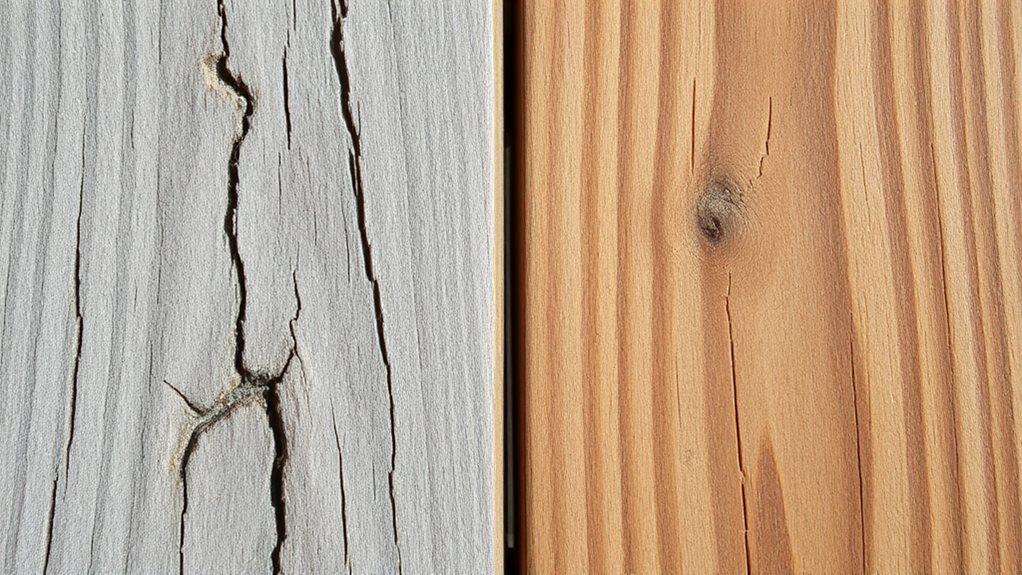
Well, those sneaky UV rays are busy breaking down lignin—the stuff that keeps wood strong and colorful—while also zapping pigments in composite boards, leaving them faded and chalky.
Think of it as a slow-motion wood roast, where sunlight fries the surface, moisture sneaks into cracks, and boom: your once-vibrant deck turns into a patchy, flaky shadow of its former self!
Proper maintenance and UV-resistant finishes can significantly slow this process by protecting the surface with UV-resistant coatings.
Lignin Breakdown Process
Ever noticed how your deck slowly loses its rich, warm color and starts looking like a tired, sunburned ghost of its former self? That’s lignin—the stuff holding your wood together—getting zapped by UV rays.
It breaks down, yellows, then grays, leaving cracks behind. Think of it like a sunburn that never heals! Save your deck, and your future camping vibes, by shielding it early.
Pigment Degradation Effects
So your deck used to look like it belonged on a cozy mountain cabin, rich and warm like a freshly toasted marshmallow, but now it’s more like a faded camp T-shirt that’s been through one too many bonfires—yeah, we’ve all been there.
UV rays zap wood pigments, breaking them down and turning lively tones ashy and dull, especially in sunny spots. You’ll spot graying fast—sometimes in just 72 hours—because sunlight fuels chemical chaos, bleaching color like nature’s own highlighter.
Darker finishes? They’re your deck’s sunscreen, soaking up UV before it wrecks the good stuff.
Steamed maple’s tougher, but cherry and larch? They’re drama queens in the sun, reddening, yellowing, then fading like old photos.
Want to keep that cabin-core glow? Think protection, not just pretty stains.
How Do Cracks and Splits Form From Sun Exposure?
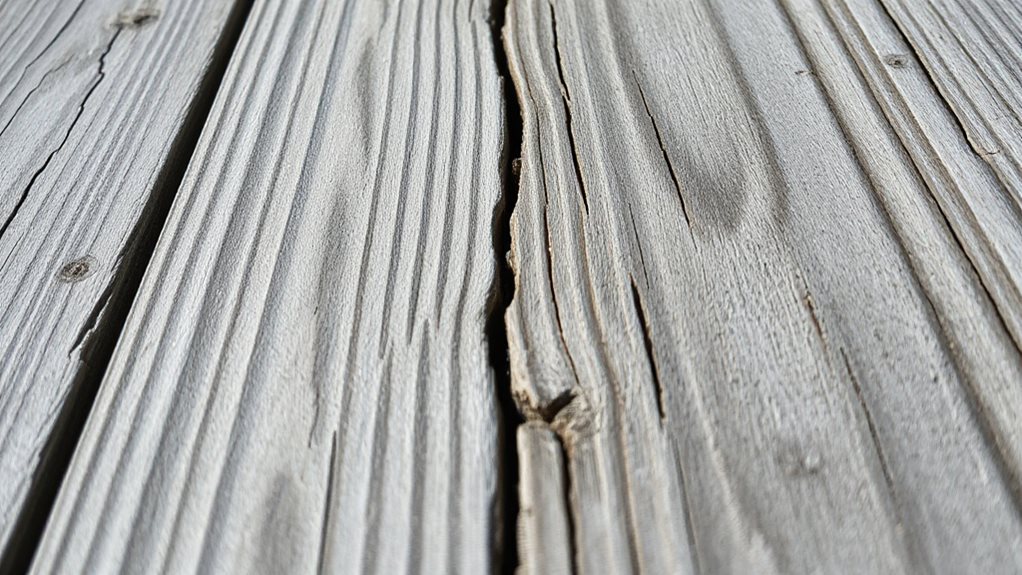
You know how the sun feels great on your skin at the campsite—until you’re all crispy, right? Well, your deck boards feel the same way, because constant sun dries them out, makes them expand and crackle like a campfire log, and weakens their insides so much that even a heavy backpack can send a split racing down the grain.
Throw in some rainy days, and boom—those tiny cracks turn into full-on splits, kind of like how a tiny tear in your tent turns into a giant hole if you don’t patch it fast!
Over time, prolonged sun and moisture cycles can also lead to warping and sagging, which worsens pooling and structural damage.
Wood Drying Process
Feeling the sun bake down on your deck like a griddle on a summer morning? Yeah, that heat zaps moisture fast, especially if you skip letting wood acclimate—kind of like forgetting to stretch before a big hike.
Fresh pressure-treated boards? They’re like sponges, so let ‘em dry 2–4 weeks in the shade, stacked with spacers. Your future deck will thank you, crack-free and ready for barefoot summers!
Heat Expansion Effects
Alright, you’ve let your deck boards dry out nice and slow like we talked about—good move, because now they’re ready to face the real grilling season, literally.
Sun heats up dark boards fast, making them expand, while shaded parts stay cool and tight—this tug-of-war stresses wood, causing cracks.
Night cools things down, shrinking boards again.
Repeat all summer, and boom: splits pop up like surprise campfire sparks.
Seal it, shade it, love it!
Crack Progression Over Time
While the sun might seem like your deck’s friendly summer companion, warming it up for barefoot strolls and backyard hangouts, it’s actually sneaking in some serious sneak attacks on those boards—especially when UV rays start breaking down the wood’s inner structure like tiny, invisible woodpeckers with a grudge.
You’ll spot gray hues, feel rough patches, then—bam!—fine cracks appear.
Left unchecked, those little fissures deepen, split, and splinter, turning your proud deck into a hazard zone.
Protect it early, reseal every couple of years, and keep it smooth, safe, and splinter-free for barbecues, game nights, and stargazing excursions!
When Does Warping Signal Serious Deck Damage?
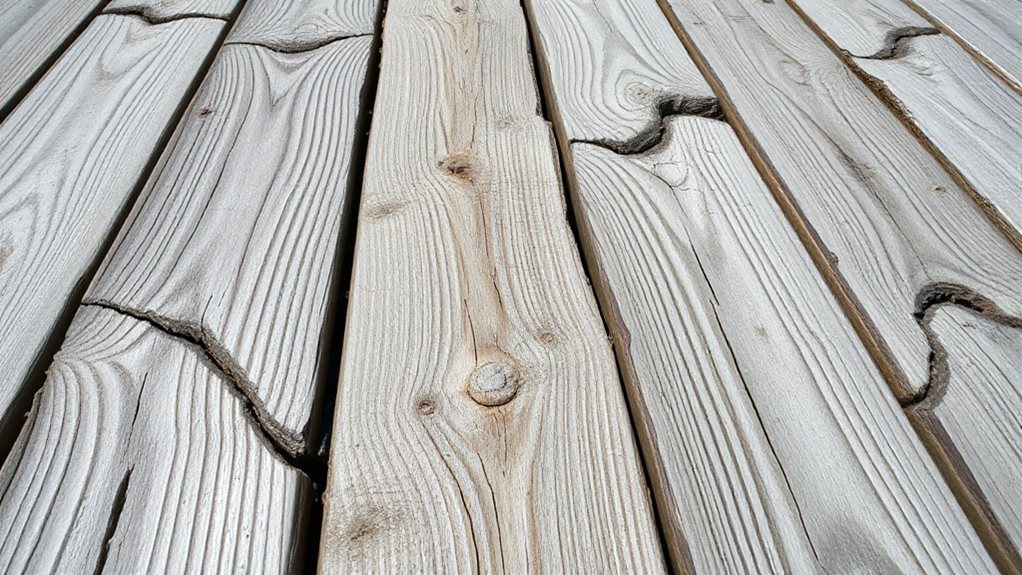
Envision this: you’re out on your deck, coffee in hand, dreaming about your next camping trip—sunrise over the trees, the smell of pine in the air—when *crack*, your foot lands on a board that’s decided to curl up like a taco. Yikes!
If multiple boards are warped, lifting, or feel spongy—especially with rusted screws or cracks—it’s not just ugly; it’s a safety risk. Don’t wait for a twisted ankle!
Check for gaps, cupping, or soft spots—these mean your deck’s crying for help. When warping teams up with rot or loose fasteners, it’s not a DIY fix. Time to call a pro and keep your outdoor oasis safe for every escapade. Consider having a professional assess for structural instability before the problem worsens.
Why Is Your Deck Splintering? (UV Breakdown Explained)
So your deck’s throwing splinters like it’s mad at you? Blame UV rays—they sneak in, wreck the wood’s natural glue, and zap its oils, leaving it brittle and angry. You’ll spot graying, cracks, or a powdery mess.
Without protection, splinters turn dangerous, especially barefoot!
But hey, sealing your deck yearly? Total transformation—it’s like sunscreen for wood, and your future bare feet will thank you. Additional protection like proper overhangs and fascia can help prevent moisture and edge deterioration by keeping water away from vulnerable end grain and supporting the deck’s edges 1–2 inches.
Why Do Some Decks Deteriorate Faster in the Sun?
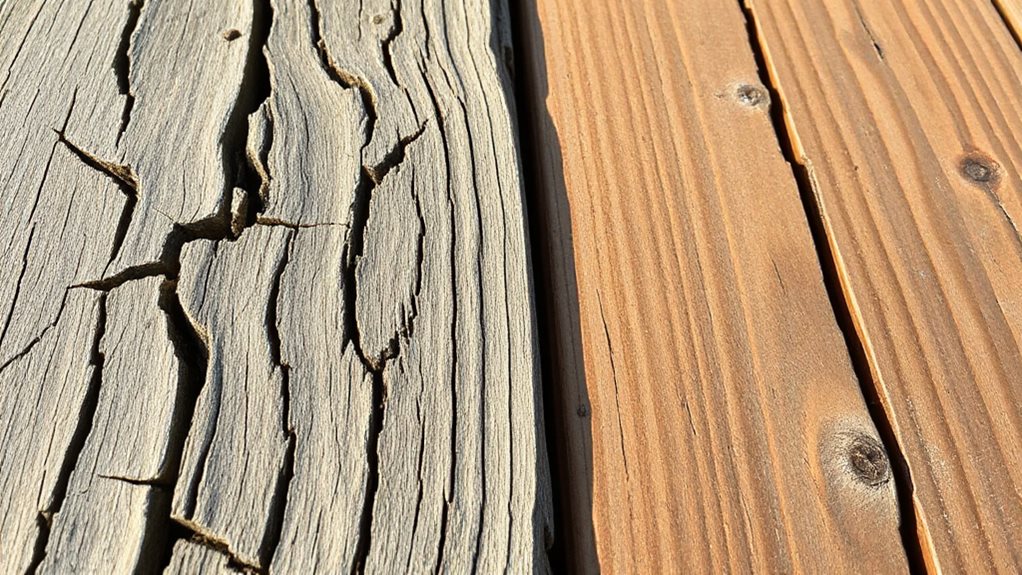
Ever wonder why your buddy’s deck in Arizona looks like it aged ten years after just one summer, while your cousin’s in Maine still looks fresh as a spring pine? Sun intensity matters—UV rays break down wood fibers fast, especially without treatment, and composites can fade or warp unless capped.
But PVC and tough tropical hardwoods like Ipe? They laugh in the face of sunlight, staying cool, strong, and good-looking even on the hottest, sunniest days—perfect for your next backyard campout!
Overall
So, you’ve seen how sneaky UV rays can turn your deck into a sunbaked puzzle of cracks and splinters, right? Don’t sweat it—now you know the why and how, which means you can totally outsmart it! Grab some sealant, give your boards some love, and boom: longer-lasting deck vibes. Think of it like sunscreen, but for wood. Your future camping trips will thank you—no one wants a splintered deck ruining s’more season!