Wisteria Never Blooms? Here’s Why (And the Fix)
If your wisteria refuses to bloom, don’t panic—it usually just wants the right combo of full sun (at least 6 hours daily), yearly pruning (think late winter haircuts, not wild spring chops), and a bit of patience since some take 7+ years to mature! Avoid overfeeding with nitrogen (think leaves, not flowers), keep roots comfy but not swampy, and make sure pests aren’t hijacking the show—trust me, my camping buddy’s wisteria acted out for years! Stick around for the full game plan.
TLDR
- Wisteria often fails to bloom if it’s too young; some varieties need 7 years or more to mature.
- Excess nitrogen fertilizer encourages leaf growth instead of flowers; use phosphorus-rich fertilizer for blooming.
- Insufficient sunlight prevents blooming; ensure your wisteria gets at least 6 hours of direct sun daily.
- Incorrect pruning or pruning at the wrong time can remove flower buds; prune in late winter or early spring.
- Poor drainage, root crowding, or waterlogging stresses roots and inhibits flowering; ensure well-draining soil and avoid overwatering.
Why Wisteria Fails to Bloom
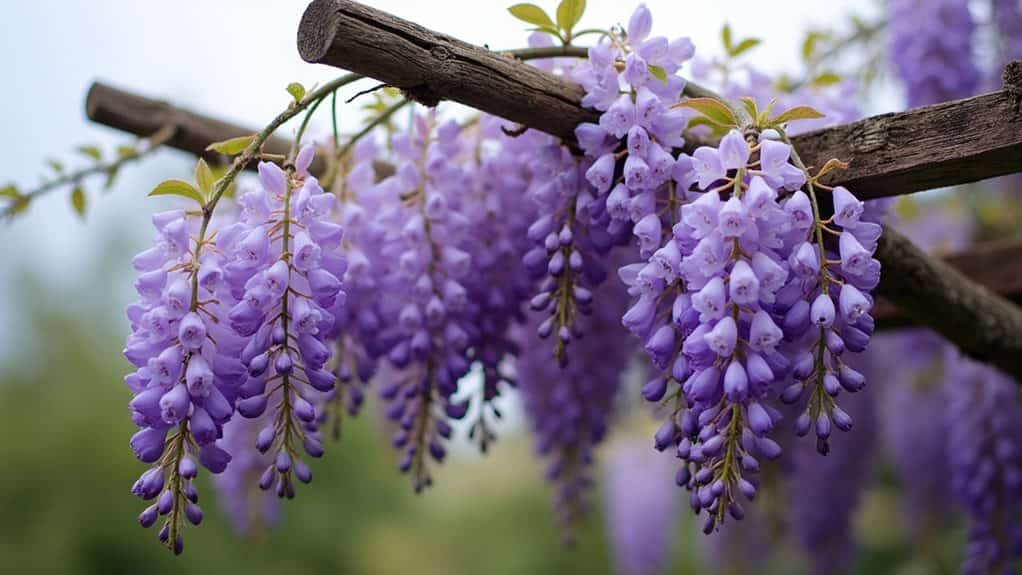
Even though wisteria vines can look like they’re ready to burst into a sea of purple, sometimes they just refuse to bloom, and honestly, it can feel like waiting for a bus that never shows up.
Sometimes, wisteria needs to mature—usually seven years or more.
Too much nitrogen? You’ll get leaves, not flowers.
Prune wrong, or face frosts, and blooming just won’t happen, no matter how patient you are!
Proper maintenance and inspection can help ensure your wisteria remains healthy and ready to bloom at the right time.
Sunlight and Soil Requirements for Wisteria
If you want your wisteria to actually show off with those famous flowers, you’ve got to treat it like a camper who loves sunshine and hates soggy socks—give it at least six hours of direct sunlight every day.
Plant it where water drains away easily, not where puddles hang out after rain. Trust me, I once tried growing wisteria in a shady, swampy corner of my yard, and all I got was a leafy vine that looked like it was training for a jungle excursion instead of a flower show.
Importance Of Full Sun
Whenever you’re trying to get wisteria to bloom, sunlight is pretty much your secret weapon—think of it like packing the perfect flashlight for a camping trip, because wisteria needs at least six hours of direct sun every single day if you want to see those spectacular flowers.
Trust me, planting in full sun is the golden ticket for strong flower buds—otherwise, you’ll just get vines with no show!
Soil Drainage Essentials
Let’s say you’ve already found the sunniest patch in your yard, and you’re picturing your future wisteria draped like the world’s fanciest tent over a garden arch—but hang on, there’s another piece to this blooming puzzle that’s just as important as sunlight: soil drainage!
If your soil turns into a swamp after watering, roots will suffer. Mix in compost for better drainage, and check moisture often!
Optimal Planting Locations
Although you might think anywhere in your yard will do for planting wisteria, trust me, this vine is pickier than a cat sniffing new food! Choose a planting location that gets full sun—at least six hours daily. That’s the golden ticket for blooms.
Use well-draining soil with a slightly acidic to neutral pH. Don’t forget, good air circulation helps wisteria thrive and serve your garden’s beauty!
Pruning Techniques for More Wisteria Flowers
If you want your wisteria to burst out in flowers like it’s throwing a garden party, you’ve got to know when and how to give it a good trim—timing is everything, and late winter or early spring is your golden ticket for encouraging those new blooms.
Trust me, I’ve learned the hard way that hacking away at the vines in the middle of spring can be a disaster, so instead, snip those long, wild shoots back to just a couple of buds from the base and save the heavy pruning for when the plant isn’t busy growing.
Don’t forget to clear out any dead or weak stems, because not only does it keep your wisteria looking less like a jungle, it also helps the flowers get the spotlight they deserve! Early pruning can actually hinder flowering by disrupting the plant’s natural growth patterns and recovery process.
Best Time for Pruning
When you want your wisteria to burst into full bloom, timing your pruning just right is like packing your backpack perfectly before a camping trip—you’ve got to know what you’re doing or you’ll end up with a tangled mess and maybe even miss out on the best part!
The best time for pruning is late winter or early spring, just before new growth starts, to guarantee blooming success.
Methods to Encourage Blooming
Since you’re probably dreaming of your wisteria looking like a waterfall of purple blooms draping over your fence or arbor, let’s talk about exactly how you can make that happen with some smart pruning moves.
Cut back new growth to 2-3 feet in late summer or fall, and always train those vines up and over.
Regular, gentle pruning keeps your wisteria blooming and thriving—no wild jungle vibes allowed!
Fertilizer Fixes for Better Wisteria Blooms

Although wisteria vines are famous for their jaw-dropping, draping blooms, getting them to actually flower can feel like waiting for your favorite TV show to finally drop a new season—frustrating, right?
When you’re picking fertilizer, don’t just grab any old bag—choose one rich in phosphorus, not nitrogen, to fuel blooms.
Trust me, balanced feeding, especially with blends made for flowering plants, makes all the difference!
Proper fertilizer selection ensures your wisteria gets the necessary nutrients for vibrant flowering.
Root Health and Wisteria Flowering
If you’ve ever tackled wisteria care, you know the roots are kind of like the engine of a camper van—if they’re not running smoothly, you’re not getting anywhere, and you can forget about those dreamy purple blooms!
Root health matters big time for wisteria flowering. Don’t let roots get crowded or waterlogged; give them space, prune gently, and watch your plant reward your effort with blossoms that’ll make your neighbors swoon.
Does Age or Variety Affect Wisteria Blooms?

Let’s be real—when you’re dreaming of those jaw-dropping wisteria blooms draping over your backyard fence like a purple waterfall, it’s easy to forget that age and variety are kind of the “secret password” to the whole show.
If you’ve got a young plant, or picked a slow-to-bloom Asian variety, you’ll need patience—sometimes wisteria takes years, even decades, to reward your efforts!
Protecting Wisteria From Pests and Stress
Even the most beautiful wisteria vines can run into some seriously annoying roadblocks, especially when pesky bugs decide to crash the party or when the plant gets stressed out—kind of like when you’re trying to relax on a camping trip but mosquitoes keep buzzing in your ear!
Keep an eye out for pests like aphids, and try using friendly bug buddies instead of harsh sprays to reduce stress and enhance blooming.
Yearly Wisteria Blooming Checklist
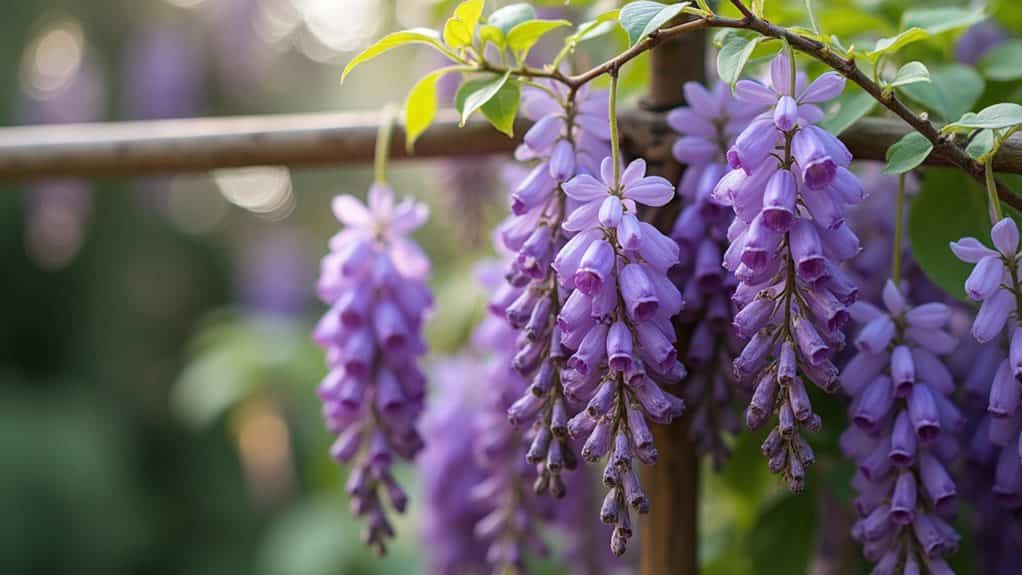
While you might think growing wisteria is a bit like planning the perfect camping trip—where you have to remember everything from bug spray to marshmallows—getting those gorgeous blooms each year actually comes down to following a few key steps on your yearly checklist.
Make sure your wisteria is mature, feed it phosphate fertilizer, prune roots and branches properly, and always give it plenty of sun for blooming success! Regular monitoring water and nutrient levels helps keep your plant healthy and encourages vibrant blooms.
Overall
So, if your wisteria just sits there acting all leafy and stubborn, don’t give up! Check the sunshine, tweak your pruning, watch that fertilizer, and keep an eye on those roots—sometimes plants are just as picky as explorers choosing the perfect tent spot! I’ve battled my own grumpy wisteria, but with a little patience and the right care, you’ll be setting up your hammock under a waterfall of purple blooms before you know it. Happy gardening, voyager!