How Long Can You Run a Portable AC Continuously?
Depending on several factors, you can run a portable AC continuously for 8-12 hours. These include environmental conditions, unit specifications, and proper maintenance. Portable ACs are designed for extended use, but monitoring energy consumption and maintaining the unit regularly is essential.
Cleaning filters, ensuring proper ventilation, and optimizing placement can help extend run time and efficiency. While continuous operation is possible, it’s important to consider energy costs and potential wear on the unit.
Proper management, such as using programmable timers and maintaining ideal room conditions, can help maximize your portable AC’s performance and lifespan. Understanding these factors will help you make the most of your cooling system.
TLDR
- Depending on environmental conditions, portable AC units can typically operate continuously for 8-12 hours.
- Continuous operation is crucial for maintaining consistent airflow and refrigerant circulation in portable ACs.
- Factors affecting runtime include ambient temperature, humidity, room insulation, and unit specifications like BTU rating.
- Regular maintenance, including filter cleaning and condenser coil inspection, is essential for extended continuous operation.
- Proper ventilation, strategic placement, and energy efficiency considerations can optimize continuous portable AC use.
Understanding Portable Air Conditioners
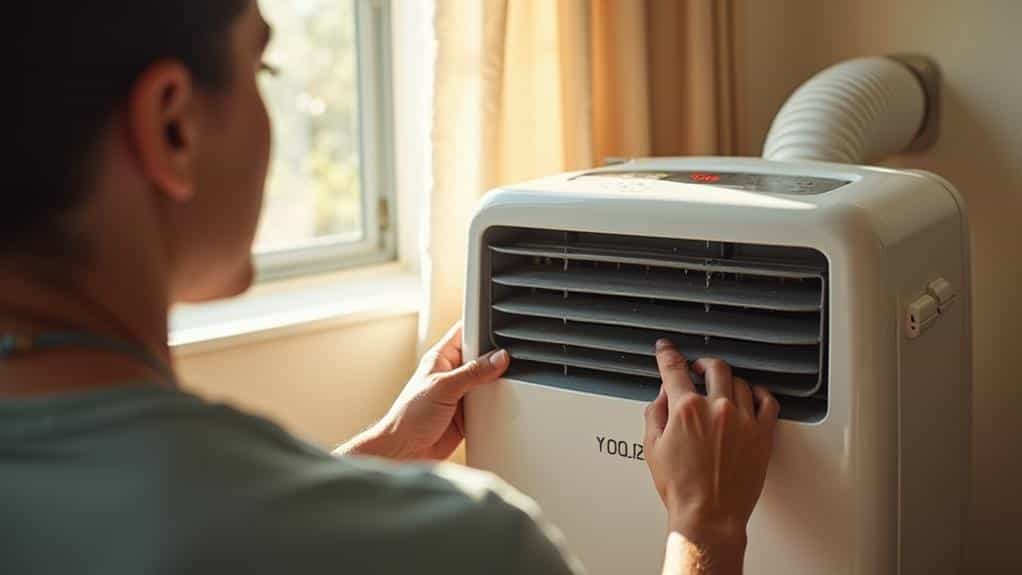
Portable air conditioners are your go-to solution for cooling individual rooms without the hassle of permanent installation. These self-contained units draw in warm air, cool it through coils, and exhaust hot air outside. They typically draw a significant amount of power, similar to space heaters, making it vital to monitor amp draw for safety.
They’re designed for continuous use, running for 8 to 10 hours when used properly. To guarantee peak performance and longevity, proper maintenance is essential. This includes regularly cleaning or replacing air filters and clearing condenser coils.
Continuous Operation Basics
Now that you understand the basics of portable air conditioners let’s investigate how long you can keep them running. Portable AC units can operate continuously for 8-12 hours, depending on conditions and manufacturer recommendations. Continuous running is often less damaging than frequent on-off cycles, as it maintains consistent airflow and refrigerant circulation, essential for effectively cooling the refrigeration cycle. However, monitoring energy consumption and practicing proper maintenance, such as regular filter cleaning and water drainage, is crucial for ideal performance during extended use.
Factors Affecting Run Time
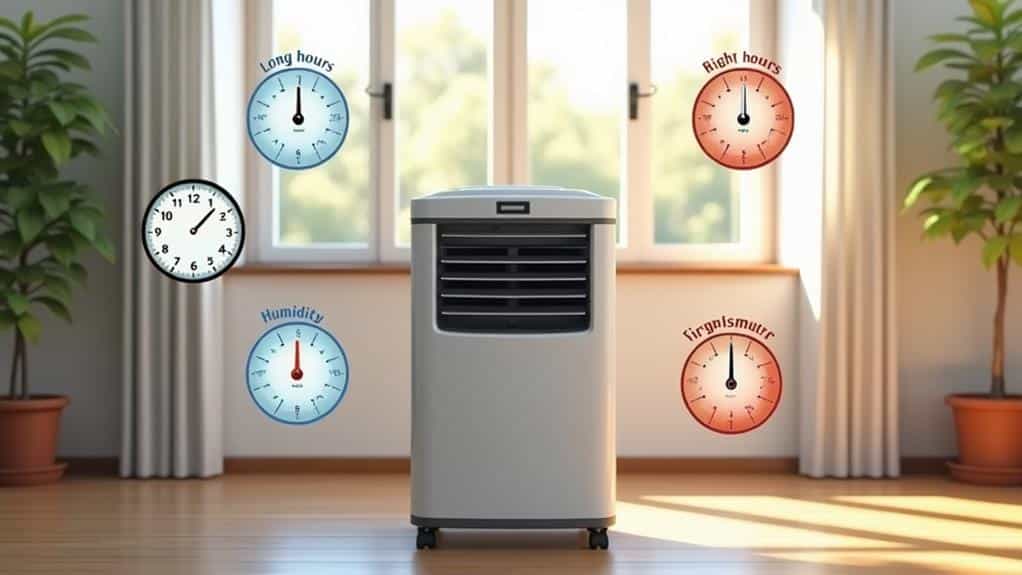
The run time of your portable AC depends on various factors, with environmental conditions and unit specifications playing vital roles. Properly managing airflow, as noted in the HVAC airflow optimization, can help improve cooling efficiency.
Your room’s temperature and humidity levels directly influence how often the unit cycles, while the AC’s BTU rating determines its ability to cool larger spaces efficiently. Additionally, room insulation and the unit’s placement can greatly impact how long you’ll need to run your portable AC to maintain a comfortable temperature.
Environmental Conditions Impact
From within the comfort of your home, you might not realize how much external factors influence your portable AC’s runtime. The ambient temperature plays a vital role, with higher outdoor temperatures forcing your unit to work harder.
Humidity levels can strain your AC’s dehumidifying capacity, extending operation time. Poor room insulation leads to heat infiltration, increasing runtime. Sunlight exposure through windows also affects cooling efficiency, requiring longer periods to maintain desired temperatures.
Unit Specifications Matter
Your portable AC’s specifications determine how long it can run effectively. The BTU rating of your unit directly impacts its cooling power and efficiency. Higher BTU ratings are necessary for larger spaces to prevent extended running times.
Additionally, the type of unit you have (single-hose or dual-hose) affects its performance. Regular maintenance, including cleaning filters and checking refrigerant levels, is vital for peak efficiency and shorter run times.
Energy Efficiency Considerations
You’ll want to optimize energy consumption to keep costs down when running your portable AC for extended periods. Space heaters, for example, consume a significant amount of energy, so understanding space heater wattage can help you make informed choices about your energy use.
Look for units with higher Energy Efficiency Ratios (EER) and smart features that allow scheduling during off-peak hours. Regular maintenance, such as cleaning filters and coils, can also improve efficiency by up to 15%, helping your portable AC run more effectively while using less energy.
Optimizing Energy Consumption
Optimizing its energy consumption is essential to get the most out of your portable AC while keeping energy costs in check. Choose a unit with a high Energy Efficiency Ratio (EER) for better cooling output per unit of electricity. Implement regular maintenance, like cleaning filters monthly, to reduce energy consumption.
Use programmable timers to run the AC only when needed, and keep windows closed to maintain indoor temperature efficiently.
Energy-Saving Features Comparison
In light of rising energy costs, it is essential to compare energy-saving features among portable AC units. Look for models with high energy efficiency ratings (EER), inverter technology for variable speed operation, and programmable timers. These features help optimize cooling and reduce energy consumption.
Consider units with dual-hose designs, which can improve overall performance by using outside air for cooling. Higher SEER ratings also indicate better year-round efficiency.
Maintenance for Extended Use
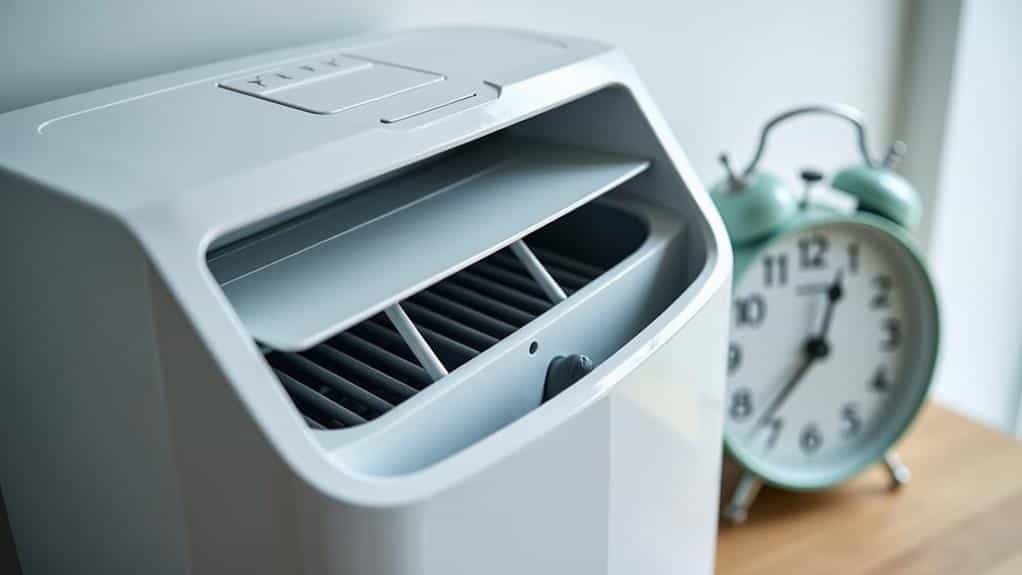
Proper maintenance goes a long way in ensuring your portable AC runs efficiently for extended periods. To keep your unit running efficiently, regularly clean the filters every month.
This prevents dust buildup and maintains peak airflow. Don’t forget to inspect and clean the condenser coils annually. These simple maintenance tasks can greatly extend your AC’s lifespan and improve its performance.
Safety Precautions
When running your portable AC for extended periods, you must contemplate several safety precautions. Proper ventilation setup is vital to guarantee efficient operation and prevent potential hazards. You should also implement electrical safety measures, such as using a dedicated circuit and regularly inspecting power cords.
Additionally, it’s important to employ overheating prevention techniques, including keeping the area around the unit clean and monitoring for unusual noises or performance issues.
Proper Ventilation Setup
Setting up proper ventilation for your portable AC isn’t just about comfort—it’s a critical safety measure. Make sure you expel hot air effectively by installing the exhaust hose correctly. Keep the hose length within manufacturer guidelines to maintain cooling efficiency.
Position your unit near a window, using window kits for secure installation. Check for air leaks and seal gaps to prevent hot air from re-entering. Regularly clean the vent and hose to avoid blockages.
Electrical Safety Measures
For electrical safety with portable ACs, it’s crucial to follow key precautions. Always connect your unit to a dedicated circuit with a 120VAC power supply. Inspect cords and outlets regularly for secure connections, avoiding extension cords to prevent electrical hazards.
Follow the manufacturer’s guidelines for proper voltage levels and suitable outlets. These measures guarantee peak performance and safety while running your portable AC.
Overheating Prevention Techniques
Beyond electrical safety, preventing overheating is key to running your portable AC safely for extended periods. Maintain a 2-foot distance from walls and furniture to guarantee proper airflow. Clean filters regularly to prevent dust build-up. Use automatic shut-off features and follow recommended operating conditions.
Schedule periodic maintenance, including cleaning condenser coils. Avoid running the unit in extreme temperatures for long periods to prevent overheating risks.
Optimal Placement Strategies
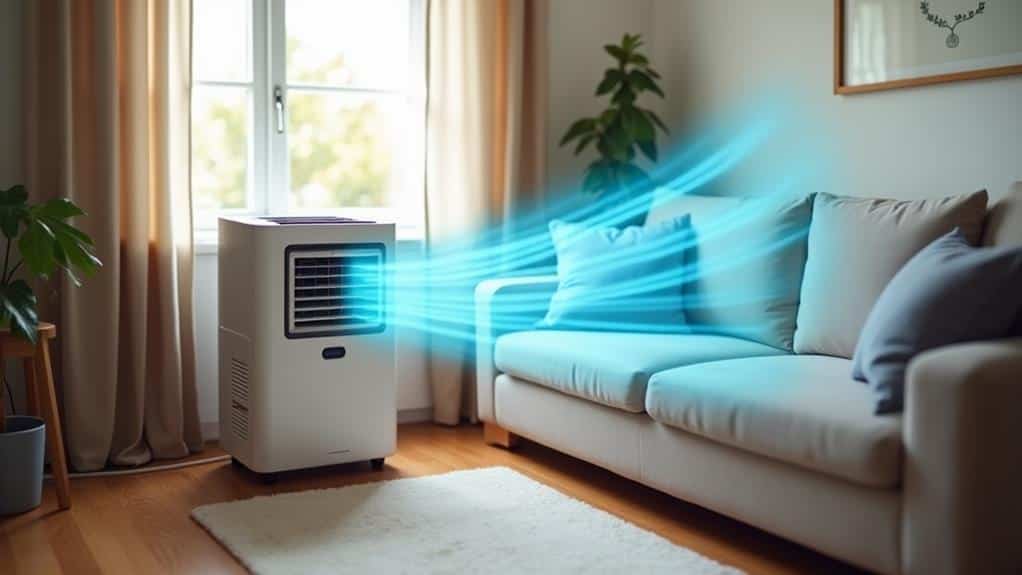
When it comes to ideal placement of your portable AC unit, strategic positioning can considerably enhance its performance and efficiency. For best placement, place the unit near a window to efficiently vent warm air outside. Maintain a 2-foot distance from walls and furniture to guarantee proper air circulation. Avoid direct sunlight by positioning the unit in shaded areas or using curtains. Place it on a level surface to prevent moisture accumulation and mechanical issues.
Temperature Control Methods
Although temperature control might seem straightforward, there are several methods you can employ to optimize your portable AC’s performance. Set your unit to a slightly higher temperature, like 72°F, to reduce strain during hot days. Use timers to run your AC when needed most.
Regular cleaning of filters enhances efficiency. Increase insulation around doors and windows to maintain a consistent temperature and reduce your portable AC’s workload.
Humidity Management Techniques
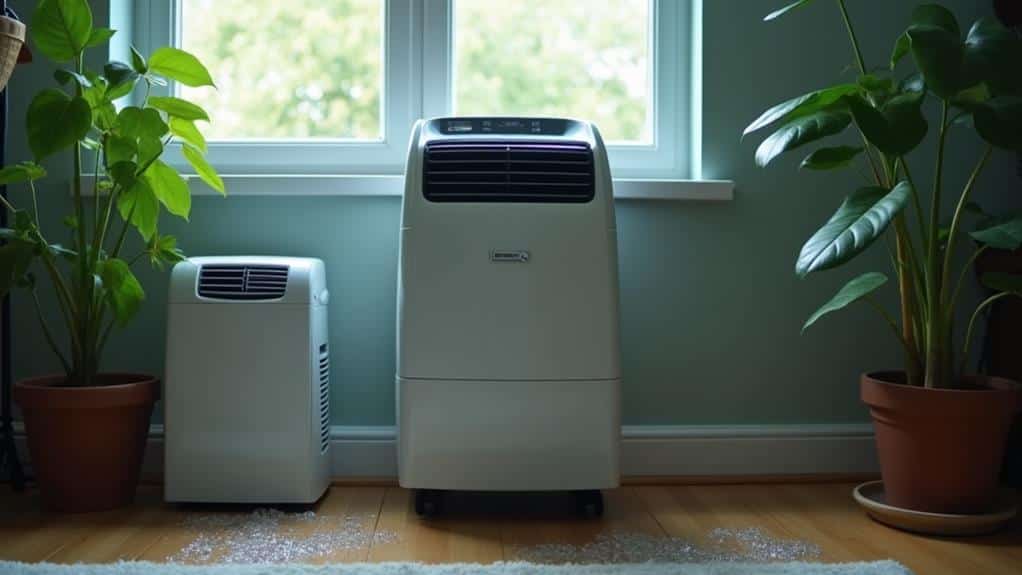
Managing humidity is essential for maximizing your portable AC’s efficiency. To improve cooling efficiency, use a dehumidifier alongside your AC unit.
This reduces indoor humidity levels, allowing your AC to work less. Keep windows and doors closed, and use curtains to block sunlight. Regularly empty the AC’s water tank to prevent mold growth. Use the “dry” mode to manage humidity while cooling.
Alternatives to Continuous Operation
Exploring alternatives to continuous portable AC operation can considerably reduce energy consumption and extend your unit’s lifespan. Ceiling fans can circulate cool air or install dehumidifiers to reduce moisture. Window reflectors and blackout curtains block sunlight, keeping rooms cooler.
Consider using timers with your portable air conditioner for maximum energy efficiency. Solar-powered fans offer an eco-friendly cooling option without relying on traditional energy sources.
Cost-Benefit Analysis
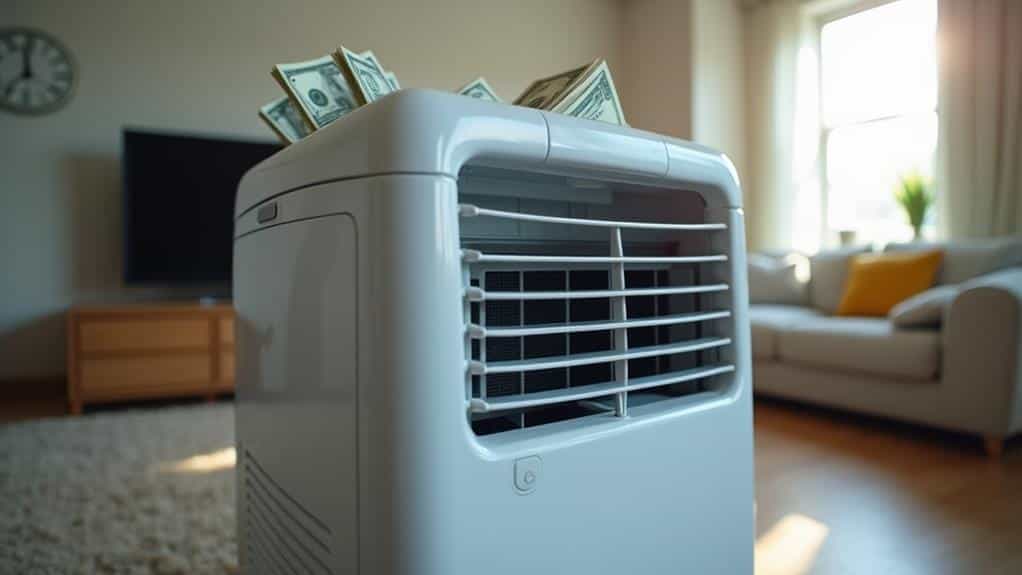
When considering the cost-benefit analysis of running a portable AC continuously, you’ll need to weigh several factors. Continuous operation can lead to higher electricity bills, ranging from $0.50 to $1.50 per hour.
Energy consumption is affected by the unit’s Energy Efficiency Ratio (EER). While continuous use may increase wear and tear, proper maintenance can extend the unit’s lifespan to about ten years, justifying the initial investment.
Overall
You’ve learned that portable AC units can run continuously, but it’s not always ideal. Consider factors like energy efficiency, maintenance, and your specific cooling needs. Use temperature control and humidity management techniques to optimize performance.
Alternatives like cycling the unit on and off can be more cost-effective. By understanding your portable AC’s capabilities and limitations, you can make informed decisions about its operation to keep your space comfortable while managing energy use and costs.