How to Reduce Humidity in Your House Naturally
Grab a few low‑maintenance plants—Boston ferns love bathroom steam, spider plants mop up air, and peace lilies thrive in low light—then tuck hanging ivy in corners and a compact parlor palm in a nook to soak up moisture while looking cool. Crack a window or spin a low‑speed fan after showers, and run your kitchen hood or bathroom exhaust whenever you cook or scrub. Keep the AC on a moderate setting so it condenses water, and sprinkle baking soda bowls, coarse salt, or charcoal in closets for extra drying power. Try these tricks, and you’ll see the humidity drop fast—plus there’s plenty more to explore!
TLDR
- Use low‑maintenance plants like Boston ferns, spider plants, and peace lilies to absorb excess moisture while improving air quality.
- Position humidity‑absorbing plants strategically—hang ivy vertically, place parlor palms in corners, and ensure proper ventilation around them.
- Increase airflow by cracking windows, running low‑speed fans, and using bathroom/kitchen exhaust fans or a supply‑only fan with a humidistat.
- Run air conditioning on a moderate setting and use ceiling fans to circulate air, preventing hot spots and condensing moisture.
- Deploy natural absorbents such as baking soda bowls, coarse salt, silica gel packets, and charcoal briquettes in closets and bathrooms.
How to Choose Low‑Maintenance Plants That Reduce Indoor Humidity (and Which Ones Fit Your Space)
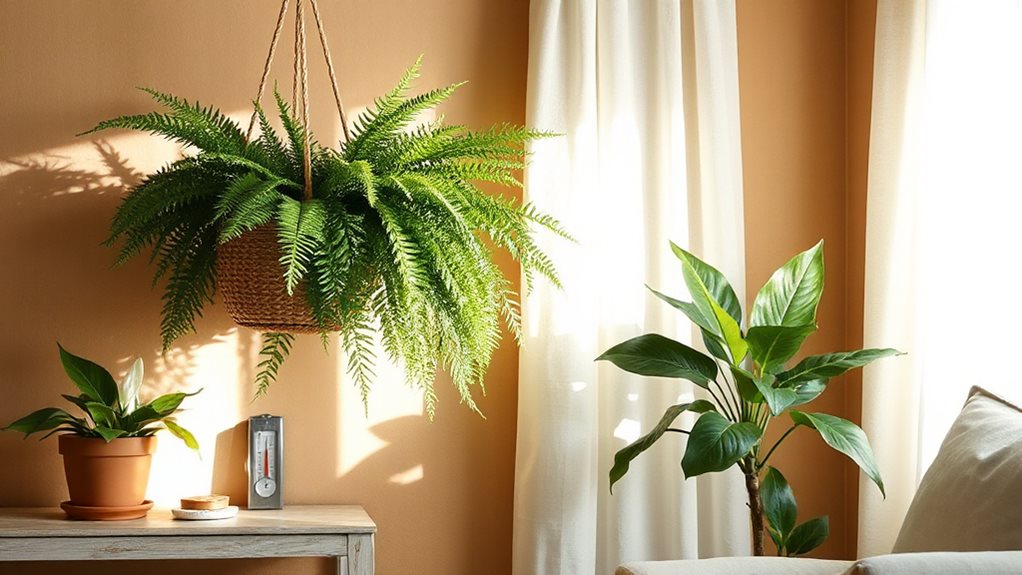
Ever wonder how a few easy‑care plants can turn your home into a breezy, low‑humidity haven without turning you into a full‑time gardener? Pick a Boston fern for bathroom steam, a Spider Plant that thrives on air, or a Peace Lily that loves low light, then match placement—hanging Ivy for vertical spots, compact Parlor Palm for corners, and you’ll keep humidity low while serving friends with fresh, clean air. The Parlor Palm thrives in tropical, humid areas and helps reduce indoor moisture. Consider pairing plants with proper ventilation to maximize moisture control and prevent mold.
Ventilation Tricks to Reduce Indoor Humidity Fast
What if you could chase away muggy air in your home as quickly as you’d pack a tent for a weekend camping trip? Crack a window, set a fan on low, and let breezes sweep moisture out, just like fresh campsite air.
Add a kitchen hood or bathroom exhaust while cooking or showering, and use a supply‑only fan with a humidistat to keep humidity low without over‑working your HVAC.
Buzzing outdoor outlets can signal dangerous electrical arcing and moisture-related hazards, so inspect outdoor receptacles and avoid relying on faulty exterior outlets when reducing indoor humidity.
Use AC and Fans to Reduce Indoor Humidity Every Day
So, you’ve just set up camp in your living room and the air feels stickier than a summer hike through a rainforest—what’s the fastest way to dry it out without packing a tent?
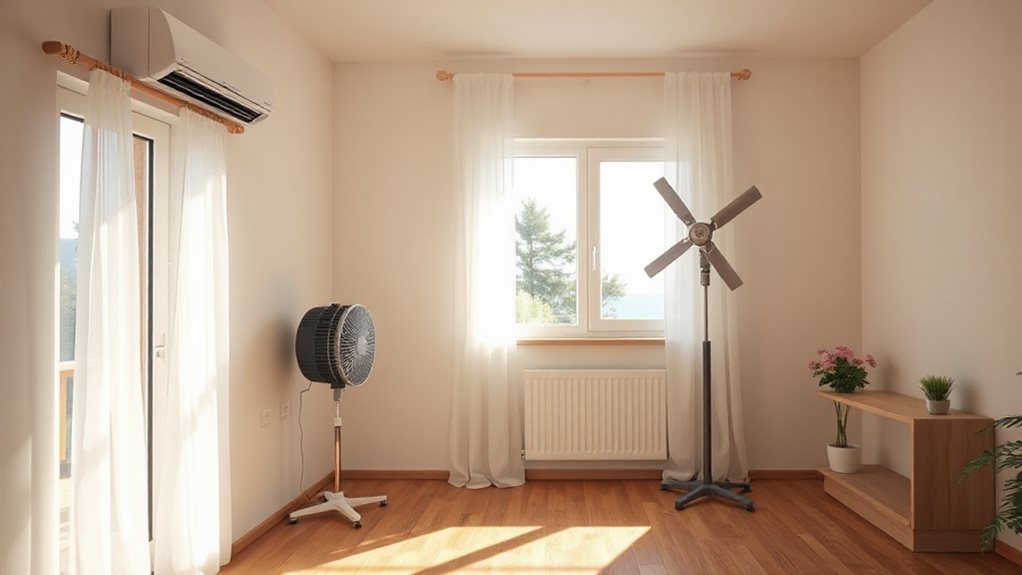
Run your AC on a moderate setting; it condenses moisture into water, draining it away, while ceiling fans swirl air, preventing hot spots.
Keep bathroom and kitchen exhaust fans on during and and showers, and make sure your AC is sized right so it doesn’t short‑cycle, letting you stay comfy and energy‑smart.
Be mindful of local regulations and privacy practices when placing cameras or monitoring devices on your property to avoid inadvertently recording neighbors or private areas like backyards.
DIY Absorbents That Reduce Indoor Humidity: Baking Soda, Salt, Silica Gel, Charcoal
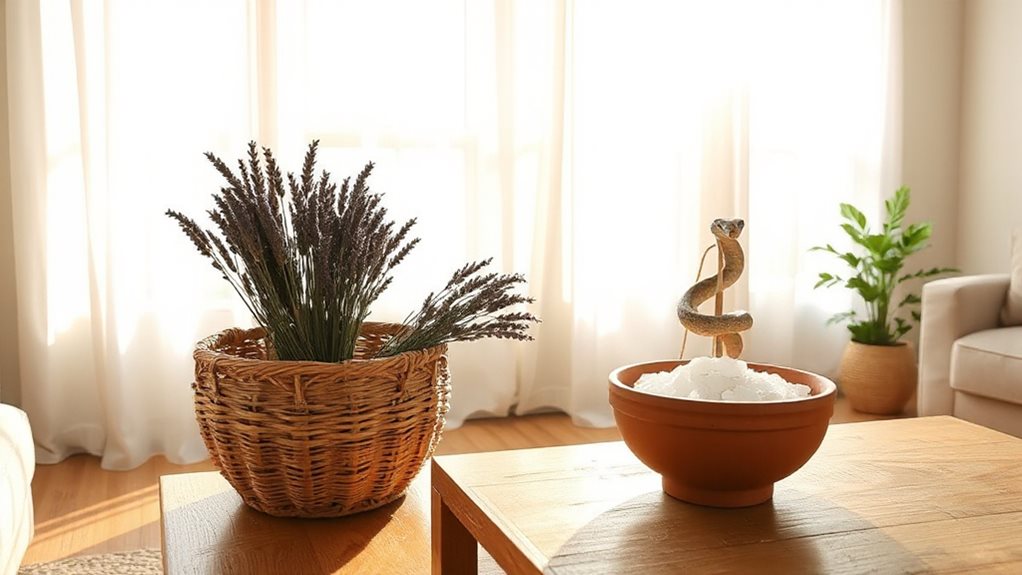
Feeling like your house is turning into a damp campsite after a rainstorm? You can stash bowls of baking soda on windowsills, scatter coarse salt in closets, tuck silica‑gel packets into bathroom corners, and line charcoal briquettes in wardrobe baskets; each material passively soaks up moisture, saves electricity, and even cuts odors, so your space stays fresh while you help guests stay comfortable. Mix annuals and perennials for both immediate and long-term benefits to pollinators by including diverse flower types in nearby garden beds.
Everyday Habits to Keep Indoor Humidity Low
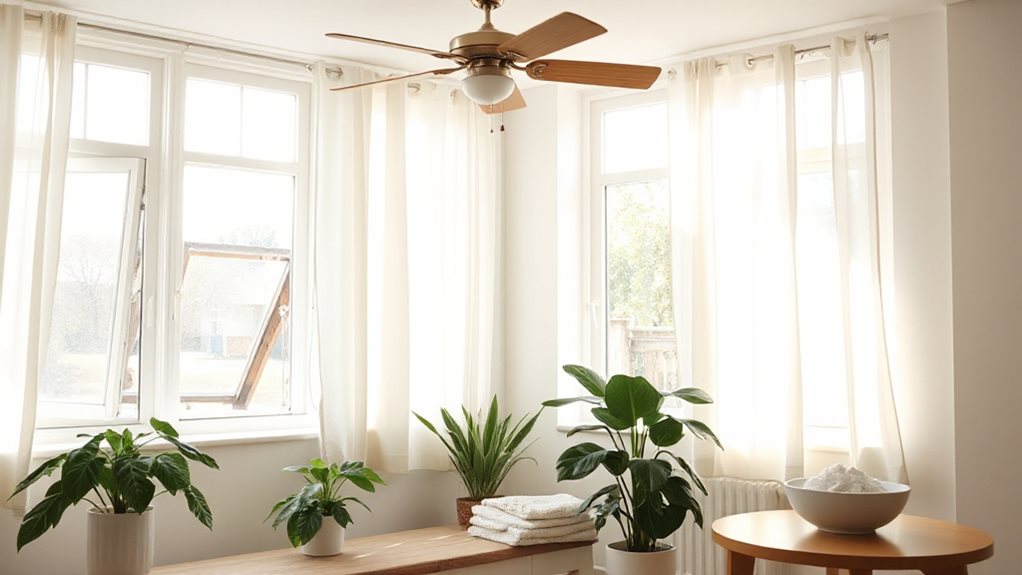
Ever wonder how you can keep your home feeling as fresh as a mountain cabin without turning every room into a science lab? You can shorten showers, crank the exhaust fan, and shut the bathroom door after.
While you’re cooking, keep lids on pots, use the range hood, and run ceiling fans to circulate air.
Fix leaks promptly, seal gaps, and avoid indoor drying—your house will stay crisp, like a campsite sunrise. Implementing simple ventilation and airflow management can further reduce indoor moisture and prevent mold.
Overall
So there you have it—by picking the right low‑maintenance plants, cracking windows, cranking the AC or fans, scattering DIY absorbents like baking soda or charcoal, and tweaking everyday habits, you’ll keep the air dry without breaking a sweat. Ready to feel like you’re camping in a desert while staying cozy at home? Give these tricks a whirl, and you’ll notice the difference instantly—no more soggy socks or musty smells, just fresh, breathable vibes. Happy drying!