Building Your Dream Deck: Floating Deck vs Fixed Deck Comparison
If you’re considering creating an outdoor living space, building a fixed or floating deck is one of the most critical decisions. Both types of decks have distinct advantages and disadvantages that can impact your space’s overall functionality and aesthetic appeal. As such, it’s crucial to understand what each option entails before committing to one over the other.
A fixed deck is attached permanently to your home or property and is usually constructed with concrete footings for support. On the other hand, a floating deck is not connected to anything and instead relies on piers or blocks for stability.
While both options offer unique benefits, such as durability and versatility in design, choosing between them ultimately comes down to personal preference and specific needs. In this article, we will explore in detail the differences between fixed and floating decks, their pros and cons, and factors you should consider when making your decision.

Floating Deck Basics
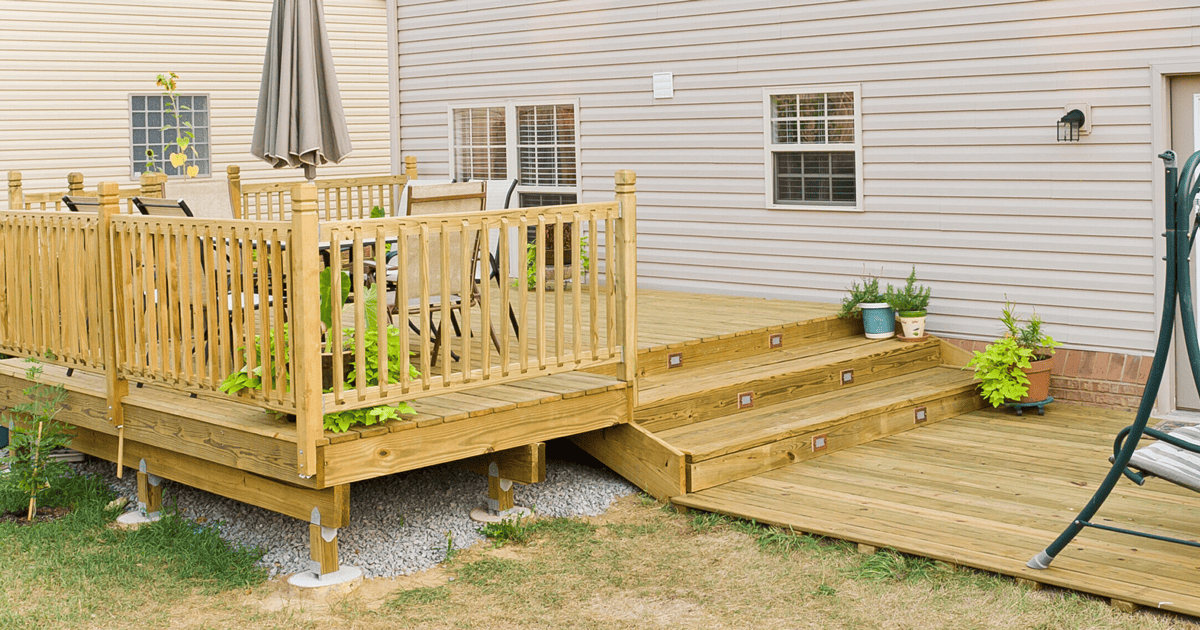
If you’re considering a floating deck, you’ll love how easy it is to build and its placement, shape, and size flexibility. Unlike fixed decks, which require anchoring to the ground or building structure, floating decks are supported by deck blocks that sit at the ground. This means you won’t have to dig holes or pour concrete footings.
Plus, if you decide to move your deck in the future, it’s much easier to disassemble and transport. Before building a floating deck, check with your local building codes for any specific regulations that may apply in your area. Also, remember that since the deck will not be attached to your home or other structures on your property, it’s essential to consider things like lawn mower access and potential tripping hazards around the edges.
However, one significant advantage of a floating deck is its durability – without being anchored into the ground or attached directly to your house or other structures on your property; they are less likely to sustain damage from weather events. There are pros and cons when choosing between a fixed deck and a floating one. While fixed tiers have benefits, such as providing more stability for higher elevated decks or adding value for ROI purposes, floating decks offer greater flexibility in design options while requiring less time-consuming maintenance tasks annually.
Nevertheless, if you’re looking for an easy-to-build home improvement project that allows for plenty of creativity & versatility- building a floating backyard oasis may just be what you need! Next, we’ll further explore some of these floating decks’ benefits. (Read Why Are Flies Attracted To My Deck)
Benefits of Floating Decks
Building a floating outdoor oasis is like creating your private island, free from the constraints of traditional deck-building methods. Here are four reasons why a floating deck might be the perfect choice for you:
- Require Less Landscape Alteration: A floating deck requires less landscape alteration than a fixed deck. This means you can keep more of your existing landscape intact and avoid the time-consuming process of restoring it once construction is complete.
- Relatively Simple Construction: Building a floating deck is simpler than constructing a fixed deck. You don’t need to worry about attaching the structure to your home or installing complicated support posts – all you need are some sturdy deck blocks and good-quality lumber.
- Increased Durability: Because they’re not attached to your home, floating decks are more durable over time than fixed decks. They’re less likely to experience damage from shifting ground or settling foundations and won’t be affected by changes in temperature or humidity levels.
- Smaller Footprint: Floating decks have a smaller footprint than fixed decks, which means they’re easier on your wallet regarding material costs and construction time. Plus, because they require fewer materials overall, they’re also better for the environment.
As you can see, there are many benefits to choosing a floating deck over a fixed one – but how do these two options differ? Let’s take a closer look at the fundamental differences between these two types of outdoor living spaces in our next section about the difference between fixed and floating deck mowers.
Difference Between Fixed and Floating Deck Mowers
Discover the key factors when choosing a mower for your outdoor living space. Whether you have a fixed or floating deck, finding the right lawn mower is essential to maintaining a healthy and attractive lawn. Your deck style will affect the type of mower you need and other factors such as ground level and building permits.
When mowing a fixed deck, you’ll choose a sturdy and reliable lawn mower that can handle the terrain. This may require hiring a professional contractor to maintain your lawn properly. On the other hand, if you have a floating deck, you may be able to use lighter-weight mowers since there are no obstacles.
To give you an idea of what kind of mower might best suit your needs, take a look at this table comparing fixed decks vs. floating decks:
| Fixed Deck | Floating Deck | |
|---|---|---|
| Type of Mower | Heavy Duty | Lightweight |
| Building Permit Required? | Yes | No |
| Ground Level | Above Grade | At Grade |
| Lumber Used | More Durable | Less Durable |
Choosing between fixed and floating decks ultimately depends on personal preference and practicality. Remember that floating decks may seem more flexible due to fewer building requirements, but they require more maintenance than their fixed counterparts. In the next section, we will explore some pros and cons of each type of deck so that you can make an informed decision for your outdoor living space.
Pros and Cons of Floating Decks
Now let’s look at the advantages and disadvantages of opting for a floating outdoor living space in your backyard.
A floating deck is not attached to any building or structure, making it easier to build and less expensive than a fixed deck. It can be placed anywhere on your property, even on uneven terrain, without requiring extensive excavation.
However, floating decks are more susceptible to damage from surrounding natural features like trees or water. Due to their lack of structural support, they also require more maintenance than fixed decks. Additionally, depending on the height of your deck, you may still need a building permit regardless of whether it is attached to an existing structure.
Moving forward into the subsequent section about ground-level decks, remember that a floating deck might be the way to go if you’re considering building a low-level deck less than 24 inches above grade. Floating decks are perfect for yards with many trees because they disturb roots less and can be built above grade away from significant roots. (Learn How Much Should Deck Boards Overhang)
Ground Level Decks
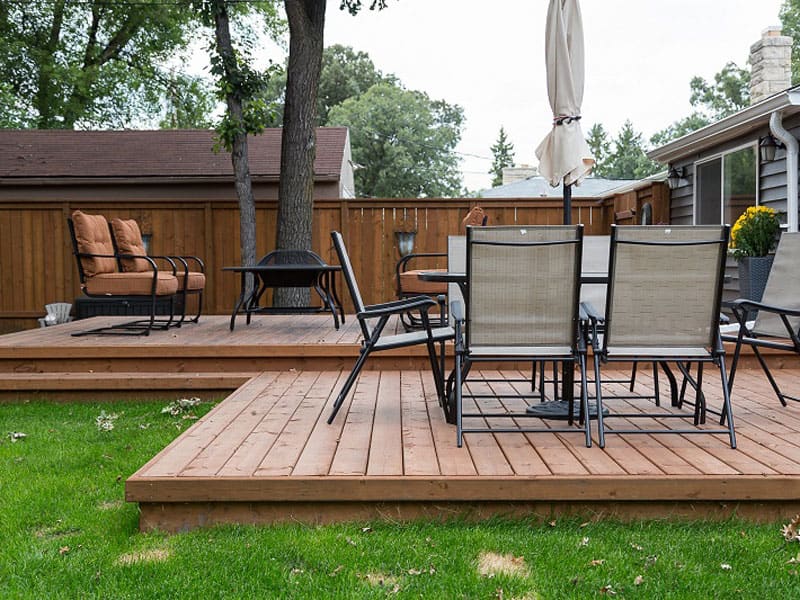
If you want to create an outdoor space that seamlessly blends with your yard, a ground-level deck is like a natural extension of your home’s interior. Ground-level decks, also known as floating decks, offer a more relaxed and casual feel than traditional decks due to their low profile and simple design.
The main difference between a floating and fixed deck is the support system. Floating decks rely on deck blocks to keep them stable, while appointed decks require piers or posts anchored into the ground for stability. Building permits may not be necessary for ground-level decks since they are not attached to the house, but it’s always best to check with local authorities before starting construction.
When building a ground-level deck, the first step is to make the frame using pressure-treated lumber. The structure should be made using joists spaced at 16-inch intervals and supported by beams placed every four feet. The system should then be covered with the decking material of choice. Use composite materials that resist moisture damage and insect infestation to ensure longevity and minimize maintenance costs.
Transitioning into the subsequent section about vinyl floating vs. fixed decks, it’s important to note that choosing between these two options will ultimately come down to personal preference and specific requirements for your outdoor living space.
Vinyl Floating vs. Fixed Decks
Choosing between a vinyl floating deck and an attached deck can be challenging, but it ultimately comes down to your personal preferences and the specific needs of your outdoor space.
The fundamental difference between the two is that a floating deck is not attached to any building or structure, while a fixed deck is physically attached to the home. This means you’ll need a building permit for an attached deck but not a floating one.
If you live in an area with high winds or have tree roots in your yard, then a vinyl floating deck may be the better option. Floating decks are more flexible than fixed ones and can be built low to the ground around obstacles such as trees.
Additionally, composite materials can increase longevity and reduce maintenance costs over time. While both types of decks are excellent home improvement projects, it’s essential to weigh the pros and cons of each before making your final decision.
In the next section, we’ll review some considerations for floating decks so you can make an informed choice for your outdoor living space.
Considerations for Floating Decks
When building a vinyl floating outdoor living space, it’s essential to consider your property’s specific needs and the feature’s purpose. A floating deck is an excellent option for those who want a portable, ground-level structure that’s easy to build and adjustable based on their backyard needs. Here are some considerations to keep in mind when making a floating deck:
- Building permits may not be required, but it’s always best to check with your local council.
- Floating decks are ideal for areas with uneven terrain or sloping yards.
- Floating decks can easily be moved or adjusted since they’re not attached to any structure.
- Building a floating deck requires minimal excavation work compared to fixed tiers.
- They’re great for DIY enthusiasts as they require fewer materials and tools.
These factors will help you decide whether a vinyl floating deck suits you. Remember that while they have their benefits, drawbacks include requiring more maintenance and being susceptible to weather damage.
In the next section, we’ll discuss considerations for fixed decks so you can decide which type of outdoor living space is best suited for your property.
Considerations for Fixed Decks
Before deciding which type of outdoor living space is best suited for your property, have you considered the specific needs and purpose of the feature? A fixed deck may be the better option if you’re looking for a deck that seamlessly flows from your interior to your exterior.
Fixed decks are physically attached to the building, offering a more permanent solution. Building a fixed deck requires more skill than building a floating deck. Finding an experienced builder or carpenter who can obtain all necessary permits before starting construction is essential. Power tools such as saws and drills will also be needed for building the frame and attaching decking boards.
One of the benefits of having an attached deck is that it can easily be enclosed in a screen or have a roof added for three-season use. If you’re considering building at ground level, then either type of deck could work well. However, a floating deck may be more practical if you’re looking to build up off the ground or around trees. Remember that attaching a deck to an existing structure will require additional support beams and cost more than constructing a floating one.
There are several factors to consider when considering maintenance and repair options for your outdoor living space.
Deck Repair and Maintenance
To properly maintain and repair your outdoor living space, you must regularly assess your deck’s condition and components. Whether you have a floating patio or fixed deck, this is true, as both require regular maintenance to ensure they remain safe and functional.
One key difference is that fixed decks may require more extensive repairs, primarily if the damage affects the attachment points. Another important consideration for homeowners is how their choice of deck type will impact maintenance requirements.
Floating decks typically require more maintenance than fixed decks due to their exposure to the elements. Regular cleaning and inspection ensure that a floating deck remains in good condition over time. Appointed decks may require some maintenance, but this can be less frequent depending on the materials used.
When it comes time to sell your home, the condition of your outdoor living space can play an essential role in attracting potential buyers. Whether you have a floating deck or a fixed one, keeping up with repairs and maintenance can help ensure your property remains attractive and marketable.
By taking care of any necessary repairs promptly and keeping up with regular cleaning and inspections, you can help ensure that your outdoor living space remains an enjoyable part of your home for years. Transitioning into our next section on permits and building regulations, it’s important to note that proper upkeep can also help ensure compliance with applicable rules or codes. (Learn How To Use A Wasp Bomb)
Permits and Building Regulations
You may think it’s a hassle, but getting the necessary permits and following building regulations can save you time and money in the long run. Whether you’re building a floating or fixed deck, you must comply with local building codes and obtain the appropriate permits before beginning construction.
Here are three reasons why obtaining the necessary permits and following building regulations is essential when building your freestanding outdoor living space:
- It ensures safety: Permits and building regulations are implemented to ensure your project meets safety standards. By complying with these regulations, you can be confident that your deck will be strong enough to support its intended use without posing any risks to yourself or others.
- It avoids legal issues: Failing to obtain the necessary permits or follow building regulations can result in fines or legal action. By completing this step correctly, you can avoid any potential legal issues.
- It adds value: Building a ground-level floating deck or fixed deck that meets all the requirements can increase your property’s value if done correctly. A well-built outdoor living space that follows all of the required guidelines will appeal more to potential buyers when it comes time for resale.
Frequently Asked Questions
What maximum height can a floating deck be built without requiring a permit?
In most jurisdictions, a floating deck can be built up to 24 inches above grade without requiring a permit. However, it’s always best to check with your local building department for specific regulations in your area.
How do you ensure stability and safety when building a tall floating deck?
How do you ensure stability and safety when building a tall floating deck? Use larger footings, choose strong materials like composite decking, add diagonal bracing to the framing, and follow local building codes. Regular maintenance is also essential for safety.
Can a floating deck be attached to a house or structure?
No, a floating deck should not be attached to a house or structure as it requires stability and can cause stress on the foundation. It is vital to avoid compromising the waterproofing of the home.
Are there any additional costs associated with building a floating deck compared to a fixed deck?
Building a floating deck can save money on materials and labor compared to a fixed deck, but additional costs may arise if the ground is not level or if extra support is needed. However, these costs can be minimized with careful planning and attention to detail.
Can a floating deck be built in areas with deep frost levels?
No, a floating deck is unsuitable for deep frost levels as it requires stability and footings installed below the frost level. Considering the ground conditions before choosing between a fixed or floating deck is essential.
Conclusion
Congratulations! You’ve now learned the ins and outs of fixed versus floating decks.
When deciding which option is best for your outdoor living space, consider budget, location, and maintenance factors. A floating deck may be the way to go if you have a flat or uneven surface. However, a fixed deck may be better if you want a more permanent structure that can withstand heavy foot traffic and inclement weather.
When it comes down to it, there’s no right or wrong answer when choosing between a fixed or floating deck. It all depends on what works best for you and your specific needs.
As the adage goes: “Measure twice, cut once.” Take the time to carefully consider your options before making any decisions. With proper planning and execution, both decks can provide an enjoyable outdoor space for years.